A toy Goldendoodle is the smallest version of the Goldendoodle, a cross between a Golden Retriever and a Poodle, usually bred using a Toy Poodle parent or several generations of small doodles. There is no official breed standard for it, so size, coat and temperament vary more than with a purebred dog. This guide explains what to expect, how to care for one and how to buy responsibly.
In This Article
- Quick Answer: What Is a Toy Goldendoodle?
- What Exactly Is a Toy Goldendoodle?
- How Big Does a Toy Goldendoodle Get?
- What Coat Does a Toy Goldendoodle Have and Is It Hypoallergenic?
- What Is a Toy Goldendoodle's Temperament Like?
- How Do You Care for a Toy Goldendoodle?
- What Health Problems Can a Toy Goldendoodle Have?
- How Do You Buy a Toy Goldendoodle Responsibly?
- What Do People Ask Most About Toy Goldendoodles?
- Sources
Quick Answer: What Is a Toy Goldendoodle?
A toy Goldendoodle is a breeder's label for the smallest Goldendoodles, produced by crossing Golden Retriever lines with Toy Poodles. It is not a recognized breed, so there is no official size. Expect a friendly, clever, energetic companion with a wavy or curly coat that needs regular grooming, and do not rely on it being hypoallergenic.
Updated October 9, 2026- A crossbreed, not a breed. Wikipedia notes Goldendoodles are not recognized by major kennel clubs such as the AKC.
- Size varies. The Poodle parent largely decides size, and "toy" has no fixed definition.
- Grooming is real work. Wavy and curly coats mat without regular brushing and trims.
- Hypoallergenic is a myth. Research does not support calling any dog breed hypoallergenic.
What Exactly Is a Toy Goldendoodle?
Answer: It is a Goldendoodle bred to be as small as possible. Goldendoodles are crosses of Golden Retrievers and Poodles, first widely bred in the 1990s in Australia and the United States. Breeders use Standard, Miniature or Toy Poodles, and the smallest offspring, often from a Toy Poodle parent, are sold as toy or petite doodles. Source: Wikipedia, Goldendoodle.
The Wikipedia article on the Goldendoodle describes it as a designer dog created by crossbreeding a Golden Retriever and a Poodle. Designer dog breeders in Australia and the United States started crossing the two widely in the 1990s, although the author Monica Dickens had already crossed them in 1969. The name comes from "golden" plus the end of "Labradoodle". Source: Wikipedia.
Goldendoodles are bred in several sizes, each corresponding to the size of the Poodle used. Wikipedia lists standard, medium and miniature Goldendoodles. "Toy" is not one of those categories; it is a marketing term breeders use for doodles smaller than a typical miniature, usually from a Toy Poodle parent or from small doodles bred to each other over generations. That is why you will see toy, petite and micro used for similar dogs.
Because Goldendoodles are crossbreeds, they are not recognized by major kennel clubs such as the American Kennel Club, according to Wikipedia. If small curly dogs appeal to you, it is worth comparing a toy doodle with the purebred toy Poodle, whose size and coat are far more predictable, and with the other options in our types of toy dogs guide.
How Big Does a Toy Goldendoodle Get?
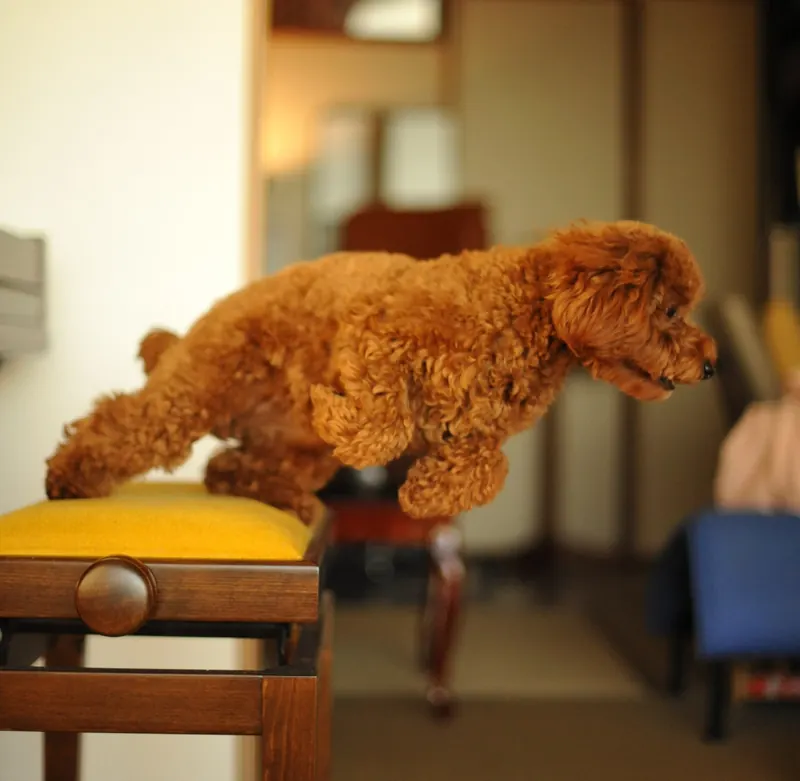
Answer: There is no official size. Wikipedia gives miniature Goldendoodles a height of up to 20 inches and a weight of 15 to 35 pounds, and toy doodles are bred to sit at the small end of that range or below. A Toy Poodle parent stands about 24 to 28 cm. Ask to see both parents. Sources: Wikipedia, Goldendoodle, Wikipedia, Poodle.
Size is the biggest question with any small doodle, and the honest answer is that it varies. Wikipedia's size ranges for the recognized doodle sizes give a useful frame of reference: Source: Wikipedia, Goldendoodle.
The table shows why buyers should be careful with size promises. A Golden Retriever is a large dog, so a first generation cross with a Toy Poodle can land almost anywhere between its parents. Breeders who aim for very small doodles usually breed small doodles together over several generations. The best predictor is the size of both parents and of earlier litters from the same pairing, so ask to see them rather than trusting a label.
Be cautious with anyone selling "teacup" or "micro" doodles as a premium extra. Extreme miniaturization in any breed can come with health trade offs, as our teacup Poodle guide explains.
What Coat Does a Toy Goldendoodle Have and Is It Hypoallergenic?
Answer: Goldendoodle coats are straight, wavy or curly, and Wikipedia says wavy is the most common. Common colors include cream, red, black, gold, apricot and brown. Goldendoodles are often sold as hypoallergenic or non shedding, but research has found no evidence that any dog breed is hypoallergenic, so allergy sufferers should spend time with the dog first.
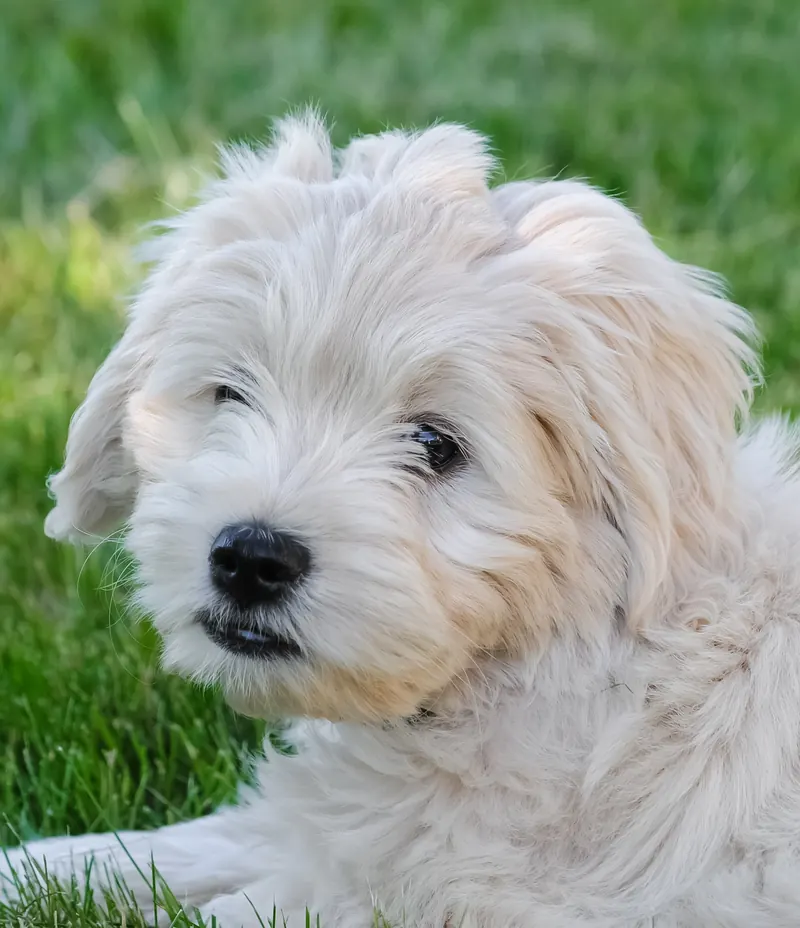
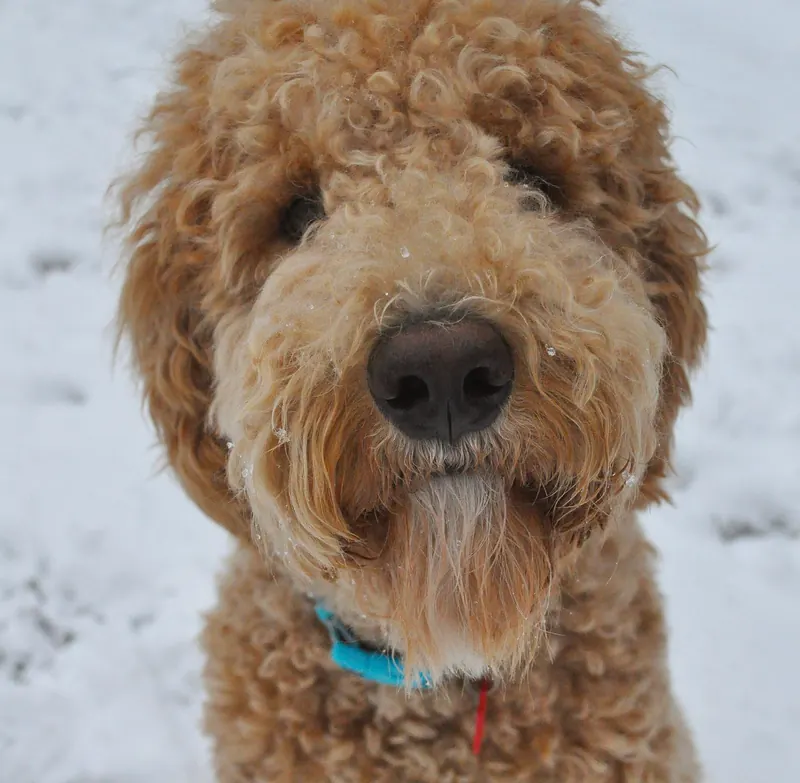
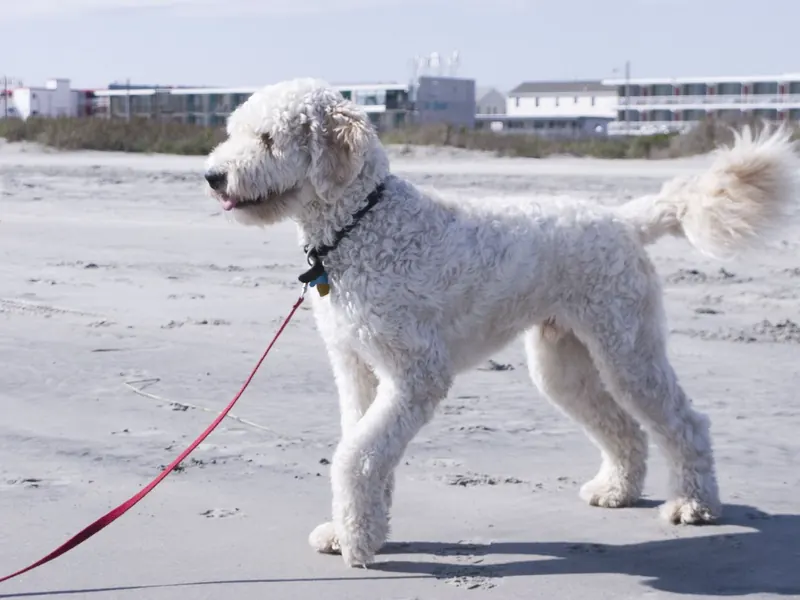
According to Wikipedia, wavy coats combine the Poodle's curl with the Golden Retriever's straight coat into loose, shaggy curls, while curly coated doodles look much like a Poodle and straight coated doodles look closer to a scruffy retriever. You often cannot be sure which coat a puppy will end up with, because the puppy coat changes as the dog matures.
The hypoallergenic claim deserves a firm warning. Wikipedia cites a 2012 study in the Journal of Allergy and Clinical Immunology that measured a major dog allergen in hair and homes and found no evidence to describe any dog breed as hypoallergenic. A low shedding coat may leave less hair on the sofa, but allergens are also in saliva and skin flakes. Source: Vredegoor et al., 2012.
If allergies are a concern, visit the breeder more than once, handle the parents and ask your doctor before committing. It is far kinder than rehoming a dog later.
What Is a Toy Goldendoodle's Temperament Like?
Answer: Most Goldendoodles are friendly, affectionate, playful and quick to learn, combining the Golden Retriever's people focus with the Poodle's intelligence. Wikipedia notes they are often good with children but prone to separation anxiety, and they tend to be mouthy retrievers. A 2019 study found doodles on average more fearful than their parent breeds, so socialization matters. Source: Wikipedia.
Wikipedia describes Goldendoodles as usually taking on the Golden Retriever's friendly, affectionate, trustworthy and outgoing nature alongside the Poodle's intelligence and trainability. Many have high energy and a strong urge to carry and retrieve objects, which in a small dog shows up as stealing socks and bringing you every toy in the house.
That close bond has a flip side. The same article notes that Goldendoodles are prone to separation anxiety, especially as puppies. Start practicing short absences early, give your dog a safe resting spot, and see our guide to separation anxiety in dogs for a step by step plan.
Wikipedia also summarizes a 2019 behavior study comparing Goldendoodles with their parent breeds, which found that, on average, the doodles showed more dog directed fear and stranger directed fear than purebred Golden Retrievers and Poodles. Crossbreeding does not guarantee an easy temperament. Puppy classes, plenty of calm meetings with new people and dogs, and reward based training help a small doodle grow into a confident adult. Source: Wikipedia, Goldendoodle.
How Do You Care for a Toy Goldendoodle?
Answer: Plan on daily walks and play, short training sessions, brushing several times a week down to the skin, a professional trim every couple of months, regular ear checks and cleaning, dental care and a quality diet sized for a small dog. Puzzle toys and retrieving games use the brain and mouth that doodles inherit from both parents.
Grooming is the part new owners underestimate. Wavy and curly coats trap loose hair instead of dropping it, so they mat quickly, especially behind the ears, under the legs and around the collar. Brush through to the skin several times a week with a slicker brush and a comb; our slicker brush for dogs guide explains the technique. Most doodles need a professional trim regularly, and the floppy ears need checking and drying after baths and swims. Use a gentle formula from our dog shampoo guide.
For exercise, a small doodle does not need marathon runs, but it does need daily walks and active play. Retrieving games, a snuffle mat for dogs and interactive dog toys keep that busy brain occupied, and puppies need soft chews from our puppy teething toys guide. Use a well fitted dog harness for walks, because small necks do not cope well with a pulling lead.
What Health Problems Can a Toy Goldendoodle Have?
Answer: A Goldendoodle can inherit problems from either parent breed, and Wikipedia notes the cross is prone to megaesophagus, a swallowing disorder. Crossbreeding does not cancel out genetic disease when the parents are unhealthy. Choose a breeder who health tests both parents for conditions common in Golden Retrievers and Poodles, and keep up regular vet checks.
There is a popular belief that crossbreeds are automatically healthier than purebreds. The Wikipedia article is more careful: Goldendoodles may avoid inheriting disease from their parents, but they may be more susceptible to health issues if the parents are unhealthy to begin with. It also lists megaesophagus, in which the food pipe does not move food properly into the stomach, as a condition the cross is prone to.
The practical answer is health testing. Both Golden Retrievers and Poodles have known inherited conditions affecting joints, eyes and other systems, and reputable breeders test for the ones relevant to their lines. Ask which tests were done on both parents and ask to see the results, not just a verbal assurance. A breeder who cannot or will not show this is a red flag.
Small size adds its own everyday risks. Lift a toy doodle rather than letting it leap off high furniture, keep it lean so its joints are not overloaded, and keep floppy ears clean to reduce ear infections. Regular vet visits catch problems early.
How Do You Buy a Toy Goldendoodle Responsibly?
Answer: Meet the breeder and both parents in person if you can, ask for health test results, ask how big previous litters grew, and avoid sellers who offer many breeds, always have puppies available or push you to pay a deposit fast. Wikipedia notes demand pushed doodle prices sharply higher, which attracted poor breeders. Consider doodle rescues as well.
Goldendoodles have become very popular, and popularity attracts people who breed for profit rather than health. Wikipedia reports that in Australia demand during the COVID-19 pandemic pushed puppy prices from around 3,500 Australian dollars to as much as 15,000 by September 2020. High prices are not proof of quality. Source: Wikipedia, Goldendoodle.
- Visit. See where the puppies are raised and meet at least the mother.
- Ask about size history. How big did earlier puppies from this pairing grow?
- See the paperwork. Health test results for both parents, vaccination and deworming records.
- Expect questions back. Good breeders want to know about your home and routine.
- Be wary of pressure. Puppies always available, many breeds on offer or demands for quick payment are warning signs.
If you are open to a slightly larger or older dog, doodle rescue groups regularly rehome adults whose size, coat and personality are already known. Whatever you choose, budget for grooming from day one; it is the cost owners most often forget. If you are still deciding between small breeds, compare our toy Aussie dog and Toy Fox Terrier guides.
What Do People Ask Most About Toy Goldendoodles?
Answer: People most often ask how big toy Goldendoodles get, whether they shed or are hypoallergenic, whether they are good family dogs, how much grooming they need, how long they live, whether they can be left alone and how a toy doodle differs from a miniature. The short answers below cover each question, with more detail in the sections above.
How big does a toy Goldendoodle get?
There is no official size. Toy doodles are bred to be smaller than miniature Goldendoodles, which Wikipedia lists at up to 20 inches and 15 to 35 pounds. Ask to see both parents. Source: Wikipedia.
Is a toy Goldendoodle a real breed?
No. Goldendoodles are crossbreeds and are not recognized by major kennel clubs such as the AKC, and toy is a breeder's size label rather than an official category.
Are toy Goldendoodles hypoallergenic?
No dog breed has been shown to be hypoallergenic. Some doodles shed little, but allergens are also in saliva and skin, so allergy sufferers should meet the dog first.
Do toy Goldendoodles shed?
Shedding depends on the coat. Curly and wavy coats tend to hold loose hair instead of dropping it, which is why they need regular brushing to prevent mats.
Are toy Goldendoodles good family dogs?
Many are friendly, affectionate and good with children, but they need training, socialization and plenty of company.
How much grooming does a toy Goldendoodle need?
Brushing several times a week down to the skin, regular professional trims and weekly ear checks.
Can a toy Goldendoodle be left alone?
Goldendoodles are prone to separation anxiety, so build up alone time gradually from puppyhood and avoid long absences.
What is the difference between a toy and a miniature Goldendoodle?
Miniature is a commonly listed doodle size; toy is an informal label for even smaller dogs, usually bred from Toy Poodle lines.
Sources
- Wikipedia: Goldendoodle
- Wikipedia: Poodle
- Vredegoor et al. (2012), Can f 1 levels in hair and homes of different dog breeds, Journal of Allergy and Clinical Immunology
Gear for small, busy dogs
Browse harnesses, grooming tools and toys sized for small breeds.
Shop dog accessories