The Toy Fox Terrier is a tiny American terrier, usually 8.5 to 11 inches tall, that packs the brains and drive of a working terrier into a toy sized body. It is bright, loyal, easy to groom and quick to learn, but it is not a lap ornament. This guide covers its size, colors, temperament, exercise needs, health risks and the gear that suits it. Size source: UKC breed standard.
In This Article
- Quick Answer: What Is a Toy Fox Terrier Like?
- What Is a Toy Fox Terrier?
- How Big Does a Toy Fox Terrier Get?
- What Colors and Coat Does a Toy Fox Terrier Have?
- What Is the Toy Fox Terrier Temperament Like?
- How Much Exercise and Play Does a Toy Fox Terrier Need?
- What Health Problems Should Toy Fox Terrier Owners Know About?
- Is a Toy Fox Terrier the Right Dog for You?
- What Gear Does a Toy Fox Terrier Need?
- What Do People Ask Most About the Toy Fox Terrier?
- Sources
Quick Answer: What Is a Toy Fox Terrier Like?
A Toy Fox Terrier is a small, smooth coated American terrier bred down from the Smooth Fox Terrier. It is intelligent, alert, loyal and fearless, learns quickly and needs daily play, short walks and mental work. Its short coat is easy to groom. Watch for knee, hip and bleeding problems common in toy breeds.
Updated October 6, 2026- A real terrier. The UKC standard calls it highly intelligent, alert, loyal and fearless, with much endurance.
- Easy coat. The coat is short, satiny and fine, so a weekly wipe and brush is usually enough.
- Needs a job. Puzzle toys, short training sessions and chase games keep it out of mischief.
- Fragile frame. Use a harness for walks and stairs or a ramp for high furniture.
What Is a Toy Fox Terrier?
Answer: The Toy Fox Terrier is an American toy breed developed from the smallest Smooth Fox Terriers, sometimes crossed with toy breeds such as the Chihuahua and the Toy Manchester Terrier. It was kept as a farm ratter and household companion, and the United Kennel Club began registering it under its current name in 1936. Sources: UKC breed standard, Wikipedia.
The breed's story starts with a bigger dog. According to the United Kennel Club breed standard, the immediate ancestor of the Toy Fox Terrier is the Smooth Fox Terrier, whose original standard was written in England in 1876. Owners noticed that the smallest pups in a litter, which they called runts, were often the scrappiest, and they bred them on. Those little dogs were first registered as Smooth Fox Terriers, and the UKC started recording them under the name Toy Fox Terrier on February 24, 1936. Source: UKC.
The Wikipedia entry on the breed adds that the Toy Fox Terrier has worked as both a farm dog and a house pet because of its skill at catching rodents, and that it was crossed with breeds such as the Toy Manchester Terrier, the Chihuahua and the Italian Greyhound along the way. You will also see it called the American Toy Terrier or AmerToy.
That mixed history explains the dog you get today: the brain and nerve of a terrier with the size and portability of a toy. If you are comparing it with other small companions, our guide to types of toy dogs lists every breed in the toy group, and our teacup Chihuahua guide explains why extreme miniature labels are a warning sign.
How Big Does a Toy Fox Terrier Get?
Answer: The UKC standard sets the height at the withers at 8.5 to 11 inches for both males and females, with a weight of up to 8 pounds and a preferred range of 4.5 to 7.5 pounds. The body should look square from the side, with height roughly equal to length. Source: UKC breed standard, Height and Weight.
Those numbers come straight from the UKC breed standard, which also treats an adult under 8.5 inches, or a dog of any age over 11 inches, as an eliminating fault in the show ring. In plain terms, a healthy adult Toy Fox Terrier stands a little shorter than a standard ruler is long. Source: UKC.
Because the frame is so light, small heights matter in daily life. A jump from a sofa is a big drop for a dog this size, which is why many owners add dog stairs for the bed and pick a low, supportive spot from our dog beds guide rather than a deep, high sided bed.
What Colors and Coat Does a Toy Fox Terrier Have?
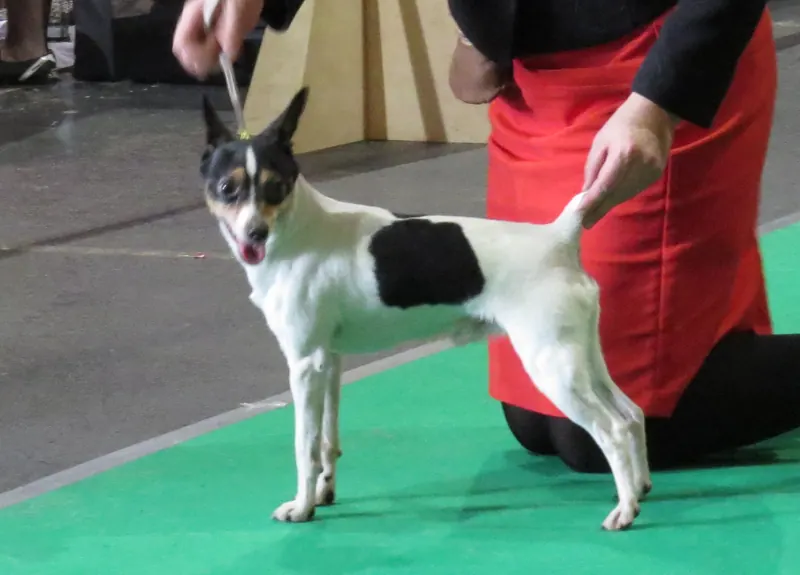
Answer: The coat is short, satiny and shiny, fine in texture and smooth to the touch, and white must always be the main body color. The UKC accepts three combinations: white with black and tan trim, white and black, and white and tan. Solid colored dogs and chocolate markings are disqualified in the show ring.
The classic look is the tri-color: a mostly black head with tan on the cheeks and above the eyes, a white body and often a black patch or two, like the dog at the top of this page. The UKC standard describes the coat as a distinguishing feature of the breed: short, satiny, shiny and slightly longer at the ruff behind the neck. A wiry coat is a serious fault, and a dog whose head is more than half white is disqualified.
For owners, that coat is good news. It does not mat, it does not need clipping, and a soft brush or a grooming mitt once a week lifts out loose hair. Bathe only when the dog is actually dirty, using a gentle formula from our dog shampoo guide, because frequent washing strips the natural shine. The thin coat does have a downside: it gives little insulation, so a Toy Fox Terrier can feel the cold quickly on winter walks and may appreciate a light coat or sweater.
What Is the Toy Fox Terrier Temperament Like?
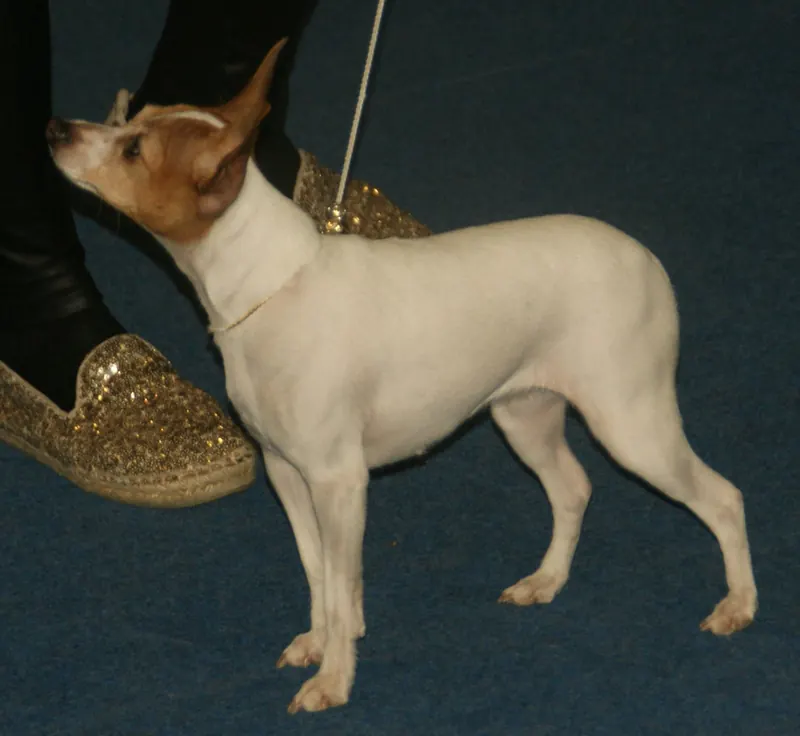
Answer: Expect a confident, clever and affectionate dog that still thinks like a terrier. The UKC describes the breed as highly intelligent, alert, loyal and fearless, with much endurance. Wikipedia notes it was popular in circus acts, trains readily and is often a devoted companion, but it also has a strong urge to chase small animals.
Most Toy Fox Terriers attach closely to their people and like to be wherever the action is. The Wikipedia article mentions that the breed was commonly used by circus clowns, that it is quite trainable and that well trained dogs tend not to bark very much. That trainability is real, but so is the terrier side. A Toy Fox Terrier was bred to spot, chase and catch rodents, so a squirrel or a pet hamster can switch its focus instantly.
That mix shapes how you live with one. Short, upbeat training sessions with food rewards work far better than repetition or harsh corrections. Early socialization with people, other dogs and household noises helps a small dog stay confident rather than defensive. Because these dogs bond strongly, some struggle when left alone for long hours; our guide to separation anxiety in dogs covers the warning signs and how to build up alone time gradually.
With children, size is the main issue rather than temperament. A Toy Fox Terrier usually enjoys gentle older kids who play fetch and tug, but a toddler can injure a dog this small by dropping it or stepping on it. Supervise every interaction until you know how both sides behave.
How Much Exercise and Play Does a Toy Fox Terrier Need?
Answer: More than its size suggests, but in short bursts. A Toy Fox Terrier is happiest with a couple of brisk walks a day, several play sessions of fetch or tug, and some mental work such as puzzle toys, scent games or trick training. A bored terrier invents its own jobs, which often means barking, digging or chewing.
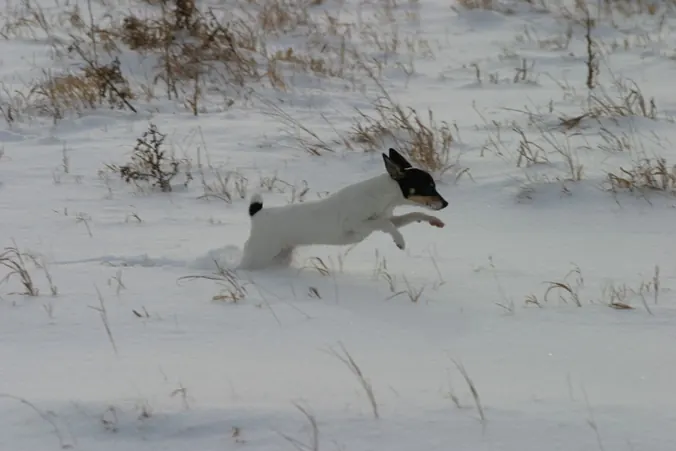
The breed's working past means it has stamina. The UKC standard specifically mentions much endurance, and many owners are surprised by how long a Toy Fox Terrier will chase a ball. The trick is to match the activity to the frame: lots of short, varied sessions rather than one long run, and no repeated high jumps.
For toys, think small and sturdy. Our guide to the best interactive dog toys for small breeds covers puzzle feeders sized for tiny jaws, a snuffle mat for dogs turns dinner into a search game, and crinkle toys scratch the itch to catch something that rustles. Puppies cut their adult teeth on soft chews; see our puppy teething toys and rope chew toys for puppies guides.
What Health Problems Should Toy Fox Terrier Owners Know About?
Answer: The breed is generally long lived, with a life expectancy of 12.9 years in a 2024 UK study. Like other toy breeds it is prone to patellar luxation, a slipping kneecap, and Legg Calve Perthes disease of the hip, and it can carry von Willebrand disease, a bleeding disorder. Ask breeders for health screening. Sources: McMillan et al. 2024, Wikipedia.
The lifespan figure comes from a large study of companion dog longevity in the United Kingdom, published in Scientific Reports in 2024. It found a life expectancy of 12.9 years for the Toy Fox Terrier from a sample of 52 deaths, compared with 12.7 years for purebred dogs overall. The sample is small, so treat the figure as a guide rather than a promise. Source: McMillan et al., Scientific Reports 2024.
The luxating patella is the problem owners meet most in small dogs: the kneecap slips out of its groove, and you may notice your dog skip a step or hold a back leg up for a few strides. Legg Calve Perthes disease affects the top of the thigh bone in young toy dogs and shows up as limping. Von Willebrand disease affects blood clotting, which matters before any surgery. None of this means your dog will be ill, but it does mean limping, lameness or unusual bleeding deserve a prompt vet visit.
Everyday care helps too. Keep your dog lean, because extra weight loads small joints. Brush the teeth often, since crowded little mouths collect tartar. Limit leaps from furniture, and use a car restraint from our dog seat belt guide, because a sudden stop can throw a very light dog hard.
Is a Toy Fox Terrier the Right Dog for You?
Answer: It suits people who want a small, portable dog with a big personality and are happy to train and play every day. It is a strong fit for apartments, older owners and families with gentle older children. Think twice if you want a quiet lap dog, keep pet rodents, or are out of the house all day.
A quick way to decide is to match the breed's traits against your routine:
If you like the idea of a small dog with working instincts but want a fluffier coat, compare our toy Aussie dog guide. Whatever you choose, buy from a breeder who screens for knee and blood problems and lets you meet the mother, or look at breed rescue groups, where adult dogs with known personalities often need homes.
What Gear Does a Toy Fox Terrier Need?
Answer: Start with a lightweight harness for walks, a soft collar that carries ID tags, a low supportive bed, stairs or a ramp for furniture, a car restraint, a small carrier and a rotation of small sized toys. Skip heavy chains and oversized chews, which strain a tiny neck and jaw, and choose a light coat for cold days.
A harness is the single most useful purchase. Pulling against a collar concentrates pressure on a very small neck, so clip the lead to a harness and keep the collar for tags. Our dog harness guide explains how to measure a small chest, and if your terrier lunges at squirrels, a no pull dog harness with a front clip gives you better steering.
For the collar, choose a narrow, light one; our best dog collar guide compares materials, and a reflective dog collar makes a small dog easier to spot at dusk. Indoors, a bed with a low entry and a cozy blanket suits a dog that loves to burrow, and steps by the sofa save its knees. Round it out with a few interactive dog toys and swap them weekly so they stay exciting.
What Do People Ask Most About the Toy Fox Terrier?
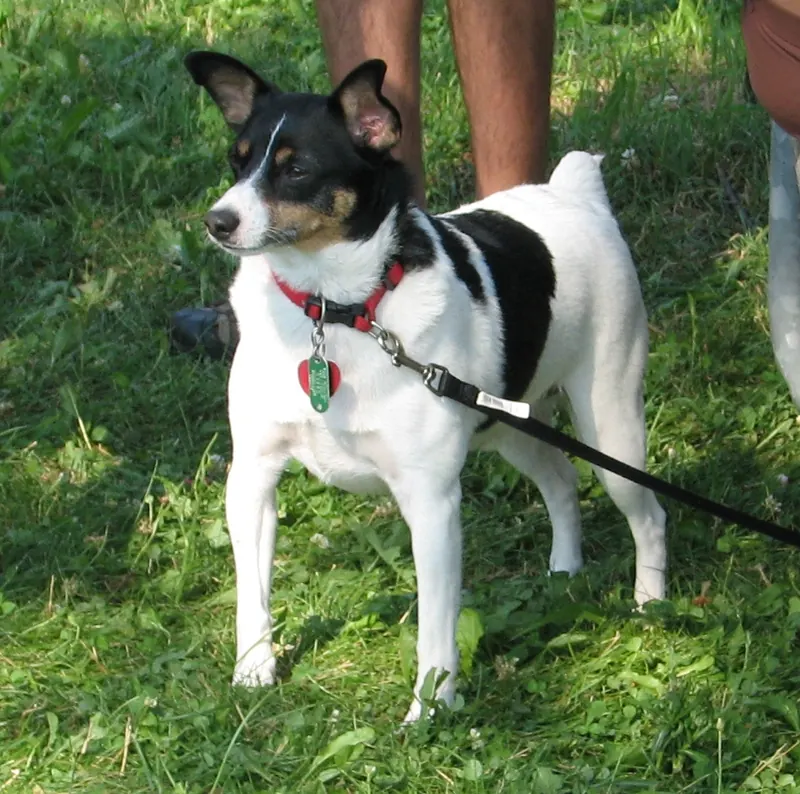
Answer: People most often ask how big Toy Fox Terriers get, whether they bark a lot, whether they are good with kids and other pets, how long they live, whether they shed, how much exercise they need and whether they suit apartments. The short answers below cover each question, with more detail in the sections above.
How big does a Toy Fox Terrier get?
Under the UKC standard an adult stands 8.5 to 11 inches at the withers and weighs up to 8 pounds, ideally 4.5 to 7.5 pounds. Source: UKC.
Do Toy Fox Terriers bark a lot?
They are alert and will announce visitors, but well trained Toy Fox Terriers tend not to bark very much. Plenty of exercise and mental work reduces boredom barking.
Are Toy Fox Terriers good with children?
They usually enjoy gentle older children who play fetch and tug. Very young children can hurt a dog this small, so always supervise.
Can a Toy Fox Terrier live with cats or small pets?
Many live happily with cats they grow up with. Pet rodents are a risk because the breed was developed to catch rats and mice.
How long do Toy Fox Terriers live?
A 2024 UK study found a life expectancy of 12.9 years from a small sample of 52 deaths, slightly above the average for purebred dogs. Source: McMillan et al. 2024.
Do Toy Fox Terriers shed?
Yes, lightly. The coat is short and fine, so a weekly brush with a soft brush or grooming mitt keeps loose hair under control.
How much exercise does a Toy Fox Terrier need?
Plan on a couple of brisk walks a day plus several short play and training sessions. They have more stamina than their size suggests.
Is a Toy Fox Terrier a good apartment dog?
Yes, if it gets daily walks, play and training. Its small size and short coat suit apartment life well.
Sources
- United Kennel Club: Toy Fox Terrier breed standard
- Wikipedia: Toy Fox Terrier
- McMillan et al. (2024), Longevity of companion dog breeds, Scientific Reports
- Wikipedia: Luxating patella
Gear sized for a tiny terrier
Browse harnesses, collars and toys made for small dogs.
Shop dog accessories