A cat hammock is a fabric sling, held up by a frame, suction cups, straps or hooks, that gives your cat a soft, raised place to rest. Cats like to be up high and to watch their territory, and a hammock offers both without taking the floor space of a full cat tree. This guide compares the main types, explains how to judge safety and load, and shows how to place one so your cat actually uses it.
In This Article
- Quick Answer: Is a Cat Hammock Worth It?
- What Is a Cat Hammock and What Types Are There?
- Why Do Cats Like Hammocks So Much?
- Which Type of Cat Hammock Should You Choose?
- Is a Cat Hammock Safe and How Much Weight Can It Hold?
- Where Is the Best Place to Put a Cat Hammock?
- How Do You Get Your Cat to Use a Cat Hammock?
- How Do You Clean and Maintain a Cat Hammock?
- Can You Make a DIY Cat Hammock at Home?
- What Do Cat Owners Ask Most About Cat Hammocks?
- Sources
Quick Answer: Is a Cat Hammock Worth It?
Yes, for most indoor cats. A cat hammock gives a raised, cradling resting spot that cats tend to enjoy, takes up little space and can sit by a sunny window, under a chair or on a frame. Choose a type that fits your cat's weight and agility, mount it securely and place it somewhere your cat already likes to rest.
Updated October 7, 2026- Cats like height. The RSPCA says cats often feel safest when high and advises giving them a suitable high place to climb and rest.
- Match the type to the cat. Young, agile cats can use window or wall hammocks; seniors and heavy cats do better with low frames.
- Check the load rating. Every mount has a limit, and the cat lands on it with more force than its resting weight.
- Placement wins. A hammock beside a favorite window or warm spot gets used far sooner.
What Is a Cat Hammock and What Types Are There?
Answer: A cat hammock is a sling of fabric or mesh suspended so that it curves around your cat's body. The main types are free standing frame hammocks, window hammocks held by suction cups, under chair hammocks tied between chair legs, radiator hammocks that hook over a heater, crate hammocks clipped to wire bars, and wall or cat tree hammocks.
All of them work on the same idea: a soft surface hung between fixed points, so it sags into a cradle shape rather than lying flat like a bed. What changes is how the hammock is held up, and that decides where you can put it, how much weight it can take and which cats can reach it comfortably. The table below compares the common designs.
If you already own a tall tree, check whether it takes an add on sling; many of the designs in our cat tree guide include a hammock level. For window spots, compare a hammock with the rigid shelves in our cat window perch guide.
Why Do Cats Like Hammocks So Much?
Answer: A hammock combines things cats seek out anyway: height, a view and a soft surface that hugs the body. The RSPCA notes that cats often feel safest when high, and Wikipedia's cat tree article says most cats favor height over comfort when choosing a perch. A hammock gives them both at once, often in a warm, sunny spot.
Height matters to cats for safety. From a raised spot a cat can see who is coming without being in the way, which is why the RSPCA advice on creating a good home for cats lists high places, such as shelves, alongside beds, hiding places and toys as things every cat needs. The Wikipedia article on cat trees makes the same point: most cats prefer features that offer height, particularly ones tall enough to survey their territory.
The sling shape adds something a flat shelf does not. The fabric curves around the cat, supporting the spine and flanks much like the side of a cushioned bed, and it gives slightly when the cat shifts. Many cats also like the gentle movement. A hammock near a window or a heat source adds warmth, which cats chase all day; you will often find them following the sun across a room.
A hammock is not a full replacement for other resting places, though. The RSPCA advises that cats need a comfortable, dry, draught free, clean and quiet place to rest, and somewhere to hide. Think of a hammock as one option in a set that also includes a cozy cat bed on the floor and a covered spot to retreat to.
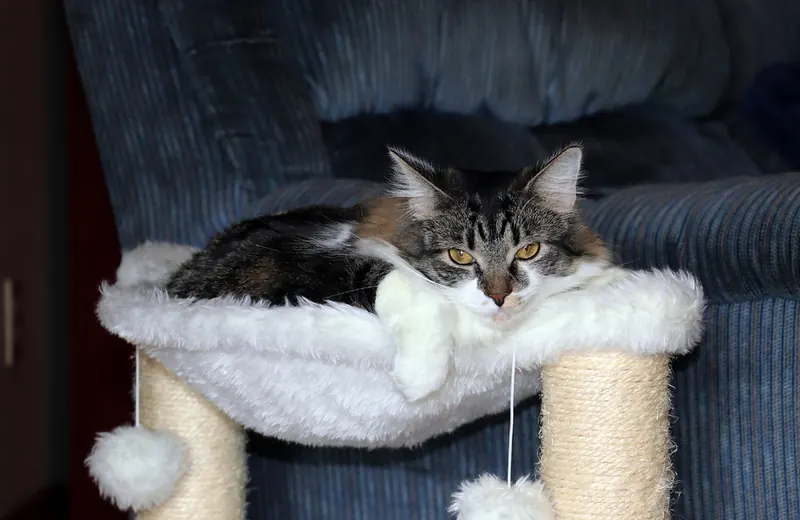
Which Type of Cat Hammock Should You Choose?
Answer: Start from your cat's age, weight and agility, then your home. Young, athletic cats can use window, wall or tree hammocks. Senior, heavy or arthritic cats need a low frame or under chair hammock they can step into. Cats that love warmth suit radiator or sunny window hammocks, and confined or recovering cats suit crate hammocks.
The best hammock is the one your cat can get in and out of easily and safely. Jumping up is only half the job; a stiff older cat also has to get down without landing hard. Use this as a starting point:
Fabric is the other choice. Plush fleece is warm and cozy in winter, while mesh or canvas stays cool and is easier to wipe clean. Many hammocks come with a reversible cover, one side fleece and one side cotton, so you can switch with the seasons. If your cat mostly naps somewhere warm, a heated cat bed may suit it better than a hammock in the coldest months.
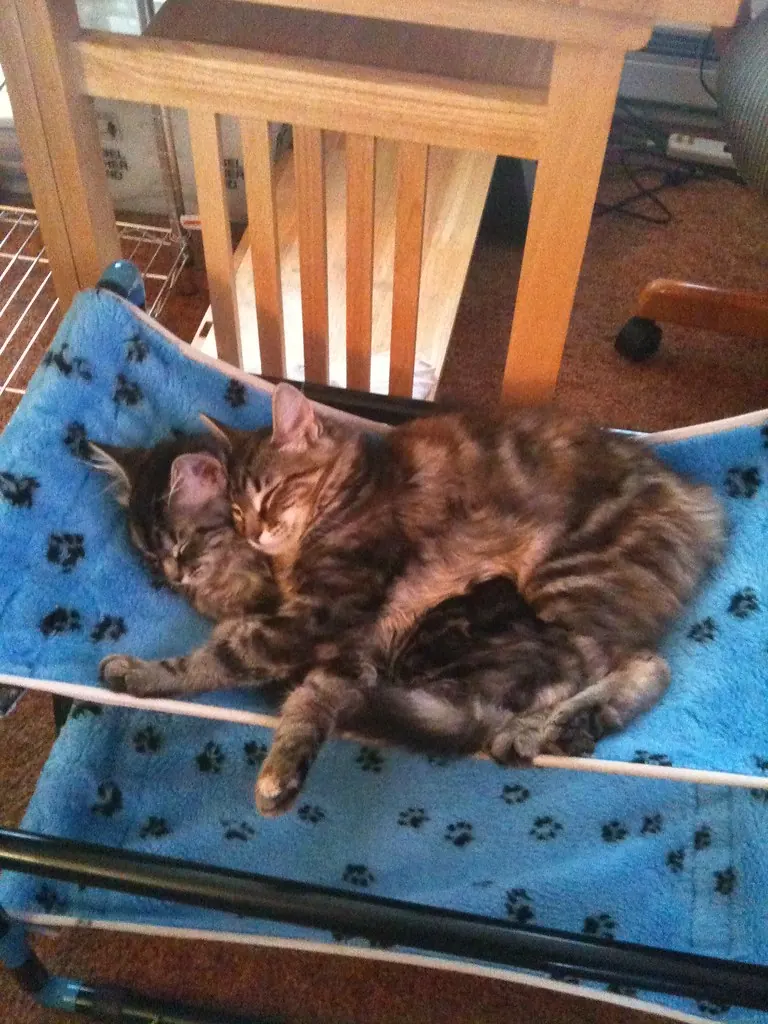
Is a Cat Hammock Safe and How Much Weight Can It Hold?
Answer: A hammock is safe when it is rated for your cat and mounted correctly. Check the maker's stated weight limit and leave a generous margin, because a cat jumping in lands harder than it rests. Clean glass before fitting suction cups, test every mount by pressing down firmly, and recheck it weekly, especially in cold weather.
Weight limits vary widely between products, so read the listing rather than assuming. Frame hammocks are usually the most forgiving because the load goes straight down into the floor. Window hammocks are the ones to treat with the most care: suction cups grip best on smooth, clean, flat glass and can creep loose as temperatures change. Wipe the window and the cups with warm water before mounting, press each cup flat, and never fit one on textured, cracked or single paned glass you are unsure about.
A few habits prevent most accidents:
- Test before your cat does. Press down hard with your hand on the center of the sling after installing.
- Mind the landing zone. Keep hard furniture edges, plants and breakables away from the area below a raised hammock.
- Keep it low for seniors and kittens. A short drop matters more than a fancy design.
- Check the stitching. Claws work at seams over time; replace a sling that is fraying or tearing.
- Watch radiator heat. The cat should be warm, not hot. If the metal is too hot to keep your hand on, it is too hot for a hammock.
For cats that spend time outside, a hammock does not replace proper shelter; our cat house for outdoor cats guide covers insulated options.
Where Is the Best Place to Put a Cat Hammock?
Answer: Put the hammock where your cat already likes to rest, ideally a quiet spot with a view and some warmth, such as beside a sunny window or near a radiator. Keep it away from the litter tray, food and water bowls and busy doorways, and in multi cat homes offer several resting spots in different rooms.
Watch your cat for a few days before you install anything. Most cats have two or three favorite spots, often a windowsill, the back of a sofa or a patch of floor that catches the afternoon sun. A hammock placed right there feels like an upgrade rather than something new and suspicious. Window spots are especially popular because they combine light, warmth and a view of birds and passing people.
Keep resting areas separate from the toilet and feeding stations. The RSPCA advises keeping the litter tray separate from eating and sleeping areas, and cats generally prefer not to nap next to the place they eat or toilet; a quiet corner away from the cat water fountain and the tray works well. In homes with more than one cat, the RSPCA notes that each cat needs enough beds and hiding places to get away from the others when it wants to.
Hammocks also slot neatly into a climbing route. A wall hammock beside shelves, or a sling on the middle level of a tree, gives a cat a resting stop between jumps. Our cat furniture guide shows how to plan vertical space, and placing a cat scratching post nearby gives your cat somewhere to stretch and scratch when it wakes up.
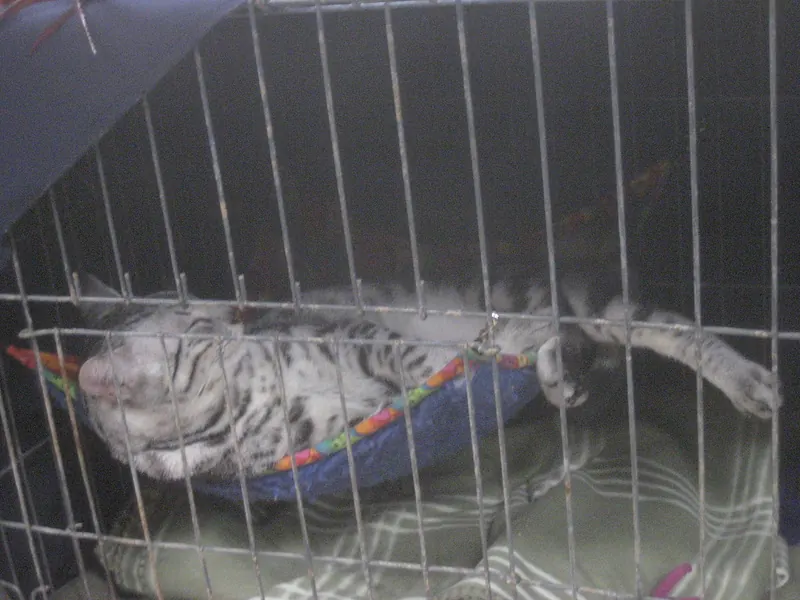
How Do You Get Your Cat to Use a Cat Hammock?
Answer: Make the hammock familiar and rewarding. Put it in a favorite resting spot, lay a blanket or shirt that smells of home in the sling, scatter a few treats or a little catnip, and let your cat explore it in its own time. Never force your cat in; a bad first experience can put it off.
Cats are cautious about new objects, and a hammock moves when touched, which can startle some cats at first. Start with the hammock low or on a stable frame, and let your cat sniff it, rub its cheeks on the frame and step in when it is ready. A small amount of catnip rubbed into the fabric works for many cats; our catnip toys guide explains how to tell whether your cat responds to it.
Play helps too. Trail a wand toy across and onto the hammock so your cat follows it in, then reward with a treat once it settles. Short sessions with interactive cat toys near the hammock link it with good things. Some cats take to a hammock in minutes; others need a week or two. If your cat still ignores it after that, try a different spot before you give up on the hammock itself.
Kittens usually accept hammocks quickly and enjoy them as climbing frames as much as beds. If you are setting up a home for a new kitten, a low hammock sits well alongside the items on our new kitten essentials list and a few toys for kittens.
How Do You Clean and Maintain a Cat Hammock?
Answer: Remove loose fur every few days with a lint roller or a damp rubber glove, and wash a removable cover regularly following the care label, using mild unscented detergent. Let it dry fully before refitting. At the same time, check seams, straps, suction cups and frame joints for wear, and replace anything that is fraying, cracked or loose.
Hammocks collect fur quickly because cats spend long stretches in them. A quick roll with a lint roller, or a wipe with a slightly damp rubber glove, lifts most of it between washes. Choose a hammock with a removable sling or cover, because washing is much easier when the fabric comes off the frame.
When you wash it, use a mild, unscented detergent and skip strong fragrances, which can make a cat avoid a resting spot that suddenly smells wrong. Dry the cover completely before putting it back, since damp fabric smells musty and can grow mildew. Mesh and canvas slings can often just be wiped down.
Make maintenance a habit rather than a reaction. Each time you wash the sling, check the seams for pulled threads, tighten frame bolts, and wipe and reseat window suction cups. A hammock that has started to sag or tilt to one side is telling you a fixing has moved.
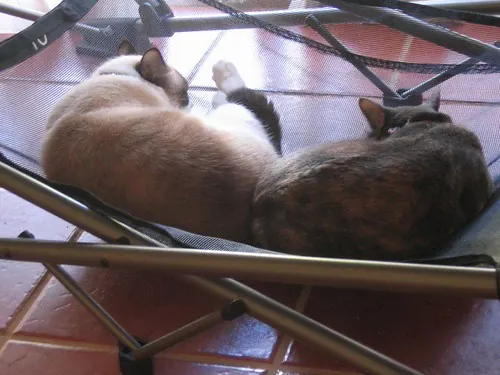
Can You Make a DIY Cat Hammock at Home?
Answer: Yes. The simplest version is a rectangle of sturdy fleece or canvas tied by its corners between the legs of a chair or small table, low to the ground. Use strong fabric, double knots or sewn loops, and keep it close to the floor. Avoid long loose straps or cords, which can tangle a playful cat.
An under chair hammock is the easiest DIY project because the chair does the structural work. Cut a piece of fleece or canvas a little larger than the space between the legs, fold and stitch a strong loop at each corner, and tie it on with short straps so the sling sits a few hand widths below the seat. Fleece does not fray, which makes it ideal if you do not sew much.
A sturdy wooden crate or an old side table can also take a sling underneath, turning unused space into a resting nook. Whatever you build, keep it low, test it with firm hand pressure and check the knots regularly. If you want something more ambitious, such as a wall mounted route, a bought hammock with rated brackets is the safer route. A cat tunnel toy placed nearby makes the area a play zone as well as a rest stop.
What Do Cat Owners Ask Most About Cat Hammocks?
Answer: Cat owners most often ask whether cats like hammocks, whether window hammocks are safe, which type suits older or heavy cats, how to get a cat to use one, how to clean it, whether kittens can use one and whether a hammock can replace a bed. The short answers below cover each question, with detail in the sections above.
Do cats like hammocks?
Most do. A hammock offers height, a view and a soft cradling surface, and the RSPCA notes that cats often feel safest when they are up high.
Are window cat hammocks safe?
They are safe when fitted to clean, smooth, sound glass, used within the stated weight limit and checked regularly. Suction cups can loosen as temperatures change, so recheck them weekly.
What is the best cat hammock for an older cat?
A low free standing frame or under chair hammock that your cat can step into without jumping. Avoid high window or wall hammocks for stiff or arthritic cats.
How do I get my cat to use a hammock?
Place it in a spot your cat already likes, add a familiar blanket, a few treats or a little catnip, and let your cat explore in its own time. Never force your cat in.
How do I clean a cat hammock?
Remove fur with a lint roller or damp rubber glove, wash a removable cover with mild unscented detergent and dry it fully before refitting.
Can kittens use a cat hammock?
Yes, but keep it low while their coordination develops. Low frame and crate hammocks are good first choices for kittens.
Can a cat hammock replace a cat bed?
It works best as one resting option among several. Cats also need a quiet, draught free bed and somewhere to hide.
Can two cats share one hammock?
Bonded cats often nap together, but in multi cat homes offer at least one resting spot per cat so no one has to compete for space.
Sources
Make more room to rest
Browse cat beds, perches and accessories for cozy, raised resting spots.
Shop cat accessories