Whether you care for a barn cat, a neighborhood regular, or an indoor-outdoor adventurer, a proper cat house is the difference between a rough night and a safe one. Cats are resourceful, but a dedicated shelter beats a car engine bay or a gap under the deck every single time.
This guide walks through what actually keeps an outdoor cat warm and dry: the shelter types, the insulation that works (and the bedding that quietly makes things worse), and the features that decide whether a cat will actually use the house you buy.
Why Outdoor Cats Need a Dedicated Shelter
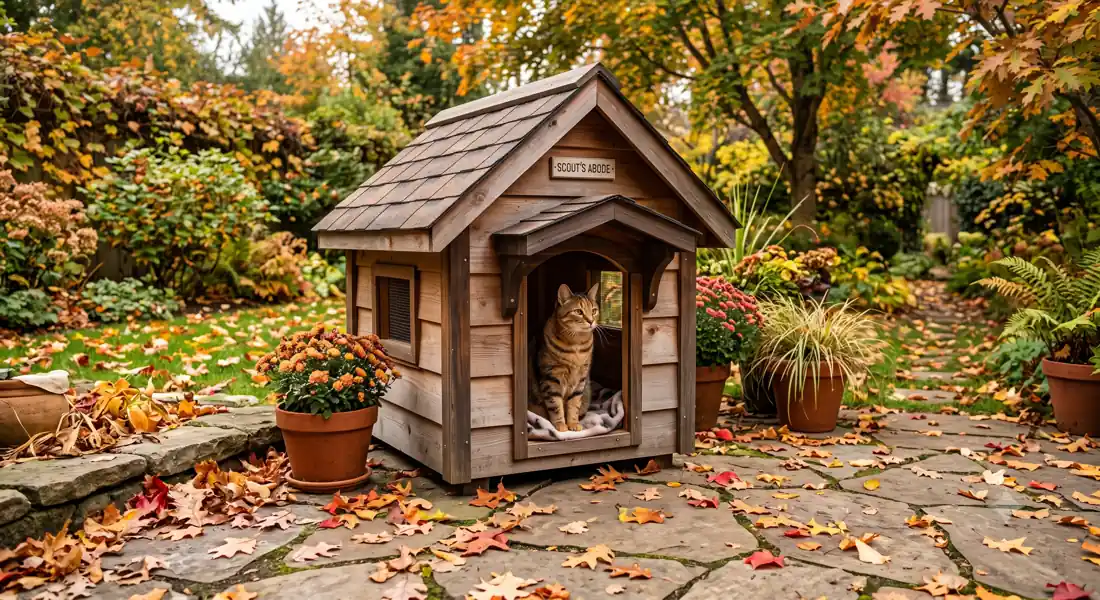
Wind and moisture, not air temperature alone, are what endanger outdoor cats. A cat can tolerate surprisingly cold dry air, but wet fur loses its insulating power fast. A good shelter blocks wind, sheds rain, and lifts the sleeping surface off cold ground.
A dedicated house also keeps cats away from dangerous improvised shelters. Every winter, cats climb into wheel wells and engine compartments for warmth. Giving them a better option nearby is the simplest prevention.
There is a territorial bonus too: a cat with a reliable shelter patrols a smaller, safer range and is less likely to roam across roads in search of cover.
The Four Main Types of Outdoor Cat House
Insulated wooden houses are the premium option: solid walls, slanted shingle roofs, and real insulation board inside. They last years and look good on a patio, but they are heavy and cost the most.
Plastic shelters are lighter, seal out moisture well, and are easy to clean. Quality varies widely, so check wall thickness and whether the floor is raised.
Heated houses add a low-watt heating pad, valuable for seniors, thin-coated cats, or brutal climates. They require safe outdoor wiring, which limits placement.
DIY tote shelters made from storage bins and foam board cost almost nothing and work genuinely well for community cats. They are a great way to shelter several cats at once; more on that in our companion piece on cat houses for outside cats, which focuses on winterizing.
Insulation Done Right (Straw, Not Blankets)
The single most common mistake with outdoor cat houses is filling them with blankets or towels. Fabric absorbs moisture from rain, snow, and the cat itself, then holds that dampness against the cat's body. A damp blanket in freezing weather is worse than no bedding at all.
Use straw instead. Straw is hollow, sheds moisture, and lets a cat burrow into a warm pocket of trapped air. Note the difference: straw, the dry yellow stalks, insulates well. Hay, which is greener feed for livestock, absorbs moisture and can grow mold. Replace straw once or twice a season, or whenever it looks flattened or damp.
For the structure itself, foam board sandwiched inside walls outperforms hollow plastic. Mylar-lined interiors add reflective warmth without any electricity.
Features That Decide Whether Cats Use It
Two exits. Community cat organizations consistently recommend an escape door, because a single-entrance box can become a trap if a predator or rival cat blocks the doorway. Cats sense this and often refuse single-exit shelters in contested territory.
Small doorways. A 6 to 8 inch opening keeps out dogs, raccoons, and most weather. Flap doors help enormously in wind but may need a training period with the flap propped open.
Raised floors. Even 2 to 4 inches of clearance keeps the floor dramatically warmer and drier than ground contact.
Right-sized interiors. Bigger is not better. A snug interior warms up from body heat; a garage-sized shelter never does. Roughly 2 feet square suits one or two cats.
Placement and Safety
Face the doorway away from prevailing wind, ideally toward a wall so there is a sheltered approach. Under a deck, porch, or eave adds free rain protection. Keep the house in a quiet spot with decent sightlines; cats avoid shelters where they can be ambushed.
Place food and water stations a short distance away rather than inside the house. Food inside attracts raccoons and insects directly into the sleeping space. For cats new to the shelter, a pinch of catnip inside and patience work better than lifting the cat in.
For deeper guidance on caring for outdoor and community cats, the Alley Cat Allies resource library is the reference most rescues use.
Frequently Asked Questions
What is the best bedding for an outdoor cat house?
Straw is the standard recommendation from community cat organizations. Its hollow stalks shed moisture and trap warm air around a burrowed cat. Avoid blankets, towels, and hay, all of which absorb moisture and chill the cat. Refresh straw once or twice a season or whenever it looks damp or flattened.
Should an outdoor cat house have one door or two?
Two whenever possible. An escape exit prevents the house from becoming a trap if a predator, dog, or rival cat blocks the main doorway. Cats in contested territory often refuse single-exit shelters entirely. If your shelter has one door, place it so the cat has clear sightlines while resting inside.
How big should a cat house be for outdoor cats?
Smaller than most people expect. An interior around 2 feet by 2 feet suits one or two cats and warms up quickly from body heat alone. Oversized shelters stay cold because the cat's warmth dissipates. The doorway should be 6 to 8 inches wide to admit cats while excluding larger animals.
Are heated cat houses safe to leave on all the time?
Quality outdoor-rated heated pads are designed for continuous use and only warm up under the animal's weight. The bigger safety questions are the wiring path and the outlet: use a GFCI outdoor outlet, protect the cord from chewing and moisture, and inspect it monthly. In mild climates, straw insulation alone is usually enough.
Where should I place an outdoor cat shelter?
Pick a quiet spot with the doorway facing away from prevailing wind, ideally under a deck, porch, or eave for extra rain protection. Raise the house a few inches off the ground, give the cat a sheltered approach route, and keep food stations a short distance away so the sleeping space does not attract raccoons.
Browse Cat Accessories
Free US shipping on every order. No minimum purchase required.
Browse Cat Toys →