The case for a heated cat bed is not sentimental. Cats are comfortable in a temperature band considerably warmer than the one people set their thermostats to, and the gap is larger than most owners realise. A room that feels pleasant to you can sit well below the range at which a cat is thermally comfortable, which is why the cat is on the radiator cover, in the airing cupboard, or pressed against the back of the television rather than in the expensive bed you bought it.
This guide covers the physiology in plain terms, the three genuinely different kinds of heated bed and what each is good at, the cats for whom warmth is a welfare issue rather than a luxury, and the safety rules that are not negotiable. The thermal figures come from the Veterinary Ireland Journal and the American Veterinary Society of Animal Behavior, and the arthritis material from VCA Animal Hospitals.
Why Cats Run Warmer Than You Do
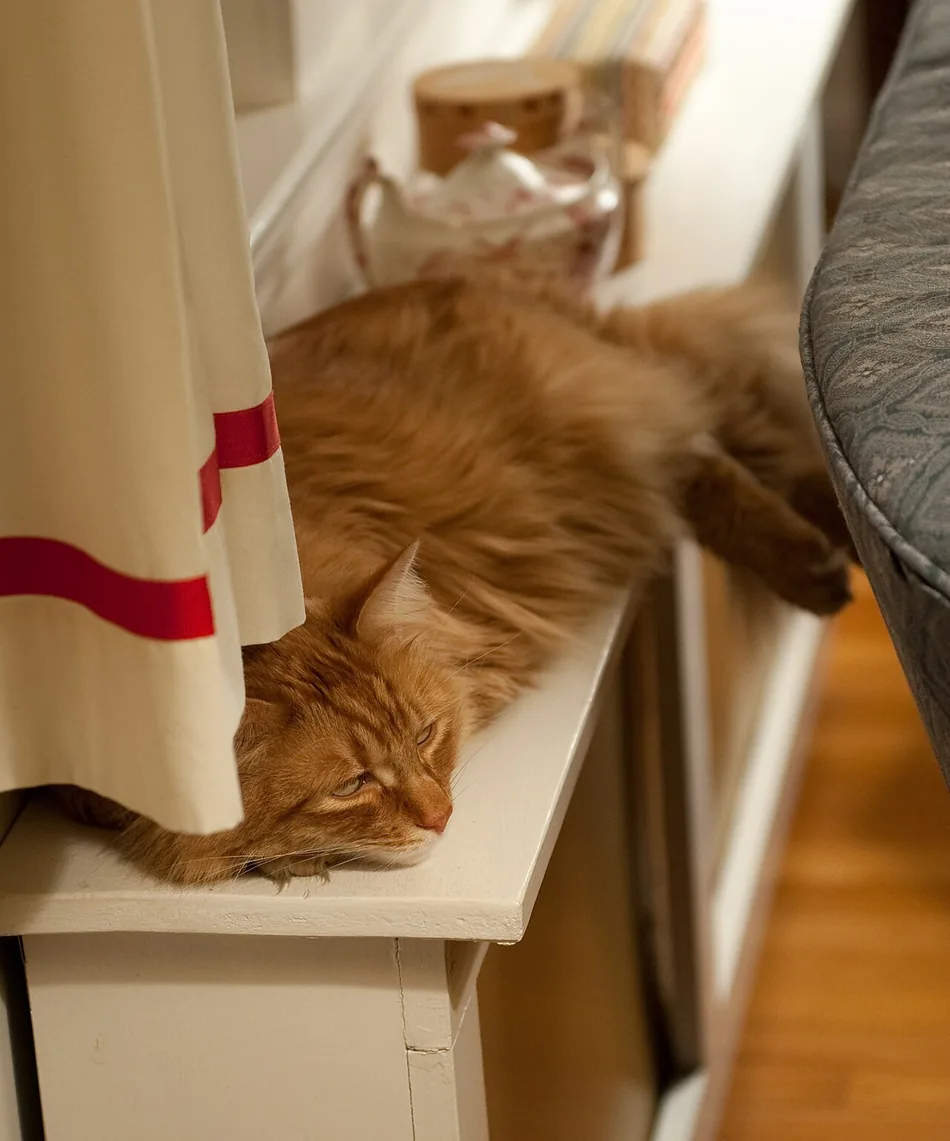
Every species has a thermoneutral zone: the band of ambient temperature in which the animal holds its body temperature steady without spending energy on warming up or cooling down. The Veterinary Ireland Journal, citing the National Research Council, puts the feline zone at 30 to 38 degrees Celsius. For comparison the same article gives 18 to 25 degrees for humans and 20 to 30 degrees for dogs. The cat's comfortable band starts roughly where a warm summer day ends.
The practical consequence is stark, and the same article spells it out: for many cats, and especially for temperature sensitive types such as Siamese, sharing a house kept at human comfort temperature feels the way a room at 8 degrees would feel to us. Cold and miserable is the phrase used. That is not a claim that every cat in every centrally heated home is suffering, but it does explain a great deal of ordinary cat behaviour that owners read as personality.
The American Veterinary Society of Animal Behavior describes the same range in Fahrenheit, roughly 86 to 101 degrees, and is careful to say what does not follow from it: nobody is suggesting you heat your house to that. What follows instead is the idea of heat zones. Give the cat a small number of places that are genuinely warm, let the rest of the house stay at a temperature people can live in, and let the animal choose.
Cats will find those zones with or without your help, and the ones they find on their own are not always safe. The same veterinary article notes that cats risk their lives in winter looking for heat, climbing into tumble dryers and under car bonnets. A bed that is warm on purpose is partly a comfort purchase and partly a way of making the cat's preferred heat source the one you chose. Everything else in this article is about choosing it well.
The Three Kinds of Heated Cat Bed
Self warming beds have no power source at all. A layer of reflective material inside the padding bounces the cat's own radiated body heat back at it, so the bed warms only when a cat is lying in it and never gets hotter than the cat. That makes them the safest category by a wide margin, and the right default for a household that does not want a cable on the floor. The limitation is equally clear: an empty self warming bed is cold, so it cannot draw a reluctant cat in, and it does very little for a cat that is already chilled.
For more expert recommendations, check out our cat bed guide.
Low voltage electric beds and pads are the category people usually mean. They run at a fraction of the power of a human heating pad, and the good ones are thermostatically limited so the surface settles at around the cat's own body temperature rather than climbing indefinitely. A well designed pad warms slowly, holds a steady temperature and feels barely warm to a human hand, which regularly surprises buyers who expected something hot. Barely warm to you is correct.
Microwave heat discs sit in between. A sealed pad is warmed in a microwave for a stated time, dropped into a cover, and radiates for several hours before fading. They need no electricity near the animal, they cost very little, and they are the obvious answer for an outdoor shelter or a power cut. Their drawback is control: the disc is hottest at the moment it goes in and the cat has no way to turn it down, so the cover thickness and the manufacturer's heating time both matter.
Whichever you choose, buy the bed for the cat rather than for the room. A deep sided donut suits a cat that curls, a flat pad suits a cat that sprawls, and an arthritic cat needs to be able to step in rather than climb in. Settle which shape your cat actually uses before you add heat to it. If you are still working out which kind of cat bed your animal actually uses, establish that with an unheated bed first, then buy the heated version of the shape that won.
The Cats for Whom Warmth Is Welfare, Not Luxury
Older cats with osteoarthritis are the clearest case, and the veterinary literature is blunt about it: the Veterinary Ireland Journal describes arthritic cats as enduring preventable pain when they are denied appropriate heat. VCA lists soft, padded bedding first among the simple environmental changes that make an arthritic cat more comfortable, alongside raised food and water dishes, non skid floor surfaces and a ramp or step for getting onto higher surfaces. A heated bed is that padded bedding with the comfort problem solved rather than merely cushioned.
Arthritis in cats is easy to miss because cats do not limp in the obvious way dogs do. VCA's list of what owners actually notice includes difficulty getting up and down, walking stiffly, reluctance to jump onto or off furniture, reluctance to play, hiding more than usual, unexpected aggression when touched, house soiling because the litter box has become hard to climb into, and a deteriorating coat because self grooming has become uncomfortable. Any of those is a veterinary appointment, not a bedding purchase.
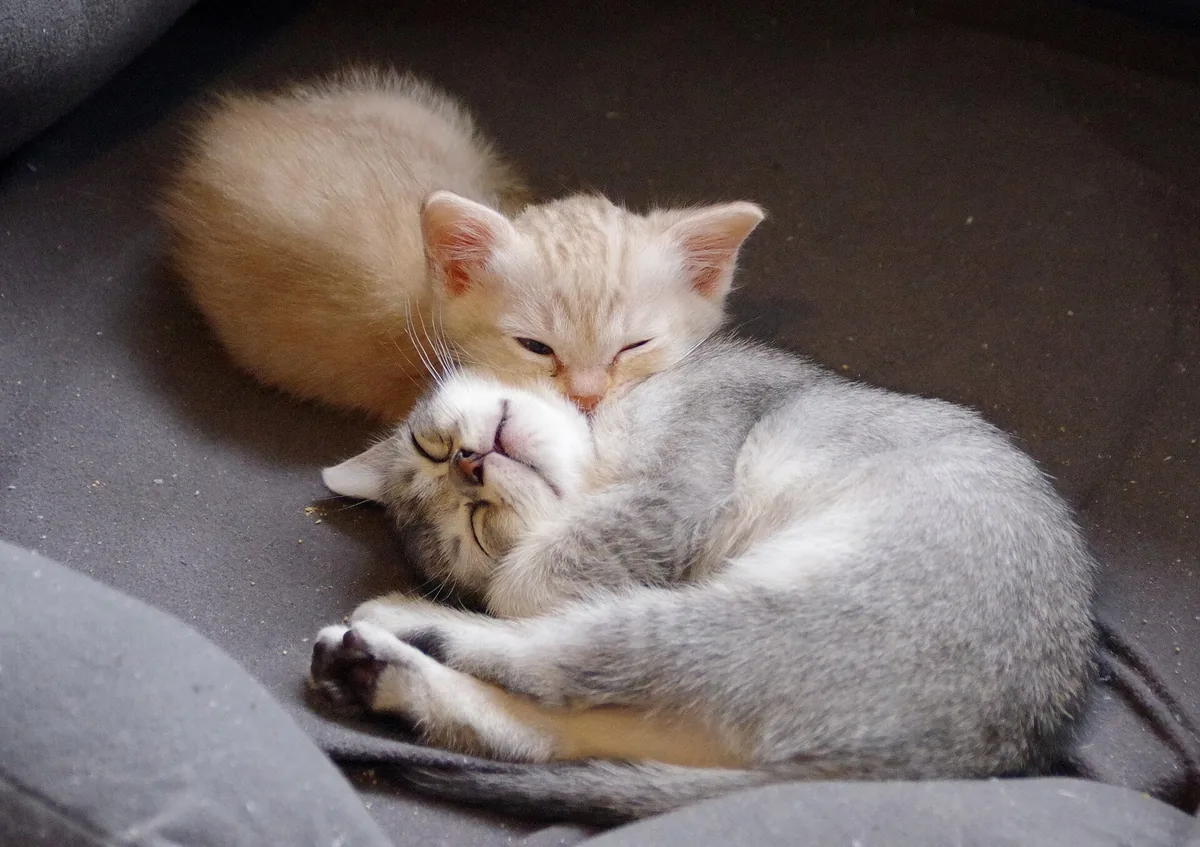
Thin coated and hairless breeds are the second group, for reasons that need no explanation, and so are very small kittens, who cannot regulate their own temperature well in the first weeks and who huddle together for exactly that reason. Cats recovering from illness or surgery, underweight cats, and cats with chronic kidney disease or hyperthyroidism who have lost body condition all lose heat faster than a well covered adult and all sit still for longer.
For a healthy, well covered, middle aged cat in a heated house, a heated bed is a nice thing rather than a necessary one, and a self warming bed in a draught free corner will usually do everything that is needed. That is worth saying plainly, because the marketing does not distinguish between the cat who needs warmth and the cat who merely enjoys it, and the two need different products at very different prices.
The Safety Rules That Are Not Optional
The first rule is the one the American Veterinary Society of Animal Behavior states outright, and everything else follows from it: a cat must always be able to remove itself from the heat source. That means the bed is never in a closed carrier the cat cannot leave, never the only surface in a shut room, and never smaller than the cat, so that stepping half off it is always an option. A heat source an animal cannot escape is a different and far more dangerous object than the same heat source in an open room.
You might also find our cat bedding article helpful when shopping.
The second rule follows from the first. Never use a heated bed, pad or disc for an animal that cannot move itself away: a cat recovering from anaesthesia, a sedated or paralysed cat, a very young or debilitated kitten, or a cat that is unconscious for any reason. Contact heat against skin that never shifts is how thermal injury happens, and it happens at temperatures far below what feels dangerous to a hand touching the surface briefly.
Do not substitute a human electric heating pad. It is engineered around a person who will notice discomfort and move, it runs considerably hotter than a cat needs, and it has no cut off appropriate to an animal that may sleep on it for six hours without shifting. The same applies to improvised warmth: hot water bottles that can burst or leak, and rice or wheat bags heated beyond the maker's stated time, both turn up regularly in emergency practice.
Finally, check the bed with your own hand at the start of every cold season and then weekly. It should feel barely warm, evenly warm across its whole surface, and never hot in one spot. A local hot spot is a failing element and it is the exact failure a sleeping cat is least able to detect in time. Any smell of scorching, any discolouration of the cover, any stiffening of the cable and the bed goes in the bin rather than back under the cat.
Cords, Wattage and the Cat That Chews
The cable is the part of an electric bed that fails, and the failures are predictable. Look for a cord in a chew resistant sleeve, usually a steel spiral or a heavy braided jacket, and for a plug connection at the bed end rather than a cable permanently moulded into the pad, because a detachable lead can be replaced when it frays instead of condemning the whole bed.
Route it properly on the day the bed arrives rather than eventually. Run the cable along a skirting board, behind furniture, clipped down at intervals, and never across an open floor where it can be pounced on or across a doorway where it will be trodden on. A loop of slack cable in the middle of a room is a toy to a young cat, and the first thing a kitten will do with a toy is bite it.
Mind the wattage claims. Beds made for cats draw very little power, and a listing that boasts high wattage is advertising a fault rather than a feature. What matters far more is whether there is a thermostat and what temperature it settles at, and a seller who cannot state the surface temperature or the regulating mechanism is a seller to leave alone. Certification marks from a recognised safety body on the plug and the transformer are the minimum bar.
If your cat is a determined chewer, skip the electric category entirely. A self warming bed or a microwave disc removes the hazard rather than managing it, and for a household with a cat that eats cables it is not a compromise but the correct product. The same logic applies to a home with a young kitten in it: the bed can be electric later, once the phase has passed and the basic kitten setup is no longer being systematically dismantled.
Where to Put It, and How Cats Actually Use It
Put the bed out of the draught first and near the family second. Cats lose heat to moving air faster than to still cold air, so a warm bed in a hallway with a gap under the front door will lose to an unheated bed in the corner of a still room. Check the actual floor of the spot on a cold evening with the back of your hand, and look for the obvious culprits: door thresholds, uninsulated floorboards, the gap beside a bay window.
If your cat needs variety, our cat house for outdoor cats guide has great suggestions.
Height helps as well, because warm air rises and because cats feel safer off the floor. A heated pad on the second tier of a cat tree, a condo tower or a shelf gets used more than the same pad on a cold tiled floor, other things being equal. The exception is an arthritic cat, for whom the extra warmth of a high shelf is cancelled out entirely by the pain of getting up to it. For that animal, floor level and soft is the right answer.
Expect the cat to use the bed intermittently rather than constantly, and do not read a half empty bed as a rejection. Cats thermoregulate by moving: a spell on the warm pad, a spell in a sunbeam, a spell on the back of the sofa, then back again. That circuit is the normal pattern and it is precisely why the bed must never be the cat's only option. A cat that never leaves the heated bed at all is telling you something, and it is usually about illness rather than about the bed.
In a multi cat household, buy more heated spots than you have cats. Warmth becomes a contested resource exactly the way food bowls and litter trays do, and the shy cat in the house is the one who ends up cold. Two modest pads in different rooms beat one large luxurious bed in the living room, and the same duplicate-and-separate principle applies across the rest of the cat furniture.
Reading the Cat: Signs the Bed Is Wrong
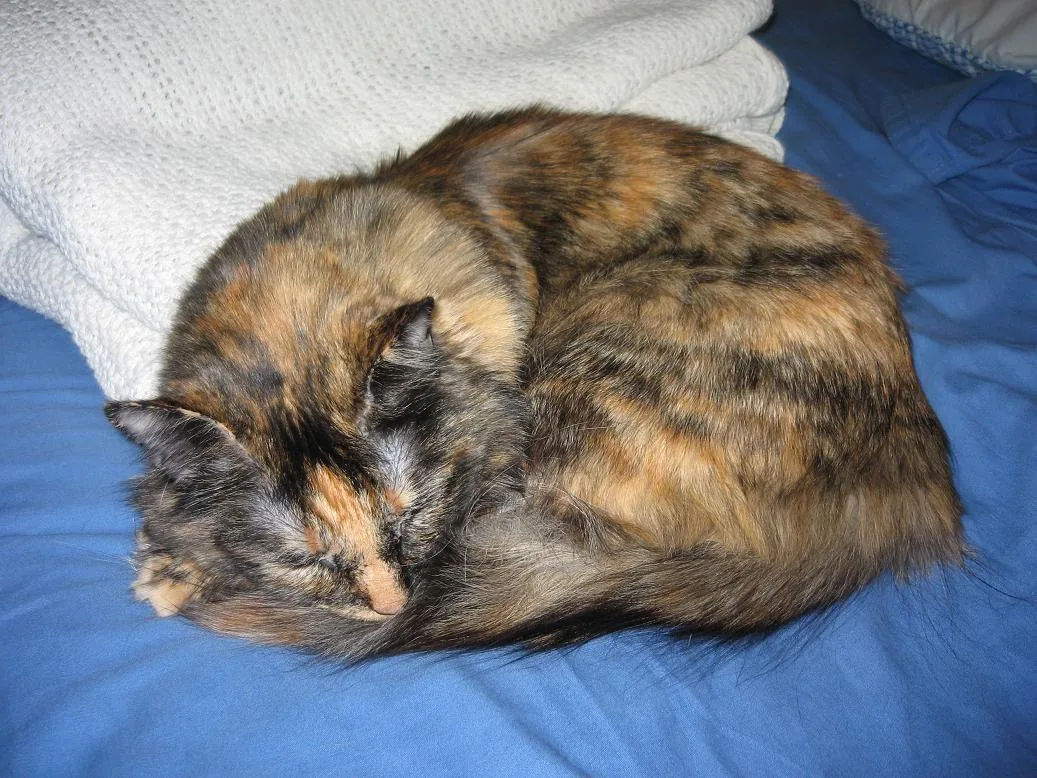
Posture is the most useful signal you have, and it is free. A cat that is cold curls tight, tucks its paws and tail in under the body, and reduces its exposed surface area as much as it can, exactly as the tortoiseshell in the photograph below is doing. A cat that is thermally comfortable sprawls, stretches out on its side and lets its limbs fall away from the body. Watch the shape rather than the location.
If the cat lies on the very edge of the heated pad, or half on and half off, the surface is warmer than it wants. That is an easy fix: a thicker cover over the pad, or a lower setting if the bed has one. If the cat lies on the pad only when the heating is off overnight and ignores it during the day, nothing is wrong at all; the cat is doing exactly what a heat zone is for.
The signals that should send you to a veterinarian rather than to the shops are different in kind. A cat that suddenly starts seeking heat constantly, that stops grooming, that becomes reluctant to jump, that hides, or that begins missing the litter box may have arthritis or another illness rather than a bedding problem, and VCA lists every one of those among the clinical signs of feline osteoarthritis. Warmth may be part of the answer, but it is not the diagnosis.
Finally, watch the skin under the cat if you are using anything electric. Redness on the flank or belly, a patch of hair that has thinned where the cat lies, or reluctance to settle on a bed the cat previously liked are all reasons to unplug the bed and have the skin looked at. Cats are extremely good at not showing discomfort, and the absence of complaint is not evidence that nothing is wrong.
Warmth Without a Plug
A great deal can be done before any product is bought. Raising the bed off a cold floor, moving it out of the draught, and adding a second layer of cat bedding underneath all reduce heat loss for nothing. Enclosed beds, igloo shapes and simple covered boxes trap the cat's own warm air around it, which is why a cardboard box with a blanket in it consistently outperforms an open luxury cushion in a cold room.
Sunlight is free heat and cats are expert at using it. A perch on a south facing sill, or a shelf placed where the afternoon sun lands, gives a cat a heat zone that costs nothing to run, and a window perch earns its keep twice over by adding a vantage point. The limitation is obvious: the sun moves and then sets, which is precisely when the heated option matters.
For cats living outdoors or in an unheated outbuilding the calculation changes completely, and insulation beats heating every time as a first step. A well insulated shelter with a small entrance, raised off the ground, filled with straw rather than blankets, will hold a cat's own heat through a winter night. If you are providing for a cat house for outdoor cats, get that right before considering any powered heating in a damp environment.
And a reminder worth ending on: the cat's own strategies are good ones. Curling reduces exposed surface, huddling with another cat shares body heat, and moving between warm spots through the day is efficient thermoregulation rather than indecision. A heated bed works best as one more option in that circuit, not as a replacement for it.
For more independent, vet-reviewed guidance on this topic, the American Kennel Club expert advice center is an excellent place to start.
Frequently Asked Questions
Do cats really need a heated bed?
Some do and most do not. The Veterinary Ireland Journal, citing the National Research Council, puts the feline thermoneutral zone at 30 to 38 degrees Celsius against 18 to 25 for humans, so an ordinary heated house sits below what a cat finds comfortable. For a healthy, well covered adult cat that is a preference. For an arthritic senior, a thin coated or hairless breed, a very small kitten or a cat recovering from illness, it moves closer to a welfare question.
What temperature should a heated cat bed be?
Barely warm to your hand, evenly warm across the whole surface, and never hot in one place. A well designed low voltage pad is thermostatically limited so that it settles at around the cat's own body temperature rather than climbing, which regularly disappoints buyers who expected something noticeably hot. A single hot spot means a failing element and the bed should be taken out of service rather than covered up.
Are heated cat beds safe to leave on all the time?
A properly made low voltage pet bed is designed for continuous use, but two conditions apply. The cat must always be able to get off it, which means never in a closed carrier or a shut room where it is the only surface, a rule the American Veterinary Society of Animal Behavior states directly. And the bed must be checked by hand regularly for hot spots, scorching smells, cover discolouration and cable damage.
Can I use a human heating pad for my cat?
No. A human pad is designed around a person who notices discomfort and moves, it runs considerably hotter than a cat needs, and it has no cut off suited to an animal that may sleep on it for six hours without shifting position. The same caution applies to hot water bottles, which can burst or leak, and to rice or wheat bags heated beyond the manufacturer's stated time.
What is the difference between a self warming and an electric cat bed?
A self warming bed contains a reflective layer that bounces the cat's own radiated heat back at it. It needs no power, it can never be hotter than the cat, and it is the safest option available. Its weakness is that it is cold until a cat is already lying in it. An electric pad supplies heat independently, which is what a chilled, elderly or unwell cat actually needs, at the cost of a cable and a set of safety rules.
Which cats should not use a heated bed?
Any animal that cannot move itself away from the heat: a cat recovering from anaesthesia, a sedated or paralysed cat, a very young or debilitated kitten, or any unconscious animal. Contact heat against skin that never shifts causes injury well below the temperature that feels dangerous to a hand. Determined cable chewers should have a self warming bed or a microwave disc rather than anything electric.
My cat sleeps on the radiator instead of the bed I bought. Why?
Because the radiator is warmer, and the cat is doing the arithmetic correctly. The useful response is to make the bed compete: get it off the cold floor, out of any draught, and somewhere the cat already chooses to sit. A heat zone that is warmer than the surrounding room, in a spot the cat already likes, is what gets used. A bed in a quiet spare room almost never wins that comparison.
How do I tell if my cat is cold?
Look at the shape rather than the location. A cold cat curls tight, tucks its paws and tail under its body and minimises exposed surface area. A comfortable cat sprawls on its side with the limbs loose and away from the body. A cat seeking heat sources far more than it used to, alongside stiffness, reluctance to jump, hiding, reduced grooming or litter box accidents, is a veterinary question: VCA lists all of those among the clinical signs of feline osteoarthritis.
Browse Cat Toys
Free worldwide shipping on every order. No minimum purchase required.
Browse Cat Toys →