If you are looking for the best cat condo tower, this comprehensive guide covers everything you need to know. Whether you are a first-time pet owner or an experienced one looking to upgrade, you will find practical advice, safety tips, and honest comparisons below.
What a Cat Condo Tower Is and Why Cats Take to Them
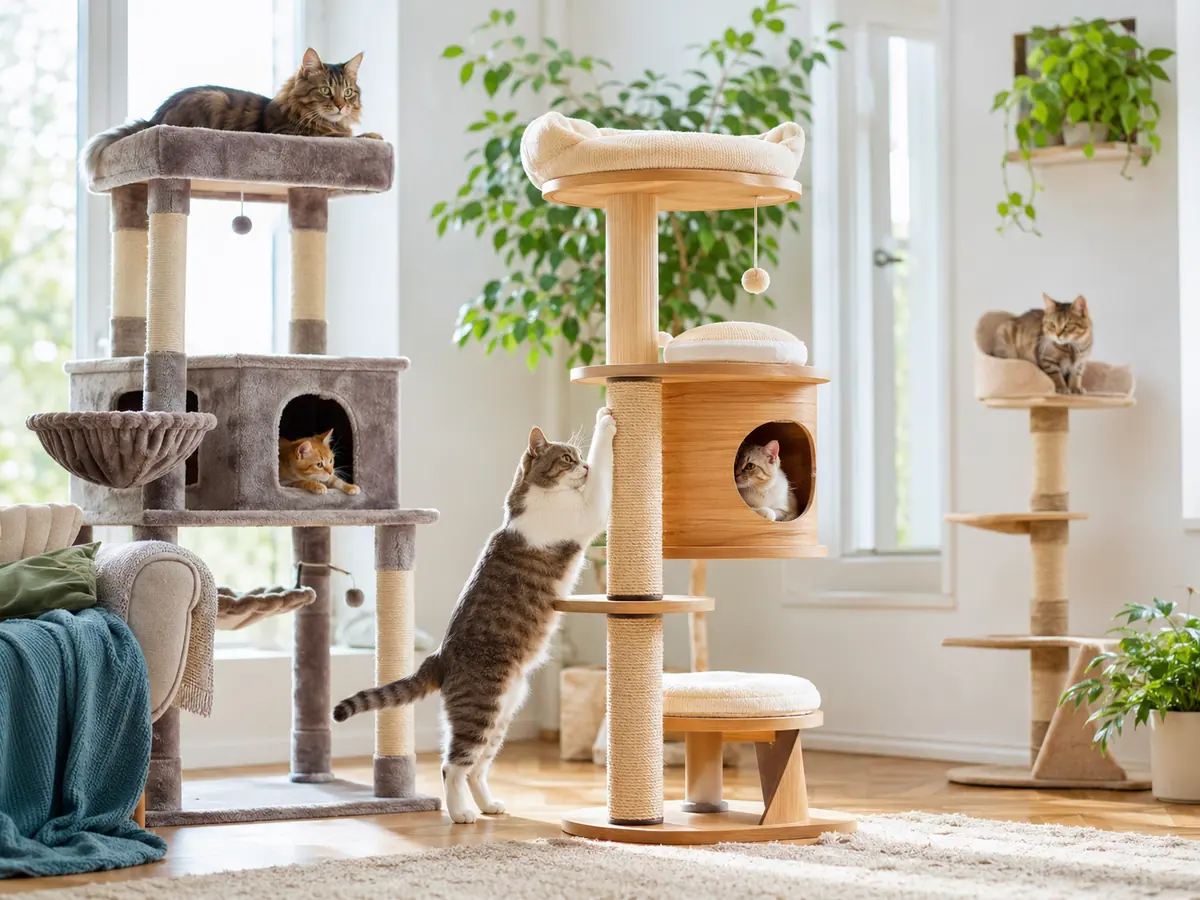
A cat condo tower is a piece of vertical cat furniture that combines two things cats want in one footprint: enclosed hideaways, the condo part, and elevated open perches, the tower part. A plain scratching post gives claws a target, a wall shelf gives height, but the condo tower bundles den, lookout, scratching surface, and climbing route into a single structure. That bundle is why one well-chosen tower often replaces a scatter of half-used cat products around the house.
The appeal is rooted in how cats read space. A cat maps its territory in three dimensions, and height equals safety and information: from a high perch a cat can watch the room, the window, and the dog without being snuck up on. The enclosed cubby answers the opposite need, a dark, tight space to nap in and retreat to when the household gets loud. A condo tower places both options on one vertical commute, so the cat can choose lookout duty or privacy minute by minute.
The catch is that a condo tower only delivers if the cat actually uses it, and cats decline furniture that feels unstable, sits in a dead corner, or has platforms sized for kittens. The rest of this guide covers the differences among towers, the stability and sizing checks that predict daily use, placement that works with feline logic instead of against it, and the simple introduction routine that turns a delivery-day monolith into the most contested real estate in the house.
Condo Tower, Cat Tree, or Perch: Which Structure Fits
The terms blur together in listings, but the structures differ. A cat tree emphasizes open platforms on posts, light and airy, quick to climb, easy to see the whole room from. A cat condo emphasizes the enclosed box, sometimes barely taller than a nightstand. A condo tower is the hybrid: at least one enclosed cubby integrated into a multi-level vertical structure, usually with sisal-wrapped posts as the supports and a padded top perch as the penthouse. If a listing shows a cubby plus stacked levels, it is a condo tower whatever the title says.
Cat parents might also find our motion activated cat toys guide helpful.
Which structure fits depends on the cat in front of you. Confident, social cats that supervise the household mostly live on open platforms and use the cubby for deep naps. Shy cats, new adoptees, and cats in busy homes with children or dogs lean hard on the enclosed condo and appreciate a lower entrance they can slip into without a climb. Seniors and heavy cats need generous, low-spaced steps and wide platforms more than they need height. Kittens use everything at once, loudly.
Multi-cat homes should think in resources rather than pieces: perches and cubbies are territory, and two cats cannot both own the single top spot. A tower with several perches at different heights lets a two-cat household sort out rank without fights, and a second structure in another room beats one giant tower when tensions run high. As a rule of thumb, aim for at least as many desirable elevated spots as there are cats, plus one spare.
Stability and Build Quality: The Wobble Test
Stability is the first thing a cat evaluates and the first thing cheap towers fail. A cat lands on a top perch with several times its body weight in momentum, and a tower that sways under that landing gets quietly blacklisted; many barely-used towers in living rooms are not disliked, they are distrusted. Judge stability by the relationship between the base and the height: the base should be wide, heavy, and rigid relative to how tall the tower stands, and the tower should not tilt when you press firmly on the top perch.
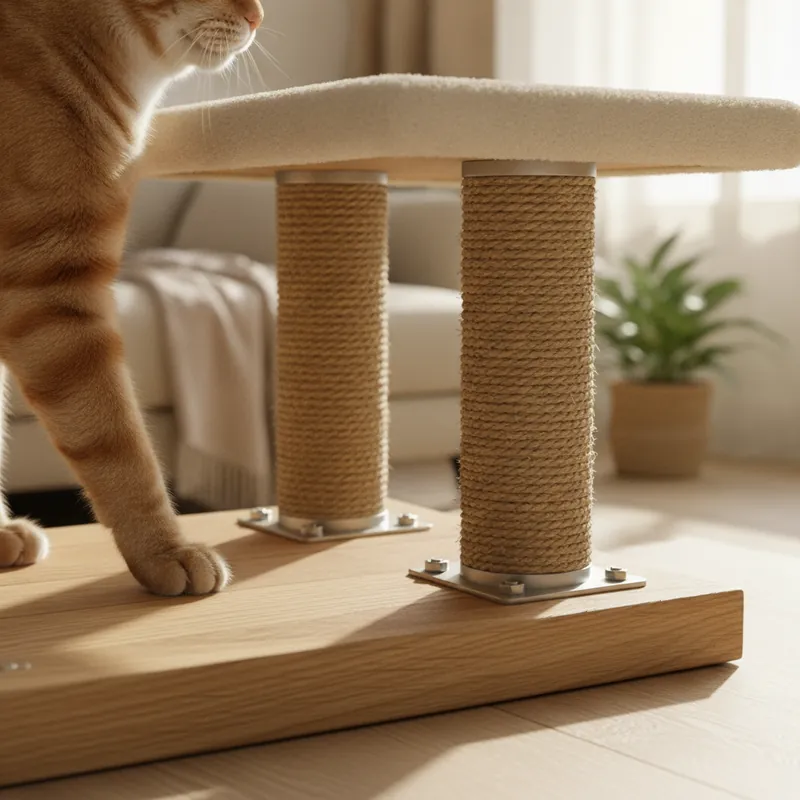
Materials tell you most of the story. Engineered wood panels give more rigidity and useful weight than rolled cardboard cores. Posts should be thick enough that a full-grown cat can wrap around them mid-scratch without the post flexing, and the sisal wrap should be tight, glued, and stapled out of claw reach. Check how levels attach: bolts threading into metal inserts stay tight through years of landings, while screws driven straight into particleboard loosen with every leap and turn a firm tower into a creaky one.
Weight ratings deserve skepticism in both directions. A tower marketed for large cats should demonstrate it with thick posts, a broad base, and wide platforms, not just a claim. If your cat is heavy, athletic, or simply enthusiastic, buy a size up in stability: the sturdier tower survives the cannonball dismounts. Once home, anchoring a tall tower to the wall with a furniture strap is cheap insurance, the same anti-tip logic used for bookcases in homes with children.
Platform, Cubby, and Height Sizing That Fits the Cat
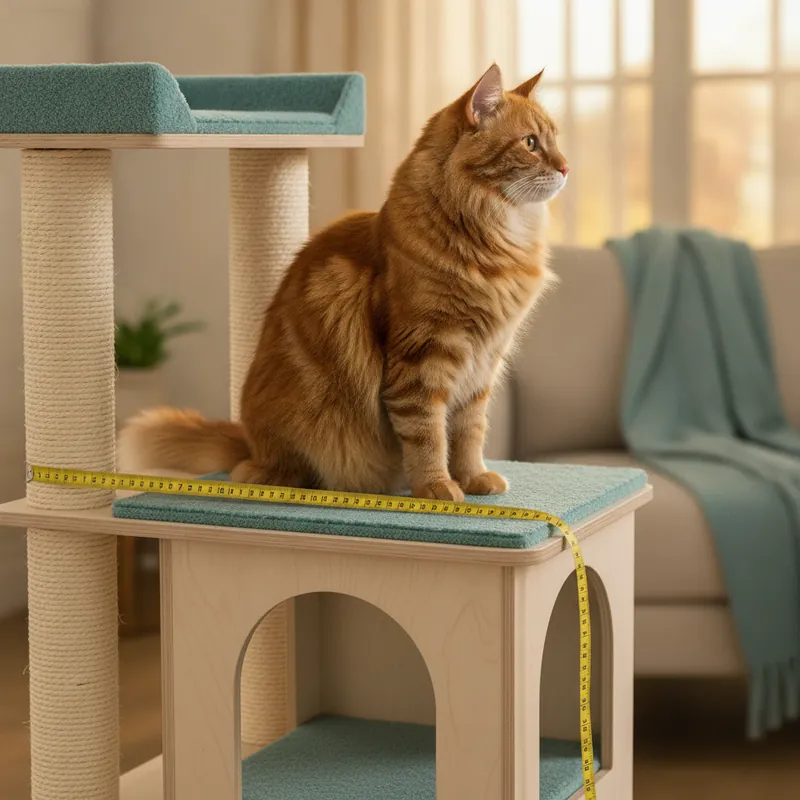
Platforms are where sizing errors hide. A perch a cat loves is one it can sit on, turn around on, and sleep on with every limb supported; a platform that forces paws to dangle off the edge gets used as a step, never a bed. Measure your cat from nose to tail base and compare against the listed platform dimensions rather than trusting photos staged with small cats. Raised edges or bolster rims on the top perch are more than styling, since cats sleep pressed against a boundary by preference.
For more feline-friendly picks, browse our toy cat interactive roundup.
The condo cubby follows den logic: snug enough to feel protective, roomy enough to enter, turn, and lie flat. The entrance hole matters as much as the interior, particularly for broad-chested cats and seniors who will not squeeze. Two entrances are better than one in multi-cat homes, because a cubby with a single door can be guarded by a housemate, and a cat that gets cornered once may abandon the condo permanently.
Height and level spacing decide who can actually live on the tower. Young, healthy cats leap between widely spaced levels happily, but kittens, seniors, and stocky builds need steps spaced like stairs, not cliffs. For an aging cat, a medium tower with tight level spacing and a low cubby beats a ceiling-scraping showpiece. If the household includes both an athlete and a senior, look for a tower with a long, gradual route up as well as big jumps, so each cat can pick its own commute.
Where to Put a Cat Condo Tower So It Gets Used
Placement can double or halve a tower's usage. The classic winning spot is beside a window with a view of birds, foot traffic, or the yard, because the tower's height turns the window into a nature channel. The second-best spot is in the room where the family actually lives, since cats want elevated positions inside the social space, watching the household from above rather than exiled with the exercise equipment in a spare room nobody enters.
Feline logic favors corners and walls over open floor. A tower backed against a wall feels more stable, both physically and psychologically, since nothing can approach from behind. Avoid placing the tower where a jump from it reaches shelves you would rather keep cat-free, because cats treat furniture as a route network, not isolated islands. In multi-story homes, the floor where the family spends evenings is the floor where the tower earns its footprint.
A few placements sabotage the purchase. Next to a loud appliance, a slamming door, or the robot vacuum dock, the cubby stops feeling safe. Directly under air conditioning, the top perch loses its warm-spot appeal. And moving the tower frequently resets the cat's trust in it each time, so choose deliberately, then leave it alone. If a previously loved tower goes quiet after rearranging the room, the fix is usually restoring its wall-and-window geometry rather than buying new furniture.
Getting a Reluctant Cat to Use the Tower
Most cats need no invitation, but for the skeptics, the rule is to make the tower interesting and never make it compulsory. Assemble it without fanfare and let it stand for a day; the cat will inspect it on night patrol. Then salt the route: treats on the lower platform, a pinch of catnip or a spray of silvervine on the scratching posts, a favorite blanket that smells like the cat in the cubby, a wand-toy game that ends with the lure landing on a perch. Placing the cat on the tower by hand tends to backfire, since being put somewhere is different from choosing it.
If your cat needs variety, our cat tree for cats guide has great suggestions.
Play is the strongest lever. A daily wand session that sweeps up the tower's levels teaches the cat that the structure is part of the hunting ground, and a hunt that ends with a treat on the top perch builds a habit loop. For cubby-shy cats, feed a few meals beside the condo entrance, then just inside it. For height-shy cats, reward every level gained and let progress take a week; confidence built slowly sticks.
If the tower still goes unused after a couple of weeks, audit the basics rather than the cat. Does it wobble on landing? Is the platform too small for a full stretch-out sleep? Is it parked in a dead room or facing a wall? Is a bolder housemate guarding the only route up? Each of those has a concrete fix, from wall-strapping and relocating to adding a second structure. Cats reliably choose good vertical territory; when they refuse, the territory usually is the problem.
Keeping the Tower Safe, Clean, and Worth Keeping
A condo tower is furniture under daily athletic load, so give it the occasional service check. Monthly, grip the top perch and test for new sway, tighten the level bolts, and confirm the base still sits flat; a tower that has started rocking on a loosened joint is one hard landing from teaching the cat to avoid it. Check the sisal wrap for unraveling ends and re-glue or re-wrap before a loose coil turns into a toe-snag. Replaceable post sleeves and washable perch covers, where offered, meaningfully extend service life.
Hygiene keeps the tower pleasant for cats and humans alike. Vacuum the plush surfaces with an upholstery attachment on the same schedule as the sofa, spot-clean accidents promptly, and machine-wash any removable cushion covers. Shed fur packed into a cubby holds odor and heat, and a condo that smells stale gets abandoned. During flea treatments, treat the tower like bedding: vacuum thoroughly, wash the covers, and let the household parasite control do the rest.
Finally, know when to retire or rebuild. Exposed particleboard edges, a cracked platform, or a permanently tilted post are safety problems rather than cosmetic ones. Many towers accept replacement parts for posts and perches, which is cheaper than replacing a structure the cat already trusts. A cat condo tower that is stable, right-sized, well placed, and maintained typically serves for years, quietly doing the job it was bought for: giving the cat a place that is entirely, officially, its own.
If you want to dig deeper into the research, the ASPCA cat care library publishes practical, expert-reviewed resources for pet owners. International Cat Care's guide to making a home cat friendly also covers vertical space and scratching opportunities.
Frequently Asked Questions
What is the difference between a cat condo tower and a cat tree?
A cat tree emphasizes open platforms on posts, while a condo adds at least one enclosed cubby for hiding and napping. A condo tower combines both: enclosed hideaway plus multi-level open perches on one vertical structure, usually with sisal scratching posts as supports. The hybrid suits most households because it serves both the lookout instinct and the den instinct in a single footprint.
How tall should a cat condo tower be?
Match height to the cat, not the ceiling. Young, agile cats enjoy tall towers; kittens, seniors, and heavy cats do better with medium heights and closely spaced levels they can climb like stairs. Stability matters more than raw height: a shorter tower with a wide, heavy base that never wobbles will be used daily, while a tall, tippy one will be avoided. Tall towers should be strapped to the wall.
Where is the best place to put a cat condo tower?
Beside a window with a view, in the room where the household actually spends time, backed against a wall. Cats want elevated spots inside the social space and a lookout over something interesting. Avoid dead rooms, spots next to loud appliances, and frequent relocation, which resets the cat's trust in the structure. Corner placement adds both physical and psychological stability.
My cat ignores the condo tower. How do I get it used?
Make it rewarding, never forced: treats on lower platforms, catnip or silvervine on the posts, meals near and then inside the cubby, and daily wand play that ends on a perch. Give it a week or two. If it still goes unused, check for wobble, undersized platforms, poor placement, or a housemate guarding the route up; those explain most refusals better than pickiness does.
How big should the platforms and cubby be?
A platform earns sleeping duty when the cat can sit, turn, and lie fully supported, so compare listed platform dimensions to your cat's nose-to-tail-base length. The cubby should allow entering, turning, and lying flat, with an entrance a broad-chested or senior cat can pass without squeezing. In multi-cat homes, prefer cubbies with two openings so no one can be cornered inside.
Is a cat condo tower worth it for an indoor cat?
For most indoor cats it is among the highest-value purchases available, because it concentrates several daily needs, climbing, scratching, watching, hiding, and sleeping, into one legal outlet. Indoor cats without vertical territory often express the same needs on bookshelves, counters, and sofa arms. One stable, well-placed tower plus a window view covers a large share of an indoor cat's enrichment.
How do I keep a cat condo tower from tipping over?
Choose a tower whose base is wide and heavy relative to its height, assemble it with every bolt fully tightened, and place it on a flat floor against a wall. For tall towers or households with big, athletic cats, add a furniture anti-tip strap to a wall stud, the same hardware used for bookcases. Re-tighten joints monthly, since landings gradually loosen fasteners in board-based furniture.