Choose catnip toys that match how your cat plays: a soft plush mouse for batting and carrying, a longer fabric kicker for hugging and kicking, or a refillable toy when you want to refresh the scent. Look for secure seams, an enclosed filling compartment, and no loose strings or detachable decorations. A plush catnip toy should invite sniffing and play, not give your cat access to stuffing or a mouthful of dried herbs.
Catnip is optional enrichment, not a requirement for a happy cat. Some cats become interested in a scented toy, while others prefer movement, texture, or a person joining the game. This guide helps you compare the toy itself, introduce it without pressure, and recognize when to put it away. For a wider starting point, see our guide to choosing cat toys by play style.
What catnip adds to a toy
Catnip is a plant, commonly identified as Nepeta cataria. Its scented compounds can make a toy interesting to a responsive cat. A peer-reviewed study on nepetalactone and the catnip plant describes nepetalactones as the compounds associated with cat attraction and behaviors such as rolling, rubbing, and pawing. That explains the appeal of the scent, but it does not establish that any particular toy is safe, durable, or suitable for every cat.
Separate two buying decisions: whether your cat likes catnip, and whether the toy's construction fits your cat's behavior. A cat may enjoy rubbing against a small scented cushion but shred a fragile fabric mouse. Another may ignore catnip altogether yet enthusiastically chase the same toy when you slide it across the floor. Our explanation of the catnip response explores the scent question in more detail.
Do not treat a stronger smell as a better product. There is no useful household test that turns scent strength into a quality score. Instead, check the manufacturer's filling description, observe your cat, and avoid repeatedly adding more catnip when the cat is uninterested. For background on the plant rather than the toy, read our catnip guide for cat owners.
How to choose a plush catnip toy
Start with the outer shell. It should feel securely assembled, with no obvious gaps at the seams or long loose threads. Embroidered details are generally easier to inspect than glued eyes or accessories, although stitching can still come loose. Gently check attachments before offering the toy, then continue inspecting it after play. An attractive shape is not a substitute for construction you can examine.
Choose a shape that supports the intended game. A lightweight mouse suits a cat that bats, tosses, or carries toys. A longer plush kicker gives a cat more surface to hold with the front paws while kicking with the back feet. A pillow-shaped toy can suit rubbing and gentle wrestling. Match the dimensions to your individual cat rather than relying on a photograph that gives no sense of scale.
A refillable plush catnip toy should have a compartment that stays closed during play. If your cat can reach the closure, pull the flap apart, or chew through the fabric, it is not a suitable unsupervised option. Keep spare catnip and filling materials somewhere the cat cannot reach. Refilling should happen away from the pet, followed by a check that no loose material remains outside the toy.
Read the care label before buying. Some toys can be surface cleaned, while others allow the catnip insert to be removed before washing. Never assume that a sealed, herb-filled toy can go into a washing machine. Think about your cat's saliva, your home's cleaning routine, and how readily you can replace a damaged toy. Our catnip mouse toy guide offers a closer look at that small-toy format.
Catnip mice, kickers, and refillable toys compared
There is no single best catnip toy for every household. Use the following comparison as a shopping checklist, not a ranking of brands or a promise of durability. We have not independently tested the products a retailer might show alongside this guide.
| Format | Useful for | Check before play |
|---|---|---|
| Small plush mouse | Batting, carrying, and short floor chases | Tail attachments, seams, and size relative to the cat |
| Fabric kicker | Hugging and back-leg kicking | Fabric damage where claws and teeth contact it |
| Refillable cushion | Refreshing the scent without replacing the shell | Closure security and the manufacturer's care instructions |
| Scented teaser attachment | Interactive play with a person | String, attachment points, and secure storage after use |
If your cat prefers stalking something that moves, scent alone may not help. Our teaser toy guide covers a more interactive approach. If the cat prefers working for food, consider the different purpose of puzzle toys for cats. A puzzle feeder should not be filled with catnip in place of its intended food or used contrary to its instructions.
Introduce a catnip toy without overstimulation
Offer one intact toy in a calm area where your cat can approach or walk away. Let the cat sniff it before you animate it. Avoid pushing it toward the face, trapping the cat in a corner, or holding a kicker against your hands while the cat wrestles. If you join the game, move the toy rather than teaching the cat to grab fingers.
Watch the whole interaction, not just whether the cat touches the toy. Relaxed sniffing, rubbing, batting, and manageable play are different from distressed vocalizing, persistent aggressive grabbing, or attempts to tear open the shell. End the session if the cat becomes uncomfortable or starts accessing the filling. Do not punish the cat for a strong reaction; quietly remove the opportunity and choose a different activity.
Catnip should not be described as completely harmless. The ASPCA's catnip safety entry notes that it can cause vomiting and diarrhea and can stimulate some cats while sedating others. That warning matters especially if a toy opens or a cat eats loose plant material. If your cat becomes ill, contact a veterinarian rather than treating the reaction as normal play.
A fabric toy can also pose a problem unrelated to catnip. Remove it if stuffing, threads, or decorations become accessible. If you suspect your cat swallowed a toy part, contact a veterinarian promptly. Do not pull a string that is protruding from the mouth or rear. This guide is general enrichment information, not veterinary advice or a diagnosis.
Cleaning, storage, and when to replace the toy
Check the toy after each session, particularly the areas your cat grips or chews. Look for damp filling, holes, separated seams, or a closure that no longer holds. Put questionable toys aside immediately instead of waiting for a larger tear. A repair is not automatically safe just because the hole looks closed; replacement can be the more sensible choice when construction is compromised.
Follow the manufacturer's cleaning directions and allow washable parts to dry fully before reuse. If a catnip insert is removable, keep it separate as directed. Do not spray perfume, household cleaner, or concentrated scented oils onto the toy to make it more appealing. If the manufacturer gives no safe cleaning method and the toy is persistently dirty or damp, replace it.
Store spare toys dry and out of direct access. Rotation can help you observe preferences without filling the floor with unused objects. You do not need a rigid schedule or an ever-growing collection. Put out a few safe choices, store the others, and switch when your cat's interest changes. Our guide to enrichment choices for cats puts scented toys in a broader daily routine.
When the scent fades, decide whether the cat still enjoys the shape and texture before replacing anything. A toy can remain useful for batting even without a noticeable catnip response. For related options, our overview of catnip play options explains how to combine scent-based and movement-based play without assuming that more stimulation is always better.
Kittens, older cats, and multi-pet homes
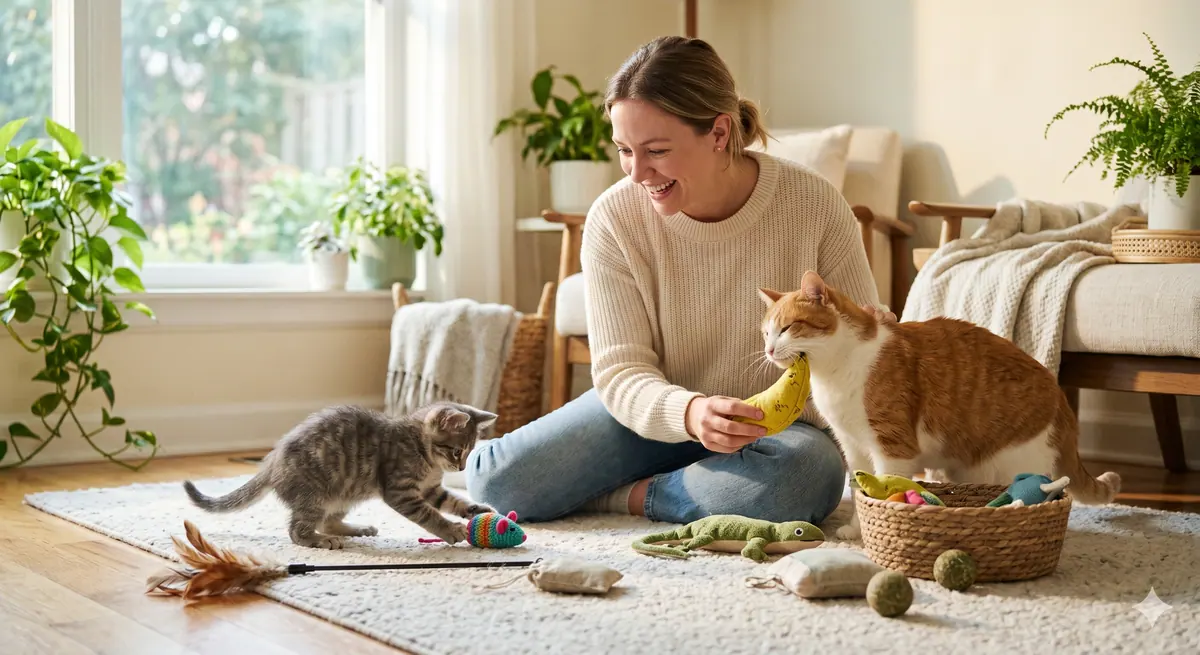
For kittens, prioritize manageable size, intact construction, and supervised exploration. A lack of interest in catnip does not mean the kitten needs a stronger product. Choose toys for its current coordination and behavior, and put string-based toys away between sessions. Our kitten toy guide focuses on those practical early-play considerations.
For an older cat, offer the toy where it can reach it comfortably. Gentle rubbing or a short floor-level game may be more appropriate than jumping after a teaser. Do not use catnip as a way to make a reluctant cat exercise through pain. A sudden change in play, mobility, or behavior deserves a veterinary conversation rather than an assumption that the toy is boring.
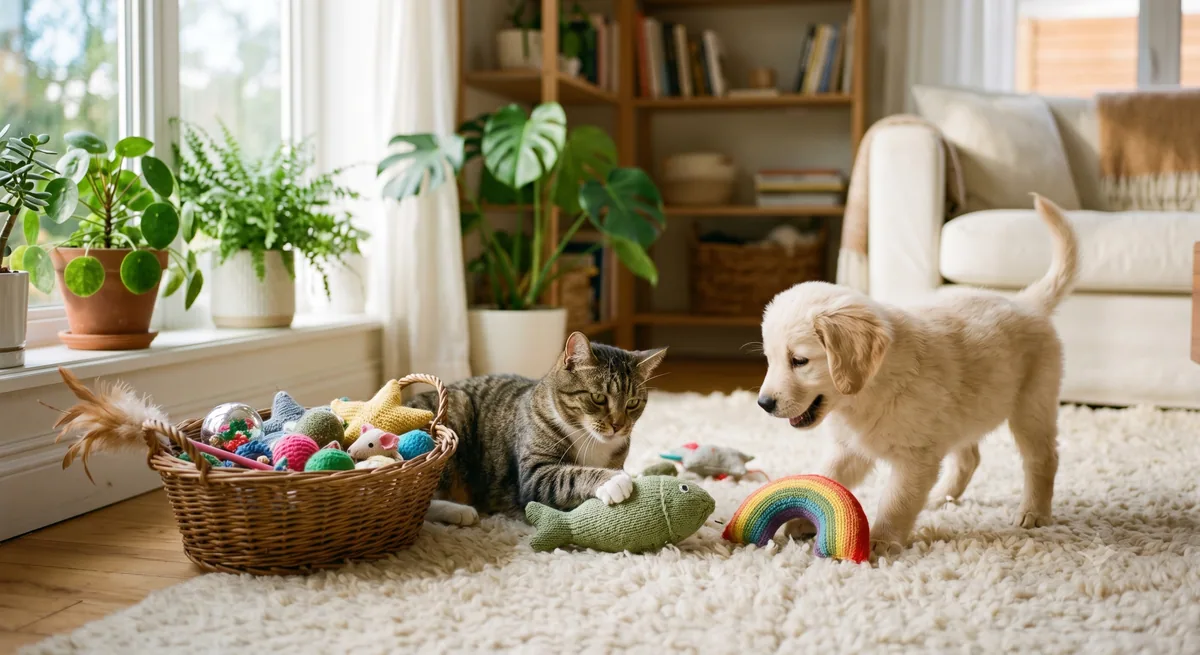
In a shared home, introduce scented toys separately if cats compete over them. Give each animal a way to disengage. Keep small cat toys away from dogs that chew or swallow unfamiliar objects, and do not leave a refillable toy with an animal that can dismantle it. A picture of several pets playing together is not proof that every mixed-pet household can use the same setup safely.
Finally, remember that a plush toy does not provide every enrichment need. Scratching, resting places, movement, and attention still matter. Our scratching post guide addresses a different part of the environment. Start with a safe toy your cat actually enjoys, then adapt from observation rather than a retailer's promises.
Frequently asked questions about catnip toys
What is a plush catnip toy?
A plush catnip toy is a fabric toy containing catnip or a removable catnip insert. It combines a soft shape for batting, carrying, or kicking with a scent that interests some cats. The filling should remain enclosed during play.
Are catnip toys safe for every cat?
No toy is suitable for every cat. Check construction, supervise the introduction, and remove a toy if the cat can reach the filling or becomes distressed. Catnip can cause vomiting or diarrhea, so contact a veterinarian if your cat becomes ill.
Why does my cat ignore its catnip toy?
Your cat may not respond to catnip, may prefer another texture or movement, or may simply not want to play at that moment. Try a calm introduction or an unscented interactive toy instead of repeatedly adding more catnip.
Can I wash a plush catnip toy?
Only use the cleaning method specified by the manufacturer. Remove an insert if the directions require it, and let washable parts dry fully. A sealed herb-filled toy should not automatically be put in a washing machine.
When should I replace a catnip toy?
Replace or retire the toy when it has holes, accessible stuffing, loose threads, damaged attachments, or a closure that will not stay shut. Do not wait until the cat has pulled out the filling.
Do cats need catnip to enjoy their toys?
No. Many cats enjoy chasing, batting, climbing, scratching, or food puzzles without catnip. Catnip is one optional enrichment tool, not a requirement or a substitute for safe construction and interaction.