If you are looking for the best catnip for cats, this comprehensive guide covers everything you need to know. Whether you are a first-time pet owner or an experienced one looking to upgrade, you will find practical advice, safety tips, and honest comparisons below.
What Catnip Is and Where It Comes From
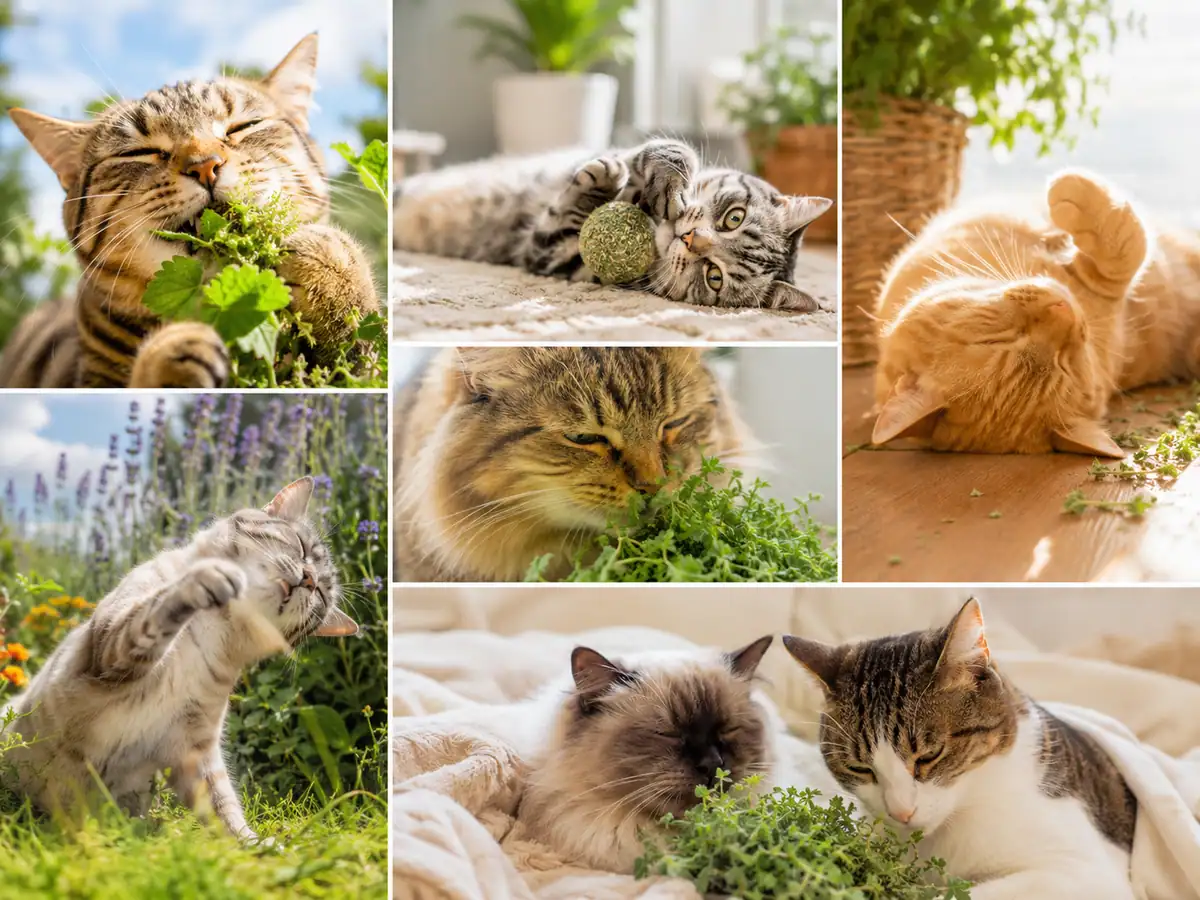
Catnip is a perennial herb in the mint family, known to botanists as Nepeta cataria. It grows wild across much of Europe and Asia and has naturalized throughout North America, where it is now a common sight along fence lines and in herb gardens. The plant itself looks unassuming, with square stems, soft gray green leaves, and small white to pale purple flowers, yet it produces one of the most recognizable behavior changes in the animal world.
The ingredient responsible is nepetalactone, an aromatic oil concentrated in the leaves, stems, and seed pods of the plant. When a cat sniffs crushed or bruised catnip, nepetalactone reaches receptors in the nasal tissue and triggers a response that many researchers describe as similar to the way cats react to natural social scents. The oil is volatile, which is why a freshly opened bag of good quality catnip smells strong to people too, a bit like mint crossed with cut grass.
The response is not limited to house cats. Larger felines, including lions and leopards, have been observed rolling in and rubbing against catnip in the same way a tabby does on a living room rug. That shared reaction across the cat family is part of why the sensitivity is understood as an inherited trait rather than a learned habit.
For a home cat, catnip is best thought of as a free, safe enrichment tool. It costs little, it needs no batteries, and for the cats that respond, it can turn a bored afternoon into ten minutes of genuine play. The rest of this guide covers how the response works, why some cats do not react at all, and how to choose between fresh, dried, spray, and toy forms.
How Catnip Affects Cats
A cat that responds to catnip usually starts by sniffing the source, then rubbing its cheeks and chin against it. From there the classic sequence includes rolling on the floor, kicking with the back feet, head shaking, flipping, and bursts of energetic play. Some cats vocalize, some drool a little, and some simply stretch out and knead. The whole display tends to look like a mix of play behavior and the face rubbing a cat uses to mark familiar objects.
Cat parents might also find our cat condo tower guide helpful.
The active phase is short. Most cats show effects for roughly five to fifteen minutes, after which the behavior fades on its own. A refractory period follows, commonly lasting from about half an hour to a couple of hours, during which the same cat will ignore the same toy completely. This built-in off switch is useful to know about, because it means leaving catnip out all day adds nothing. Short, occasional sessions work better. Veterinary resources such as the Cornell Feline Health Center are a good starting point for reading more about feline behavior and enrichment.
How the catnip is taken in changes the effect. Sniffing is the stimulating route, and it is what produces the rolling and zooming most people picture. Eating the herb tends to have the opposite character, leaving many cats mellow and relaxed. Cats often do both in one session, chewing a few leaves and then rubbing in the rest, so do not be surprised if a wild play burst ends in a long nap.
Individual cats respond differently, and both reactions are normal. One cat may sprint laps around the sofa while another quietly hugs a catnip pillow and purrs. Neither response is better, and there is no need to push a cat toward a more dramatic display. Let the cat set the tone of the session and step back once interest fades.
Why Some Cats Do Not React to Catnip
Sensitivity to catnip is inherited, and a substantial minority of cats simply do not carry it. A commonly cited estimate is that roughly one cat in three shows little or no visible response no matter how fresh the herb is. If your cat sniffs a new catnip toy once and walks away, nothing is wrong with the cat or the toy. That cat is just not wired for it.
Age matters as well. Kittens usually show no interest in catnip, and the response typically appears only as they mature, often somewhere between three and six months of age. There is no benefit in offering catnip earlier, so with a young kitten it is worth waiting and retrying every few weeks. At the other end of life, some senior cats respond less strongly than they did in their prime, which is normal.
For non-responders, several alternatives trigger a similar reaction through different plant compounds. Silver vine, made from the Actinidia polygama plant, is the best known and works on many cats that ignore catnip. Valerian root and Tatarian honeysuckle wood are two more options that some cats find irresistible. Introduce one alternative at a time in a small amount, watch how your cat reacts, and keep whichever one lands. Between catnip and these three alternatives, most households can find at least one scent that turns play on.
Forms of Catnip: Fresh, Dried, Spray, and Filled Toys
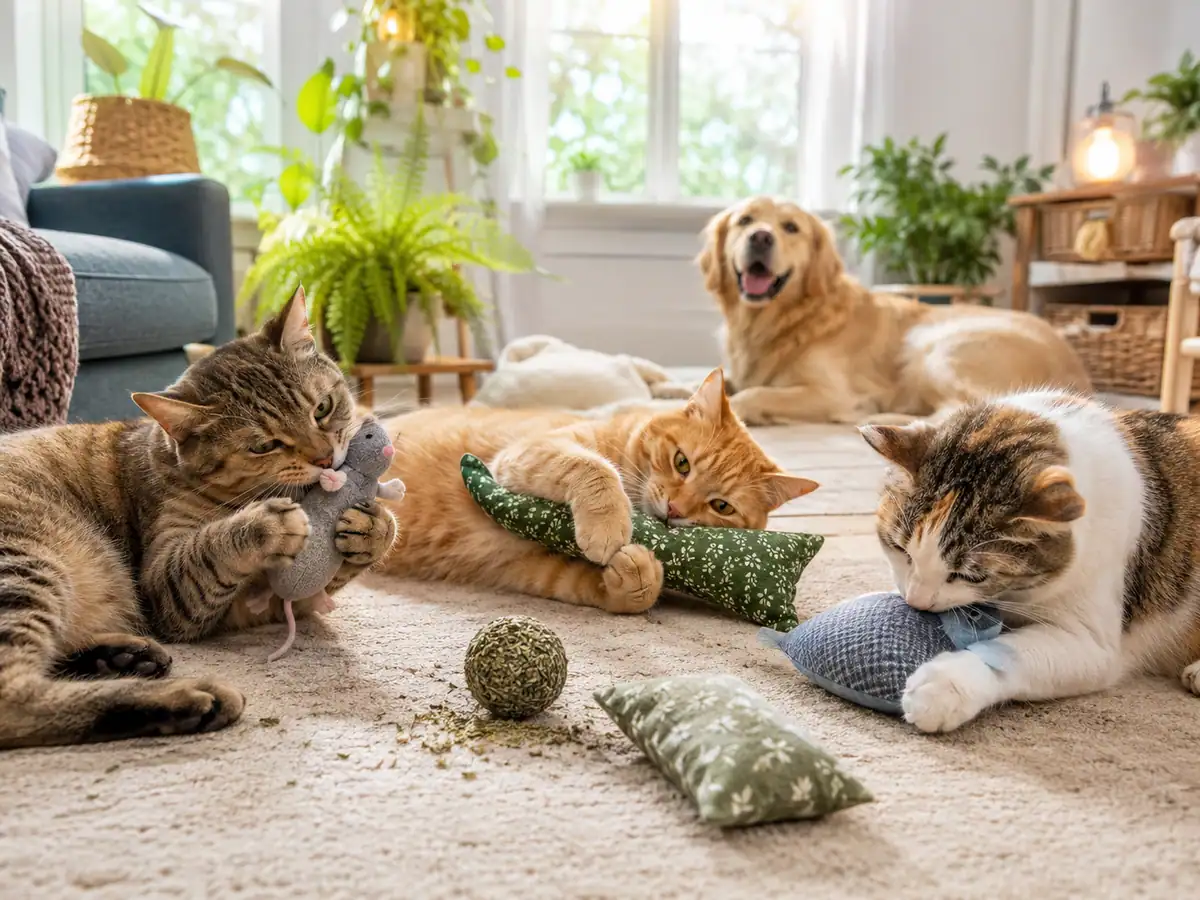
Fresh catnip is the strongest form, because the aromatic oil is still intact in the living leaves. A small pot on a sunny windowsill gives a cat the occasional nibble and gives you a supply of leaves to crush over a toy or scratcher. The plant is easy to keep alive, though a determined cat may flatten it faster than it grows.
For more feline-friendly picks, browse our siberian tree cat roundup.
Dried catnip is the everyday workhorse. Sold loose in bags or tubs, it is easy to sprinkle on the floor, stuff into refillable toys, or rub into a scratching post. Quality varies widely between brands. Look for a blend that is mostly leaf and flower, which is where the oil lives, rather than chopped stems that add bulk but little scent.
Catnip spray contains the aroma in liquid form and is the gentlest option. It works well for marking a new bed, carrier, or scratcher with an inviting scent, and it suits cats that get overstimulated by the concentrated dried herb, since the effect is milder and there is nothing to eat. The trade-off is that sprays fade quickly and usually need reapplying.
Filled toys put the herb inside a fabric shell that cats can grab, kick, and carry. Kicker pillows, stuffed mice, and crinkle toys with a catnip pocket are the common shapes, and refillable designs let you restore potency instead of replacing the toy. Our catnip toys for cats guide compares the main styles in more depth if your cat is primarily a wrestler rather than a sniffer.
How to Offer Catnip: Play, Training, and Enrichment
The simplest session is a pinch of dried herb crushed between your fingers and scattered on a washable surface. Crushing matters, because bruising the leaf releases the oil. Let the cat sniff, roll, and kick until it loses interest, then sweep up the leftovers. A session like this once or twice a week keeps the effect novel without wearing it out.
Catnip is also a practical training aid. Rubbing dried catnip or spraying catnip scent on a new scratching post is one of the most reliable ways to redirect a cat away from the sofa arm, because it gives the cat a positive reason to investigate the approved surface. The same trick eases acceptance of a new bed, a cat tree, or a carrier that currently only appears before vet visits. Our cat scratching post guide covers placement and post selection alongside the scent trick.
Pairing catnip with active play stretches its value further. Offer a catnip kicker right after a wand-toy session so the cat has something legal to bite and bunny-kick while still worked up, or use a catnip toy to start a play session with a cat that is slow to engage. For more structured play ideas, our interactive cat toys guide pairs well with a catnip warm-up.
Keep sessions bounded. Put catnip toys away between uses rather than leaving them in the toy basket, both to preserve potency and to keep the scent special. If you have several cats, give the first sessions separately, since one cat rolling in catnip can draw swats from a housemate that wants the same spot.
Is Catnip Safe for Cats?
Catnip is considered safe for healthy cats. It is not toxic, it is not addictive, and a cat cannot meaningfully overdose by sniffing it, because the response fades on its own and the refractory period stops back-to-back sessions. There is no dosing schedule to manage; the cat's own interest is the regulator.
If your cat needs variety, our cat house scratching post guide has great suggestions.
Eating catnip is also generally harmless in small amounts, and many cats chew a few leaves as part of a normal session. A cat that gulps a large quantity of the dried herb may vomit or have loose stool for a short time. This resolves on its own, but it is a reason to offer pinches rather than piles and to store the bag where a motivated cat cannot rip it open.
The behavioral side deserves the same attention as the medical side. A minority of cats, often confident males, respond to catnip with rough, nippy play and can swat or bite if handled mid-session. Never offer catnip from your hand if your cat plays rough with it, give the cat space until the effect passes, and use a kicker toy as the target instead. If your household includes a pregnant cat or a cat with a chronic health condition, it is sensible to ask your veterinarian before adding catnip to the routine.
Talk to a vet if a cat shows anything beyond the expected short play burst, such as repeated vomiting, prolonged digestive upset, or a sudden behavior change that outlasts the session. These are not typical catnip effects, and the herb should not be used to mask a change that deserves a checkup.
Growing and Storing Catnip at Home
Catnip is one of the easiest herbs to grow. It wants full sun and well drained soil, tolerates neglect, and comes back year after year in most temperate climates. It is vigorous enough to crowd a garden bed and it self-seeds freely, so many growers keep it in a pot to contain it. Indoors, a sunny windowsill works, though you may need to protect seedlings from the very cat you are growing them for.
To preserve a harvest, cut whole stems in the morning, bundle them, and hang them upside down in a dark, dry, well ventilated spot until the leaves crumble easily. Strip the dried leaves and flowers off the stems and discard the stems themselves, which carry little scent. The result is fresher and usually stronger than a bag that has been sitting on a store shelf.
Storage determines how long any catnip stays worth sniffing. The aromatic oil breaks down with exposure to air, light, and heat, so keep dried catnip in an airtight jar in a cool, dark cupboard, and consider the freezer for long term storage. Potency fades over months even in good conditions. If a toy no longer gets a reaction, the herb inside has probably gone flat; refill it or recharge it by storing it in a sealed jar with fresh catnip for a few days.
How to Choose Good Catnip Products
For loose catnip, quality shows in the cut. A good bag is mostly soft leaf and flower with a strong, fresh smell the moment it opens. A weak product is full of hard stem pieces and smells like hay. Single ingredient catnip with nothing added is the standard to look for; dyes, perfumes, and unnamed fillers add nothing a cat wants.
For filled toys, construction matters as much as the fill. Check for tight stitching that survives bunny kicks, covers that can be wiped or washed, and no glued-on eyes, strings, or small parts that could come loose during rough play. Refillable pockets are a genuine advantage because the toy outlives its first charge of herb. Classic shapes like the stuffed mouse remain popular for a reason, and our catnip mouse toy guide looks at that style specifically.
Match the product to your cat's play style. A wrestler needs a kicker pillow sized to hug, a batter does better with lightweight catnip balls, and a shy sniffer may prefer a sprinkle of loose herb or a light spray on a familiar blanket. If you are building a small rotation, our best cat toys guide shows how catnip toys fit alongside wands, tunnels, and puzzle feeders in a balanced toy box.
Organizations like the International Cat Care advice hub also offer trusted, science-backed advice that is well worth bookmarking.
Frequently Asked Questions
How often can I give my cat catnip?
A session once or twice a week is a sensible rhythm for most cats. The response fades after five to fifteen minutes and a refractory period follows, so more frequent offerings mostly get ignored. Spacing sessions out also keeps the scent novel, which preserves the strong reaction owners are hoping for.
Can kittens have catnip?
Catnip is not harmful to kittens, but it is usually pointless before a few months of age. The inherited response typically appears as a kitten matures, often between three and six months. If a young kitten ignores catnip, wait a few weeks and try again rather than increasing the amount.
Is it OK for my cat to eat catnip?
Small amounts are fine, and nibbling is part of a normal session. Eating catnip tends to relax cats rather than excite them. A cat that eats a large pile of the dried herb may vomit or have brief loose stool, so offer pinches, keep the storage bag sealed away, and let the toy or scratcher carry the scent instead.
Why does my cat get rough or bite after catnip?
Some cats channel the catnip response into intense, wrestling style play, and hands that are nearby can become targets. Offer the herb on a kicker toy rather than from your palm, give the cat space during the active phase, and end sessions early if play keeps tipping into swats. The intensity passes within minutes.
My cat does not react to catnip. Is something wrong?
No. Sensitivity is inherited, and roughly a third of cats show little or no response. For those cats, try silver vine, valerian root, or Tatarian honeysuckle wood, which trigger a similar play response through different compounds. Introduce one at a time in a small amount and keep whichever your cat enjoys.
Does catnip expire or lose its strength?
The aromatic oil degrades with air, light, heat, and time, so catnip gradually loses potency rather than spoiling outright. Store it in an airtight jar in a cool, dark place, or freeze it for the long term. If a once-loved toy is being ignored, refill it with fresh herb or recharge it in a sealed jar of loose catnip for a few days.