If you searched for a YETI dog bowl, you are looking at the Boomer, the stainless steel bowl from the cooler and drinkware brand YETI. It is one of the most expensive everyday dog bowls you can buy, so it is fair to ask what you actually get. This guide covers the two Boomer sizes, what the bowl is made of, how the non-slip base and dishwasher claims hold up, which size suits your dog, how to keep any bowl clean, and cheaper bowls that do the same job.
In This Article
- Quick Answer: Is the YETI Dog Bowl Worth It?
- What Is the YETI Boomer Dog Bowl?
- What Sizes and Prices Does the YETI Boomer Come In?
- Is the Boomer Really Non-Slip and Dishwasher Safe?
- Is a Premium Stainless Steel Dog Bowl Worth the Money?
- What Bowl Size Does Your Dog Need?
- How Often Should You Clean a Dog Bowl?
- Stainless Steel, Ceramic or Plastic: Which Dog Bowl Is Best?
- Does YETI Make a Travel Dog Bowl?
- What Are Good Alternatives to the YETI Dog Bowl?
- What Do People Ask Most About YETI Dog Bowls?
- Sources
Quick Answer: Is the YETI Dog Bowl Worth It?
The YETI dog bowl is the Boomer, a double wall stainless steel bowl sold in a four cup and an eight cup size. It is dishwasher safe, food safe, BPA free and sits on a rubber non-slip ring. It is built to last for years, but a basic stainless bowl does the same feeding job for far less money.
Updated October 20, 2026- Two sizes: Boomer 4 (four cups) for small dogs and Boomer 8 (eight cups) for medium and large dogs.
- Material: 18/8 stainless steel, double wall but not insulated, with a seamless design.
- Base: a rubber ring YETI calls the BearFoot Non-Slip Ring, which YETI says not to remove.
- Care: dishwasher safe; YETI says no bleach and no abrasive cleaners.
- Travel: the Boomer is rigid. We found no collapsible YETI travel bowl on the YETI US site when we checked.
What Is the YETI Boomer Dog Bowl?
Answer: The Boomer is YETI's only line of dog bowls in the United States. It borrows the stainless steel build of the brand's Rambler drinkware: two layers of steel, a seamless shape and a rubber ring underneath. YETI sells it in two sizes, offers custom engraving on its own website and backs it with a long warranty.
YETI is best known for hard coolers and insulated tumblers, and it describes the Boomer as using the same "DNA" as its Rambler drinkware and LoadOut bucket. The bowl is made from 18/8 stainless steel with a double wall, non-insulated construction, a seamless design, food safe and BPA free materials, and a BearFoot Non-Slip Ring on the bottom. YETI says the Boomer comes with a five year warranty. Source: YETI, Boomer and Trailhead FAQ.
"Double wall" means there is an inner bowl and an outer shell with a gap between them. In YETI's tumblers, that gap is a vacuum that keeps drinks hot or cold. The Boomer skips the vacuum. YETI explains that because a dog bowl has such a wide open surface, insulation would make little difference, so the second wall is there for stiffness and dent resistance rather than temperature control.
When we checked the YETI US dog category, it listed the two Boomer bowls, two sizes of a Boomer dog bed and blankets, plus a few dog themed patches and shirts in search results. That is a small range. If you want a raised feeder, a slow feeder or a fountain, you will need to look at other brands, which we cover further down.
What Sizes and Prices Does the YETI Boomer Come In?
Answer: There are two sizes. The smaller Boomer holds four cups and is meant for small dogs, while the larger one holds eight cups for bigger dogs. Both share the same steel, base ring and care rules. The larger bowl is wider, a little taller and heavier, and it costs more. Check the YETI site for current prices and colors.
The table below lists the specifications YETI publishes on its product pages and FAQ, with the prices shown on yeti.com on October 16, 2026. Prices, colors and limited editions change often, so confirm them before you buy. Source: YETI, Boomer 8 Dog Bowl.
YETI's FAQ gives the Boomer 4 diameter as 6.75 inches, while the product page rounds it to 6.8 inches, so treat both as the same bowl. The FAQ also confirms that the bowls stack on top of each other but do not nest inside one another, which matters if you plan to pack two of them. Source: YETI, Boomer and Trailhead FAQ.
Custom engraving is offered when you buy directly from YETI. The company says its customization process creates a permanent finish that will not crack or peel and keeps the warranty intact, and it warns that third party coatings on its drinkware void the warranty. If you want a name on the bowl, ordering it engraved from YETI is the safer route.
Is the Boomer Really Non-Slip and Dishwasher Safe?
Answer: YETI lists both features on every Boomer page. The rubber ring under the bowl grips the floor so it does not skate around while a dog eats, and the whole bowl, ring included, can go in the dishwasher. YETI asks owners to leave the ring in place and to avoid bleach and abrasive cleaners.
The BearFoot ring is a rubber band around the base. On smooth kitchen tile or wood floors, a light steel bowl tends to slide when an excited dog pushes it with its nose, and a rubber base is the standard fix. The Boomer's extra weight helps too. A heavier bowl with a grippy ring stays put better than a thin bowl, although a determined dog can still push or flip almost any bowl.
On cleaning, YETI's FAQ says the bowl is dishwasher safe and can also be washed with dish soap and warm water. It says not to use bleach or abrasive cleaners, and that removing the non-slip ring is not required for cleaning. YETI also recommends against removing the ring at all. Source: YETI, Boomer and Trailhead FAQ.
That no-bleach rule is worth noting, because some general cleaning guides suggest a weekly bleach soak for pet dishes. For a Boomer, follow the maker's instructions and rely on hot water, detergent and the dishwasher instead. Steel wool and gritty scouring powders are also out, since they can scratch the finish where residue then clings.
Is a Premium Stainless Steel Dog Bowl Worth the Money?
Answer: It depends on what you value. A basic stainless bowl already gives you the key benefits: a smooth, non-porous surface that is easy to clean and survives the dishwasher. A premium bowl adds weight, stiffness, a sturdier base, a long warranty and nicer finishes. Those are comforts, not health upgrades, so a cheaper bowl is perfectly fine.
The material itself is the part that matters most for hygiene, and veterinarians interviewed by the American Kennel Club recommend stainless steel for food and water bowls. They describe it as basically indestructible, dishwasher safe and less likely than plastic to hang on to odors and bacteria, because the surface is non-porous. Any decent stainless bowl gives you that. Source: American Kennel Club, How Often Should I Wash My Dog's Bowl?.
Where a premium bowl earns its price is durability and stability. Thin, single wall bowls dent when dropped, their rubber bases peel off after many dishwasher cycles, and light bowls slide across the floor. A double wall bowl resists dents, and a heavy base keeps meals in one place. If your dog is rough with bowls, eats outdoors or travels with you, those details add up.
Here is a quick way to decide:
- Buy a premium bowl if your dog flips, chews or dents bowls, if you want one bowl to last for many years, or if you like matching colors and engraving.
- Buy a basic stainless bowl if your dog eats calmly indoors, if you want spare bowls to rotate while one is in the dishwasher, or if budget matters more than looks.
- Buy a specialty bowl instead if your dog gulps food, has trouble bending down or drinks too little. A slow feeder, a raised feeder or a fountain solves those problems better than a premium plain bowl.
One practical tip: owning two bowls of any kind is more useful than owning one expensive bowl. With a spare, one bowl can sit in the dishwasher while your dog eats from the other, which makes daily washing much easier to stick to. Our guide to stainless steel dog bowls compares more budget and mid range options.
What Bowl Size Does Your Dog Need?
Answer: Pick a food bowl that holds a full meal with room to spare, and a water bowl that holds roughly a full day of water so it never runs dry between refills. Small dogs usually fit the smaller Boomer, while medium and large dogs suit the larger one. Very large dogs may need two water bowls or a fountain.
Water is the easier one to size. The American Kennel Club says that as a general rule adult dogs need about one ounce of water per pound of body weight per day, and that weaned puppies need between half an ounce and one ounce per pound. Heat, exercise and a dry food diet push that higher. Source: American Kennel Club, Is Your Puppy Drinking Enough Water?.
Comparing that rule with YETI's published capacities of 32 oz for the Boomer 4 and 64 oz for the Boomer 8 gives the rough guide below. It is a starting point, not a prescription, and you should refill water bowls at least daily whatever their size. Source: YETI, Boomer and Trailhead FAQ.
Food bowls are about shape as much as volume. A bowl that is too small makes kibble spill over the edge; one that is too deep makes flat faced breeds like Pugs and Bulldogs push their faces in uncomfortably. Wide, shallow bowls suit short muzzles, while long eared breeds such as Basset Hounds and Cocker Spaniels do better with narrower, deeper bowls that keep ears out of the food.
Height matters for some dogs too. Giant breeds, older dogs with stiff joints and dogs recovering from surgery may be more comfortable eating from a raised stand, though raised feeding is not right for every dog, so ask your vet first. Our elevated dog bowls guide walks through the pros and cons, and our general dog bowls guide covers sizing for every breed group.
How Often Should You Clean a Dog Bowl?
Answer: Wash food bowls after every meal and water bowls at least once a day, using hot water and detergent or a dishwasher. Bacteria in a bowl form a slimy layer called biofilm that rinsing alone will not remove. A smooth stainless bowl is easier to scrub clean, but no material cleans itself, including expensive ones.
The U.S. Food and Drug Administration advises washing pet food bowls and scooping utensils with soap and hot water after each use, and using a clean scoop rather than the bowl itself to measure food. Source: FDA, Tips for Safe Handling of Pet Food and Treats.
Few owners do this. In a North Carolina State University study published in PLOS ONE, just 4.7% of 417 surveyed dog owners were aware of the FDA's pet food handling and dish hygiene guidelines. When owners followed those guidelines for a week, bacterial counts on their dogs' dishes dropped significantly, and washing in hot water above 160°F beat cold or lukewarm water. Source: Luisana et al., PLOS ONE (2022).
Household testing tells the same story. In NSF's study of germs in family homes, pet dishes were the fourth germiest place in the homes analyzed. NSF recommends washing pet dishes daily, either in a sanitizing dishwasher or by scrubbing them by hand with hot soapy water, and following the manufacturer's instructions. Source: NSF, Clean the Germiest Home Items.
The slimy film you feel on the inside of a neglected water bowl is biofilm, a layer of bacteria that sticks to the surface and protects itself. The AKC notes that breaking up this biofilm is the main reason to wash a dog's bowl, and that the dishwasher on a high heat setting is a good option for bowls rated dishwasher safe. Source: American Kennel Club.
A simple routine for any stainless bowl, including a Boomer:
- Empty and rinse. Tip out leftover food and water right after the meal so residue does not dry on.
- Wash with hot water and detergent. Use a sponge or brush kept only for pet dishes, and scrub the inside walls and the rim where saliva collects.
- Or run it through the dishwasher. Use a hot cycle if the bowl is rated dishwasher safe, as the Boomer is.
- Check the base. Wipe under rubber rings and around the edges, where water and crumbs can collect.
- Dry and refill. Let the bowl dry, then add fresh water or the next meal. Never top up old water.
- Inspect regularly. Replace bowls that are deeply scratched, chipped, cracked or rusting.
Lick mats and puzzle toys need the same treatment, since food sits in their grooves. See our guides to lick mats for dogs and puzzle feeders for dogs for how to clean textured feeders properly.
Stainless Steel, Ceramic or Plastic: Which Dog Bowl Is Best?
Answer: Stainless steel is the best all round choice for most dogs: it is tough, non-porous and dishwasher safe. Ceramic is heavy and stable but can chip and crack, and the glaze must be food safe. Plastic is light and cheap but scratches easily, and those scratches are hard to clean, so it is best used only short term.
The AKC article quoted above notes that ceramic bowls tend to be heavier and are not always dishwasher safe, and that you should watch for chips and cracks because bacteria can hide in the fissures. If you choose ceramic, look for a bowl labeled food safe and lead free, and retire it at the first chip.
Plastic has one honest advantage: price. It suits a spare bowl in the car or a bowl for a short trip. For everyday use, though, plastic gets scuffed by teeth and scrubbing, and those scuffs are hard to get truly clean. Some dogs also chew plastic bowls, which creates sharp edges and swallowed pieces. If your cat shares the kitchen, our cat bowls guide covers the same material choices for cats.
Does YETI Make a Travel Dog Bowl?
Answer: Not a collapsible one, as far as we could find. When we checked the YETI US website, its dog bowl category listed only the two rigid Boomer bowls. YETI pitches the Boomer for camping, boating and road trips, but it does not fold flat, and two Boomers stack rather than nest, so they take up real space.
While researching this guide, we searched the YETI US site for dog gear, travel bowls and collapsible bowls and found no collapsible YETI dog bowl. Product ranges change and vary by country, so if you have seen one elsewhere, check the current YETI page for your region before buying. Be wary of listings that use the YETI name on unbranded silicone bowls.
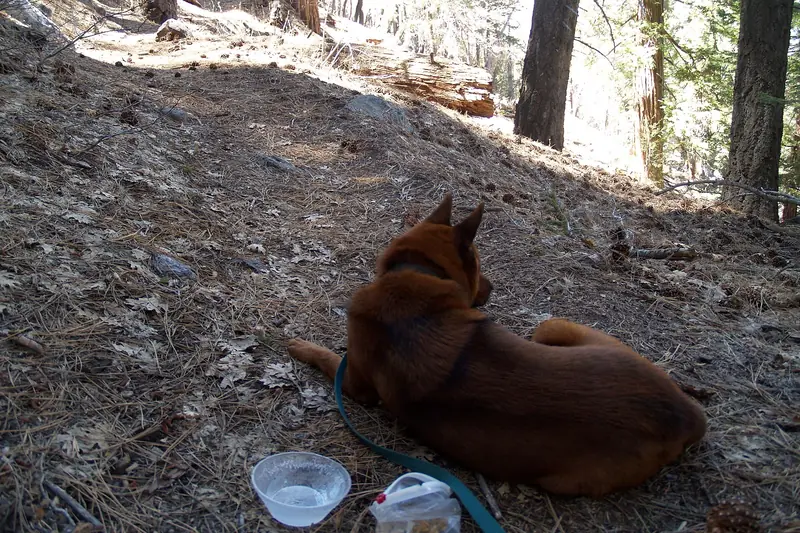
For car trips and campsites, a Boomer works well as a steady bowl at the destination, especially with its heavy base on uneven ground. For hikes, a lighter option usually makes more sense:
- Collapsible silicone bowls fold flat, clip to a pack and weigh very little. Rinse them after every use, since folds trap grit and saliva.
- Lightweight steel camping bowls are tougher than silicone and still pack small.
- Water bottles with a built in trough let you pour a little water at a time without carrying a separate bowl.
Whatever you carry, bring more water than you think you need on warm days, offer it often, and keep a dog secured in the car with a crash tested restraint. Our dog seat belt guide explains the options, and a dog cooling mat helps at hot campsites.
What Are Good Alternatives to the YETI Dog Bowl?
Answer: If you like the Boomer's sturdiness but not the price, a heavy stainless bowl with a rubber base gets you most of the way. If your dog has a specific need, a specialty bowl is a better buy: slow feeders for fast eaters, raised feeders for some large or older dogs, and fountains for dogs that drink too little.
Match the bowl to the problem you actually have:
- Plain stainless with a rubber base: the closest budget match to the Boomer. Look for a seamless bowl and a base ring that is bonded on, not glued in a thin strip.
- Stainless insert in a holder: a steel bowl that lifts out of a heavier ceramic, melamine or wooden surround. The holder adds stability and the steel insert goes in the dishwasher.
- Slow feeder bowls: ridges and mazes slow down dogs that inhale their meals. Our slow feeder dog bowl guide compares styles.
- Raised feeders: a stand that lifts the bowl, useful for some tall or arthritic dogs after a chat with your vet.
- Water fountains: moving, filtered water can tempt reluctant drinkers. Read our dog water fountain guide before buying, since fountains need regular cleaning too.
- Snuffle mats and puzzle feeders: these turn meals into a game. See our snuffle mat for dogs guide.
If you are setting up for a new dog, start with two simple stainless bowls, then add specialty feeders once you know how your dog eats. Our new puppy essentials checklist lists the rest of the basics.
What Do People Ask Most About YETI Dog Bowls?
Answer: Owners usually ask whether the Boomer is dishwasher safe, which size to buy, whether it keeps water cold, whether the rubber ring comes off, what the warranty covers, whether it is worth the price and whether YETI sells a travel bowl. The short answers below draw on YETI's own pages and on veterinary guidance.
What is the YETI dog bowl called?
YETI's dog bowl is the Boomer. It comes in a smaller four cup size and a larger eight cup size, both made from double wall stainless steel with a rubber non-slip ring on the base.
Is the YETI Boomer dog bowl dishwasher safe?
Yes. YETI lists both Boomer sizes as dishwasher safe. You can also wash them with dish soap and warm water, but YETI says not to use bleach or abrasive cleaners, and the rubber ring does not need to come off for cleaning.
Which YETI Boomer size should I buy?
The four cup Boomer suits small dogs and puppies. The eight cup Boomer suits medium and large dogs, especially as a water bowl. Giant breeds or very active dogs may need a second water bowl or a fountain so water never runs out.
Does the YETI dog bowl keep water cold?
Not really. The Boomer has two steel walls, but YETI says it is not vacuum insulated, because the wide open top of a dog bowl would make insulation of little benefit. Add fresh cool water often on hot days instead.
Can you remove the rubber ring from a YETI dog bowl?
YETI recommends against removing the BearFoot Non-Slip Ring and says it is not necessary for cleaning. Wipe around and under the ring when you wash the bowl so water and crumbs do not collect there.
Does the YETI dog bowl have a warranty?
Yes. YETI's FAQ says the Boomer comes with a five year warranty, and that engraving ordered through YETI keeps the warranty intact. Check YETI's warranty page for the current terms in your country.
Is a YETI dog bowl better than a cheap stainless bowl?
It is sturdier, heavier and better finished, with a strong warranty, but it does not make food or water any healthier. Any smooth stainless bowl that you wash daily gives your dog the same hygiene benefits for much less.
Does YETI sell a collapsible travel dog bowl?
We could not find one. When we checked the YETI US site, its dog bowl range listed only the two rigid Boomer bowls. For hiking, a light collapsible silicone or steel camping bowl from another brand packs much smaller.
Sources
- YETI: Boomer 4 Dog Bowl
- YETI: Boomer 8 Dog Bowl
- YETI: Boomer and Trailhead FAQ
- U.S. FDA: Tips for Safe Handling of Pet Food and Treats
- Luisana et al. (2022), Survey evaluation of dog owners' feeding practices and dog bowls' hygiene assessment in domestic settings, PLOS ONE
- NSF: Clean the Germiest Home Items
- American Kennel Club: How Often Should I Wash My Dog's Bowl?
- American Kennel Club: Is Your Puppy Drinking Enough Water?
Everyday gear for happy dogs
Browse toys, accessories and essentials for dogs of every size.
Shop dog accessories