Cats love warmth. Watch any cat for a day and you will find it on a sunny windowsill, on top of the laptop, or pressed against a radiator. A heated cat pad gives that warmth a safe, steady home. This guide explains the main types of pads, which cats benefit most, the safety rules vets stress, and how to choose and place a pad for an indoor cat, a kitten or an outdoor shelter.
In This Article
- Quick Answer: What Is a Heated Cat Pad?
- What Types of Heated Cat Pads Are There?
- How Do the Main Types Compare?
- Which Cats Benefit Most From a Heated Pad?
- Are Heated Cat Pads Safe?
- Why Should You Never Use a Human Heating Pad on a Cat?
- Can Kittens Use a Heated Cat Pad?
- How Do You Warm an Outdoor or Feral Cat Shelter?
- How Do You Choose the Right Heated Cat Pad?
- Where Should You Put a Heated Cat Pad?
- What Do People Ask Most About Heated Cat Pads?
- Sources
Quick Answer: What Is a Heated Cat Pad?
A heated cat pad is a warm resting mat for cats. Electric pet pads use low power and a thermostat to stay near a cat's body temperature, self-warming pads return the cat's own heat, and microwavable discs hold heat for hours. Choose a pet rated pad, never a human one, and always leave room to move off.
Updated October 19, 2026- Safest choice: a self-warming pad with no cord, for healthy indoor cats in a reasonably warm home.
- Most warmth: a low wattage electric pet pad with a built in thermostat, for seniors, arthritic or hairless cats.
- Outdoors: only pads made for outdoor use, with a chew resistant cord, inside a dry, insulated shelter.
- Never: a heating pad made for people, a pad in a space the cat cannot leave, or a pad under an unconscious or recovering pet without vet guidance.
What Types of Heated Cat Pads Are There?
Answer: There are four main types. Electric indoor pads plug into the wall and hold a gentle, thermostat controlled warmth. Self-warming pads use no power and reflect a cat's own body heat. Microwavable discs are heated in the microwave and slipped under bedding. Outdoor heated pads are rugged electric pads built for sheds, garages and cat shelters.
Electric indoor pads are the classic heated cat pad. They draw very little power and use an internal thermostat rather than a dial. K&H Pet Products, for example, says its Thermo-Kitty Mat uses just six watts, warms to about the natural body temperature of cats when one lies on it, and stays only a little warmer than the room when empty. It has no on and off switch and is meant for indoor use only. Source: K&H Pet Products, Thermo-Kitty Mat.
Self-warming pads have no cord at all. A layer inside the pad traps the heat your cat gives off and sends it back, so the pad feels warm a few minutes after your cat settles in. K&H describes its Self-Warming Pet Pad this way: the material captures your pet's body heat and radiates it back. Some other makers use a thin reflective or insulating layer to the same end. Source: K&H Pet Products, Self-Warming Pet Pad.
Microwavable discs are hard plastic discs filled with a heat holding material. You heat one for a few minutes, put it in its fleece cover or under bedding, and it releases its warmth slowly as it cools. They are handy for travel, power cuts and short term use. The maker of the SnuggleSafe disc sets the heating time by microwave wattage and warns never to exceed it. Source: SnuggleSafe heatpad instructions.
Outdoor heated pads are built tougher. The K&H Original Lectro-Kennel, for instance, has a rigid plastic shell, a steel wrapped cord that deters chewing, and is designed for sheds, garages, barns and other sheltered outdoor spots. These pads use more power than indoor mats because they have to fight colder air. Source: K&H Pet Products, Original Lectro-Kennel.
You will also see heated beds, which build a warming element into a full cushioned or enclosed bed. A pad is the more flexible option: you can slip it into a bed your cat already loves, a window perch, or a cat tree bed. If you prefer an all in one bed, our heated cat bed guide covers those.
How Do the Main Types Compare?
Answer: Self-warming pads are the safest and cheapest to run but add no extra heat. Electric indoor pads give steady, gentle warmth for cats that truly need it. Microwavable discs are cordless but cool down over time. Outdoor pads are the only electric choice for shelters, and they need a protected, safe power supply.
Specs vary between models and change over time, so read the label and manual of the exact pad you buy. The safety rules in the rest of this guide apply to every brand. Source: K&H Pet Products, Thermo-Kitty Mat.
Which Cats Benefit Most From a Heated Pad?
Answer: Senior cats, cats with arthritis, hairless breeds such as the Sphynx, thin or recovering cats under vet guidance, young kittens without a mother, and community cats living outdoors benefit most. A healthy adult cat in a warm home usually does fine with a soft bed in a sunny, draft free spot.
Senior cats. The Cornell Feline Health Center notes that cats like warm resting places and that an older cat's favorite soft bed should not sit in a drafty part of the home. It adds an important warning: too much heat can burn a cat that cannot move quickly, so the goal is warm but not hot. Source: Cornell Feline Health Center, Loving Care for Older Cats.
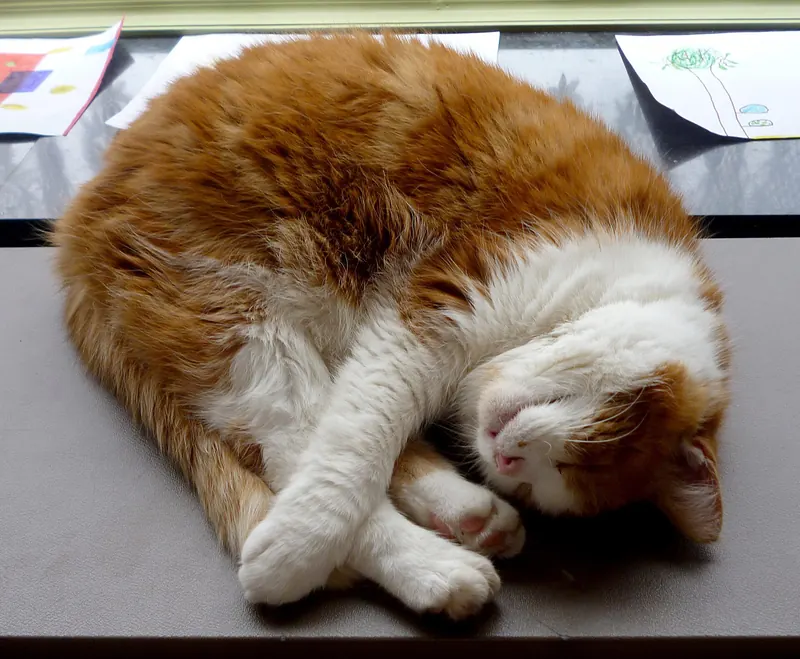
Cats with arthritis. VCA Animal Hospitals advises keeping arthritic cats warm and dry, because cold, damp conditions may worsen stiffness and discomfort. It also suggests an orthopedic or memory foam bed in an easy to reach spot, plus ramps or pet stairs to favorite perches. A low heat pad placed under such a bed combines both ideas. Source: VCA Animal Hospitals, Helping Your Cat with Osteoarthritis.
Warmth eases comfort, but it does not treat arthritis. If your cat hesitates to jump, misses the litter box or seems stiff after naps, ask your vet about pain relief. Our orthopedic pet bed guide explains what support to look for, and a low cat window perch lets a stiff cat enjoy the sun without big jumps.
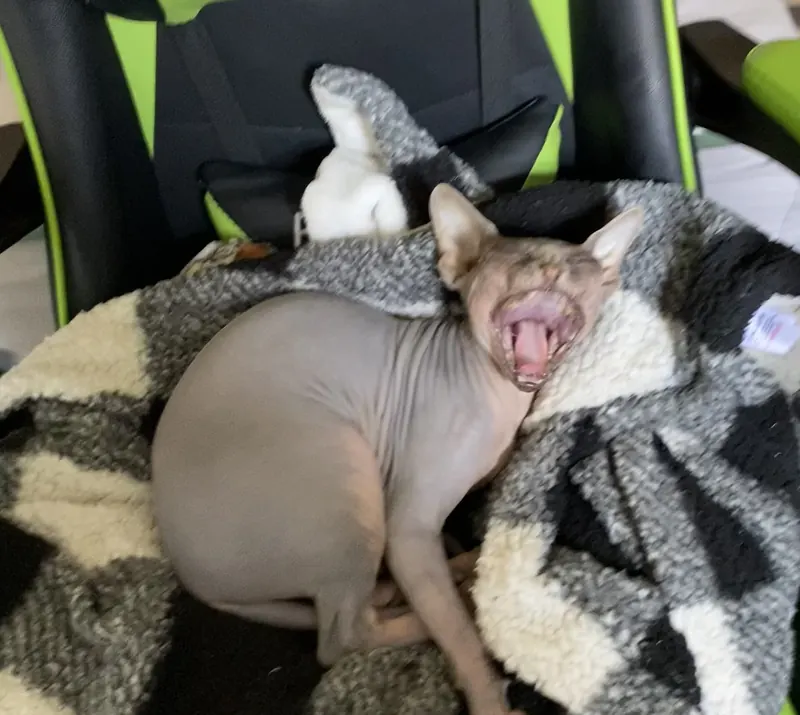
Hairless cats. Without fur to trap heat, breeds such as the Sphynx feel the cold quickly. A veterinary dermatologist quoted by PetMD recommends warm sleeping spots and draft free areas, but cautions that a heated bed must not be too hot because bare skin can burn. The same article suggests self-heating beds as a lower risk option. Source: PetMD, How To Keep Sphynx Cats and Other Hairless Cats Warm.
Other cats that may benefit include thin cats, cats in a cool basement or sunroom, and cats recovering from illness. For a cat that is sick or recovering from surgery, ask your vet first. Pet pad makers themselves say to consult a vet before using a pad with convalescent pets or any animal that cannot move off it. Source: K&H Pet Products, Original Lectro-Kennel.
Are Heated Cat Pads Safe?
Answer: They can be, when you choose a pet rated pad and follow a few rules. The main risks are burns, especially in old, sick or deeply sleeping cats, chewed cords and overheated microwavable discs. Low power, a thermostat, a chew resistant cord and a cat that can always walk away keep the risk low.
VCA Animal Hospitals takes a cautious line. It explains that heating pads can build up heat over time and burn pets that are asleep and slow to wake, with elderly, arthritic and sick pets most at risk, and that cord chewing adds another hazard. Its safer suggestion is plenty of bedding and blankets in a sunny spot. If you do use a pad, it says to use the lowest setting, cover it, never shut your pet in a crate or carrier with it, and supervise. Source: VCA Animal Hospitals, Heating Pads: True or False.
Pet specific electric pads are designed around those risks. They run on a thermostat instead of a high, medium and low dial, and better models carry an independent safety listing. K&H, for example, says its pads are MET listed and tested to UL standards, and warns against using extension cords. Source: K&H Pet Products, Thermo-Kitty Mat.
Use this safety checklist for any heated pad:
- Pick a pad made for pets. Look for a thermostat, a safety listing and clear instructions for animals.
- Protect the cord. Choose a chew resistant or steel wrapped cord, or run it behind furniture or through a cord protector.
- Plug it straight into the wall. Skip extension cords and keep the plug and outlet dry.
- Test it first. Lay a pillow on the pad for a while, then feel underneath. It should feel warm, never hot.
- Leave an escape route. Cover only part of the bed or crate floor so your cat can move to a cooler spot.
- Check your cat. Look at the belly and hips now and then for redness, hair loss or sore skin, and inspect the pad and cord for damage.
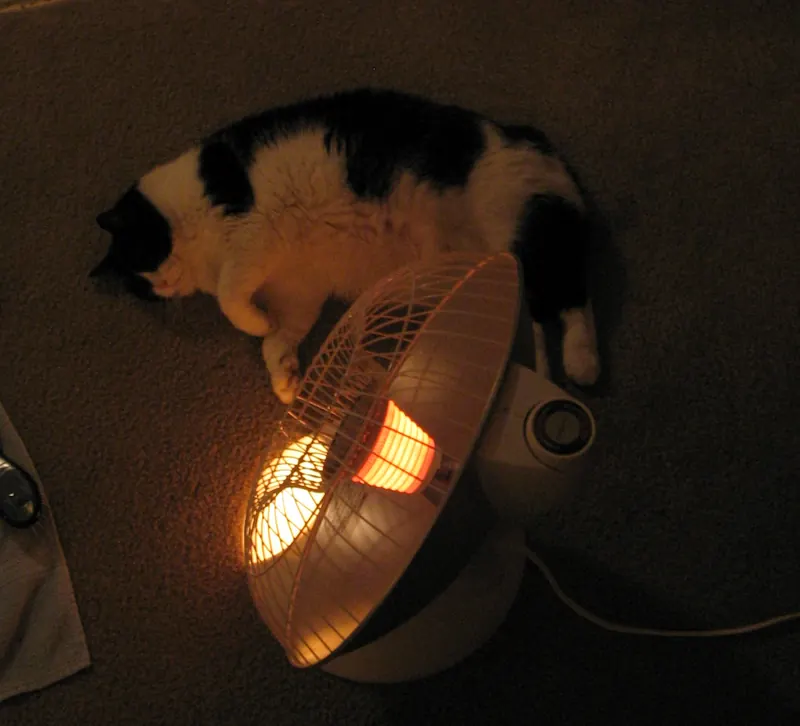
Cats are drawn to heat in ways that can surprise owners. They curl up next to heaters, on top of electronics and inside warm laundry. A pet pad gives them a dedicated warm spot that is designed for long contact, which is far safer than a space heater, a radiator cover or a pile of clothes on top of an appliance.
Why Should You Never Use a Human Heating Pad on a Cat?
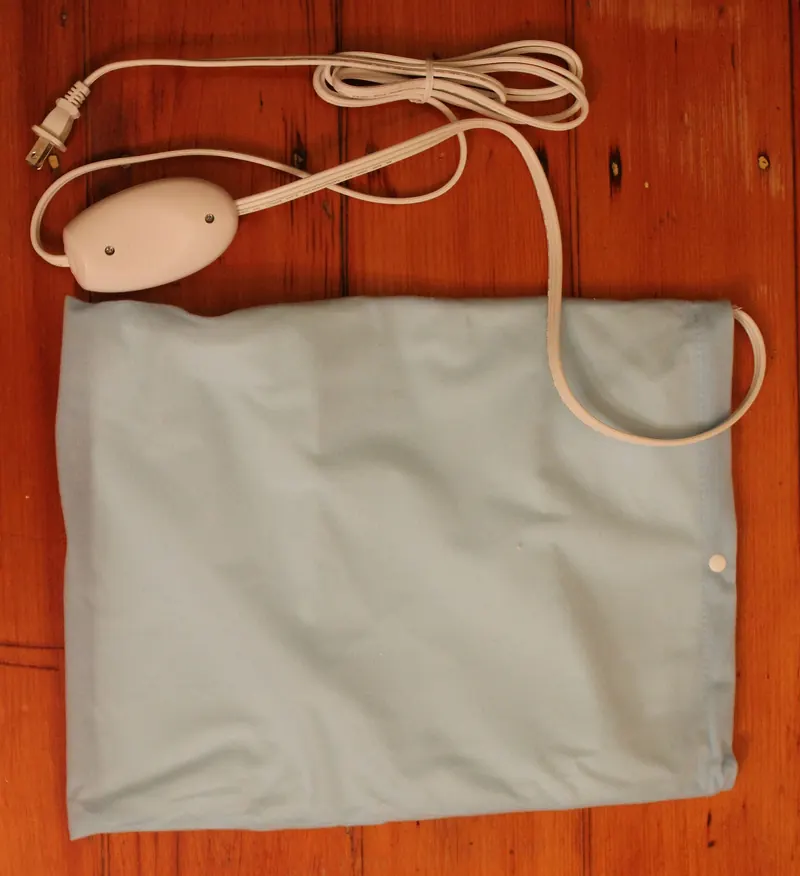
Answer: A heating pad for people is built for an awake adult who can feel heat and switch it off. A sleeping, elderly or sick cat may not move away in time, and the cord is not made to resist chewing. Veterinary and manufacturer sources both point owners to pads designed for pets instead.
The difference is design, not brand. A pet pad warms to around a cat's own body temperature and holds there, while a human pad is designed to deliver therapeutic heat to a person who is watching the clock. K&H's advice on warming newborn kittens is direct: choose a pad designed specifically for pets and do not use a regular human heating pad. Source: K&H Pet Products, Keeping Newborn Kittens Warm.
The same logic applies to electric blankets, hot water bottles filled from the kettle, and rice socks warmed in the microwave. They have no reliable way to stay at a safe temperature, and rice socks are easy to overheat. If you need warmth in an emergency and have nothing else, wrap the heat source in several towels, cover only part of the bed, and stay with your cat.
Can Kittens Use a Heated Cat Pad?
Answer: Yes, with care and ideally with your vet's input. Newborn kittens cannot control their body temperature well for their first few weeks and normally rely on their mother. Orphaned or bottle fed kittens need outside warmth, but they also need a cooler area of the nest, because they cannot always crawl away from heat.
K&H notes that newborn kittens cannot properly regulate their body temperature for the first few weeks. Its advice is to add supplemental heat with a pet specific pad and to give kittens an area of the nesting box where they can get away from the warmth if they wish. Pad makers also tell owners to consult a vet before using a pad with very young kittens. Source: K&H Pet Products, Keeping Newborn Kittens Warm.
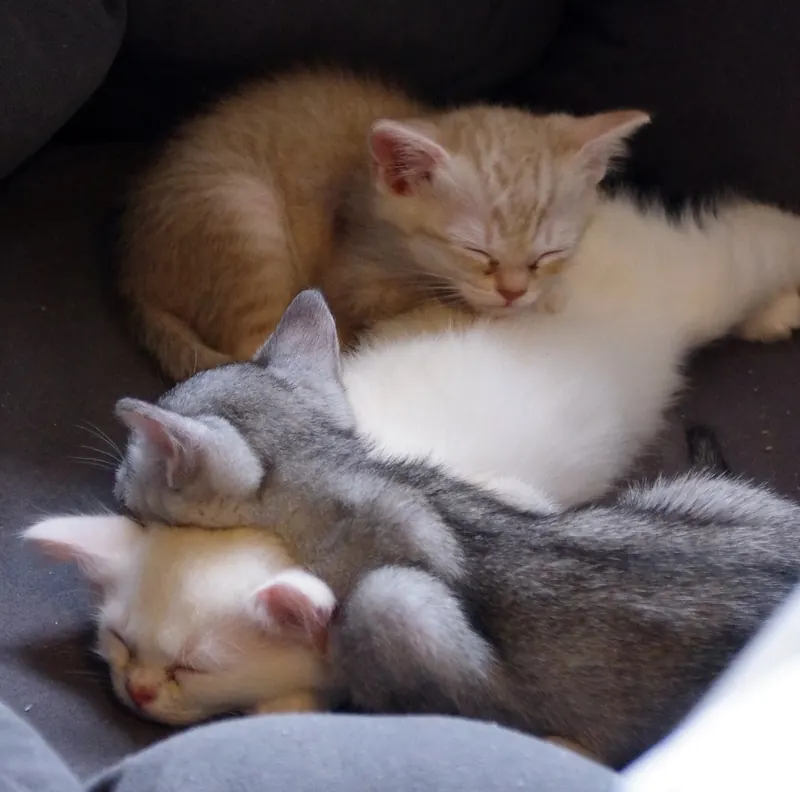
A simple kitten setup looks like this:
- Choose a box or carrier big enough for the kittens to move around in.
- Place a pet rated pad under one half of the box, not the whole floor.
- Cover the floor with soft towels or fleece so no kitten touches the pad directly.
- Check that the warm side feels warm, not hot, to the back of your hand.
- Watch where the kittens sleep. If they all crowd away from the pad, it is too warm; if they pile on top of each other at the far side and feel cool, they may need more warmth.
- Call your vet or rescue group right away if a kitten feels cold to the touch, will not feed or seems weak.
Once kittens are older and running around, a normal cozy bed is usually enough. Our new kitten essentials list covers the rest of the setup, and our kitten toys guide helps them burn off energy before nap time.
How Do You Warm an Outdoor or Feral Cat Shelter?
Answer: Start with the shelter, not the heater. A small, insulated, wind proof box filled with straw keeps most community cats warm. In very cold places you can add an outdoor rated electric pad with a chew resistant cord, or a covered microwavable disc, but never indoor pads, blankets or towels.
Alley Cat Allies, a national advocacy group for community cats, recommends straw rather than hay in outdoor shelters, because straw repels moisture and cats can burrow into it to stay warm and dry. It also advises adding straw through the season, clearing snow from shelter entrances, and using heated bowls so water and wet food do not freeze. Source: Alley Cat Allies, Help Outdoor Cats in Winter.
Its simple do it yourself design nests a small plastic tub inside a larger one, with a thin foam slab on the bottom and straw packed between and inside the tubs. That insulation does most of the work: a small, well packed space warms up quickly from a cat's own body heat. Source: Alley Cat Allies, How to Build an Outdoor Shelter.
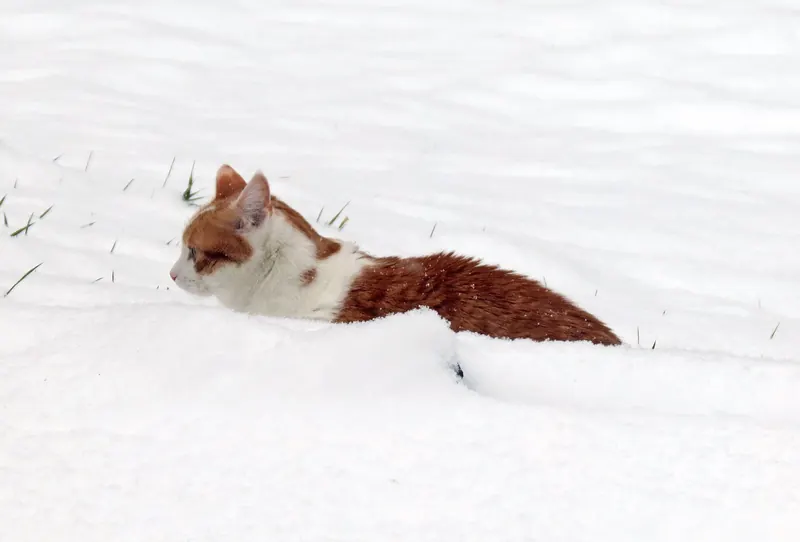
If you add electric heat outdoors, choose a pad sold for outdoor use. The K&H Original Lectro-Kennel, for example, is water resistant but must not sit where water can pool, can be screwed to the floor or wall so pets cannot lift it, and should have nothing but its own cover on top, since blankets can trap heat. Source: K&H Pet Products, Original Lectro-Kennel.
Because an outdoor pad should carry only its own cover, follow the maker's advice on where straw can go, and keep loose bedding off the pad itself. Use a covered outdoor outlet with a ground fault breaker, and ask an electrician if you are unsure.
Where there is no power, a covered microwavable disc tucked under straw can take the edge off a cold night, as long as someone can reheat it safely each day. Ready made insulated houses are covered in our heated cat houses for outdoor cats and cat house for outdoor cats guides.
For pet cats, the simplest rule is to keep them inside in cold weather. The ASPCA reminds owners that if it is too cold for you, it is probably too cold for your pet, and that pets need a warm place to sleep off the floor and away from drafts. Source: ASPCA, Cold Weather Safety Tips.
How Do You Choose the Right Heated Cat Pad?
Answer: Match the pad to your cat and your space. For a healthy cat in a warm home, a self-warming pad is enough. For seniors, arthritic or hairless cats, choose a low wattage electric pet pad with a thermostat and a protected cord. For shelters and garages, buy a pad rated for outdoor use.
Beyond the type, compare these details on the box or product page:
- Size: big enough for your cat to stretch out, but small enough to leave cool space around it in the bed.
- Thermostat: fixed, low temperature thermostats suit cats better than high heat dials.
- Safety listing: look for an independent mark such as UL, ETL or MET on electric pads.
- Cord: length to reach the outlet without an extension, and chew resistance if your cat bites cables.
- Cover: removable and machine washable, so you can clean hair and accidents easily.
- Warranty and support: a clear warranty and replacement parts are signs of a maker that stands behind the product.
A pad is only as good as the bed around it. If your cat already has a favorite, slip the pad underneath. If not, our best cat bed guide and our roundup of cat beds help you pick one that suits your cat's sleeping style.
Where Should You Put a Heated Cat Pad?
Answer: Put it where your cat already likes to sleep, in a quiet, draft free spot that is easy to reach, close to an outlet and away from water. Place it under a bed cover or blanket, leave cooler space nearby, and never put it in a closed crate or carrier your cat cannot leave.
- Find the favorite spot. Cats ignore beds they did not choose. Watch where yours naps and start there.
- Avoid drafts and damp. Keep the pad away from doors, cold floors and bathrooms, and lift it off a cold floor with a raised bed or a mat.
- Keep it reachable. For seniors, use a low bed or add a ramp or steps instead of a high shelf.
- Route the cord. Run it along the wall or behind furniture so it is not a toy or a trip hazard.
- Leave a cool option. Let the pad cover only part of the sleeping area, or keep a second unheated bed nearby.
- Introduce it slowly. Add a familiar blanket and a few treats. Many cats take a day or two to trust a new bed.
Window spots are popular because cats get sunshine and something to watch, and a pad under a perch cushion adds warmth on grey days. Cat trees with enclosed beds and hammocks work too; see our cat hammock guide. Dogs in the same home have their own options in our heated dog bed guide, and it is worth giving each pet a separate warm spot so nobody gets pushed off.
Many nervous cats like to hide in snug, enclosed places. A heated pad inside a covered bed or cave can become a favorite retreat, and pairing it with gentle play using calming toys for cats gives a nervous cat a steady routine of play, food and a warm nap.
What Do People Ask Most About Heated Cat Pads?
Answer: Owners usually ask whether a pad can stay on all the time, how warm it should feel, whether a human heating pad is fine, how self-warming pads compare, and whether kittens and outdoor cats can use one. The short answers below draw on the vet and maker sources listed at the end.
Can I leave a heated cat pad on all the time?
Many pet pads are made to stay plugged in, and some have no on and off switch at all. That only makes sense with a pet rated, thermostat controlled pad, a cord your cat cannot chew and enough room for your cat to walk away from the heat. Unplug it when you travel.
How warm should a heated cat pad feel?
Warm, not hot. Put your hand or a pillow on it for a while and check. If it feels uncomfortable to you, it is too hot for a cat, especially an old, sick or hairless one.
Can I use my own heating pad for my cat?
It is not a good idea. Pads made for people are built for someone who can feel the heat and turn it off, not for a sleeping animal, and their cords are not made to resist chewing. Veterinary sources warn that they can burn sleeping, old or sick pets.
Is a self-warming pad as good as an electric one?
It depends on the cat and the room. A self-warming pad only holds and returns your cat's own body heat, so it is the safest option and needs no cord. It will not add warmth in a cold garage or for a cat that is already chilled.
Are heated cat pads safe for kittens?
Only with care. Very young kittens cannot control their body temperature well and cannot always crawl away from heat. Use a pet rated pad under bedding, heat only part of the box, and ask your vet first.
Do outdoor cats need a heated pad?
Not always. A dry, insulated, wind proof shelter with plenty of straw keeps many community cats warm. In very cold places, an outdoor rated pad with a chew resistant cord can help, but it needs a safe power source.
Should I put a blanket over a heated cat pad?
Use only the cover the maker supplies or one thin layer they approve. Thick blankets can trap heat on some electric pads. For microwavable discs, the opposite is true: they should always sit in their cover or under bedding.
How do I know if my cat is too hot on a heated pad?
Watch for your cat moving off the pad, panting, restlessness or red skin. Check the pad surface and your cat's belly now and then. Stop using it and call your vet if you see redness, blisters or hair loss.
Sources
- VCA Animal Hospitals: Heating pads, true or false
- VCA Animal Hospitals: Helping your cat with osteoarthritis
- Cornell Feline Health Center: Loving care for older cats
- ASPCA: Cold weather safety tips
- Alley Cat Allies: Help outdoor cats in winter
- Alley Cat Allies: How to build an outdoor shelter
- PetMD: How to keep Sphynx cats and other hairless cats warm
- K&H Pet Products: Thermo-Kitty Mat
- K&H Pet Products: Self-Warming Pet Pad
- K&H Pet Products: Original Lectro-Kennel heated pad
- K&H Pet Products: Keeping newborn kittens warm
- SnuggleSafe microwave heatpad instructions (PDF)
Cozy spots for happy cats
Browse our cat beds, trees and toys for warm naps and playful days.
Shop cat essentials