A stainless steel cat drinking fountain is a practical choice for households that want moving water without the odor, staining, or scratch concerns that can come with plastic. The best model is not simply the one with the biggest tank. It should be easy to take apart, quiet enough for your cat, sized for your home, and simple to keep clean. This guide explains what to look for, how to introduce the fountain, and when a drinking change needs veterinary attention. It also covers the question behind most searches for a stainless water fountain for cats: how much of the unit is actually steel.
Why Choose Stainless Steel for Cat Water?
Stainless steel is popular because it gives cat owners a durable, non-porous drinking surface that is usually easy to rinse and sanitize. Plastic can develop fine scratches with repeated washing, while glazed ceramic can chip or crack. Steel is not magic and it does not make neglected water safe, but it gives you a strong starting material when the surface is cleaned regularly.
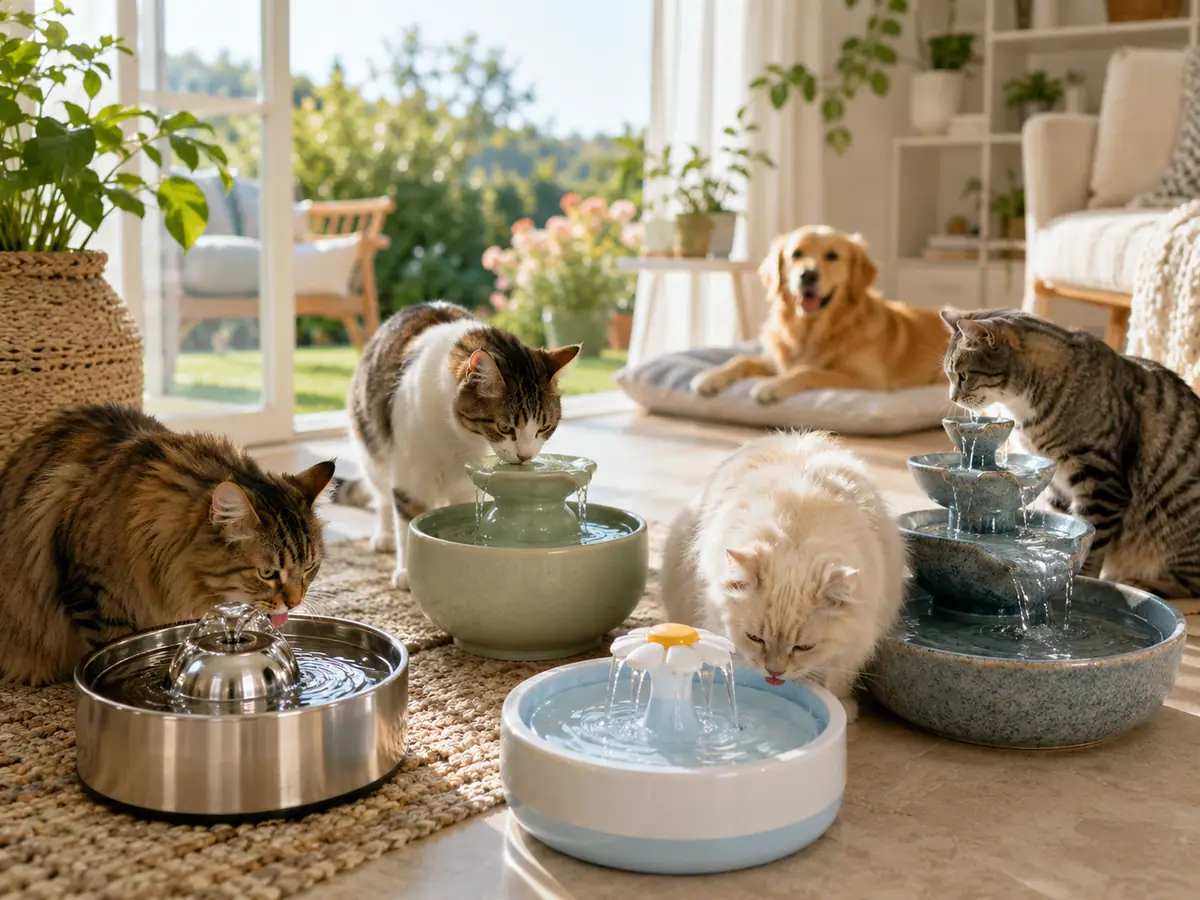
Hydration still depends on your individual cat. The Cornell Feline Health Center hydration guide explains that dehydration can be connected to illness and water loss, so a fountain should support everyday care, not replace a veterinary examination. If your cat suddenly drinks much more or much less, treat the change as useful information.
A fountain may be worth trying when your cat paws at a bowl, drinks from a tap, or ignores water that has been sitting still. Our broader cat water fountains guide compares flow styles, while the cat water fountain article covers placement and filter basics. Stainless steel is the material decision within that larger product choice.
What to Check Before Buying
Look beyond the tank capacity and check the parts you will handle every week. A reliable stainless steel cat drinking fountain should have a removable drinking surface, a pump that can be opened for rinsing, and replacement filters that are available without a complicated subscription. If a model cannot be disassembled, hair and slime can remain in the pump even when the visible bowl looks clean.
- Quiet operation: A low hum helps cautious cats accept the fountain. Avoid models that vibrate loudly on hard floors.
- Wide drinking area: A broad surface gives whiskers more room and lets a cat choose the stream or pool.
- Stable base: Rubber feet and a low center of gravity reduce sliding and splashing.
- Simple filter access: You should be able to see when the filter is dirty and replace it on schedule.
- Safe power routing: Keep the cord away from chewing pets and place the plug where a splash cannot reach it.
Do not choose a fountain only because its product page promises cleaner water or better health. A filter catches some debris and can improve taste, but it does not turn every water source into sterile water. For extra reading on choosing a drinking setup, compare our cat drinking fountain guide with the water fountain for a cat checklist.
Material quality matters too. Look for food-contact information from the manufacturer, smooth welds, and a finish without sharp edges. The FDA overview of food contact substances is useful background on why materials that touch food or water deserve careful sourcing. It is not a certification for a particular pet fountain, so verify the product claims separately.
Capacity, Height, and Multi-Cat Sizing
Choose capacity around your refill routine, not a promise that the cat will drink the entire reservoir. One healthy indoor cat often does well with a 1.5 to 2 liter fountain if you refresh it frequently. Two cats may need 2.5 to 3 liters, or two separate stations if one cat guards resources. In a larger home, two smaller fountains in different rooms can be more useful than one oversized unit.
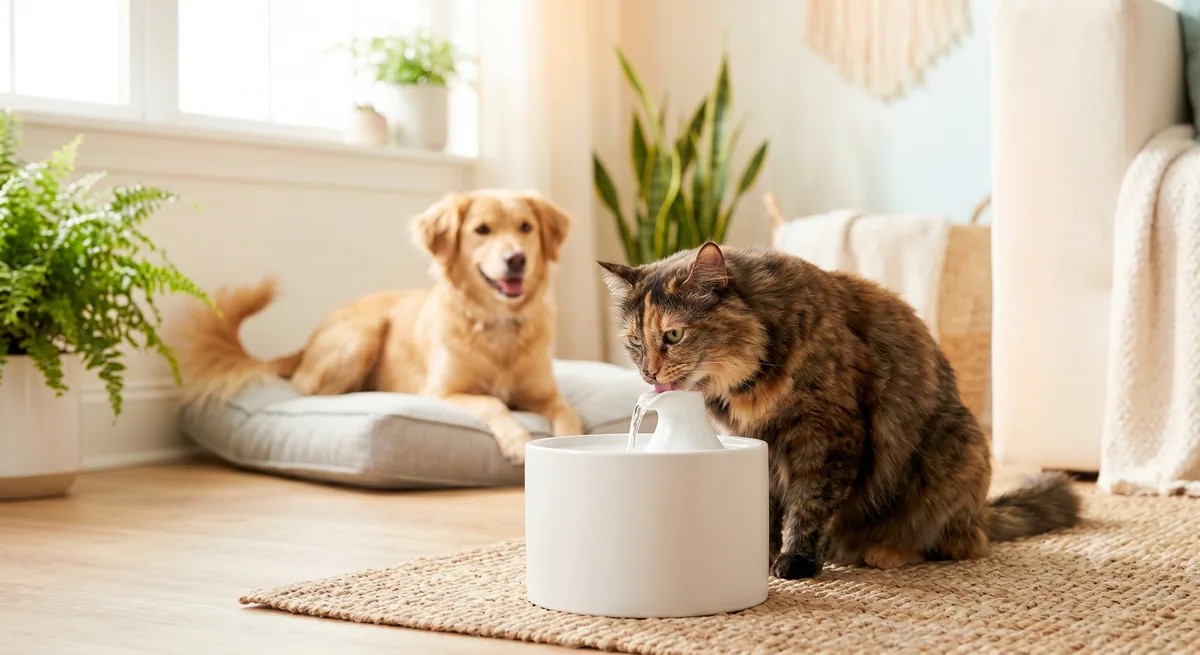
Height should match your cat. Kittens and small cats need a low, easy-to-reach drinking surface. Older cats may appreciate a raised rim that reduces crouching, but a tall fountain is not automatically better. Watch posture during the first week. If the cat stretches awkwardly, spills water, or avoids the unit, adjust the height or offer a second bowl.
Water intake also comes from food. The VCA guide to encouraging cats to drink more notes that needs vary with body size, food, activity, temperature, and health. Use a fountain as one option in a hydration routine, alongside fresh bowls and suitable food. Our water drinking fountain guide has more ideas for homes with hesitant drinkers.
How to Clean a Stainless Steel Cat Fountain
Cleaning is the part that determines whether a fountain remains helpful. Empty and rinse the reservoir before it develops a slippery film. At least weekly, unplug the pump, remove the steel basin, wash the parts with mild dish soap, and rinse until no soap remains. Follow the product instructions for filters because some are disposable and others are washable only in a limited way.
Use a small brush or cotton swab for the pump inlet and impeller chamber. Hair, food dust, and mineral scale collect in these narrow spaces. Do not assume that a fresh filter can compensate for a dirty pump. Replace the filter at the maker's recommended interval, sooner if it smells, looks clogged, or the water flow weakens.
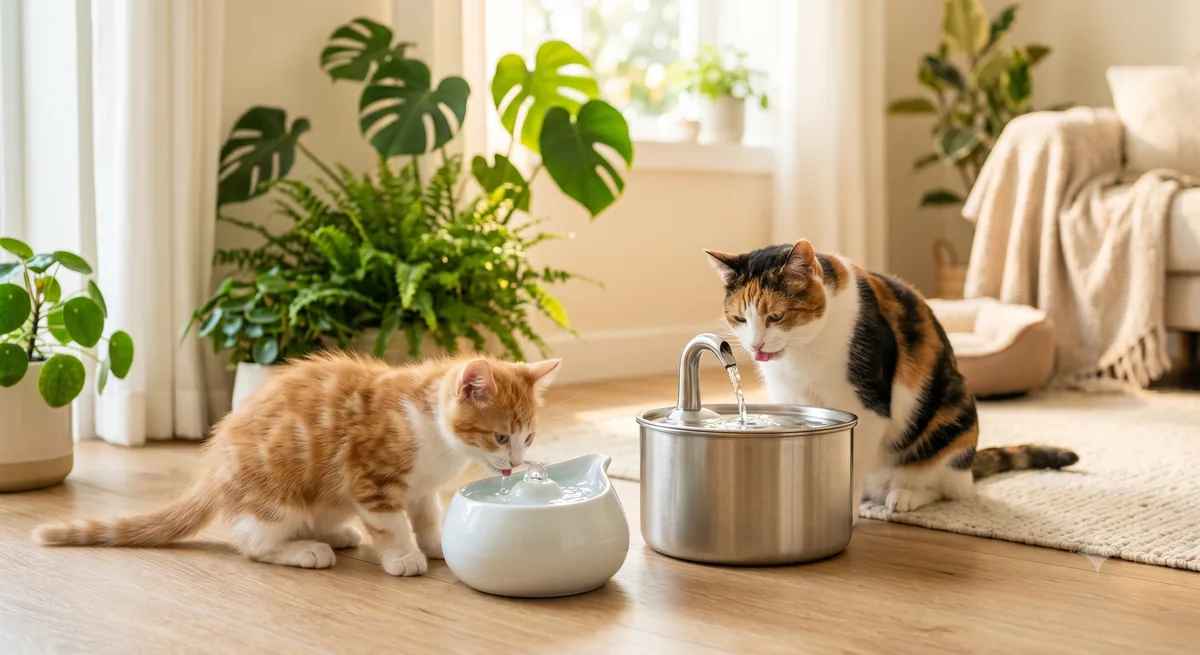
For hard-water scale, ask the manufacturer whether diluted white vinegar is suitable for the pump and steel parts, then rinse thoroughly. Never mix cleaning chemicals. Keep the drinking surface away from litter dust and food crumbs, and put the fountain on a washable mat. The ASPCA general cat care guidance also emphasizes fresh, clean water and daily bowl washing, which is a useful minimum standard even when you use a fountain.
How to Introduce a Fountain to Your Cat
Do not remove the old bowl on day one. Place the stainless steel cat drinking fountain near the familiar station while leaving the bowl available. Run the fountain at its quietest setting and let your cat inspect it without being carried over or pushed toward the stream. Some cats need several days to accept the sound and movement.
- Wash and fill the fountain, then run it for a few minutes before presenting it.
- Keep the old bowl nearby and refresh both water sources.
- Try a lower flow if your cat startles, splashes, or watches from a distance.
- Move the fountain to a quiet area away from the litter box and food.
- Keep both options until you have observed consistent drinking from the fountain.
A cat that prefers a tap may like a gentle stream, while a nervous cat may prefer a still pool inside the same unit. If your cat dislikes the first fountain, that does not prove all fountains will fail. The feline water fountain guide and cat fountain drinker guide cover different flow and placement preferences.
Common Problems and Safe Solutions
The fountain is ignored: Check noise, location, water freshness, and whether the stream touches the whiskers. Offer a wide bowl beside it and try a different flow mode. Some cats prefer multiple water stations, which you can plan with our fountain water for cats article.
The water smells: Unplug and clean the pump, basin, and filter housing. A smell can mean trapped organic material, a filter past its useful life, or soap residue. If the odor remains after a full clean, stop using the unit and contact the manufacturer.
The pump is weak: Remove hair from the inlet and impeller, confirm the water level, and inspect the filter. Running a pump dry can damage it. Keep a backup bowl available during troubleshooting.
Your cat drinks dramatically more or less: Track the change rather than trying to solve it with a new product. The Cornell guidance on feline lower urinary tract disease reinforces the importance of clean water, while signs such as straining, repeated litter box visits, vomiting, lethargy, or sudden thirst need veterinary advice. A fountain can make water easier to offer, but it cannot diagnose a health problem.
Once the routine works, you can browse our kitty water fountain guide for additional setup ideas or explore the Livehappypet cat collection for complementary supplies.
Stainless Water Fountain for Cats: What "All Steel" Really Means
People who search for a stainless water fountain for cats usually picture one thing: a unit made of metal from the drinking rim down to the base. Most of what actually ships under that description is a steel bowl or steel top plate sitting on a moulded plastic tank, with a plastic pump housing underneath. That is not dishonest labelling in every case, but it does change what you are scrubbing every week, and it is the single detail that decides whether the switch to steel does anything for you.
Read the construction before you read the marketing. The question is not whether the word stainless appears on the box. It is which surfaces the water touches while it sits, and which surfaces your cat's chin and whiskers touch while she drinks.
Full Steel, Steel-Topped, or Steel Trim
Three constructions get sold under the same phrase, and they behave differently once the fountain has been in service for a month.
- Full steel body and bowl: reservoir walls, drinking bowl, and top plate are all metal. Only the pump housing and a few seals are plastic, because an impeller chamber has to be moulded. This is the version most buyers think they are ordering.
- Steel bowl on a plastic tank: the drinking surface is metal and the reservoir that holds standing water is plastic. Better than all plastic, because the cat's face meets steel, but the water still sits against a plastic wall between cleans.
- Steel trim: a metal ring, lid, or decorative plate on an otherwise plastic unit. Cosmetic. Treat it as a plastic fountain for cleaning purposes.
You can usually tell from the listing without asking. A full steel unit has photographs of the empty reservoir showing a metal interior, and it is noticeably heavier empty than the plastic equivalent of the same volume. A steel-topped hybrid tends to be photographed full, from above, where the plastic tank is out of frame. If the reservoir interior is never shown, assume it is plastic and decide whether you still want it.
Reading the Grade: 18/8 and 304
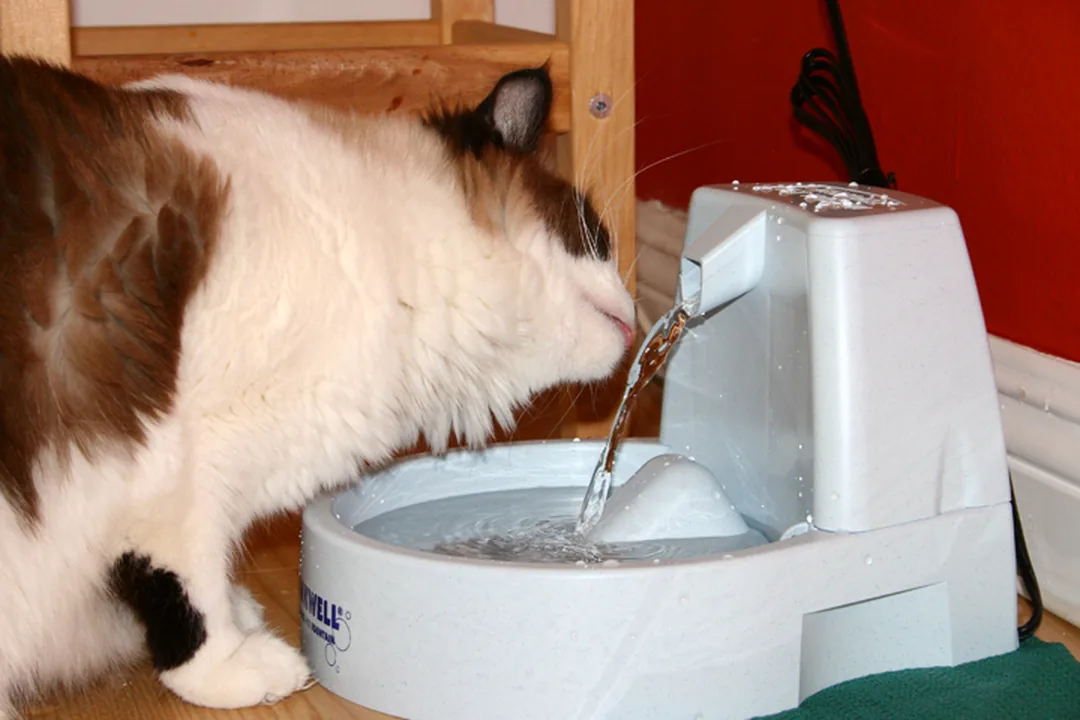
When a product page bothers to name a grade, it is almost always 304 or its trade shorthand 18/8. Those are the same material. The AZoM materials datasheet for Stainless Steel Grade 304 states that grade 304 is a standard 18/8 stainless and that it is the most versatile and most widely used stainless steel available, with food processing equipment and kitchen sinks and benches among its typical applications. That is the practical reason to want it in a water fountain: it is the same family of steel already used where food and water sit for hours.
A listing that says only stainless steel, with no grade, is telling you the finish and nothing about the alloy. That is not automatically bad, and plenty of unlabelled bowls hold up fine, but it removes your ability to compare two products on anything except price. Ask the seller for the grade in writing before you buy. A manufacturer that knows its own supply chain will answer in one line. A reseller that cannot answer at all has told you something useful too.
Ignore claims that a particular grade purifies, ionises, or sterilises water. Steel is a container. It resists corrosion and it does not develop the fine scratches that plastic develops, which is genuinely helpful, but no alloy replaces emptying the reservoir and washing it.
Why Owners Move Away From Plastic: the Chin Acne Question
The most common reason people go looking for steel in the first place is a cat with a grubby, spotted chin. VCA Hospitals, writing about acne in cats, puts it carefully: "There may be an association between using plastic food and water dishes and chin acne, as the irregular surface or scratches in the plastic make it more prone to bacterial contamination." The same page notes that replacing plastic food and water dishes with non-porous, smooth-surface dishes like glass or stainless may help to resolve chin acne in some cats, as well as daily washing of these dishes.
Read both halves of that. It is an association, not a proven cause, and the same guidance pairs the material change with daily washing rather than presenting steel as a fix on its own. A stainless fountain that is topped up for three weeks without being taken apart is not better than a plastic bowl that is washed every morning. If your cat already has chin lesions, the material swap is a sensible change to make alongside a veterinary visit, not instead of one.
This is also the argument for caring about the whole body and not just the bowl. If the chin touches steel but the water sits in a scratched plastic tank all week, you have improved one of the two surfaces. Our cat pet water fountain guide walks through the same trade-off from the product-choice side.
Sizing Steel Against What Your Cat Actually Drinks
Steel reservoirs are usually opaque, which changes how you manage capacity. You cannot glance at the side and see the level, so either pick a model with a window or a marked fill line, or commit to a refill schedule.
It also helps to know how small the real number is. The Cornell Feline Health Center's hydration guidance states that "Cats need to consume about 4 ounces of water per five pounds of lean body weight per day, so the average 10-pound cat should drink about one cup of water per day." That is total water intake, not fountain drinking, and the same page notes that cats that eat wet food, which can contain up to 80% water, may drink less.
So a two litre steel reservoir holds roughly a week of one average cat's entire daily water requirement. Capacity is a decision about how often you want to refill and how long you are willing to let water stand, not a decision about thirst. A larger tank in a single-cat home mostly means older water. If your honest cleaning rhythm is weekly, a smaller reservoir you empty every two or three days serves the cat better than a big one you top up.
Multi-cat homes are the real case for more capacity, and even there the answer is usually more stations rather than a bigger tank. Cornell notes that increasing water intake depends partly on assuring that there are no conflicts among cats or other pets that may result in a particular cat being banned from the water bowl. A second fountain in another room solves a social problem that a three litre tank does not. Our feline drinking fountain guide covers placement for households where one cat guards resources.
Hard Water, Heat, and the Weekly Reality
Steel handles two everyday situations better than plastic and one slightly worse. It tolerates hot rinse water without clouding or warping, so a hot final rinse is practical. It does not hold odour in scratches. But mineral scale shows on a polished steel rim as a chalky white ring far more visibly than on textured plastic, so a steel fountain in a hard water area will look neglected sooner than a plastic one that is equally dirty. That visibility is a feature, not a fault. Check with the manufacturer whether diluted white vinegar is safe for the pump and the finish, then rinse thoroughly.
Warm weather is when the fountain earns its place. Cornell's feline heat safety guidance advises helping maintain hydration by assuring that fresh water is available at all times, and states that "Providing a running water source like a fountain may encourage some cats to drink more." In hot spells, shorten the interval between full cleans rather than simply topping up, because warm standing water develops a film faster.
Steel Is the Surface, Not the Outcome
Material is one variable among several, and it is not the one that decides whether your particular cat drinks. Cornell is blunt about this: "Some cats increase their intake of water when provided with water fountains, but individual preferences among cats for these varies." Buy steel for the cleaning and durability advantages you will actually notice, and judge the fountain on whether your cat uses it.
| Construction | What the cat drinks from | Cleaning reality | Checking the level | Main watch-out |
|---|---|---|---|---|
| Full steel body and bowl | Metal rim and metal basin | Easiest to inspect; tolerates a hot rinse; no scratch build-up | Opaque, needs a window, a fill line, or a schedule | Costs most, and the pump chamber is still plastic |
| Steel bowl on a plastic tank | Metal rim, plastic reservoir walls | Bowl wipes clean, tank still scratches and needs scrubbing | Often visible through the tank | Marketed as stainless; only half of it is |
| Ceramic | Glazed, non-porous surface | Very easy to clean while the glaze is intact | Opaque, same schedule problem as steel | Chips and hairline cracks end its useful life |
| Plastic | Moulded plastic throughout | Needs the most frequent scrubbing as the surface wears | Usually visible | Scratches hold film; associated with chin acne in some cats |
If the steel model you want is out of budget, a well-cleaned plastic fountain beats an expensive steel one that sits unwashed. Set the cleaning habit first, then upgrade the material. For flow styles and quiet pumps, the cat bubbler fountain guide compares the options, and homes already running scheduled equipment can pair the fountain with an automatic cat feeder on the same cleaning rota.
Frequently Asked Questions
Do cats really drink more with a water fountain?
Many cats do, especially cats that show interest in running taps or paw at their bowls. Moving water can feel fresher and more interesting. Results vary, so keep the old bowl available while you observe whether your cat consistently uses the fountain.
Which material is best for a cat water fountain?
Stainless steel is a strong all-around choice because it is durable, smooth, and easy to wash. Ceramic is stable and attractive but can chip. Plastic is light and affordable but can scratch, so it needs careful cleaning and replacement when the surface becomes worn.
How big should a cat water fountain be?
For one cat, 1.5 to 2 liters is a practical starting point. Two cats may need 2.5 to 3 liters or separate stations. With several cats, multiple locations often matter more than buying one very large reservoir.
Are fountain filters really necessary?
Filters help catch hair and debris and can improve taste, but they do not replace cleaning or make unsafe water sterile. Replace filters on schedule and choose a model with affordable, easy-to-find replacements.
Where should I put my cat’s water fountain?
Choose a quiet, well-lit area away from the litter box and not directly beside food. Keep the cord safe from chewing and place the fountain on a washable mat with enough room for your cat to approach comfortably.
Can I leave a cat water fountain running while I travel?
For a short trip, a clean, full fountain may be suitable if the pump cannot run dry. For longer travel, have a sitter check the water and clean the drinking area, and leave a backup bowl in case of an outage or pump failure.
Why does my cat still prefer the tap over the fountain?
Your cat may prefer the sound, height, or ritual of the tap. Try a quieter flow, a different location, and a clean filter. Some cats keep preferring the tap, so keep another fresh water option available rather than forcing the fountain.
Is a stainless water fountain for cats made entirely of steel?
Often not. Many units sold under that phrase pair a steel drinking bowl with a moulded plastic reservoir, and every model has a plastic pump housing because the impeller chamber has to be moulded. Look for photographs of the empty reservoir interior. If the inside of the tank is never shown, assume it is plastic.
Which stainless steel grade should a cat water fountain be?
Grade 304, also sold as 18/8, is the sensible benchmark because it is the same widely used food-equipment stainless found in kitchen sinks and benches. A listing that says only stainless steel with no grade is describing the finish, not the alloy, so ask the seller to state the grade in writing before buying.
Will a stainless water fountain clear up my cat’s chin acne?
It may help, but it is not a cure on its own. Veterinary guidance describes an association between plastic dishes and chin acne, and pairs switching to a smooth, non-porous surface such as stainless with washing the dish daily. If your cat already has chin lesions, make the swap alongside a veterinary visit rather than instead of one.
Browse Cat Supplies
Free US shipping on every order. No minimum purchase required.
Browse Cat Supplies →