A feline drinking fountain can help many cats drink more comfortably by offering fresh, moving water in a bowl-like station that feels inviting, clean, and easy to access. If your cat ignores a still water bowl or paws at the faucet, a well-chosen fountain may make daily hydration simpler. It is not a medical treatment, but it can be a practical home upgrade when paired with regular cleaning, fresh water, and guidance from your veterinarian.
At Livehappypet, we think the best pet gear is the kind that quietly supports real life. A good cat fountain should be safe, easy to wash, stable on the floor, and pleasant enough that both you and your cat can live with it every day. This guide walks through how fountains work, what to look for, how to introduce one, and how to keep it clean without turning hydration into a chore.
In This Article
Why a Feline Drinking Fountain Can Help
Cats can be surprisingly particular about water. Some prefer a wide, shallow dish. Others love the sound of a faucet. Many dislike water that sits too close to food, litter boxes, or busy walkways. A fountain gives you another way to meet those preferences because it keeps water circulating and often encourages a cat to investigate, sniff, and sip.
Hydration matters because water supports digestion, temperature regulation, kidney function, and everyday comfort. The American Veterinary Medical Association reminds pet owners that fresh water should always be available. A fountain does not replace veterinary care or a balanced diet, but it can make fresh water more appealing for cats who are easily bored by a standard bowl.
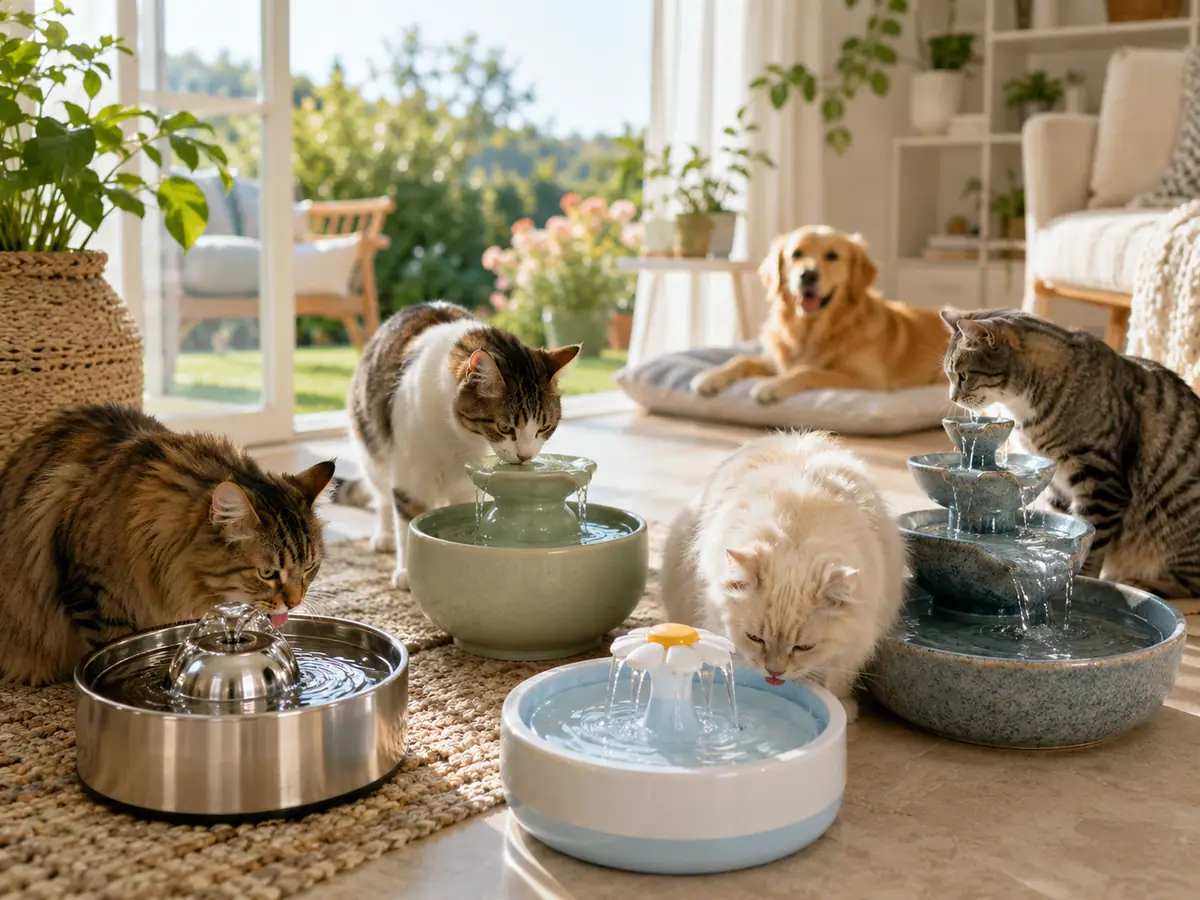
One of the biggest benefits is convenience. A fountain with a suitable reservoir can reduce how often you refill the water station, especially in multi-cat homes. The movement can also help prevent dust or hair from settling on the surface as quickly as it might in a still bowl. That said, moving water is not automatically clean water. You still need to wash the parts, replace filters as directed, and keep the pump free of hair and mineral buildup.
A fountain may be especially useful if your cat nudges the water bowl, drinks from sinks, or waits for you to turn on the tap. It can also help senior cats if the drinking surface is at a comfortable height and easy to reach. For cats with urinary, kidney, diabetic, or other health concerns, ask your veterinarian how much water intake matters for your cat's specific condition. Cornell Feline Health Center offers owner-friendly information on many feline health topics at Cornell Feline Health Center.
How to Choose a Feline Drinking Fountain
The best feline drinking fountain is the one your cat will actually use and you will actually maintain. Start with your cat's habits. A timid cat may prefer a quiet bubbler with a low splash pattern. A curious cat may enjoy a flower-style stream or gentle waterfall. A large cat may need a wider drinking area so whiskers do not brush the sides.
Capacity is another practical factor. One cat may do well with a compact fountain, while several cats need a larger reservoir and a sturdier base. If you travel for long workdays, choose a fountain that holds enough water for normal daily use, while still keeping a separate backup bowl available. No electric fountain should be your cat's only water source, because pumps can clog, cords can be unplugged, and power can go out.
| Feature | Why It Matters | What to Look For |
|---|---|---|
| Noise level | Loud motors or splashing can scare sensitive cats. | Quiet pump, stable water flow, low vibration base. |
| Drinking surface | Cats may avoid narrow bowls that touch their whiskers. | Wide, shallow top or basin with easy access. |
| Reservoir size | Too little water means frequent refills and pump strain. | Enough capacity for your household, plus a visible water line. |
| Ease of cleaning | Complicated parts make weekly washing less likely. | Simple disassembly, dishwasher-safe parts when available. |
| Stability | Playful cats may tip light fountains. | Weighted base, non-slip feet, low center of gravity. |
Think about your home, too. If the fountain will sit in a bedroom or home office, quiet operation matters. If it will be in a kitchen, choose a cord route that does not cross a walkway. If your cat is a messy drinker, place the fountain on a washable mat. Small details like these can make the difference between a fountain that becomes part of your routine and one that ends up in a closet.
Materials, Filters, and Pump Features
Cat fountains are usually made from plastic, stainless steel, ceramic, or a combination of materials. Each option can work, but each has tradeoffs. Plastic is lightweight and affordable, yet it can scratch over time. Scratches may hold residue and odors, so careful cleaning is important. Stainless steel is durable and often simple to sanitize. Ceramic feels sturdy and attractive, but it can chip if dropped and may be heavier to handle.
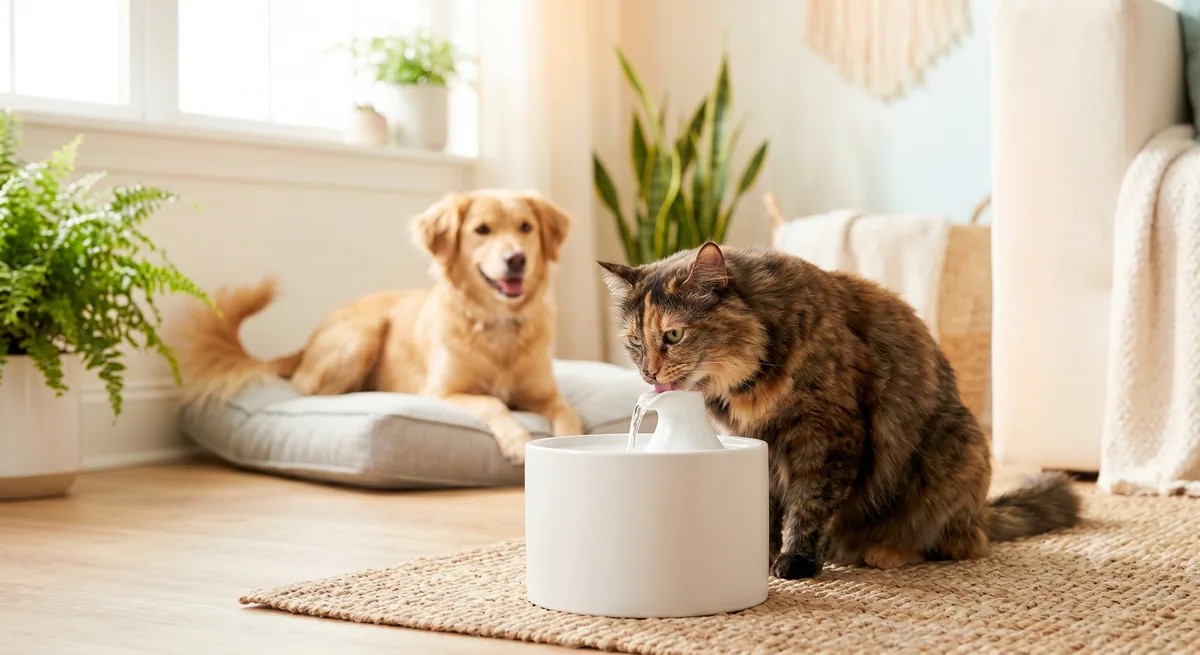
Filters are helpful, but they are not magic. Many fountains use charcoal or carbon filters to reduce odors and improve taste. Some use foam pre-filters to catch hair before it reaches the pump. A filter can improve the water experience, but it cannot make up for dirty parts or stale water. Always follow the manufacturer's replacement schedule, and rinse new filters if the instructions recommend it.
| Material | Pros | Watchouts | Best For |
|---|---|---|---|
| Plastic | Lightweight, budget-friendly, easy to move. | Can scratch, may hold odors if not cleaned well. | Trial use, travel rooms, gentle cats. |
| Stainless steel | Durable, sleek, usually easy to sanitize. | Can show water spots, may cost more. | Busy households, cats prone to chin irritation. |
| Ceramic | Heavy, attractive, less likely to slide. | Breakable, heavier during cleaning. | Calm homes, owners who want a stable fountain. |
The pump is the heart of the fountain. Look for a model with a removable pump cover so you can clean the impeller, which is the small rotating part inside. Hair, food crumbs, and minerals can slow the motor. If your water is hard, mineral deposits may build up faster. A quick soak in a pet-safe cleaning routine recommended by the manufacturer can help, but avoid harsh chemicals or strong fragrances that might turn your cat away.
Cord safety matters as well. Choose a fountain with a protected cord path, and plug it into an outlet where the cord will not be chewed or pulled. If your cat chews cords, talk with your veterinarian or a behavior professional and use appropriate cord covers. Never run a pump without enough water, because that can damage the motor and create heat or noise.
Setup, Placement, and Cat-Friendly Introduction
Where you place the fountain can matter as much as which fountain you buy. Many cats prefer water away from food and litter. A quiet corner of the kitchen, hallway, laundry room, or living area may work well if your cat already feels safe there. Avoid placing the fountain next to a noisy appliance, under a swinging door, or in a spot where a dog can crowd the cat.
When introducing the fountain, keep the old water bowl available. Let your cat explore at their own pace. Some cats drink from a fountain within minutes. Others need several days of sniffing, watching, and pretending they are not interested. You can turn the fountain off at first if the movement seems startling, then turn it on for short periods while your cat is nearby and relaxed.
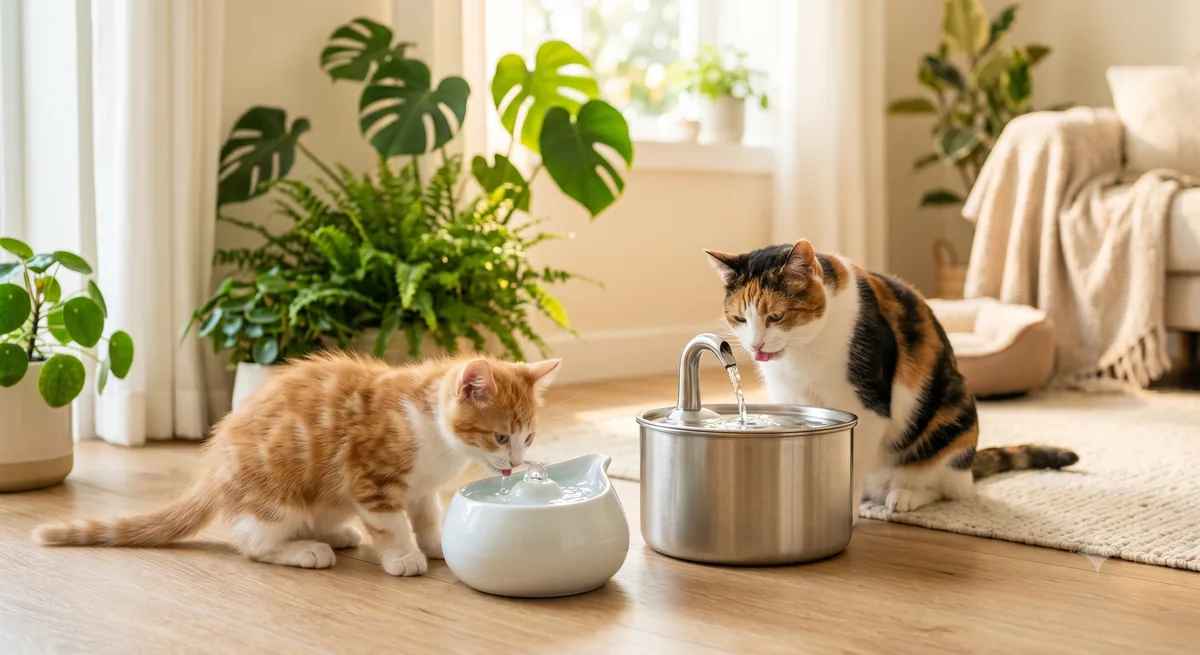
A few small tricks can help. Fill the fountain with fresh, cool water. Make sure the pump is fully submerged so it stays quiet. Sit nearby without forcing your cat toward it. If your cat enjoys treats, reward calm curiosity near the fountain, but do not place treats in the water. If your cat is cautious, move the fountain a little farther from walls so they do not feel trapped while drinking.
Multi-cat homes need extra thought. One fountain may not be enough if cats guard resources or prefer different parts of the house. Watch for subtle tension, such as one cat blocking access or another waiting until the room is empty. In that case, add more water stations in separate areas. The goal is not to make every cat share one perfect fountain. The goal is to make drinking easy, low-stress, and predictable.
Cleaning, Safety, and Troubleshooting
A fountain only helps if it stays clean. In most homes, a weekly deep clean is a sensible starting point, with more frequent cleaning if you see slime, hair, food crumbs, or cloudy water. Refill with fresh water daily or as needed. During cleaning, unplug the unit, empty all water, wash the bowl and top pieces, rinse thoroughly, and clean the pump according to the manual.
Do not forget the small parts. The pump intake, impeller, spout, and filter housing can collect debris. A small brush, cotton swab, or cleaning tool from the manufacturer can reach tight spaces. If the fountain becomes noisy, first check the water level. Low water is a common reason for rattling or humming. If the pump still sounds rough, take it apart and remove trapped hair or mineral buildup.
If your cat refuses the fountain, troubleshoot gently. Try a different location, lower the flow setting, remove a decorative spout, or offer the fountain with the pump off for a day. Some cats dislike splashing water on their face. Others dislike plastic smells from new parts. Washing and rinsing before first use can help. If your cat still prefers a bowl, that is perfectly fine. Hydration success is measured by what your cat will use, not by what looks best online.
Watch your cat's drinking behavior, but do not panic over every change. Drinking more can happen for harmless reasons, like warmer weather or a diet change, but a sudden increase in thirst can also be a health signal. Drinking much less, straining in the litter box, vomiting, lethargy, or appetite changes are reasons to contact your veterinarian. A fountain is a helpful tool, not a way to diagnose or treat illness.
For best safety, keep the fountain on a flat surface, inspect the cord regularly, and replace cracked parts. Use only filters made for your model. If you notice a burning smell, exposed wiring, persistent overheating, or pump failure, unplug the fountain and stop using it. Livehappypet always recommends choosing pet products that fit your cat's personality, your home setup, and your ability to maintain them consistently.
Feline Drinking Fountain FAQs
Is a feline drinking fountain better than a regular bowl?
A feline drinking fountain can be better for cats that prefer moving water, but it is not automatically better for every cat. Some cats drink happily from a clean bowl. The best choice is the one your cat uses consistently. Many owners keep both a fountain and a backup bowl.
How often should I clean a cat water fountain?
A weekly deep clean is a good starting routine for many homes, with daily refills and quick checks. Clean more often if you see hair, slime, cloudy water, or food crumbs. Always follow the manufacturer's instructions for your specific model.
Do cat fountains use a lot of electricity?
Most cat fountains use small low-power pumps, but exact usage depends on the model. Check the product label or manual for wattage. If energy use matters to you, choose an efficient pump and unplug the unit during cleaning or if it is not being used.
Can a fountain help a cat with urinary issues?
A fountain may encourage some cats to drink, which can support hydration, but urinary problems need veterinary guidance. If your cat strains, cries in the litter box, urinates outside the box, or seems unwell, contact a veterinarian promptly.
What material is safest for a cat fountain?
Stainless steel, ceramic, and quality plastic can all be safe when kept clean and used as intended. Stainless steel and ceramic are often easier to sanitize, while plastic should be monitored for scratches. Replace damaged parts as needed.
Why is my cat fountain noisy?
Noise often comes from low water, trapped hair, mineral buildup, vibration, or a pump that is not seated correctly. Refill the reservoir, clean the pump and impeller, check that parts are aligned, and place the fountain on a level surface.
What if my cat ignores the fountain?
Give your cat time and keep the old bowl available. Try moving the fountain to a quieter place, reducing the flow, or running it only during calm moments at first. If your cat still prefers a bowl, choose the bowl. Comfort and reliable water access matter most.
Explore Cat Essentials
Give your cat comfortable, practical gear with free US shipping from Livehappypet.
Shop Cat Essentials →