A cat bubbler fountain is a specific style of drinking fountain: instead of a stream that falls from above, water gently bubbles up from the center, like a tiny drinking spring. That difference sounds small, but for many cats it decides whether the fountain gets used at all. This guide explains how bubbler fountains work, which cats they suit best, and how to set one up so your cat actually drinks more.
What Makes a Cat Bubbler Fountain Different
Most cat fountains move water in one of three ways: a free-falling stream, a sloped cascade, or a bubbler. In a bubbler design, the pump pushes water up through a narrow opening at the top of the unit so it wells up and ripples back down over a rounded surface. The water level around the spout stays shallow and calm, so cats can drink straight from the source without getting splashed.
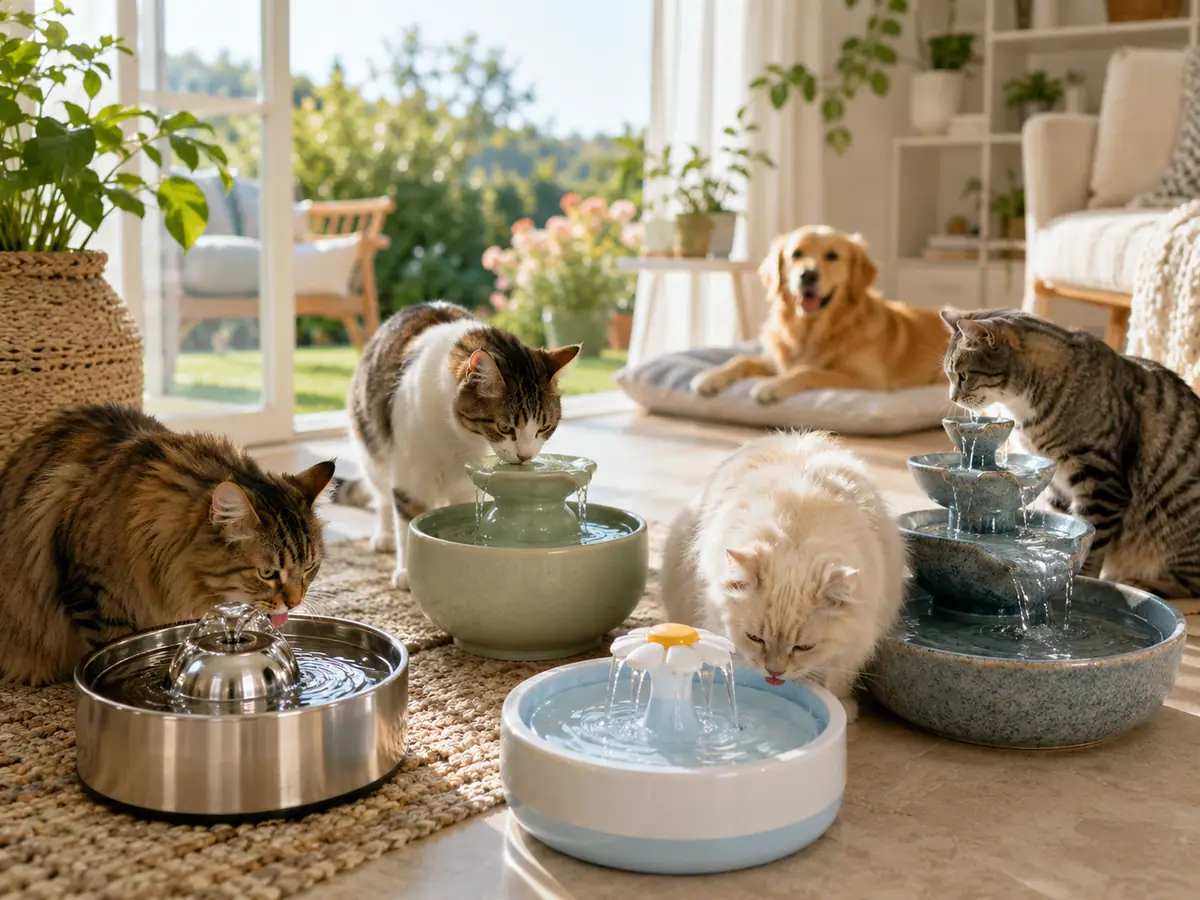
Because the water rises rather than drops, bubbler fountains are usually the quietest moving-water option. There is no waterfall sound, just a soft ripple. If a trickling noise has ever startled your cat away from a fountain, or if the unit will sit in a bedroom or studio apartment, that quiet profile is the main reason to pick a bubbler over a cascade design.
The trade-off is height. Bubbler spouts sit low, so very tall or long-bodied cats need to crouch slightly more than they would at a raised free-fall fountain. For most average-sized cats this is a non-issue, but it is worth noting before you buy.
Why Bubbling Water Appeals to Picky Drinkers
Cats descend from desert-dwelling ancestors and carry a famously weak thirst drive. In the wild, still water in a puddle is more likely to be stale or contaminated than moving water, so many cats instinctively prefer water that moves. A bubbler taps that instinct while keeping the surface calm enough for cautious drinkers.
The gentle motion also keeps water oxygenated, which keeps it tasting fresher than a bowl that has been sitting out all day. Owners often notice the difference with cats that used to paw at the water bowl, tip it over, or drink from the tap: the bubbler gives them the "fresh source" signal they were looking for.
Bubblers are also kind to whisker-sensitive cats. Because the drinking point is a low, open dome rather than a deep bowl, cats do not need to push their face into a narrow space. Many behaviorists suggest wide, shallow drinking zones for cats that seem reluctant to finish drinking, and a bubbler provides exactly that.
How to Choose the Right Bubbler Fountain
Start with the pump. Look for a submersible pump rated for continuous use with an adjustable flow setting, so you can tune the bubble height down for shy cats. A flow that is too strong turns the gentle spring into a splashy geyser, and nervous cats will keep their distance.
- Material: stainless steel and ceramic resist the biofilm slime that builds up on plastic and are dishwasher-friendly. If you choose plastic, plan to scrub it more often.
- Capacity: 1.5 to 2 liters suits a single cat; go 2.5 liters or larger for two cats so you are not refilling daily.
- Filter access: filters should slide out without disassembling the whole unit, or weekly maintenance will start slipping.
- Cord safety: a low-voltage DC pump with a chew-resistant or routed cord is safer around playful cats.
If you are still comparing fountain styles side by side, our overview of cat water fountains walks through cascade and free-fall designs as well, and our guide to the cat drinking fountain covers filter types in more depth.
Setting Up Your Bubbler Fountain for Success
Placement decides more than the fountain itself. Keep the bubbler away from the litter box and, ideally, a step or two away from the food bowl; many cats prefer water that is separated from food. Choose a quiet corner with consistent foot traffic rather than a busy hallway or a laundry room with sudden noises.
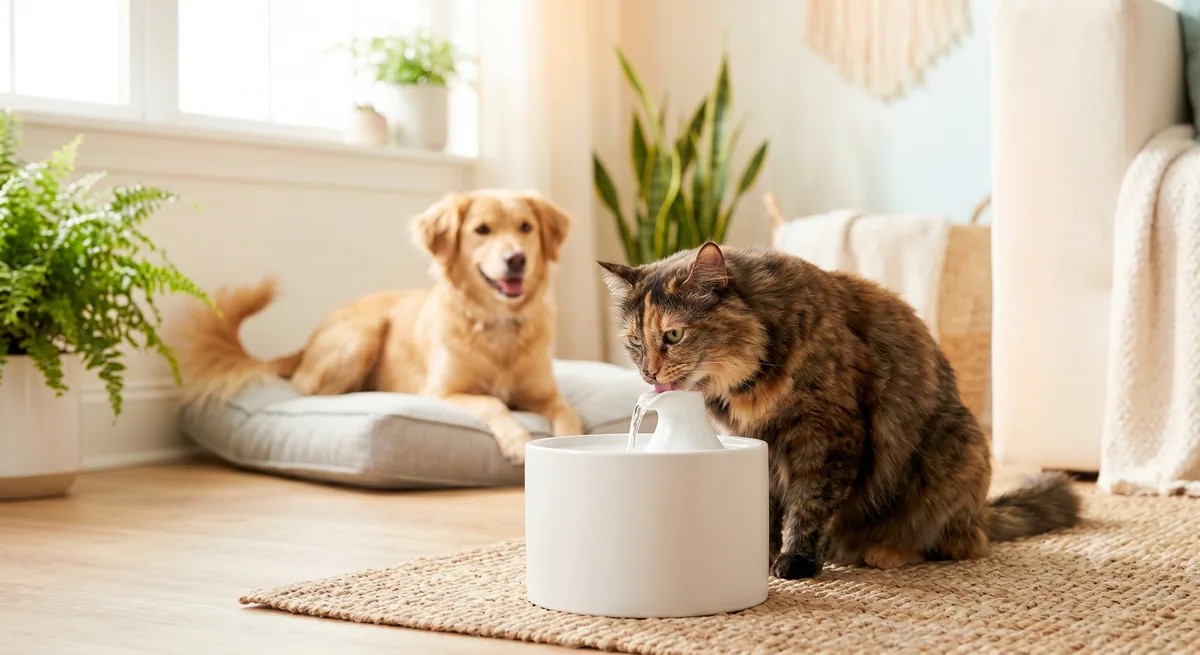
Before the first run, rinse every part, soak the filter, and fill to the marked line. Run the pump for a few minutes and adjust the flow until the bubble crown is steady but not splashing. Then let your cat investigate on their own schedule. Curious sniffing on day one and drinking by day three is a completely normal timeline.
Cleaning and Maintenance Schedule
A bubbler fountain only stays appealing if the water stays clean. The good news: because the spout area is compact, bubblers tend to collect less debris than open waterfall trays. A simple routine keeps everything fresh without much effort.
- Daily: top up the water level and skim off any hair or crumbs around the spout.
- Every 2 to 3 days: wipe the dome and drinking ring with a clean sponge reserved for pet dishes.
- Weekly: full water change, rinse the filter under running water, and check the pump intake for hair.
- Monthly: replace the filter, disassemble the pump, and clean the impeller with a small brush.
Hard-water areas may see mineral scale on the spout. A 1:1 vinegar and water soak for 15 minutes, followed by a thorough rinse, clears it safely without harsh chemicals.
Troubleshooting Common Bubbler Problems
Most bubbler complaints trace back to three causes: water level, air in the pump, or a dirty impeller. If the bubble suddenly weakens or sputters, check the level first; bubblers are more sensitive to low water than cascade fountains because the pump sits close to the surface.
A rattling or humming noise usually means trapped air after a refill. Tilt the unit slightly or briefly lift the pump while it runs to release the air pocket. If the noise persists, open the pump housing and clean the impeller; a thin layer of biofilm is enough to unbalance it.
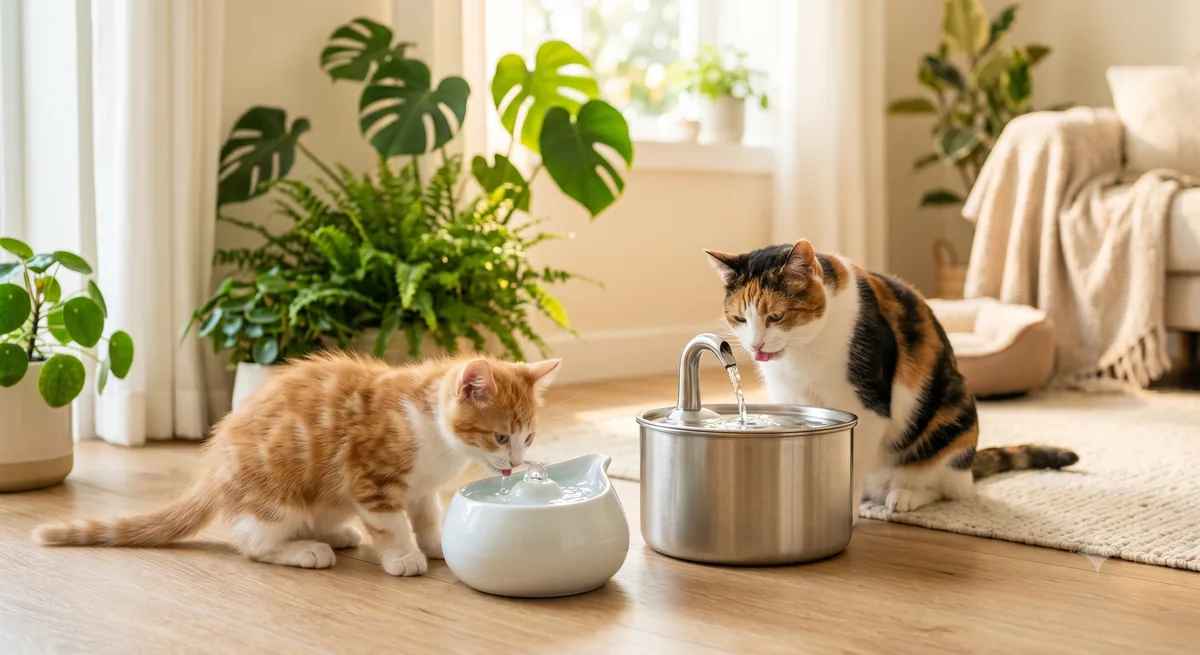
If your cat drank happily for weeks and then stopped, do not assume boredom. Taste changes from an overdue filter, a new cleaning product, or relocated furniture are far more common causes. Reset the basics before replacing the fountain.
Bubbler vs Free-Fall Stream vs Still Bowl
Use this table to see where a bubbler fountain fits compared with a free-fall stream fountain and a traditional still bowl.
For more independent, vet-reviewed guidance on feline hydration, the Cornell Feline Health Center is an excellent place to start.
Frequently Asked Questions
What is a cat bubbler fountain?
A cat bubbler fountain is a drinking fountain where water gently wells up from a spout at the top of the unit instead of falling from a raised stream. The bubbling motion keeps water moving and aerated while staying quiet and splash-free, which suits cats that are wary of waterfall-style fountains.
Are bubbler fountains quieter than regular cat fountains?
Generally yes. Because the water rises and ripples back over a dome instead of dropping into a tray, there is no waterfall sound. With the flow set correctly and the water topped up, most bubbler fountains produce only a faint ripple that is hard to hear from across the room.
Will my cat actually drink more from a bubbler fountain?
Many cats do, because moving water looks and tastes fresher than a still bowl. Cats that paw at bowls, tip them over, or beg to drink from the tap are the strongest candidates. Give a new fountain at least a week of side-by-side availability with the old bowl before judging the result.
How often should I clean a cat bubbler fountain?
Top up water daily, wipe the drinking area every two to three days, do a full water change and filter rinse weekly, and replace the filter with a pump deep-clean monthly. Stainless steel and ceramic models resist slime buildup better than plastic and can go into the dishwasher.
Why did my bubbler fountain stop bubbling properly?
The usual culprits are a low water level, an air pocket in the pump after refilling, or a dirty impeller. Refill to the marked line first, tilt the unit to release trapped air, and if the flow is still weak, open the pump and brush the impeller clean.
Are bubbler fountains safe to leave running overnight?
Yes. Bubbler pumps are low-voltage submersible pumps designed for continuous operation. The main safety rules are keeping the water above the minimum line so the pump never runs dry and routing the cord where your cat cannot chew it.
Is a bubbler fountain good for a cat with sensitive whiskers?
Bubblers are one of the better designs for whisker-sensitive cats because the drinking point is a low, open dome rather than a deep or narrow bowl. Your cat can lap from the rising water without pressing their whiskers against the sides of a container.
Browse Cat Supplies
Free US shipping on every order. No minimum purchase required.
Browse Cat Supplies →