Buying a water fountain for a cat is the easy half of the job. Where you put it, how you introduce it, and how you arrange it around the rest of your home decides whether your cat actually drinks from it or treats it as expensive furniture.
This guide walks through the setup side: picking the right room and corner, running a calm first week, planning stations for multi-cat homes, and fixing the common situation where a perfectly good fountain gets ignored.
Why Placement Decides Whether a Fountain Gets Used
Cats drink most when the water station feels safe, and safety to a cat means sight lines and quiet. A fountain squeezed against a noisy appliance, in a busy doorway, or beside the litter tray fails no matter how good the hardware is, because the cat has to choose between drinking and staying alert.
Territory also matters. Cats prefer resources spread out rather than lined up in one corner. Food, water, and litter each want their own zone; a small gap between bowls does not count as separation in a cat's map of the house.
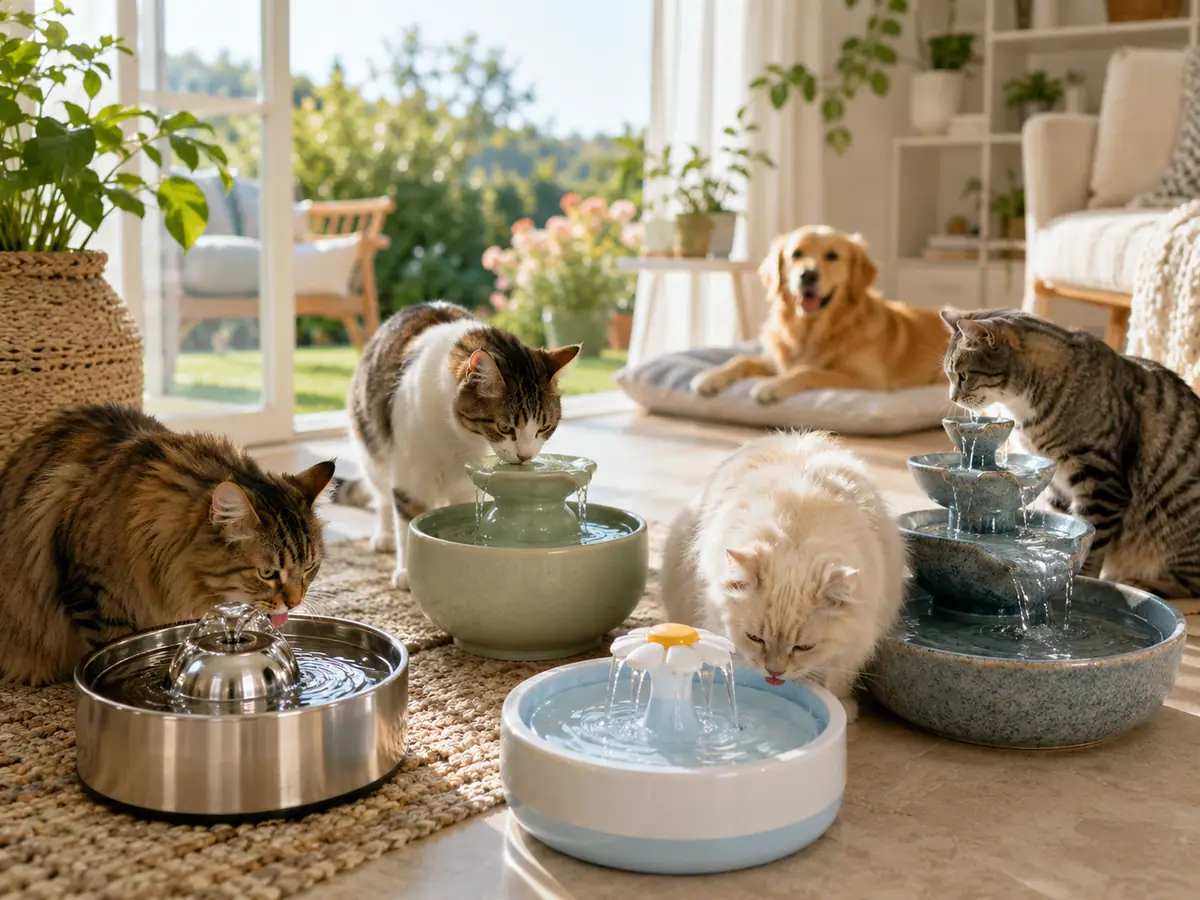
Veterinary resources such as Cornell Feline Health Center's feeding guidance note that water access shapes everyday cat health, and access is exactly what placement controls. A fountain your cat has to cross a scary hallway to reach is, functionally, a fountain that does not exist.
Choosing the Right Spot, Room by Room
Start with three rules that survive every floor plan: away from food by at least a meter, well away from the litter tray, and out of the main walking lanes of the house. Cats treat water near food as suspect because in nature, prey near water can contaminate it.
Corners work better than the middle of walls, because a corner lets a cat drink while covering most of the room with one glance. Avoid spots behind doors that swing, under dripping laundry, or beside washing machines and dishwashers whose sudden noise can end a drinking session and leave a bad memory of the spot.
Think about your own path too. You will carry this fountain to the sink several times a week, so a spot near a power outlet, on a hard floor, and along an easy carrying route keeps the maintenance habit alive. A fountain in an awkward corner gets cleaned less, and dirty water undoes everything placement wins.
Practical tip
Test a spot before committing: put the old water bowl there for a few days. If your cat uses it happily, the location is fountain-ready. If not, move the bowl, not the plan.
Hardware choice still matters; for picking the actual unit, see our cat water fountain guide and cat drinking fountain guide. Here we assume the box has arrived and focus on where it should land.
Setup on Day One: A Calm Introduction
Unpack and wash everything first: basin, lid, and pump all carry factory dust and a faint plastic smell that cats notice. Rinse the filter, assemble, and run the fountain for an hour before you expect any interest, so the pump noise becomes part of the background rather than an event.
Place the fountain next to the existing water bowl, not instead of it. Keeping the familiar bowl means your cat never faces a forced choice, and most cats investigate the new object within a day or two on their own terms. Do not carry your cat to the fountain or dip their paw in; engineered introductions usually delay acceptance.
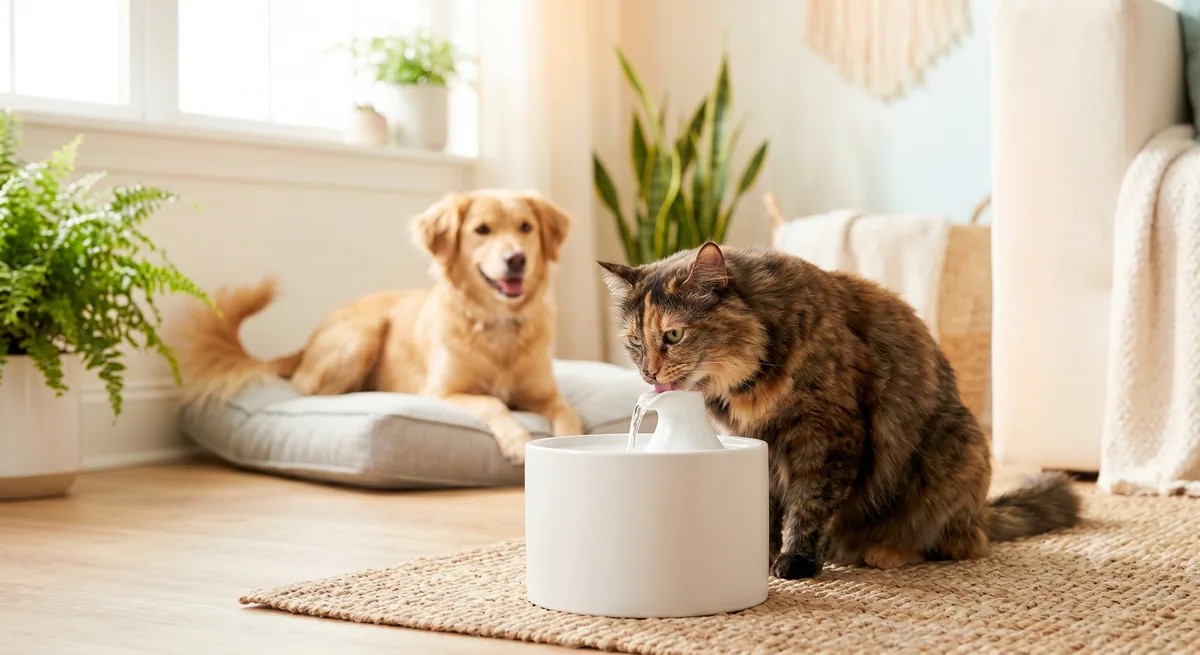
If the pump has adjustable flow, start on the lowest, quietest setting. A gentle bubble is less startling than a tall stream, and you can raise the flow once your cat drinks confidently. Expect the transition to take anywhere from an afternoon to two weeks depending on the cat's temperament.
The International Cat Care advice hub covers stress-free change in general, and the same principle applies here: the less you force the fountain on the cat, the faster the cat claims it as safe territory.
Multi-Cat Homes: How Many Stations and Where
The working rule for multi-cat homes is one water station per cat plus one extra, spread across different rooms or at least different walls. That sounds like a lot until you watch a confident cat park itself beside the only fountain and quietly ration everyone else's access.
Resource guarding around water is subtle. It rarely looks like a fight; it looks like one cat lounging in the path to the fountain while another waits, gives up, and drinks less. Separate stations with separate approach routes remove the chokepoint entirely.
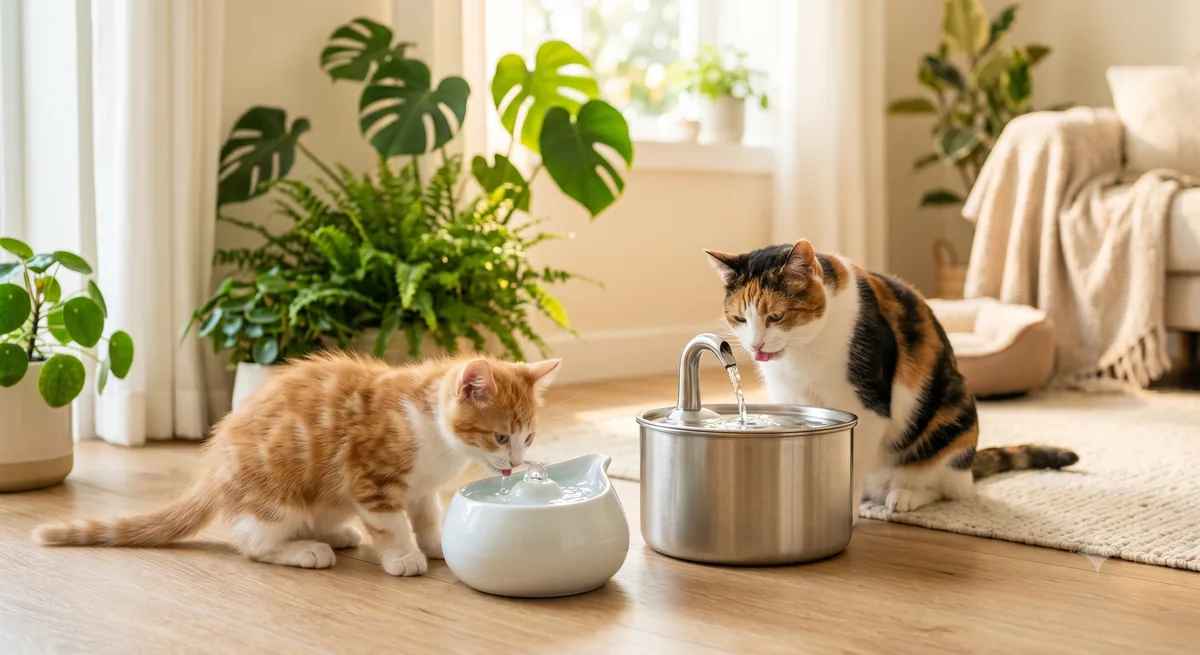
Mixing hardware is fine: one fountain plus one or two plain bowls covers most two-cat homes. Put the fountain where the more confident drinker already spends time and give the shyer cat a quiet bowl elsewhere, then watch for a week and swap if the usage says otherwise.
Kittens and seniors deserve extra thought. A kitten needs a low, stable station it cannot tip, and an older cat with stiff joints appreciates water on the floor it already lives on, not up or down a flight of stairs.
Placement Comparison by Room
Every home is different, but the trade-offs per room are surprisingly consistent. The table compares the three most common fountain locations from your cat's point of view.
No room wins outright. The kitchen makes your maintenance easy but is often too close to food and too noisy at mealtimes; the hallway corner is calmest but may need an extension cord solved safely; the living room is the compromise most homes land on. Pick for your cat's temperament first and your convenience second.
Troubleshooting: When Your Cat Ignores the Fountain
First, rule out the spot before blaming the hardware. Move the fountain to a calmer corner with better sight lines and give it three or four days. A surprising number of "my cat hates the fountain" stories end with the same fountain being loved two rooms away.
Next, check the sensory details. Turn the flow down if the stream splashes, wash everything if the water is more than two days old, and make sure a collar tag is not clanging against the rim. Whisker contact matters too: a cat that leans in, flinches, and backs away may simply need a wider drinking area.
If your cat drinks noticeably less for more than a couple of days, or suddenly much more, stop treating it as a placement puzzle. The American Veterinary Medical Association reminds owners to make health decisions with veterinary guidance, and a real drinking change is a veterinary question, not a furniture question.
Key takeaway
Location, calm, and sight lines sell the fountain to your cat. When a fountain is ignored, move it before you replace it.
Placement is one piece of the system. For keeping the water itself clean, see our cat pet water fountain article, and browse the cat products collection for mats, bowls, and related supplies.
Frequently Asked Questions
Where should I put a water fountain for a cat?
Choose a calm corner with clear sight lines, away from food, litter, loud appliances, and busy walking routes. A quiet spot your cat already likes to rest near is usually a strong candidate.
How far should the fountain be from food and litter?
Keep water at least a meter from food and place it well away from the litter tray, ideally in a different zone or room. Cats instinctively distrust water that sits right beside either one.
Can I put a cat fountain in the kitchen?
Yes, and refills are easy there, but pick an edge away from the food bowls and from noisy appliances. If your cat avoids the kitchen at busy times, a calmer room usually works better.
How do I introduce a cat to a new fountain?
Wash all parts, run the fountain beside the old water bowl, and let your cat investigate on its own schedule. Keep the old bowl available until the fountain is clearly being used every day.
Do I need more than one fountain for two cats?
Two cats need at least two water stations with separate approach routes, though one can be a plain bowl. The extra station prevents one cat from quietly blocking the other's access.
Is fountain noise a problem for cats at night?
A healthy pump on a full basin is quiet enough for most homes. If the sound grows louder, the water level is usually low or the impeller needs cleaning; fix that rather than switching the fountain off.
What surface should a cat fountain sit on?
A level, hard, water-tolerant surface is best, with a silicone mat underneath to catch drips. Avoid wobbly stands and thick carpet, which trap moisture and make some cats distrust the station.
Build a Better Cat Care Setup
Explore cat-friendly toys and accessories with free worldwide shipping on every order.
Browse Cat Products →