Shopping for a cat pet water fountain quickly turns into a wall of near-identical products: different materials, tank sizes, filter claims, and prices from pocket change to premium. This buyer’s guide cuts through the noise. We break down the three main materials, how much capacity you really need, which features are worth paying for, and where to place the fountain so your cat actually uses it.
Why a Water Fountain Beats a Still Bowl for Most Cats
Cats have a naturally low thirst drive inherited from desert ancestors, and many simply do not drink enough from a static bowl. Moving water reads as fresher and safer to a cat’s instincts, stays oxygenated, and does not collect dust and hair the way an open bowl does. That is the entire pitch for a fountain: more drinking with zero effort from you.
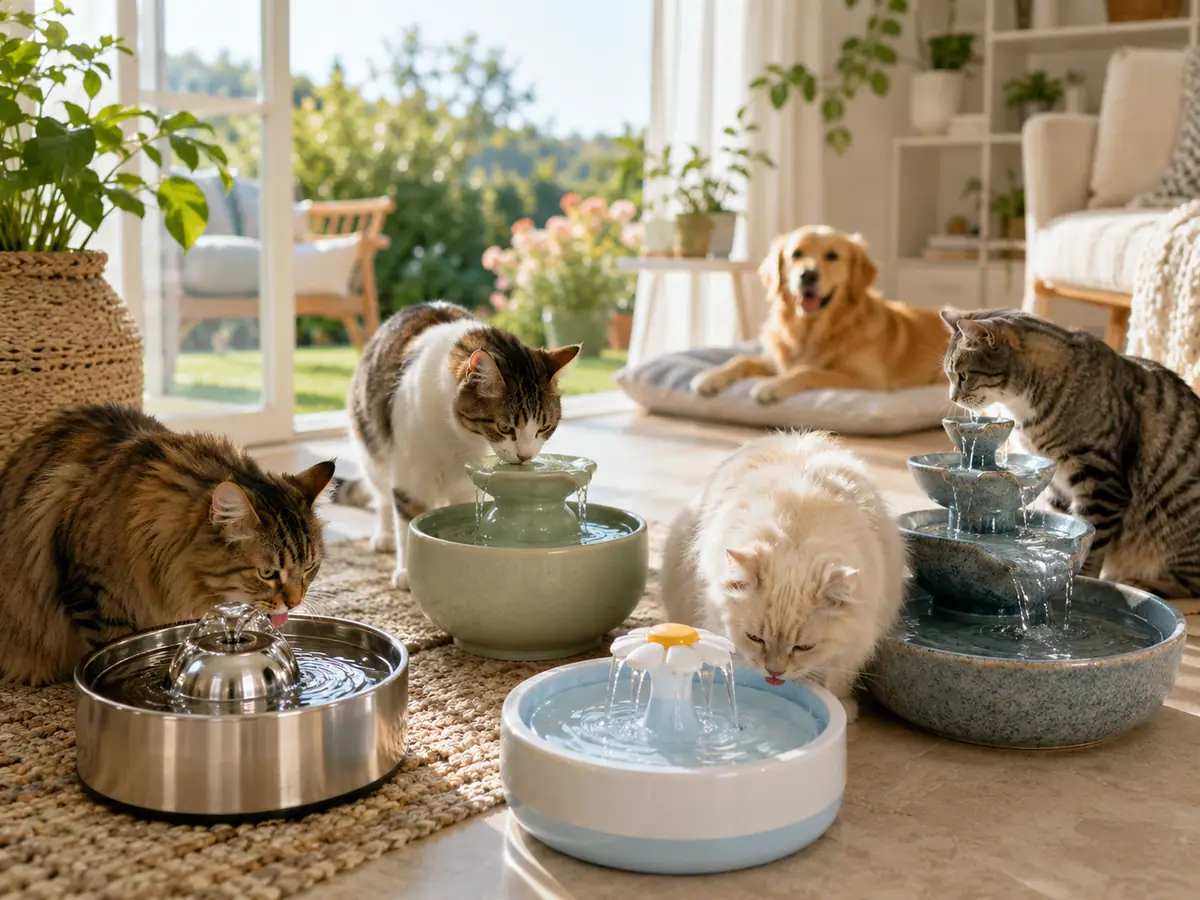
Good hydration supports urinary tract and kidney health, which are two of the most common trouble areas for indoor cats as they age. A fountain is not a medical treatment, but making water more attractive is one of the simplest habits you can change at home. If your cat already shows symptoms like straining or frequent litter box trips, see a vet first; a fountain complements care, it does not replace it.
The main honest downsides: fountains need weekly cleaning, a power outlet, and filter refills. If that maintenance will not realistically happen in your household, a wide bowl refreshed twice a day is better than a neglected fountain.
Cat Pet Water Fountain Materials: Plastic, Ceramic, and Stainless Steel
Plastic fountains are the cheapest and lightest, and the selection is huge. The catch is that plastic scratches easily, and those micro-scratches harbor biofilm and can contribute to feline chin acne in sensitive cats. If you go plastic, choose BPA-free models and expect to scrub more often.
Ceramic fountains look the best in a living room and stay put thanks to their weight. They clean up easily and resist slime, but they are breakable, and the heavier top pieces can chip if you are careless during washing. Check that the glaze is lead-free from a reputable brand.
Stainless steel is the sweet spot for most households: hygienic, dishwasher-safe, scratch-resistant, and light enough to handle at the sink. It usually costs more than plastic and less than designer ceramic. Vets and shelters tend to default to steel dishes for exactly these reasons.
Whichever material you pick, the pump inside is broadly similar, so think of the material choice as a hygiene and durability decision rather than a performance one. For a deeper look at spout styles instead of materials, see our cat water fountains overview.
Capacity and Multi-Cat Sizing Guide
Capacity determines how often you refill, not how much your cat drinks. A commonly cited veterinary rule of thumb is that cats need roughly 50 to 60 ml of water per kilogram of body weight per day, and part of that comes from food, especially wet food. Even a big drinker will not empty a liter in a day; evaporation and filter loss are what actually drain the tank.
- One cat: 1.5 to 2 liters gives you two to three days between top-ups.
- Two cats: 2.5 to 3 liters, or two smaller fountains in different rooms to prevent guarding.
- Three or more cats: multiple stations are non-negotiable; a single fountain becomes a bottleneck and a stress point.
In multi-cat homes, placement diversity matters more than tank size. A confident cat can quietly block a hallway fountain from a timid one, and you may never see it happen. Two modest fountains on different floors beat one giant tank in the kitchen.
Features Worth Paying For
Ignore the marketing fluff and check for these things: an adjustable flow rate, a visible water level window, a filter you can buy generically, and a pump that disassembles fully for cleaning. Those four features decide what owning the fountain feels like after month one.
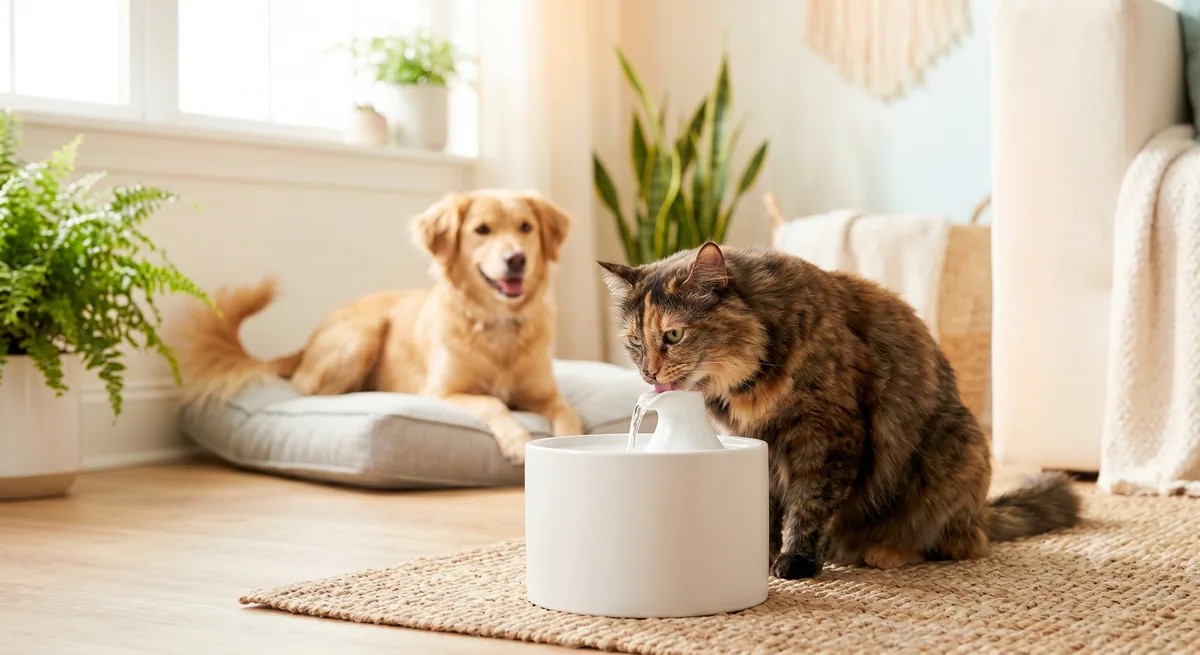
Filters are usually a sponge for debris plus activated carbon for taste. They polish the water your cat drinks; they do not make tap water unsafe water into safe water. If your tap water is fine for you, it is fine for your cat. Skip any fountain whose proprietary filters are expensive or hard to find, because a fountain with an overdue filter quietly becomes worse than a bowl.
Smart features like app alerts and UV modules are nice-to-haves at best. The one upgrade genuinely worth a premium in a bedroom setup is a quieter pump; check reviews that mention noise specifically. A battery-backup or gravity reserve is useful in areas with frequent outages.
Where to Place a Cat Water Fountain (and Where Not To)
Cats prefer drinking away from their food and far from their litter box. Instinct treats water next to food or waste as a contamination risk, and studies of feeding behavior consistently show cats drink more when water sits in a separate station. Pick a quiet corner with a nearby outlet, not the middle of a busy kitchen runway.
Avoid direct sunlight, which encourages algae, and spots where the fountain can be ambushed from behind if you have a nervous cat; cats like sight lines while they drink. Hard floors beat carpet for the occasional splash, or use a small waterproof mat.
Introduce the fountain next to the existing bowl and keep both available for a week or two. When you see the fountain being used consistently, retire the bowl or keep it as a backup for power outages.
Getting the Best Value: Budget vs Premium
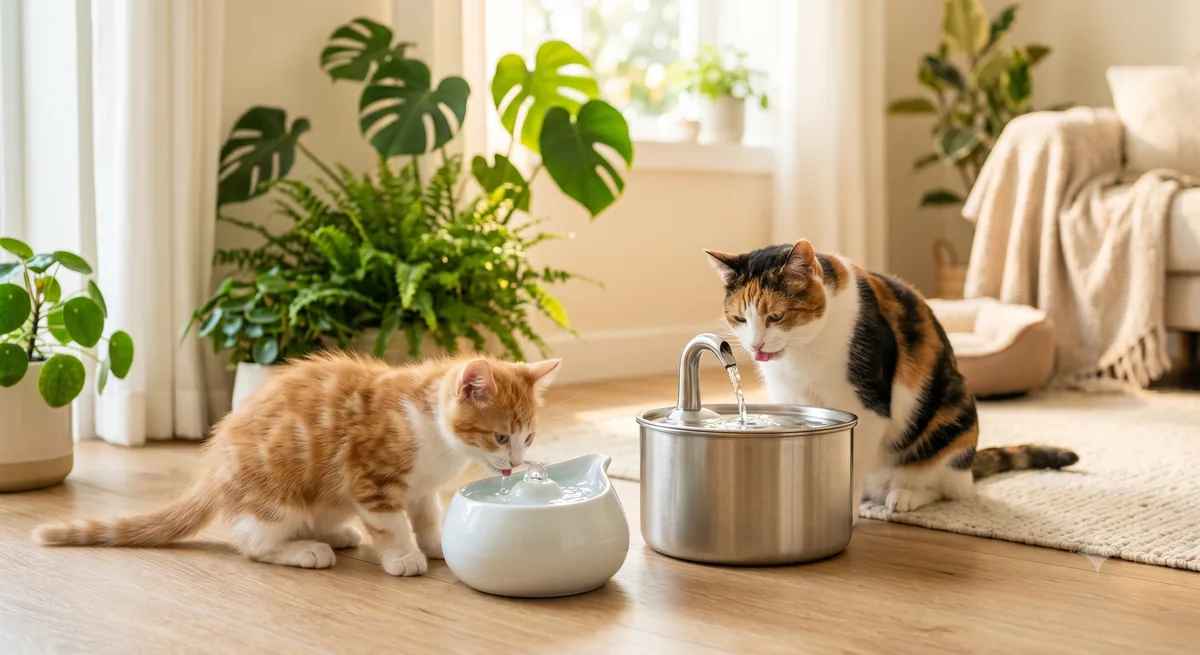
Here is how the three material tiers of cat pet water fountain compare on the factors that matter after purchase.
A sensible strategy: buy an affordable stainless model first, confirm your cat is a fountain cat, then upgrade for looks or capacity later. The habit matters more than the hardware. For more independent, vet-reviewed guidance on feline hydration, the Cornell Feline Health Center is an excellent place to start.
Frequently Asked Questions
Do cats really drink more with a water fountain?
Many cats do, especially cats that already show interest in running taps or paw at their bowls. Moving water appears fresher and safer to feline instincts and stays oxygenated. Results vary by cat, so run the fountain alongside the old bowl for a week or two and compare.
Which material is best for a cat water fountain?
Stainless steel offers the best balance of hygiene, durability, and price for most homes. Ceramic is the most attractive and very hygienic but breakable. Plastic is the cheapest but scratches over time, and those scratches harbor biofilm, so it needs the most frequent scrubbing.
How big should a cat water fountain be?
For one cat, 1.5 to 2 liters is plenty and keeps refills to every two or three days. For two cats, look at 2.5 to 3 liters or add a second fountain. With three or more cats, multiple water stations in different rooms matter more than any single large tank.
Are fountain filters really necessary?
Filters catch hair and debris and improve taste with activated carbon, which keeps cats drinking. They do not sterilize water. Replace them roughly monthly, and prefer fountains whose filters are cheap and easy to buy, because an overdue filter makes the water taste worse than a clean bowl.
Where should I put my cat’s water fountain?
In a quiet spot away from the litter box and at least a step away from food. Cats instinctively avoid water near food or waste. Choose a location with good sight lines, no direct sunlight, and a nearby outlet, and use a waterproof mat on carpet.
Can I leave a cat water fountain running while I travel?
For a weekend, yes, as long as the tank is full and the pump never runs dry. For longer trips, have a sitter check the level and rinse the drinking area, and leave a backup bowl of fresh water in a separate spot in case of a power cut or pump failure.
Why does my cat still prefer the tap over the fountain?
Tap drinking is usually about the ritual and your presence, not just the water. Keep the fountain filter fresh, try a model with a taller stream if your cat likes vertical water, and reward fountain visits. Some cats keep the tap habit for fun; that is fine as long as they drink.
Browse Cat Supplies
Free US shipping on every order. No minimum purchase required.
Browse Cat Supplies →