Chronic low-grade dehydration is one of the quietest health risks for indoor cats, and it starts with a simple fact: many cats ignore still water. A feline water fountain tackles the problem at the instinct level by keeping water moving and fresh. This guide focuses on the cat side of the equation: how to tell whether your cat drinks enough, how to match a fountain to your cat’s life stage, and how to transition a skeptical cat from bowl to fountain without stress.
Why a Feline Water Fountain Matters for Your Cat’s Health
Cats evolved from desert hunters that got most of their moisture from prey, so their thirst signal lags behind their actual needs. A cat on a dry-food diet is especially dependent on voluntary drinking, and a bowl of day-old still water is easy to ignore. Moving water triggers the instinct that fresh, flowing sources are safer to drink.
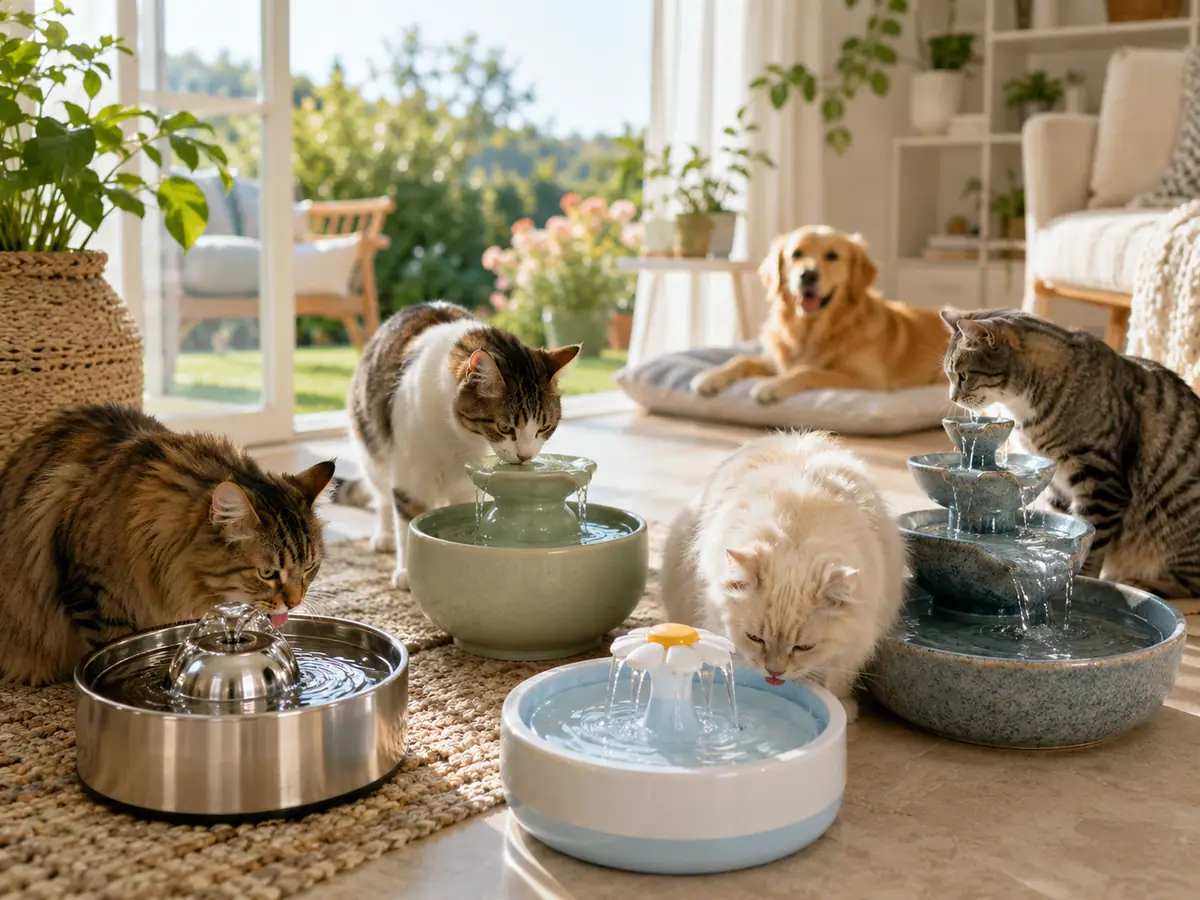
Hydration touches almost every common feline health issue: urinary crystals and cystitis, constipation, and the kidney disease that affects many senior cats. None of these are cured by a fountain, but every extra milliliter of water helps dilute urine and keep things moving. Veterinarians routinely recommend increasing water intake as a first-line habit change, alongside wet food.
The fountain also solves a practical problem: freshness without your attention. The filter catches hair and dust, the circulation keeps the taste neutral, and your cat gets the same appealing water at 3 a.m. as at breakfast.
How to Tell Whether Your Cat Drinks Enough
A commonly cited veterinary guideline is roughly 50 to 60 ml of water per kilogram of body weight per day from all sources, including food. A 4 kg cat therefore needs around 200 to 240 ml daily; a cat eating wet food may drink visibly little and still be fine, while a dry-food cat needs to make up most of that at the water station.
- Quick checks at home: skin tent test (gently lift the scruff; it should spring back immediately), gum moisture, and energy levels.
- Litter box signals: smaller, darker urine clumps over several days suggest low intake; sudden large increases in drinking and urination also deserve a vet visit.
- Behavior signals: begging at taps, licking shower floors, or pawing the bowl are all cats telling you the current water offer is not attractive.
If you want a baseline, measure what you pour into the fountain for a few days and subtract what you discard at cleaning. It will not be lab-precise, but a trend is enough to know whether the fountain is working. Persistent increases or decreases in thirst are medical questions, not equipment questions; loop in your vet.
Choosing a Feline Water Fountain by Life Stage
Kittens need shallow, stable designs with a gentle flow. A curious kitten will climb, splash, and occasionally sit in a fountain, so pick a heavy base, a low drinking level, and a pump with the mildest setting. Cord protection matters most at this age, because kittens chew.
Adult cats can use any style; the deciding factors are personality and household. Bold tap-drinkers often love a taller free-fall stream, cautious cats prefer a quiet bubbler or gentle cascade, and multi-cat homes need either a high-capacity unit or several stations to prevent resource guarding.
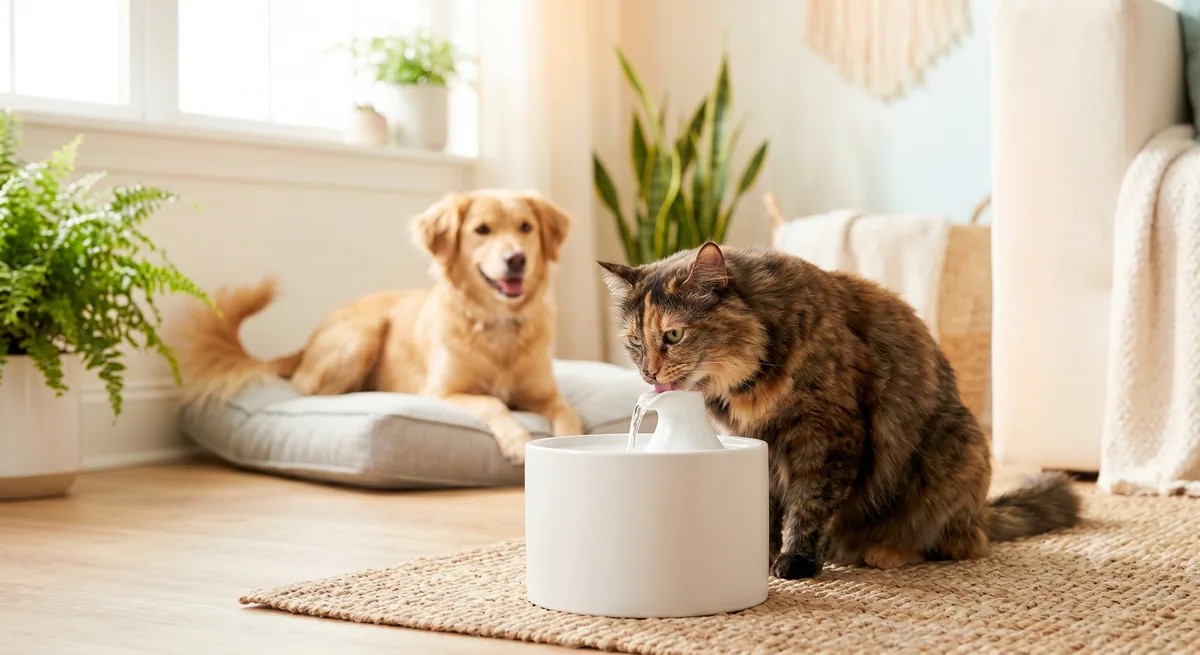
Senior cats benefit from raised drinking levels that spare arthritic necks and shoulders, wide whisker-friendly openings, and absolute reliability, because seniors drink more as kidney function declines. For an older cat, prioritize easy filter changes and a pump that never runs loud; a senior startled away from water is exactly what you are trying to avoid.
How to Transition Your Cat from Bowl to Fountain
Never do a hard swap. Removing the familiar bowl on day one turns the fountain into an obstacle instead of an upgrade, and a stubborn cat will simply drink less, which defeats the whole purpose.
- Days 1 to 3: place the fountain next to the old bowl, switched off, and let your cat inspect it as a static object.
- Days 3 to 7: switch the pump on at the lowest flow. Keep the bowl in place. Reward any approach with calm praise or a treat.
- Week 2: once you see regular drinking from the fountain, stop refilling the bowl, then remove it a few days later.
- Anytime: if your cat startles, lower the flow rather than giving up; noise and splash are the two most common objections.
Most cats convert within one to two weeks. The holdouts usually object to something fixable: filter taste (rinse a new filter thoroughly), location (too close to food or litter), or flow (too strong). Adjust one variable at a time so you can tell what worked.
Common Mistakes Cat Owners Make with Water Fountains
The number one mistake is buying the fountain and forgetting the maintenance. A fountain with a slimy pump and a saturated filter is less hygienic than a plain bowl. Put the weekly rinse and monthly filter change on your calendar like any other pet chore.
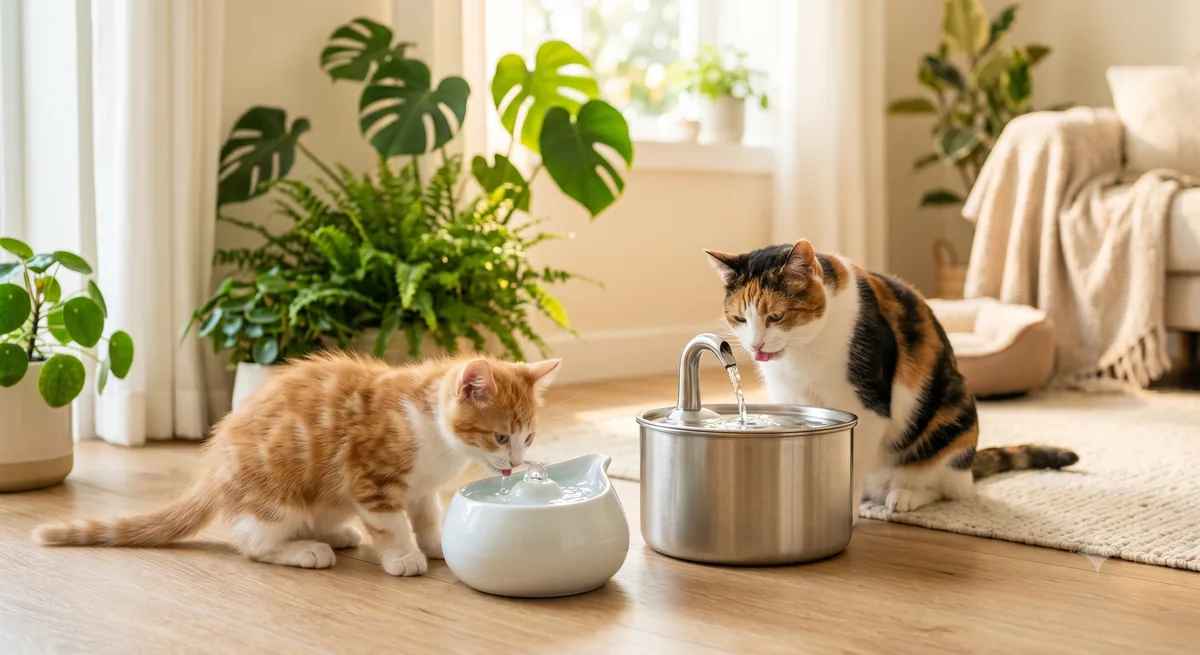
Other frequent misses: placing the fountain beside the litter box (instinctive contamination alarm), running it half-empty until the pump whines, using strong detergents that leave a scent cats hate, and judging the fountain after two days when a cautious cat needs two weeks. In multi-cat homes, expecting one station to serve everyone is the classic error; timid cats get quietly squeezed out.
Finally, do not chase gadgets. A basic, quiet, easy-to-clean fountain used daily beats a smart fountain that intimidates your cat or a designer piece whose filters you can never find in stock.
What Vets Look For in a Feline Water Fountain
This comparison summarizes fountain priorities by life stage, based on the drinking-behavior guidance most vets give cat owners.
When in doubt, bring your fountain questions to your own clinic; they know your cat’s kidney values and history. For more independent, vet-reviewed guidance on feline hydration and kidney health, the Cornell Feline Health Center is an excellent place to start.
Frequently Asked Questions
How much water should my cat drink per day?
A commonly cited veterinary guideline is roughly 50 to 60 ml per kilogram of body weight per day from all sources, food included. A 4 kg cat needs around 200 to 240 ml daily. Cats on wet food drink visibly less because their food carries moisture; dry-food cats depend far more on the water station.
Do vets recommend water fountains for cats?
Many vets suggest fountains as a simple way to raise voluntary water intake, particularly for cats prone to urinary issues and for seniors with early kidney changes. A fountain supports hydration habits; it is not a treatment, so persistent thirst changes still need a proper vet visit.
How do I get my cat to use a new water fountain?
Run the fountain next to the existing bowl for one to two weeks. Start with the pump off, then use the lowest flow, and reward approaches. Retire the bowl only after you see regular fountain drinking. If your cat balks, lower the flow, move the fountain away from food and litter, or rinse the filter.
Which fountain is best for a senior cat?
Look for a raised drinking level that spares stiff necks and shoulders, a wide whisker-friendly opening, a very quiet pump, and easy filter access. Senior cats often need to drink more as kidney function declines, so reliability and fresh taste matter more than any styling or smart features.
Is a water fountain safe for a kitten?
Yes, with the right model: heavy base, shallow drinking level, gentle flow, and a protected or hidden cord, because kittens chew. Expect some splashing and paw-dipping at first; that play is normal and usually settles as the kitten learns the fountain is a drinking spot.
How often should a feline water fountain be cleaned?
Top up daily, wipe the drinking area every couple of days, change the water and rinse the filter weekly, and replace the filter monthly with a full pump clean. Skip harsh scented detergents; a vinegar soak followed by a thorough rinse handles mineral scale safely.
My cat suddenly stopped using the fountain. Why?
Check the fixable causes first: an overdue filter changing the taste, a low water level making the pump noisy, a new cleaning product smell, or the fountain being moved near food or litter. If drinking drops across all water sources or thirst spikes suddenly, book a vet check.
Browse Cat Supplies
Free US shipping on every order. No minimum purchase required.
Browse Cat Supplies →