A fountain water cat setup lives or dies on one thing: the quality of the water inside it. A fountain running with stale, slimy, or mineral-heavy water is worse than a clean bowl, because cats judge water by smell before they ever take a sip.
This guide is about keeping fountain water genuinely fresh: what filters really do, how often to change the water, how to break down the pump, and how to stop slime and scale before your cat starts refusing the fountain.
How Water Freshness Shapes Drinking Habits
A cat's nose is far more sensitive than ours, and standing water picks up odors quickly: dust, food particles, saliva, and the plastic smell of a worn basin. Circulating water through a filter slows that process down, which is why many cats drink more consistently from a well-maintained fountain than from a bowl that sits still all day.
The key word is maintained. Circulation buys you time between washes; it does not replace them. Once biofilm coats the basin or the stream slows to a trickle, the freshness advantage disappears and some cats will quietly go back to drinking less. Watch the water surface: if it looks oily or cloudy, the water has been in there too long.
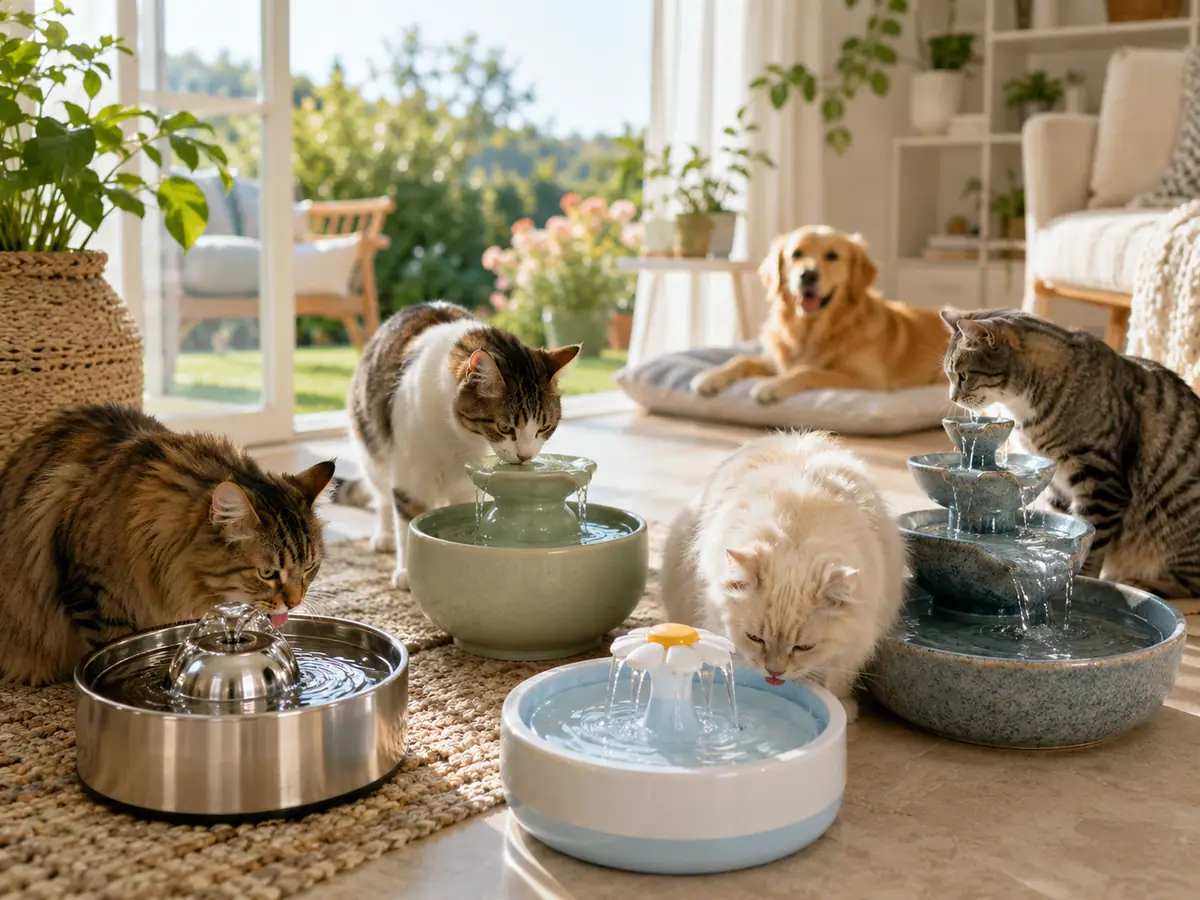
Veterinary resources such as Cornell Feline Health Center's feeding guidance treat water access as part of everyday feline health, and water quality is the half of that equation owners control directly. If drinking suddenly increases or drops no matter how clean the fountain is, call your veterinarian rather than experimenting with new hardware.
What Decides Fountain Water Quality
Four things determine how long fountain water stays drinkable: the starting water, the basin material, the filter, and your washing rhythm. Tap water is fine in most areas as long as it is safe for people, but hard tap water leaves white mineral scale on the pump and basin faster, which means more frequent descaling.
Basin material matters more for hygiene than for looks. Non-porous surfaces such as stainless steel and glazed ceramic hold less residue and rinse clean easily. Scratched plastic is the worst offender: the grooves shelter bacteria and hold odors even after a quick rinse, which is exactly what a smell-sensitive cat notices first.
Water level is the quiet failure point. When the level drops too low, the pump sucks air, gets louder, runs hot, and churns the remaining water into a concentrated mix of hair and debris. Top up every day or two rather than waiting for the fountain to sputter.
Practical tip
Keep a rhythm you can actually sustain: top up daily, change the water every two to three days, and do a full soap-and-rinse wash weekly. Consistency beats intensity.
If you are still choosing hardware, our cat water fountain guide and cat drinking fountain guide cover model selection. This article assumes you already own a fountain and want the water in it to stay worth drinking.
Filters: What They Remove and When to Replace Them
Most cat fountains ship with two filter types. The carbon filter handles taste and odor: it adsorbs chlorine notes and small dissolved impurities, which is why freshly filtered water smells neutral to a cat. The foam pre-filter is mechanical: it catches hair, food crumbs, and dust before they reach the pump.
Neither filter kills bacteria or removes the slippery biofilm that forms on wet surfaces. That is the single most misunderstood point in fountain care. A fountain with a brand-new filter and an unwashed basin is still a dirty fountain, and your cat can smell the difference even when the water looks clear.
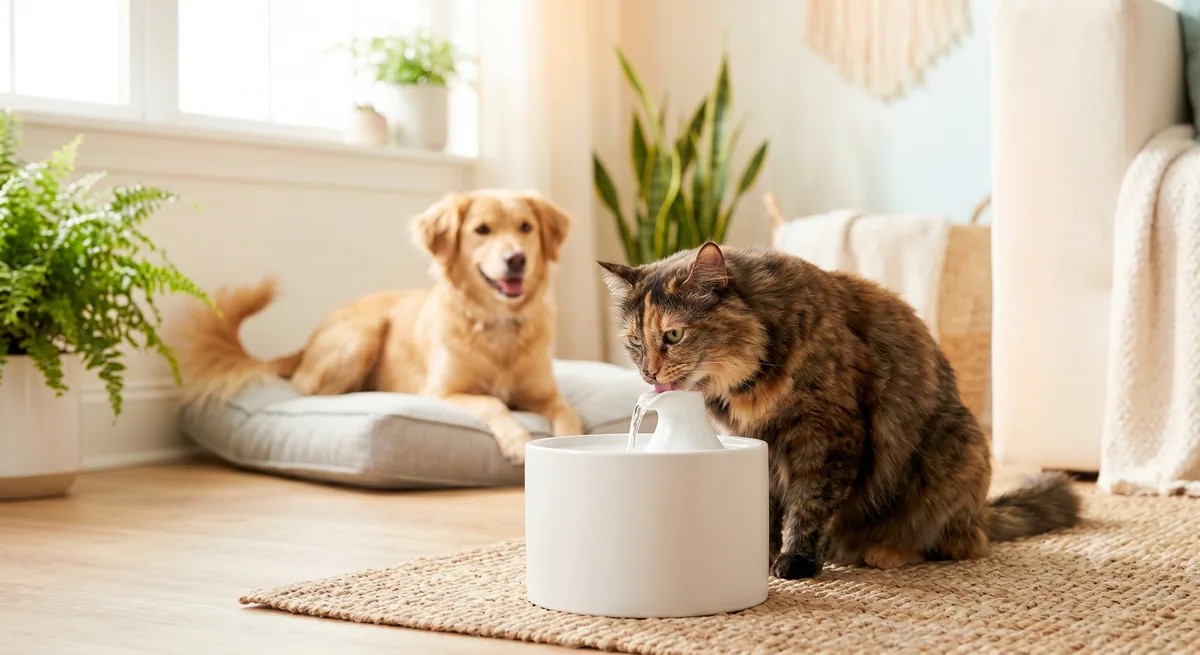
Replacement rhythm: carbon filters typically last two to four weeks, foam pre-filters about a month, sooner in multi-cat homes or during shedding season. A filter left in too long becomes a bacteria hotel. If the filter smells sour even after rinsing, its useful life is over regardless of the calendar.
The International Cat Care advice hub is a good general wellbeing reference, but for filters the manufacturer's schedule is the baseline and your nose is the override. A sour smell, visible discoloration, or a slowed stream all mean the same thing: replace it now.
A Realistic Cleaning Schedule: Daily, Weekly, Monthly
Daily care takes thirty seconds: check the water level, top up with fresh water, and skim out any visible hair or crumbs. Every two to three days, pour out the old water entirely and refill; topping up forever only concentrates whatever is already in the basin.
Weekly is the real wash. Unplug the fountain, take it apart, and wash the basin, lid, and spout with hot water and unscented dish soap, then rinse until no soap smell remains. Rinse the foam pre-filter under running water; never soap a carbon filter, just swap it on schedule.
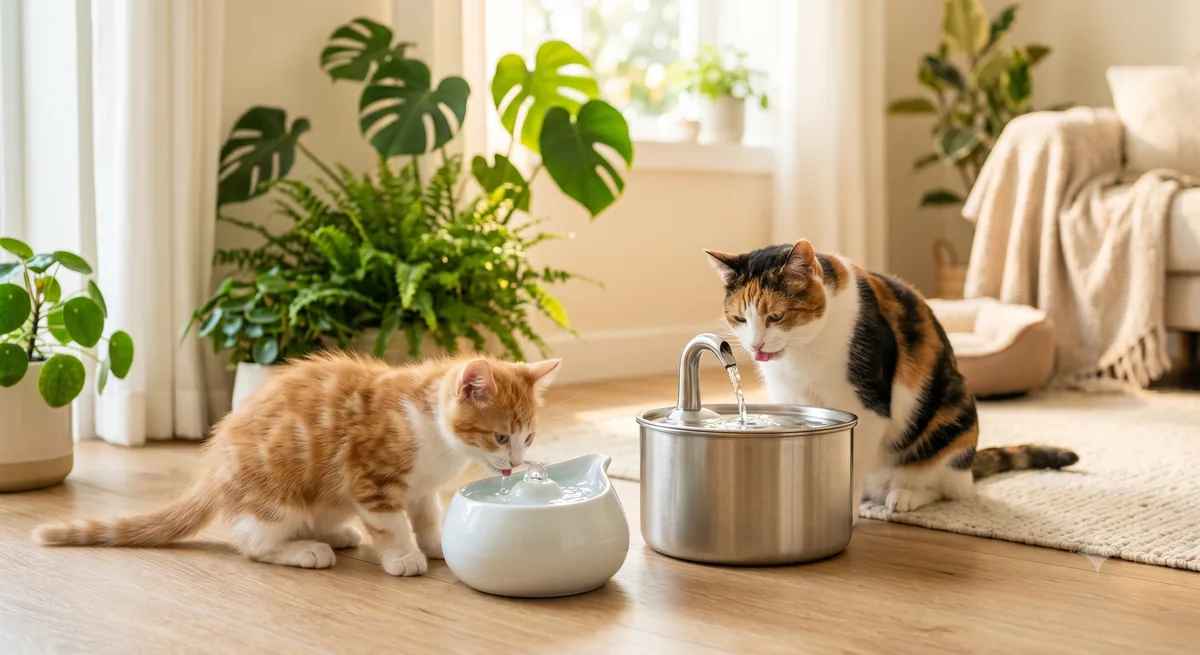
Monthly, give the pump real attention. Pop the impeller out following the manual and clear the hair wrapped around it; that wrap is the usual cause of rattling, weak streams, and early pump death. For mineral scale, soak parts in a one-to-one white vinegar and water mix for fifteen minutes, then rinse thoroughly before reassembly.
Scale the whole schedule up for multi-cat homes, long-haired breeds, and warm rooms. And trust your senses over the calendar: slimy walls, a stale smell, or a noisy pump mean the fountain needs cleaning today, whatever the planner says.
Water Care Comparison by Material
Basin material changes how quickly water quality degrades and how hard the fountain is to keep clean. The table below compares the three common materials purely from a water care point of view.
Material does not change the schedule; it changes your margin for error. Stainless steel and ceramic forgive a missed wash better because their surfaces hold less residue. Plastic demands discipline: inspect it monthly and retire the basin once scratches turn cloudy, because no amount of scrubbing makes a worn plastic surface smell neutral again.
Water Care Mistakes That Put Cats Off Drinking
The first mistake is endless topping up without full water changes. The basin slowly turns into a concentrate of dust, saliva, and hair, and the filter has no way to undo that. Empty it completely at least every two to three days.
The second mistake is washing with the wrong chemicals. Scented soap, bleach, and strong descalers leave residues and smells that cats detect long after you stop noticing them. Stick to hot water, unscented dish soap, diluted white vinegar for scale, and a thorough rinse every time.
The third mistake is treating good water care as a substitute for medical attention. Sudden thirst or sudden avoidance can signal health issues no matter how clean the fountain is. The American Veterinary Medical Association reminds pet owners to make health decisions with veterinary guidance; apply that to major drinking changes too.
Key takeaway
Filters slow contamination; they never reverse it. Fresh water changes plus a weekly wash are the only two habits that keep fountain water truly clean.
Water care is one piece of the bigger setup. For choosing and positioning hardware, see our cat pet water fountain article, and browse the cat products collection for related supplies.
Frequently Asked Questions
How often should I change the water in a cat fountain?
Do a complete water change every two to three days, with daily top-ups in between. Change it sooner if the water looks cloudy, smells stale, or collects visible hair and debris.
Can I use tap water in a cat fountain?
Yes, if your tap water is safe for people it is generally fine for cats. Hard tap water leaves mineral scale faster, so descale with diluted white vinegar more often or use filtered water to slow the buildup.
Why does my cat fountain get slimy?
The slime is biofilm, a bacterial layer that grows on wet surfaces fed by saliva and food particles. Filters do not remove it. Wash the basin, lid, and pump parts weekly with hot water and unscented dish soap.
How often should I replace the fountain filter?
Carbon filters usually last two to four weeks and foam pre-filters about a month. Replace either one sooner in multi-cat homes, during shedding season, or whenever it smells sour or the stream weakens.
Can fountain parts go in the dishwasher?
Many stainless steel and ceramic basins are top-rack dishwasher safe, but check the manual first. Keep the pump, cord, and filters out of the dishwasher and wash those by hand.
Do I need distilled water for a cat fountain?
Usually not. Distilled water slows scale in very hard water areas, but clean drinkable tap or filtered water plus a regular wash routine matters far more for your cat's health.
How do I clean the fountain pump?
Unplug it, open the pump housing, and remove the impeller following the manual. Rinse away trapped hair, soak scaled parts in one-to-one vinegar and water, rinse well, and reassemble once fully clean.
Build a Better Cat Care Setup
Explore cat-friendly toys and accessories with free US shipping on every order.
Browse Cat Products →