Top photo: a black kitten crouched on a wooden floor, eyes fixed on a ball toy. Photo: Mike Barry / Wikimedia Commons, CC BY 2.0 (cropped, resized and converted to WebP).
A kitten teether toy is a small, soft, chewable object made to be gnawed for minutes at a time while new teeth push through. It is not the same as an ordinary kitten toy, and buying the wrong one is easy. This guide focuses on the teether itself: what it should be made of, how big it should be, how to check it before your kitten gets it, and where to put it so it gets chewed instead of your phone charger. For the full picture of the teething process and its signs, read our companion guide to kitten teething toys.
Quick Answer: What Makes a Good Kitten Teether Toy?
A good kitten teether toy is one moulded piece of soft silicone or natural rubber, or a tightly woven fabric chew, sized so it cannot fit wholly in a kitten's mouth but is thin enough for the back teeth. It has no glued parts, chills well in the fridge, washes easily, and is replaced at the first split.
What Is a Kitten Teether Toy?
Answer: A kitten teether toy is a chewable object designed to survive long, slow gnawing on sore gums without breaking, shedding or releasing small parts. Ordinary kitten toys are built to be chased and batted. A teether is built to be held in the mouth and ground on, which is a much tougher test.
Most of the toys in a new kitten's basket are designed for paws: balls to chase, feathers to swat, mice to toss. A teething kitten uses them differently. It lies down, pins the toy and works at it with its back teeth for minutes at a time. That kind of grinding pulls threads out of felt mice, cracks thin plastic and loosens anything glued on.
A teether is made for exactly that use. It is usually a single moulded piece of soft rubber or silicone, or a tightly woven fabric shape with nothing attached. It flexes under the jaw, it can be cooled, and when it finally wears out it does so slowly enough for you to notice.
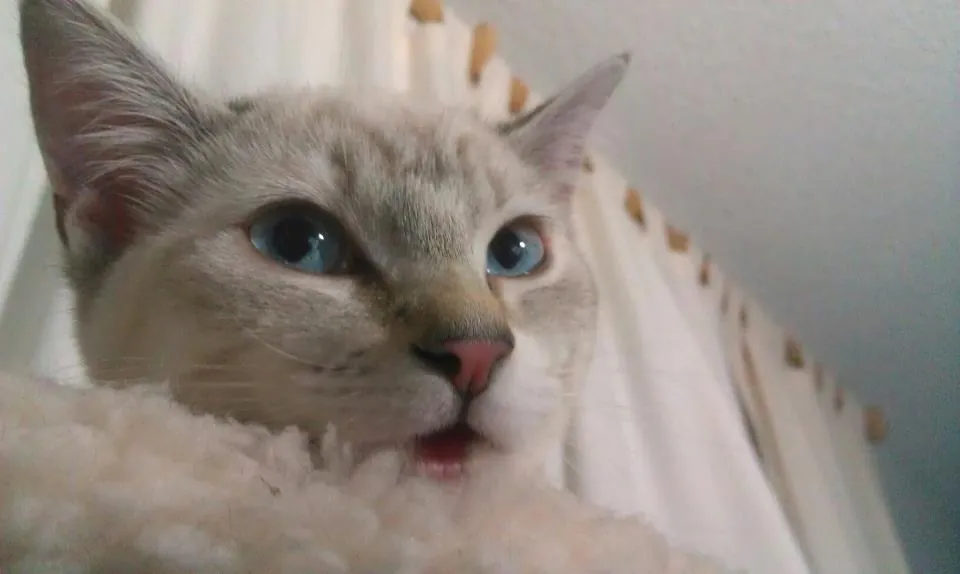
Photo: Japerry007 / Wikimedia Commons, CC BY-SA 3.0
You will often see a teething kitten chew bedding, blanket edges or the corner of a cushion, as in the photo above. That is not naughtiness. It is a kitten looking for something soft enough to bite and close enough to reach. The aim is to make the teether the easiest thing in the room to grab.
When Does a Kitten Need a Teether?
Answer: Kittens need teethers most while baby teeth are falling out and adult teeth are coming through. According to the Merck Veterinary Manual, most cats have 26 baby teeth and 30 permanent teeth, and permanent teeth usually begin to appear at around 4 to 7 months of age. (Source: Merck Veterinary Manual, Dental Development of Cats)
The Merck Veterinary Manual explains that most cats have 26 deciduous (baby) teeth and 30 permanent teeth. The baby incisors begin to erupt at 2 to 4 weeks of age and the baby premolars at 5 to 6 weeks, while permanent teeth usually begin to appear at around 4 to 7 months. The stretch when baby teeth loosen and adult teeth push through is the main teether season. (Source: Merck Veterinary Manual, Dental Development of Cats)
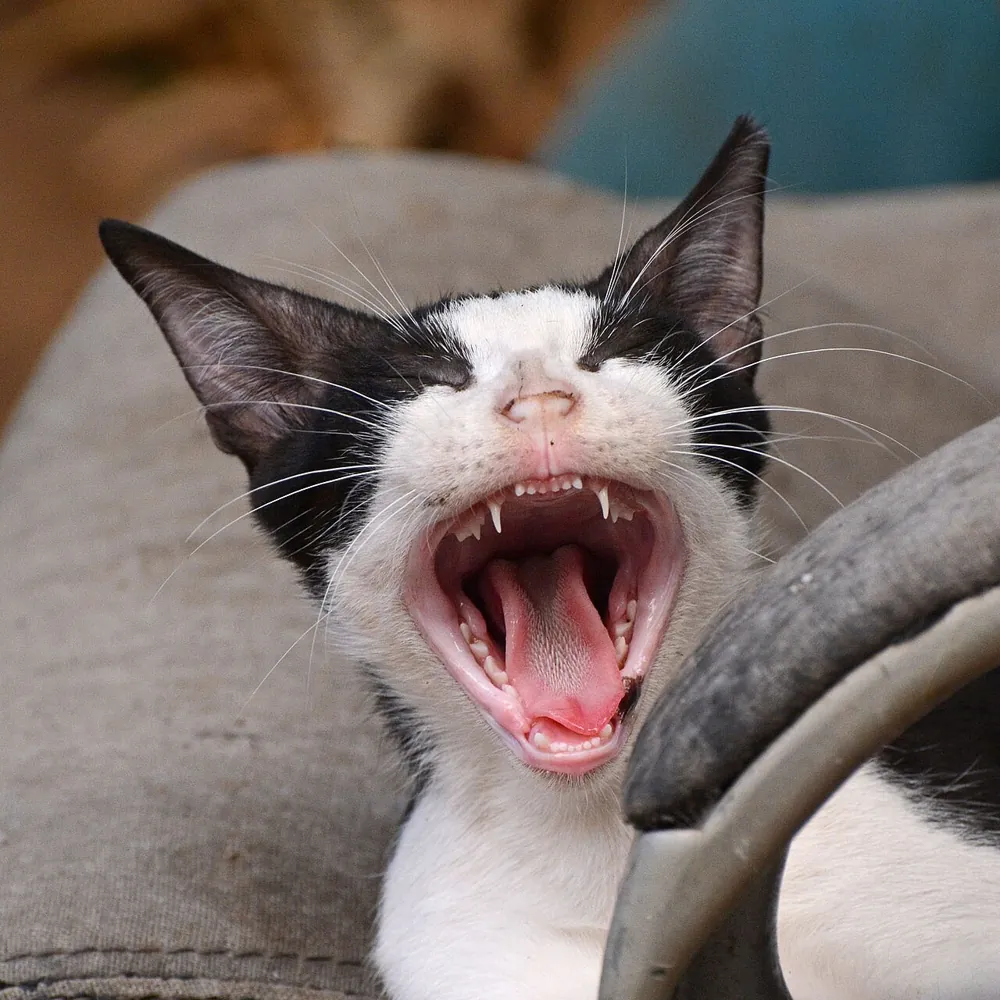
Photo: Revital Salomon / Wikimedia Commons, CC BY-SA 4.0
You may find a tiny shed tooth on the floor during this time, and many are simply swallowed. Our kitten teething toys guide covers the signs of teething in more depth, from drooling to a temporary dip in appetite.
Which Teether Materials Are Safest for Kittens?
Answer: Food-grade silicone and soft natural rubber are the safest everyday teether materials because they flex, chill well, wash easily and do not shed. Tightly woven fabric chews are a good soft option. Skip hard nylon dog chews, thin brittle plastic, and felt or yarn that pulls apart into threads.
Material decides how a teether fails, and that matters more than how it looks on day one. A good teether fails slowly and visibly: it thins, it tears at an edge, it gets a nick you can feel. A poor one fails suddenly by snapping, by letting go of a glued part, or by unravelling into strands a kitten can swallow.
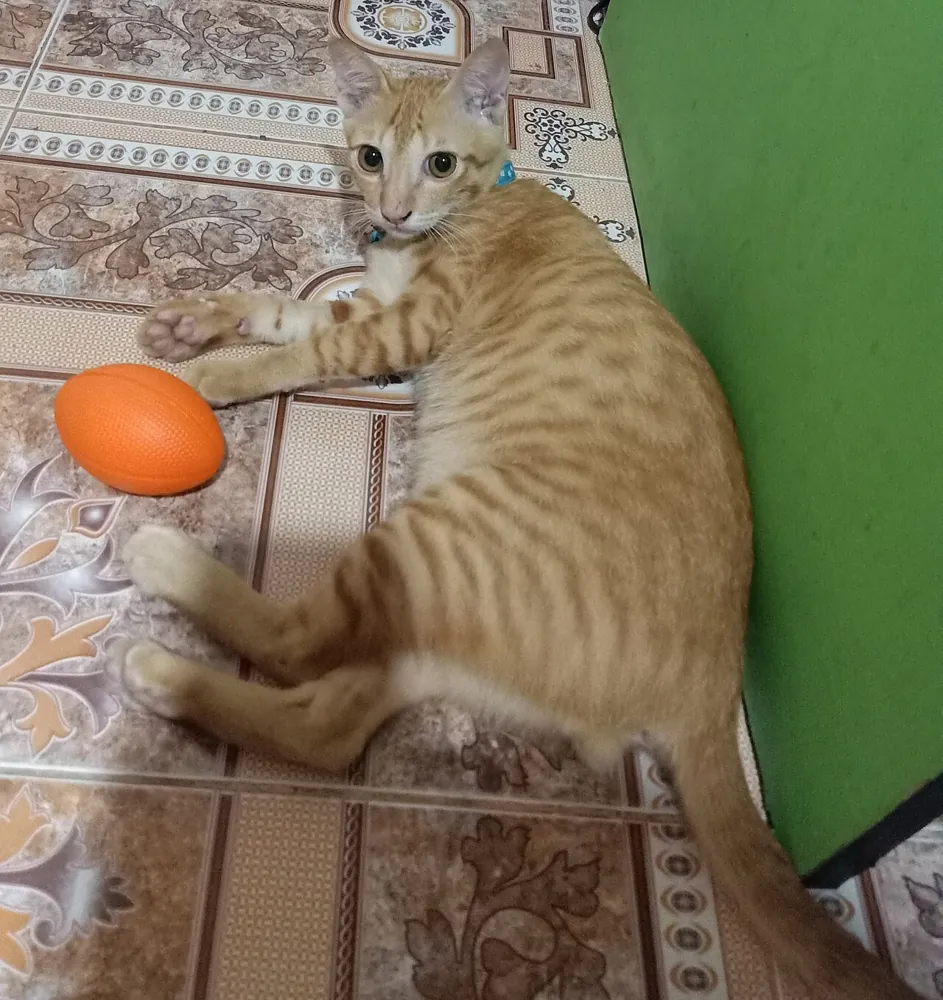
Photo: Aiaikz / Wikimedia Commons, CC0
Smell is a useful extra test. A teether with a strong chemical odour straight out of the packet is worth airing or returning, since a kitten will taste whatever you can smell. Plain, unpainted surfaces are better than printed or glittery ones on anything designed for the mouth.
How Big Should a Kitten Teether Be?
Answer: A kitten teether should be too large to fit entirely inside the kitten's mouth, yet slim in at least one place so the back teeth can get around it. Light enough to carry, with ridges or nubs for texture, and no parts that can be bitten off. Rings, sticks and small dumbbell shapes work well.
Kittens chew with the side of the mouth, working the back teeth rather than the front ones. So the ideal teether has a thin section, such as a ring, a stick or the bar of a small dumbbell, that slides between those back teeth. At the same time the whole object must be too big to swallow or to lodge in the throat.
Weight matters too. A kitten that can pick a teether up, carry it to its bed and pin it with its paws will use it far more than one it can only nudge. Very heavy or bulky chews made for puppies tend to be ignored, and kittens then go back to cables and fingers.
Texture is a bonus rather than a requirement. Gentle ridges, nubs or a woven surface give sore gums something to work against. Avoid deep holes and narrow gaps where a small jaw or tooth could get stuck, and anything with a squeaker or rattle hidden inside, because those pieces come out once the casing is bitten through.
When in doubt, size up. A teether that is a little big for a young kitten will still be useful as the jaw grows, while one that is too small becomes a choking risk as soon as the kitten can get it fully into its mouth.
How Do You Check a Teether Before Use?
Answer: Before handing over any teether, pull, flex and inspect it: no glued parts, no small attachments, no seams that open, no fibres coming off on your fingers and no strong chemical smell. Then repeat the same check every week and bin the teether at the first real split.
A quick check at home catches most problems before the kitten finds them. Do this when the teether comes out of the packet and again once a week:
- Pull every part. Tug any feature that sticks out. If it moves, it will come off.
- Flex it hard. Bend the teether back on itself and look for white stress lines or cracks.
- Rub the surface. Rub it firmly between your fingers. Fibres or flakes on your skin mean fibres or flakes in the kitten.
- Check the seams. On fabric chews, look for gaps where stuffing could escape.
- Size it up. Make sure no piece, including any piece that could break off, could fit wholly in the kitten's mouth.
- Smell it. A strong chemical smell is a reason to air it out or choose another.
Never leave a kitten alone with anything stringy, including ribbons, elastic, tinsel, yarn or wand cords. A swallowed strand can cause a serious intestinal emergency, and kittens are especially keen to chew anything thin and dangly while their gums are sore.
Replace rather than repair. A teether that has lost a chunk, split along an edge or thinned enough to give way when you squeeze it has done its job. Keep a spare ready so there is no gap where the kitten goes looking for something else to chew.
Where Should Teethers Go in Your Home?
Answer: Put teethers where your kitten already chews: beside its bed, near the sofa where it naps, and next to any cables it targets. Protect cables physically with covers or by routing them out of reach, and keep a teether in the carrier for vet trips. A teether across the room gets ignored.
Teething kittens chew whatever is nearest when the urge hits. That means a teether in the toy basket on the far side of the room loses to the charging cable right beside the kitten. Think of teethers as stations rather than a collection, with one at each place your kitten likes to settle.
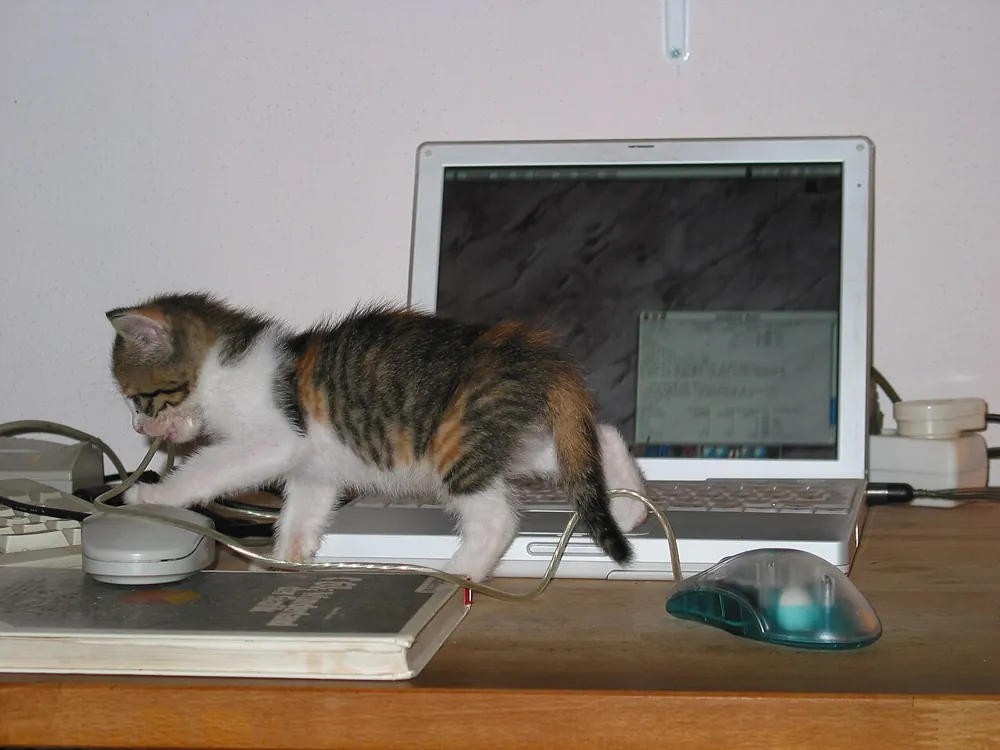
Photo: elian / Wikimedia Commons, CC BY 2.5
Cables need a physical fix, not just a distraction. Run them behind furniture, use cord covers, and unplug chargers that are not in use. Then leave a teether at that spot so the kitten has a better option the next time it comes looking.
Other useful stations are the kitten's bed, a window perch, and its carrier. A familiar teether in the carrier gives a nervous kitten something to do on the way to the vet. If you are still setting up for a new arrival, our new kitten essentials checklist and kitten toys guide cover the rest of the kit.
What If Your Kitten Prefers Your Fingers?
Answer: Many teething kittens prefer fingers because hands are warm, soft and always nearby. Never offer fingers as a chew. When teeth touch skin, go still and withdraw slowly, then put a teether or kicker in front of the kitten. Habits learned now carry on into adulthood.
Sore gums plus play instinct make fingers very tempting. It can feel harmless while the kitten is tiny, but a kitten that learns to chew hands becomes an adult cat that bites hands, and adult teeth hurt. The teething months are the best time to teach the difference.
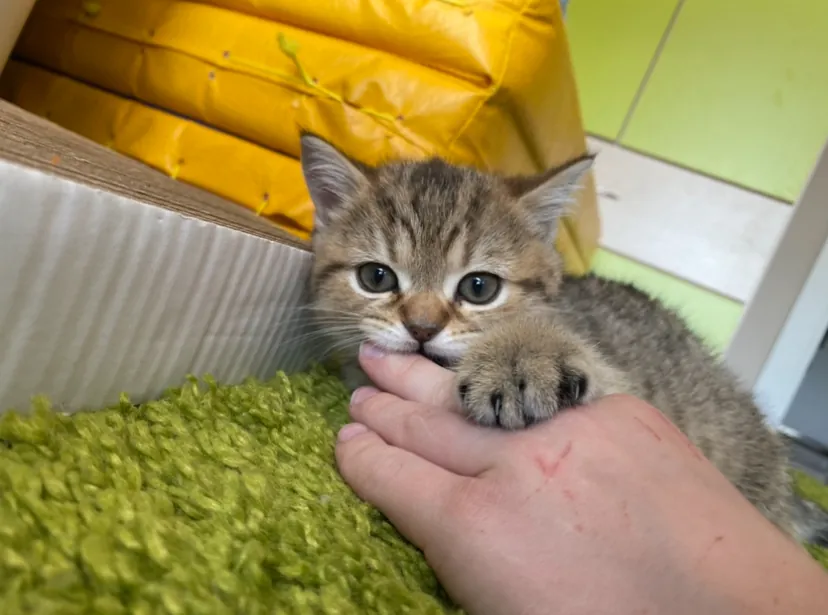
Photo: Max196rockets / Wikimedia Commons, CC0
Keep the response calm and identical every time: stop moving, slowly take the hand away, and offer a teether instead. Do not flick, tap or shout, because that can turn into a game or make the kitten wary of hands. Everyone in the household needs to follow the same rule.
As your kitten grows, the same approach carries over to play biting in adult cats. Our guide to cat biting toys explains how kickers and wand toys keep an older cat's bites off your skin.
When Is a Teether Not Enough?
Answer: A teether soothes normal teething but cannot fix a dental problem. See a veterinarian if a baby tooth is still in place next to its adult replacement, gums bleed persistently or look very red, breath turns foul, the kitten stops eating, or it paws at its mouth or drools a lot.
Teething is normally uneventful. A little extra chewing, the odd spot of blood on a toy and the occasional shed tooth on the floor are all part of it. Some things are not, and those need a veterinary look rather than another teether.
- A baby tooth still sitting beside the adult tooth that should have replaced it.
- Gums that bleed persistently, look very red or swollen, or have a sore spot that does not heal.
- Bad breath that does not fade.
- A kitten that stops eating, eats on one side only, or drops food.
- Pawing at the mouth, heavy drooling, or a swollen face.
Routine kitten checks are a good time to ask the vet to look in the mouth. Starting gentle tooth handling early also makes brushing much easier later; the Cornell Feline Health Center is a reliable place to read more about feline dental health, and our cat toothpaste guide covers the basics of brushing at home.
How Do You Clean and Chill a Teether?
Answer: Wash rubber and silicone teethers in hot soapy water or on the top rack of a dishwasher, and fabric chews on a gentle cycle without softener. Dry them fully. To chill, put a clean teether in the fridge, not the freezer, so it soothes gums without turning rock hard.
Teethers get wet with saliva and pick up food and litter dust, so clean them often. Rubber and silicone rinse clean in hot soapy water; rinse thoroughly so no soap taste is left behind. Fabric chews can go in a laundry bag on a gentle wash. Skip fabric softener, because cats often reject the coating it leaves.
Cold helps sore gums. Pop a clean rubber or silicone teether in the fridge for a while before offering it. Avoid the freezer: frozen rubber becomes hard enough to be uncomfortable on tender gums, and ice-cold surfaces can stick to a wet tongue.
Keep at least two teethers in rotation, so one can be washed and chilled while the other is in use. That way there is always a cool, clean option ready, and the kitten never has a reason to go looking for the sofa corner instead. Browse our cat toy range when it is time to add a new one, and see cat chew toys for options once your kitten has its adult teeth.
What Questions Do Owners Ask About Kitten Teether Toys?
Answer: Owners mostly ask what age a kitten needs a teether, which materials are safe, whether chilling is a good idea, and how to tell normal teething from a problem. The answers below cover each one, using ages from the Merck Veterinary Manual where timing matters.
At what age does a kitten need a teether toy?
Teethers are most useful while baby teeth are falling out and adult teeth are coming in. The Merck Veterinary Manual says permanent teeth usually begin to appear at around 4 to 7 months of age, so that is peak teether season, though many kittens enjoy a soft chew earlier. (Source: Merck Veterinary Manual, Dental Development of Cats)
What is the safest material for a kitten teether?
Food-grade silicone and soft natural rubber are the safest everyday choices because they flex, wash easily, chill well and do not shed. Tightly woven fabric chews are a gentle alternative. Avoid hard nylon dog chews, brittle plastic, and felt or yarn that comes apart into threads.
Can I freeze a kitten teether toy?
Chill it in the fridge instead. A cooled rubber or silicone teether soothes sore gums while staying soft. A frozen one becomes hard enough to be uncomfortable and can stick to a wet tongue. Keep two in rotation so a cool, clean one is always ready.
Are puppy teething toys safe for kittens?
Usually not. Puppy teethers are made for bigger, stronger jaws, so they are often too hard and too heavy for a kitten to use. Some small soft puppy toys may be fine, but choose items sized for a kitten's mouth, with no small parts and nothing a kitten could bite off.
How many teethers does a kitten need?
Two or three is plenty for most kittens. One at the bed, one where the kitten naps or plays, and a spare that is being washed or chilled. Placing teethers where your kitten already chews matters more than owning a large collection.
Is it normal for a kitten to bleed a little while teething?
A small spot of blood on a toy is common when a baby tooth comes out. Persistent bleeding, very red or swollen gums, bad breath or a kitten that stops eating are reasons to see your veterinarian, as is a baby tooth still in place beside its adult replacement.
How often should I replace a kitten teether?
Replace it at the first real split, missing piece or thin spot, not on a fixed schedule. Check each teether weekly by pulling, flexing and rubbing it. Fabric chews that start fraying should go straight in the bin rather than being trimmed and returned.
Why does my kitten chew my fingers instead of the teether?
Fingers are warm, soft and always nearby, so they win unless the teether is closer and more interesting. Go still and withdraw slowly whenever teeth touch skin, then offer a chilled teether. Keep teethers where the kitten naps and plays so it is always within reach.
Sources: Merck Veterinary Manual (number of deciduous and permanent teeth, eruption ages); Cornell Feline Health Center (feline dental health).