Kitten teething toys are soft, chewable toys that give a kitten something safe to bite while its baby teeth fall out and its adult teeth come in. Teething makes kittens mouthy: they nibble hands, cords, plants and furniture. The right toys protect your kitten and your home. This guide explains the teething timeline, which toy textures help, what is unsafe and how to start dental care early.
In This Article
- Quick Answer: What Are the Best Kitten Teething Toys?
- When Do Kittens Start Teething and When Does It End?
- What Are the Signs That a Kitten Is Teething?
- Which Types of Kitten Teething Toys Work Best?
- What Should Teething Kittens Never Chew?
- How Do You Stop a Teething Kitten From Biting Hands?
- How Can You Soothe a Teething Kitten at Home?
- Should You Start Brushing a Kitten's Teeth?
- What Else Belongs in a Teething Kitten's Kit?
- What Do Owners Ask Most About Kitten Teething?
- Sources
Quick Answer: What Are the Best Kitten Teething Toys?
The best kitten teething toys are soft but durable chew toys sized for a small mouth: rubber or silicone chews, fabric kickers, plush toys with no loose parts and textured dental toys. Rotate them, supervise play, and keep cords, string, hair ties and toxic plants out of reach while your kitten replaces its baby teeth.
Updated October 8, 2026- It is normal. Every kitten swaps its baby teeth for an adult set, and chewing helps it through.
- Soft and flexible wins. Gums are sore, so choose toys that give a little rather than hard objects.
- Supervise string. Thread, ribbons and cords are a serious swallowing risk for kittens.
- Start brushing early. A kitten that learns to accept a brush keeps that habit for life.
When Do Kittens Start Teething and When Does It End?
Answer: Kittens grow 26 baby teeth in their first weeks, with the incisors erupting at around 2 to 4 weeks. The Merck Veterinary Manual says permanent teeth usually begin to appear at around 4 to 7 months, and most cats end up with 30 adult teeth. Chewing is most intense while the adult teeth push through. Source: Merck Veterinary Manual.
Cats, like people, have two sets of teeth. The Merck Veterinary Manual's guide to dental development in cats explains that most cats have 26 deciduous, or baby, teeth and 30 permanent teeth. The baby incisors erupt at 2 to 4 weeks of age and the baby premolars at 5 to 6 weeks, and the permanent teeth usually begin to appear at around 4 to 7 months. Source: Merck Veterinary Manual.
Other references give a slightly earlier start. The Wikipedia article on kittens says kittens generally begin to lose their baby teeth around three months of age and have a complete set of adult teeth by nine months. The exact timing varies between kittens, so think of teething as a phase that runs through much of the first half year rather than a single week. Source: Wikipedia, Kitten.
What Are the Signs That a Kitten Is Teething?
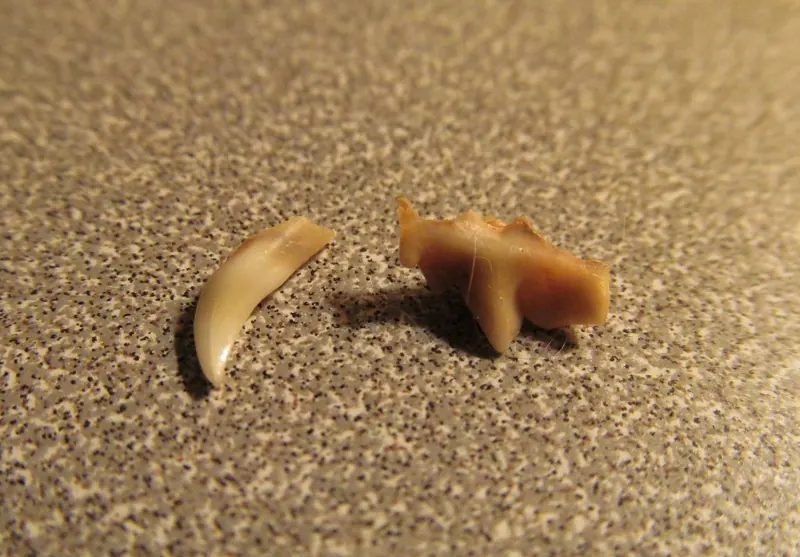
Answer: The most common signs are extra chewing and biting, nibbling on hands and furniture, slightly red gums, a little drooling, the odd tiny tooth on the floor and occasionally a pinker tinge on a toy. Some kittens are briefly fussier with dry food. Bad breath, swelling, bleeding that does not stop or refusing food all need a vet.
Most kittens get through teething with little more than a strong urge to chew. You may notice your kitten gnawing on the corner of a cushion, chewing shoelaces or mouthing your fingers during play more than usual. The gums can look a bit red where a new tooth is breaking through, and some kittens drool slightly.
Many owners never see a baby tooth, because they are tiny and hollow and kittens often swallow them while eating, which is normal and harmless. Finding one on the floor or stuck in a toy is a good sign the process is moving along.
What is not normal is pain that stops a kitten eating, gums that are very swollen or bleed a lot, strong bad breath, or a baby tooth still sitting next to an adult tooth once the adult one has fully come through. The Merck Veterinary Manual covers dental development, and your vet can check a retained baby tooth, which may need removing so the adult teeth line up correctly. Bring it up at the routine kitten checks that happen during these months anyway.
Which Types of Kitten Teething Toys Work Best?
Answer: Flexible rubber or silicone chews, soft fabric kicker toys, small plush toys with stitched features, textured dental chews and crinkle balls work best for teething kittens. They give under pressure, which soothes sore gums, and they are big enough not to be swallowed. Avoid hard plastic, toys with glued parts and anything small enough to fit inside the mouth.
A teething kitten wants to bite down and work its jaw, so the best toys are ones it can grip with its paws and chew with its side teeth. The table compares the common options:
Catnip can make a chew toy more appealing, although very young kittens often do not react to it yet; our catnip toys guide explains why. For a wider set of age appropriate options, see our kitten toys and toys for kittens guides.
What Should Teething Kittens Never Chew?
Answer: Keep electrical cords, string, thread, ribbon, tinsel, hair ties, rubber bands, small hard objects, splintering wood and toxic plants away from teething kittens. String like items can be swallowed and cause serious gut problems, cords can cause burns, and some common houseplants, especially lilies, are poisonous to cats. Put wand toys away after play.
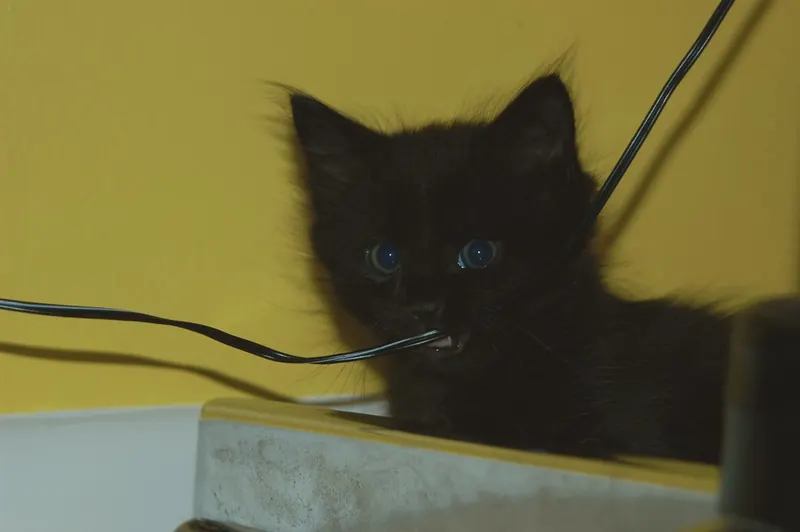
A teething kitten will test almost anything with its mouth, which is why kitten proofing matters most in these months. Cables are an obvious risk: chewing through a live cord can burn the mouth. Cover them with cord protectors, run them behind furniture or unplug chargers when you are out.
Linear objects are the hidden danger. Thread, yarn, ribbon, dental floss and the string on a wand toy can be swallowed and cause a serious blockage, so never leave string toys out unsupervised. Small hard items, such as bottle caps or pieces of a broken toy, are a choking risk, and wood that splinters is not a chew toy.
Plants deserve a check too. The ASPCA toxic and non toxic plants list lets you look up every plant in your home, and true lilies are known to be highly toxic to cats. A pot of cat grass gives a kitten something safe to chew instead.

How Do You Stop a Teething Kitten From Biting Hands?
Answer: Never use hands or feet as toys. When your kitten bites, stop play calmly, go still and offer a chew toy instead, then praise it for biting the toy. Use wand toys and kickers to keep play at a distance, give several short play sessions a day, and redirect every time so the kitten learns toys are for teeth.
Play biting is how kittens learn to hunt, and teething makes it stronger. A kitten that learns hands are toys will still be biting as an adult cat, when its bites hurt. The fix is consistency rather than punishment: shouting, tapping the nose or pushing the kitten away tends to turn play into a game or make the kitten fearful.
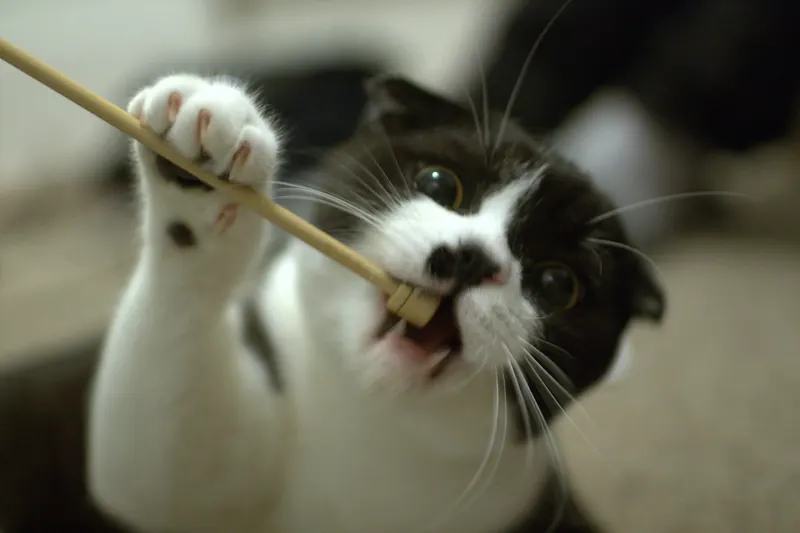
Instead, keep a chew toy or kicker within reach. When teeth touch skin, go still, gently remove your hand and offer the toy. Praise or reward the moment your kitten bites the toy. Long handled toys keep your fingers out of the action; our interactive cat toys and best interactive cat toys guides list good options.
Energy matters too. A kitten that is bored bites more. Two or three play sessions a day that end with a "catch" on a toy, followed by a meal, leave most kittens ready to sleep. A cat tunnel toy and a sturdy kitten scratching post give it other outlets for that energy.
How Can You Soothe a Teething Kitten at Home?
Answer: Offer a rotation of soft chew toys, more play to burn off energy, a chilled damp washcloth to chew under supervision and soft or moistened food if dry kibble seems uncomfortable. Keep the kitten's routine calm and predictable. Do not use human pain medicine or teething gels unless your vet advises it.
Rotating toys keeps them interesting. Put out two or three at a time and swap them every few days, so the chew toys feel new again. Wash rubber and silicone toys regularly, and throw away anything that has been chewed into pieces.
Cold can help sore gums. Wet a clean washcloth, wring it out and chill it in the fridge, then let your kitten chew it while you watch. If your kitten seems hesitant with dry food, add a little warm water to soften it or offer a wet food meal; once the sore phase passes, most kittens go back to crunching happily.
Medicines are where you must be careful. Do not give products made for people, including pain relievers and baby teething gels, unless your vet tells you to; cats process many drugs differently from humans. If your kitten seems to be in real pain, stops eating or has very swollen gums, call your vet instead of reaching for the medicine cabinet. Fresh water also matters during growth spurts; a cat water fountain encourages many kittens to drink more.
Should You Start Brushing a Kitten's Teeth?
Answer: Yes. Kittenhood is the easiest time to start. The Cornell Feline Health Center recommends a gradual program: let your cat smell and lick cat toothpaste, then touch a dab to a tooth, then introduce the brush, and only then brush. Use toothpaste made for cats, because human toothpaste is not safe for cats.
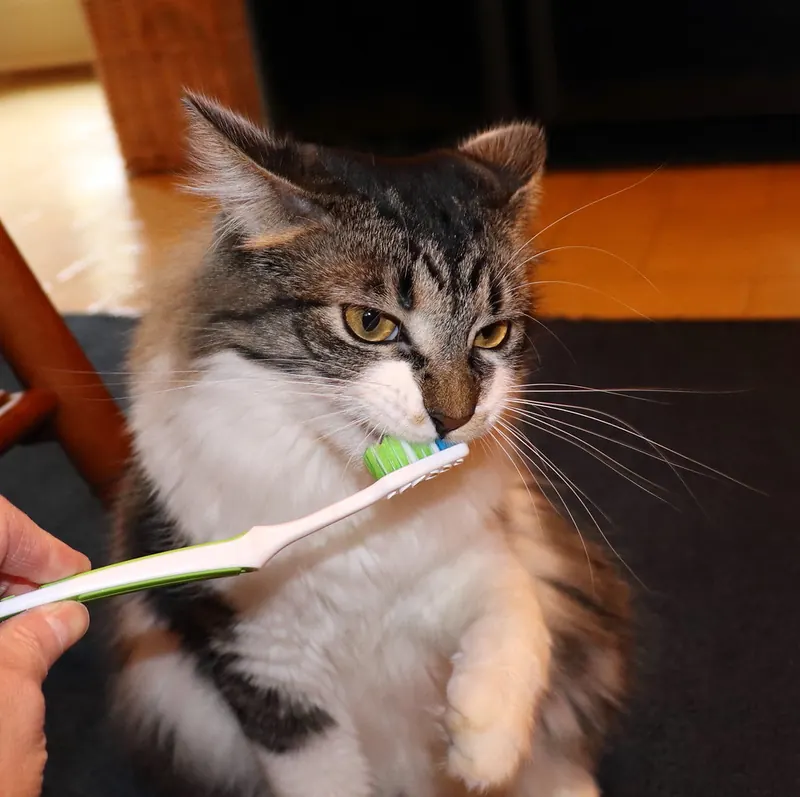
Brushing is the most effective way to keep plaque under control for life, and a cat that met the toothbrush as a kitten is far easier to handle later. The Cornell Feline Health Center sets out a four week plan. First, let your cat sniff and lick the toothpaste from your finger. Next, apply a dab to a canine tooth each day with a reward. Then let your cat lick toothpaste from the brush, and finally brush gently along the outer surfaces, where the tongue does not reach. Source: Cornell Feline Health Center.
Go gently while adult teeth are coming through, because the gums can be tender. Short, positive sessions matter more than perfect technique at this age; the goal is a kitten that sees the brush as a normal part of life. Cornell stresses using only toothpaste or gel designed for cats, as human products can be toxic to them.
What Else Belongs in a Teething Kitten's Kit?
Answer: Alongside a few chew toys, a teething kitten needs a scratching post, a wand toy for supervised play, a cozy bed, cord covers, a pot of cat grass, cat toothpaste with a small brush and a vet check scheduled during the teething months. Put string toys and small parts away whenever you leave the room.
Teething overlaps with the busiest months of kittenhood, so it makes sense to set up the whole environment at once. Our new kitten essentials checklist covers food, litter and bedding, and the scratch post for kittens guide explains sizes that suit small cats. A low cat hammock gives a tired kitten a safe nap spot after a play session.
Keep the toy box varied: one or two chews, a kicker, a crinkle ball and a supervised wand toy cover most needs. Toys that move on their own, like those in our electronic cat toys guide, can entertain a kitten while you work, but always check they have no small parts that can break off under a teething kitten's jaws. If you are switching litter at the same time, our eco-friendly cat litter guide explains why kittens are the easiest to start on a new type.
What Do Owners Ask Most About Kitten Teething?
Answer: Owners most often ask when teething starts and ends, whether kittens swallow their baby teeth, whether teething causes bleeding or appetite changes, which toys are safe, whether frozen toys help, how to stop biting and when to see a vet. The short answers below cover each question, with more detail in the sections above.
When do kittens start teething?
Baby teeth come in during the first weeks of life, and the adult teeth usually start to appear at around 4 to 7 months, according to the Merck Veterinary Manual. Source: Merck Veterinary Manual.
Do kittens swallow their baby teeth?
Often, yes. Baby teeth are tiny and hollow and are frequently swallowed with food, which is normal and harmless.
Is it normal for a teething kitten's gums to bleed?
A tiny spot of blood on a toy can happen when a tooth falls out. Heavy or ongoing bleeding, swelling or bad breath needs a vet check.
What toys are safe for teething kittens?
Soft rubber or silicone chews made for cats, fabric kickers, plush toys with stitched features and crinkle balls that are too big to swallow.
Can I give my kitten frozen toys?
A chilled damp washcloth or a cat chew cooled in the fridge is gentler than a hard frozen object. Always supervise.
How do I stop my teething kitten biting me?
Never use hands as toys. Go still when teeth touch skin, offer a chew toy instead and reward the kitten for biting the toy.
Can teething make a kitten eat less?
Some kittens are briefly fussier with dry food. Softening the food helps, but a kitten that stops eating should see a vet.
When should a teething kitten see a vet?
If a baby tooth stays next to a fully grown adult tooth, or the kitten has pain, swelling, bad breath or stops eating.