A whelping box for dogs is a low-walled pen where a pregnant dog gives birth and nurses her puppies for their first weeks. The right one is sized to the mother (one and a half to two times her body length on each side), has a pig rail around the inside walls to stop her from crushing a puppy, is lined with washable, non-slip bedding, and sits in a warm, quiet room away from other dogs. This guide walks through each of those decisions using guidance from the American Kennel Club and VCA Animal Hospitals.
Published September 29, 2026. Header photo: copperfeesh / Wikimedia Commons, CC BY-SA 2.0, cropped and resized. A dog named Kuta inspects her wooden whelping box, lined with a soft pad.
In This Article
- The Short Answer
- What a Whelping Box Is For
- How Big Should a Whelping Box Be?
- The Pig Rail: The One Feature You Should Not Skip
- Choosing a Material
- Bedding and Lining
- Keeping Puppies Warm Without Overheating Them
- Where to Put the Box
- Setup Timeline Before the Due Date
- Using the Box After the Birth
- Frequently Asked Questions
- Sources
The Short Answer
- Size it to the mother, not the litter. The American Kennel Club recommends a box one and a half to two times the length of the dam, so she can stretch out fully with room to spare.
- Fit a pig rail. A rail or ledge about 3 to 4 inches off the floor around the inside walls stops her from pinning a puppy against the side.
- Keep it warm, not hot. AKC guidance puts the box at around 85°F, and VCA suggests 85°F to 90°F for the first few days, because newborn puppies cannot hold their own body heat.
- Set it up early. Introduce the mother to the box at least five days before her due date, in a quiet room away from other dogs.
What a Whelping Box Is For
A whelping box is the pen where a pregnant dog gives birth and where her puppies spend their first weeks. You will also see it called a nesting box, whelping den, or whelping pen. According to the Wikipedia overview of the whelping box, its job is to keep newborn puppies contained, protected from the cold, and safe from being crushed or smothered by their mother.
That last point is the one most first-time owners underestimate. A healthy, attentive dam can still roll over in her sleep or lie down against a wall without noticing a puppy behind her. Newborns are too weak to wriggle free, and in a soft, sagging dog bed there is nowhere for them to go. A proper whelping box gives the mother a firm, flat floor, walls she can lean against, and a rail that leaves a small gap where a trapped puppy can survive.
The box also keeps the mess manageable. The VCA guide to whelping in dogs warns that there will be a large amount of fluid at the time of birth, and a box with removable layers of lining lets you swap soiled material with minimal disturbance to the mother and her newborns. Finally, it gives the dam a den. Dogs look for a sheltered, quiet spot in the last week of pregnancy, and a box she already trusts makes it far less likely that she picks the back of your closet instead.
If this is your first litter, a whelping box is only one part of the kit. Our new puppy essentials checklist covers what you will need once the puppies are up and moving, and the puppy starter kit guide is a useful list to hand to new owners when the litter goes home.
How Big Should a Whelping Box Be?
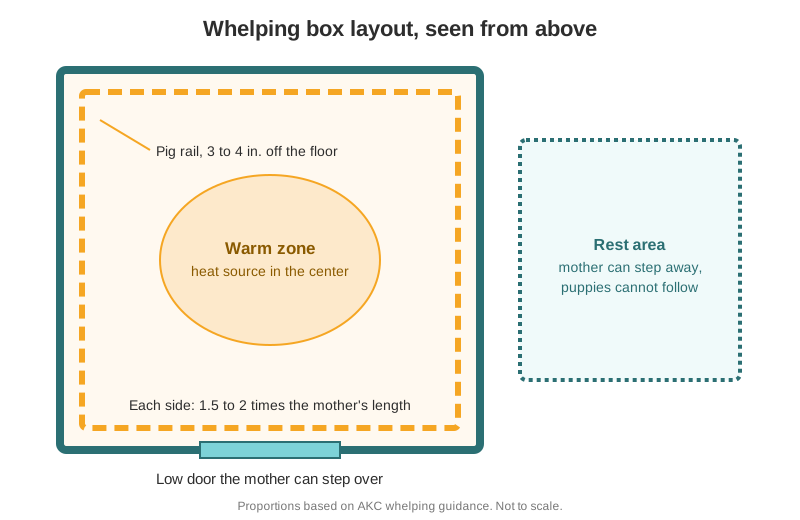
Size is where most homemade boxes go wrong, usually by being too small. The AKC's advice on whelping and caring for newborn puppies is simple: each side of the box should measure one and a half to two times the length of the dam, so she can stretch out in full length with room to spare. Measure her from the tip of her nose to the base of her tail while she lies on her side, then multiply.
Height matters just as much. The sides should be tall enough to hold the puppies in but low enough for the mother to get in and out comfortably. The Wikipedia overview notes that designers must allow for her enlarged mammary glands, which is why many boxes have a door or a lower section on one side with an adjustable height. VCA adds that the sides should be low enough for her to see out, so she does not feel shut in.
These figures are straight multiplication of the AKC rule, not product sizes, so treat them as a floor. If your dog likes to sprawl, or you expect a large litter, lean toward the 2x end. The AKC also says the mother should be able to get away from her puppies into a separate area without the puppies escaping. That can be an attached extension, a half-wall she can step over, or simply an exercise pen around the box, as shown in the layout below.
The Pig Rail: The One Feature You Should Not Skip
The pig rail (also called a puppy rail, bumper, or roll bar) is a ledge fixed to the inside walls of the box. AKC guidance places it 3 to 4 inches from the floor around the whole perimeter. When the mother lies down against a wall, the rail holds her body slightly away from it, leaving a pocket underneath where a puppy caught behind her can still breathe.
Wikipedia's summary notes that rails are considered especially important for larger breeds, simply because a heavy dam can do more damage in a split second. Smaller breeds still benefit, and the rail costs very little to add to a homemade box. A length of wooden dowel or PVC pipe held with brackets is a common approach; commercial boxes usually include rails that clip on at more than one height.
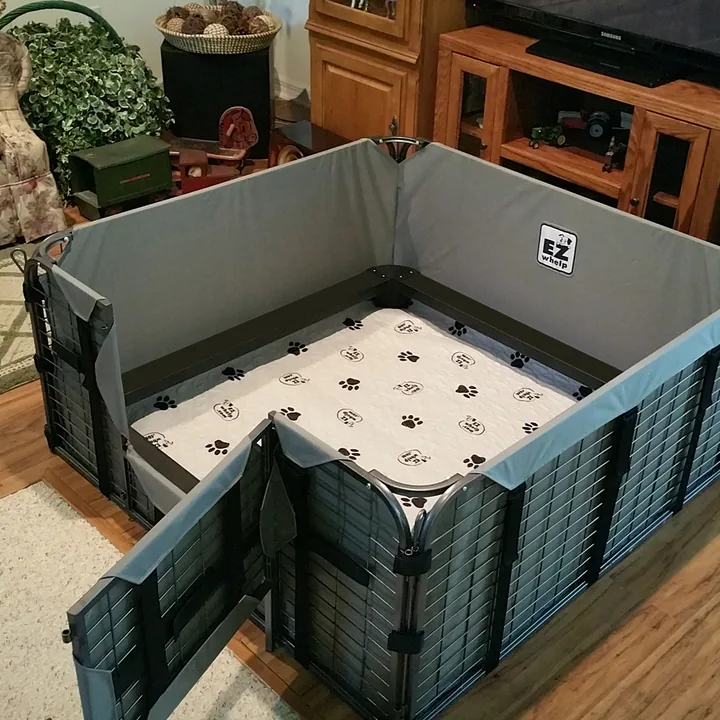
Check the rail before the due date. It should be solid enough that the mother cannot push it loose, smooth enough that it will not scrape her, and high enough that a puppy fits underneath but low enough that it actually meets her body when she lies down. Once the puppies are walking steadily and strong enough to move away from her, some owners remove or raise the rail.
Choosing a Material
Whelping boxes range from improvised cardboard to purpose-built plywood and plastic. Wikipedia lists ease of cleaning, extendibility, and toughness as the features that matter most. The AKC article on innovations in whelping boxes makes the point that the simplest homemade designs still work, and that a children's wading pool or the bottom half of a dog crate can do the job for the right breed and space, as long as the floor has no dips where puppies could get stuck.
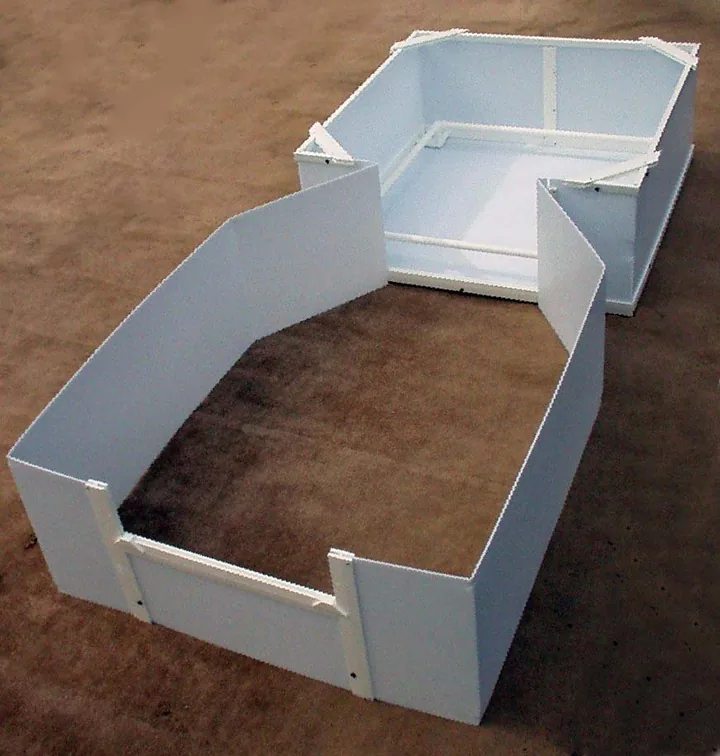
Whatever you choose, think about the floor. Wikipedia notes that an unnaturally flat, slippery floor gives puppies poor traction. Good bedding solves this, which is why the lining deserves as much thought as the box.
Bedding and Lining
The AKC says the best bedding for a whelping box is soft, warm, has good traction, and is easy to clean and disinfect. It should be moisture resistant and not easy for puppies to swallow. The same guidance lists what to avoid: hay, straw, shavings, and stiff particles that can irritate eyes and skin, plus loose rags, blankets, or carpeting that puppies can crawl underneath, where the mother could lie on them without seeing them.
During the birth itself, VCA recommends lining the box with plenty of newspaper. Several layers let you peel away soiled sheets without lifting the mother. VCA also points out a practical difference: washable acrylic bedding can go on top, but plain newspaper is more absorbent and puppies are less likely to get hidden beneath it. Many breeders use newspaper during delivery and switch to a fitted, washable pad afterward. AKC describes a common setup of waterproof bedding on the bottom with a flannel-top whelping pad that wicks moisture away from the puppies.
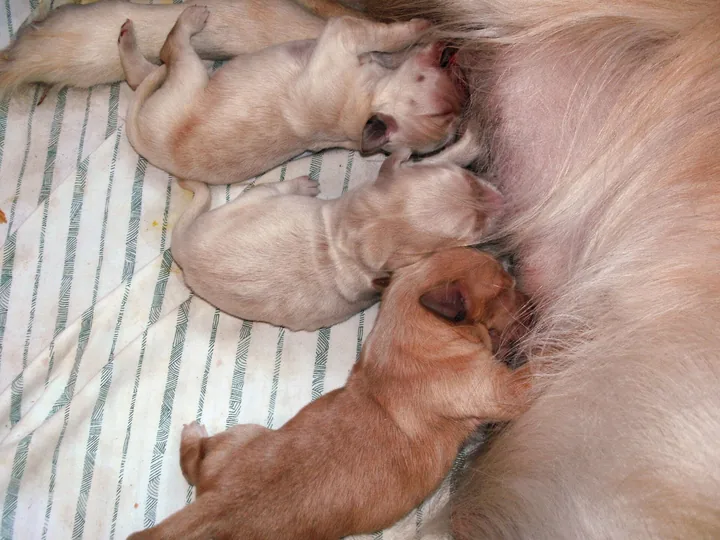
Plan for laundry. You will change pads several times a day in the first weeks, so have at least three sets ready: one in the box, one in the wash, and one clean and dry. Our guides to a washable dog bed and a machine-washable dog blanket explain which fabrics survive repeated hot washes, which is useful once the mother moves back to her own bed.
Keeping Puppies Warm Without Overheating Them
Newborn puppies cannot regulate their own temperature. The AKC says they are not able to make their own body heat until around two and a half weeks of age and recommends keeping the whelping box at around 85°F. VCA gives a slightly wider range of 85°F to 90°F for the first few days, and adds that if the mother is caring for her puppies well and the room is warm, extra heat is usually unnecessary.
Too much heat is its own problem. VCA warns that newborns lack the strength to crawl away from a heat source and can overheat quickly, and the AKC notes that very high temperatures and humidity can cause breathing trouble and dehydration in puppies, while an overly warm mother may spend less time with her litter and produce less milk. That is why the heat should cover only part of the box. The AKC recommends placing it in the center, which also keeps puppies away from the walls where the mother is most likely to lie on them.
Common heat sources include heat lamps and electric, water-filled, or microwavable heating pads. The AKC's whelping box article prefers rigid kennel heat mats with a protected cord, paired with a thermostat, over flexible household heating pads that puppies can get tangled in or chew. Whatever you use, put a thermometer at puppy level and check it several times a day. A heated dog bed designed for adult dogs is not a substitute, because it is sized and powered for a dog that can move away when it gets too warm.
Where to Put the Box
Location is a safety decision. In the AKC article on the perfect place for the whelping box, a longtime breeder explains that a dam benefits from a quiet, covered space without contact with other dogs. Her advice is to set the box up in a room isolated from other dogs, use a door or gate to keep them out, and add an exercise pen around the box as an extra layer of protection. Many breeders, she says, keep the box in their own bedroom for the first three weeks.
The same article is blunt about other pets: never trust another adult dog around new puppies, no matter how gentle it normally is. Keep household dogs well away until the puppies are eating solid food. Plan for bathroom breaks too, since you will need to take the mother outside yourself rather than leaving a door open that other dogs could use.
Choose a spot that is warm, draft-free, and easy to clean around. Avoid high-traffic hallways and anywhere near loud appliances. You will also spend a lot of time sitting beside the box, so make sure there is room for you.
Setup Timeline Before the Due Date
Timing matters because the mother needs to accept the box as her den. The AKC recommends introducing her at least five days before her due date. VCA explains why: in the last week of pregnancy many dogs start searching for a safe place to give birth, and some insist on staying close to their owners, sometimes on the owner's bed in the middle of the night. Getting her used to the box well before whelping makes it much more likely she uses it.
Keep your veterinarian's number handy. VCA advises calling if intense straining goes on for more than 30 minutes without a puppy or signs of the water breaking, or if she has delivered at least one puppy and does not strain again within two hours. The box is there to keep puppies safe, but it does not replace watching the birth.
Using the Box After the Birth
For the first couple of weeks the box is the whole world for the puppies. Keep it clean and dry, keep the heat steady, and weigh the puppies regularly. The AKC suggests checking weights at birth, at 12 hours, and at 24 hours, and notes that most healthy puppies nearly double their birth weight in the first week. A small kitchen scale and a notebook next to the box make this easy.
As the puppies start to walk and explore, the box needs to grow with them. This is when extension walls and exercise pens earn their keep. Add a separate play area, begin swapping some of the bedding for textures they will meet later, and introduce safe items to mouth and carry. Our guides on which toys are safe for puppies, choosing puppy toys, and the best teething toys for puppies cover what to offer once the litter is old enough, and how to keep a puppy busy has ideas for the noisy weeks before they go to new homes.
If the litter is a small breed, pick toys scaled to tiny mouths; our guide to toys for small breed puppies explains sizing. Gentle first grooming sessions also start in these weeks, and our puppy grooming tools guide lists the soft brushes and nail trimmers worth having. For new owners collecting a puppy from you, a new puppy gift set is a thoughtful send-off.
When the puppies leave, clean and disinfect the box thoroughly before storing it. Plastic and sealed plywood boxes can be reused for years, which is one reason repeat breeders invest in them.
Frequently Asked Questions
How big should a whelping box be?
The American Kennel Club recommends that each side be one and a half to two times the length of the mother, measured from nose to base of tail, so she can stretch out fully with room to spare.
What is a pig rail in a whelping box?
A pig rail is a ledge or bar fixed around the inside walls of the box, about 3 to 4 inches off the floor. It keeps the mother from pinning a puppy against the wall when she lies down.
What temperature should a whelping box be?
AKC guidance is around 85 degrees Fahrenheit, and VCA suggests 85 to 90 degrees Fahrenheit for the first few days. Heat only part of the box so puppies can move away if they get too warm.
When should I put my dog in the whelping box?
Introduce her at least five days before her due date, according to the AKC, so she accepts the box as her den before labor starts.
What is the best bedding for a whelping box?
Use plenty of newspaper during the birth, then a soft, non-slip, washable pad that fits the floor. Avoid hay, straw, shavings, and loose blankets or rags that puppies can crawl under.
Can I use a cardboard box as a whelping box?
For smaller dogs, yes. VCA says a large cardboard box with an open top and an opening cut in one side is ideal for smaller dogs. It cannot be cleaned, so plan to replace it.
Where should I put the whelping box?
In a warm, quiet, draft-free room away from other dogs. The AKC suggests a door or gate to keep other pets out and an exercise pen around the box for extra protection.
Sources
- American Kennel Club: Best practices for whelping and caring for newborn puppies
- American Kennel Club: The perfect place for the whelping box
- American Kennel Club: Innovations in whelping boxes
- VCA Animal Hospitals: Breeding for pet owners, whelping in dogs
- Wikipedia: Whelping box
Getting ready for the puppies?
Once the litter is on its feet, soft toys and safe chews help with teething and play. Browse our range of puppy-friendly toys.
Shop dog toys