If you are looking for the best how to keep a puppy busy, this comprehensive guide covers everything you need to know. Whether you are a first-time pet owner or an experienced one looking to upgrade, you will find practical advice, safety tips, and honest comparisons below.
This article is for general informational purposes only and is not a substitute for professional veterinary advice, diagnosis, or treatment. Always consult your veterinarian about any health concerns, dietary changes, medication, or product safety questions specific to your pet. If your pet shows signs of distress, illness, or injury, contact a licensed veterinarian or emergency animal hospital immediately. For background context, see the reference at American Kennel Club.
Why Breed and Size Matter When Choosing How To Keep A Puppy Busy
Different dog breeds were developed for specific jobs, and those original purposes still influence how they play, chew, and interact with toys today. Retrievers tend to carry and hold toys gently, terriers prefer shaking and "killing" their toys, and herding breeds enjoy toys they can chase and control. Understanding your breed's natural tendencies helps you select how to keep a puppy busy that align with their instincts.
When we look at to keep a puppy busy from a practical pet-owner lens, we keep coming back to a simple rule: choose for your dog's chewing style first, aesthetics second. We've found that approach prevents most of the regrets.
Size affects toy selection beyond simple choking hazard considerations. Small dogs under 20 pounds need lightweight toys they can carry, shake, and manipulate without jaw strain. Large dogs over 60 pounds need toys robust enough to withstand powerful bites and large enough that they cannot accidentally swallow them. Medium dogs between 20-60 pounds have the widest range of suitable options.
Age interacts with breed to further refine toy selection. A senior Golden Retriever has very different needs than a young Golden Retriever puppy, even though they share breed characteristics. Consider both your dog's breed tendencies and current life stage when building their toy collection.
How To Keep A Puppy Busy for Small and Toy Breeds
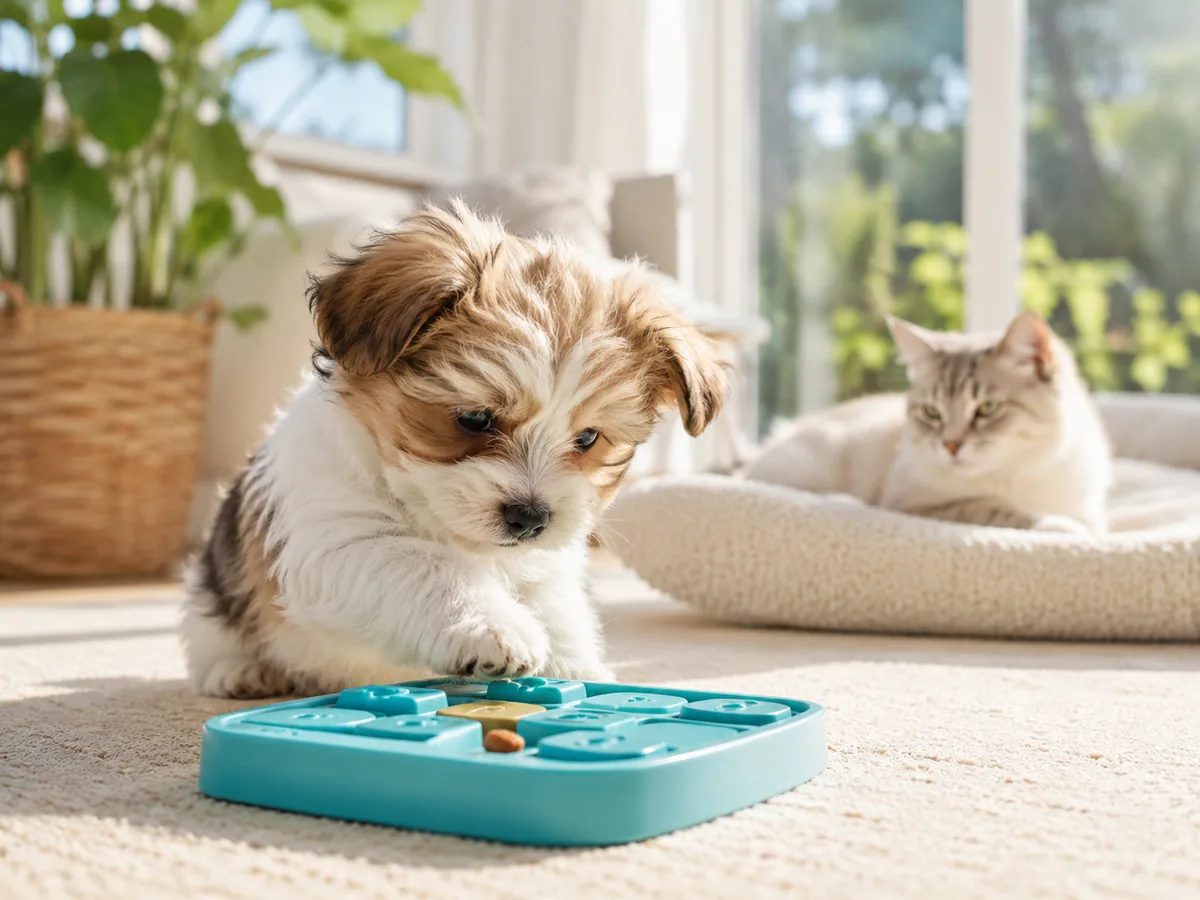
Small breeds like Chihuahuas, Yorkshire Terriers, and Pomeranians need toys scaled to their tiny mouths and delicate dental structures. Standard-sized tennis balls are too large for most toy breeds to carry comfortably. Look for mini versions of popular toys specifically designed for dogs under 15 pounds.
Honestly, we get asked about to keep a puppy busy more than almost any other category, and our answer has evolved over time as new research and product updates land.
For breed-specific recommendations, see our dog food for small dogs picks.
Despite their small size, many toy breeds have surprisingly strong chewing drives. Miniature Schnauzers, Jack Russell Terriers, and Dachshunds can destroy lightweight toys within minutes. Choose appropriately sized but durable options that match their chewing intensity rather than assuming small dogs need fragile toys.
Small breed toys should be lightweight enough for your dog to toss, carry, and shake independently. Many small dogs enjoy the "kill shake" motion where they grab a toy and whip it side to side. Heavy toys designed for larger dogs prevent small breeds from performing this satisfying behavior.
How To Keep A Puppy Busy for Large and Giant Breeds
Large breeds like Labrador Retrievers, German Shepherds, and Rottweilers need toys rated for heavy chewing. Standard rubber toys can break under the jaw pressure of a determined large-breed chewer, creating sharp fragments that pose ingestion risks. Look for products specifically labeled for "power chewers" or "aggressive chewers" and made from heavy-duty natural rubber.
Giant breeds including Great Danes, Mastiffs, and Saint Bernards require XL-sized toys that cannot fit entirely in their massive mouths. A toy that is appropriately sized for a Labrador may be a choking hazard for a Great Dane. Always err on the side of larger when selecting toys for giant breed dogs.
Joint health considerations are important for large and giant breeds. Toys that encourage low-impact exercise like swimming retrieves or gentle puzzle-solving are kinder to developing joints than high-impact fetch games on hard surfaces. This is especially important for puppies of large breeds, whose growth plates remain open until 14-18 months.
How To Keep A Puppy Busy for Working and Herding Breeds
Working and herding breeds like Border Collies, Australian Shepherds, and Belgian Malinois have exceptionally high mental stimulation needs. Standard toys bore these dogs quickly. They need complex puzzle feeders, multi-step problem-solving toys, and interactive games that challenge their intelligence.
Our puppy starter kit guide is tailored to the unique needs of specific breeds.
Herding breeds often enjoy toys they can control and chase. Balls that roll unpredictably, self-moving toys, and flirt poles tap into the herding instinct that drives these breeds. Without appropriate outlets, herding dogs may redirect this instinct toward children, other pets, or moving vehicles.
Rotate puzzle difficulty levels to prevent these smart breeds from becoming frustrated or bored. Once your Border Collie solves a puzzle in under two minutes, it is time to introduce a more complex version. Many puzzle toy brands offer tiered difficulty levels specifically designed for progressive challenge.
How To Keep A Puppy Busy for Flat-Faced Breeds
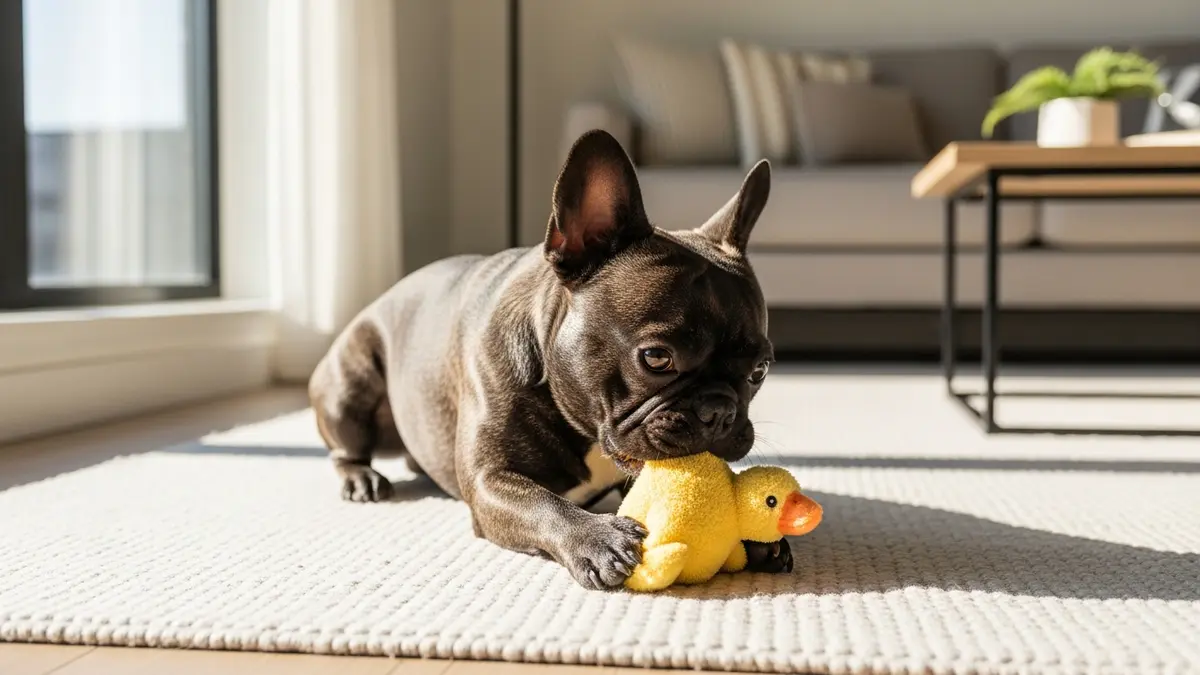
Brachycephalic breeds like French Bulldogs, Pugs, and English Bulldogs face unique challenges with standard toys. Their shortened muzzles make it difficult to grip round balls, pick up flat toys from the ground, or breathe properly during intense play. Look for toys with handles, irregular shapes, or raised edges that are easier for flat-faced dogs to grab.

Avoid toys that require sustained heavy breathing for brachycephalic breeds. Long fetch sessions, vigorous tug-of-war, and high-speed chase games can cause respiratory distress in these dogs. Short, moderate play sessions with frequent rest breaks are safer and more enjoyable for flat-faced breeds.
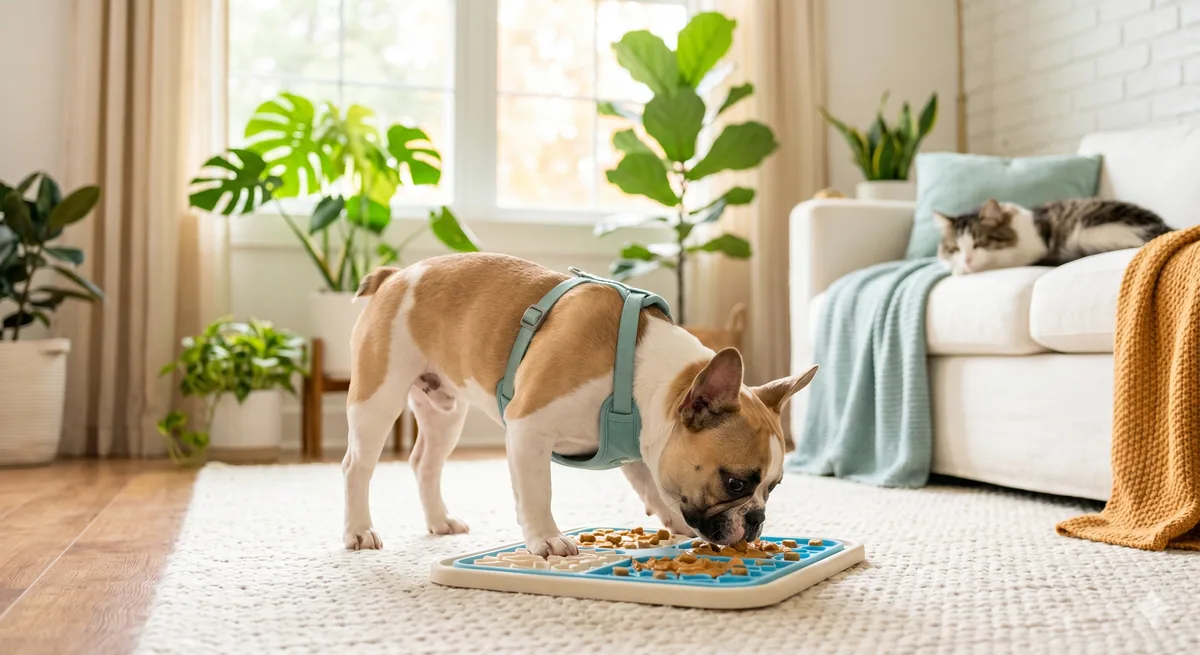
Puzzle feeders with wide, shallow openings work better for brachycephalic breeds than deep narrow designs. Standard KONGs can be difficult for flat-faced dogs to lick because their tongues are often shorter and their muzzles prevent deep insertion. Lick mats and flat puzzle trays are more accessible alternatives.
How To Keep A Puppy Busy for Terriers vs Retrievers
Terriers were bred to hunt small prey in underground dens, giving them intense shaking, digging, and destruction instincts. They enjoy toys they can "kill" through shaking and tearing. Squeaker toys satisfy this prey-kill sequence, and some terriers become obsessed with extracting the squeaker as their primary entertainment.
Different breeds have different needs. Our toys for kittens and cats guide helps you choose.
Retrievers were bred to carry game gently without damaging it, which explains their preference for holding and carrying toys rather than destroying them. Soft-mouth retrievers often enjoy plush toys they can parade around the house. Durable plush toys with reinforced stitching work well for retriever breeds because they want to carry, not destroy.
Understanding these breed-specific play preferences helps you avoid buying toys your dog will ignore. A terrier given a plush toy to gently carry will likely shred it within minutes. A retriever given a tough chew toy may lose interest because it does not satisfy their carry-and-hold instinct. Match the toy to the breed's natural behavior for maximum engagement.
How To Keep A Puppy Busy Across Your Dog's Lifetime
Puppy toys need to accommodate rapid growth. A toy that fits your 8-week-old Labrador puppy perfectly will be dangerously small within 3 months. Plan to size up toys as your puppy grows, and remove undersized toys promptly. Teething puppies between 3-6 months benefit from frozen rubber toys that soothe inflamed gums.
Senior dogs of all breeds benefit from gentler, lighter toys. Dental disease, arthritis, and reduced energy levels change how older dogs interact with toys. Soft rubber toys replace hard ones, gentle tugging replaces vigorous sessions, and simple puzzles replace complex ones. The goal shifts from physical challenge to mental engagement and comfort.
How To Keep A Puppy Busy: Size and Breed Comparison Table
This comparison helps you quickly identify the right toy category based on your dog's size and breed type. Always verify individual product sizing before purchasing.
Conclusion
Picking the right option for your puppy is less about finding a single "best" product and more about matching the choice to your puppy's size, age, play style, and your home environment. The recommendations above cover the main scenarios most pet owners run into, so use them as a checklist when comparing options.
Start with one or two changes, watch how your puppy responds for a week or two, then iterate. Pets show you very quickly what works for them. If a toy, feeder, or routine is ignored or causes stress, swap it out without hesitation. The goal is a happier, healthier puppy every day.
Frequently Asked Questions
What size toy is right for my dog?
Match toy size to your dog's weight and mouth size. Dogs under 20 pounds need small or mini toys, 20-50 pound dogs use medium toys, 50-80 pound dogs need large toys, and dogs over 80 pounds require XL options. The toy should be large enough that your dog cannot fit the entire thing past their back teeth, but light enough to carry comfortably.
Do different breeds need different toys?
Yes, breed tendencies significantly influence toy preferences. Retrievers prefer carrying and holding, terriers enjoy shaking and destroying, herding breeds like chasing and controlling, and brachycephalic breeds need easy-grip designs. While individual dogs vary, understanding your breed's natural instincts helps you select toys that align with how your dog naturally wants to play.
What are the best toys for puppies?
Puppies need soft, flexible toys that soothe teething gums without damaging developing teeth. Frozen rubber toys, puppy-specific plush toys, and lightweight rope toys are ideal for dogs under 6 months. Avoid hard nylon bones, antlers, and toys designed for adult chewing strength. Size up toys every 4-6 weeks as your puppy grows rapidly.
What toys do senior dogs enjoy?
Senior dogs benefit from softer materials that are gentle on aging teeth and jaws, lightweight designs that do not strain arthritic joints, and simple puzzles that provide mental stimulation without physical demands. Elevated feeders reduce neck strain, gentle tug toys maintain light exercise, and comfort plush toys provide emotional support. Keep play sessions shorter but more frequent.
Are small toys dangerous for large dogs?
Yes, toys designed for small dogs present serious choking and swallowing hazards for large dogs. A ball meant for a Chihuahua can be swallowed whole by a Labrador, potentially causing a life-threatening intestinal blockage. Always select toys rated for your dog's size category and replace toys that become small relative to your growing puppy.
What toys suit flat-faced breeds?
Brachycephalic breeds like Pugs, French Bulldogs, and Boxers need toys with handles or irregular shapes for easy gripping, wide shallow openings for lick mats and puzzles, and moderate stimulation levels that do not cause breathing distress. Avoid deep KONGs, round balls that are hard to pick up, and toys requiring sustained intense activity.
How do I choose toys for mixed breed dogs?
For mixed breeds, assess your dog's individual characteristics rather than guessing breed composition. Observe their natural play style (carrying, shaking, chewing, chasing), measure their mouth and body size, and test their chewing intensity with a supervised trial of a medium-durability toy. Let your dog's actual behavior guide your selection rather than assumed breed traits.