Quick Answer: What Are the Best Chew Toys for Puppies?
Match the toy to the teething stage: soft, flexible toys for needle teeth (about 8 to 12 weeks), cold or frozen chews and sturdier rubber during heavy teething (about 3 to 6 months), and adult-strength toys once the permanent teeth are in, usually by 6 months. Always pick a size your puppy cannot fit entirely in its mouth, supervise chewing, and replace toys as soon as pieces come off.
A puppy's chew toy needs change faster than any other part of its kit. The toy that soothes an eight-week-old's gums is often too soft for the same dog at five months, and some puppy toys carry an age or tooth limit printed right on the maker's page. This guide follows the teething timeline VCA Animal Hospitals describes and pairs each stage with the kind of toy that fits it, plus the rules for when to move on.
Sources: the teething timeline comes from VCA Animal Hospitals and the American Kennel Club. Age limits, weight ranges and materials for named toys are quoted from the makers' own pages as of September 2026. We did not test these toys ourselves, and the stage-by-stage pairings are our recommendation.
The Teething Timeline in Brief
VCA's guide to puppy teeth and teething lays out the sequence. Puppies begin teething at around three weeks, and by about six weeks all the baby (deciduous) teeth are in. At around twelve weeks those start to fall out as the permanent teeth erupt, and normally by six months every adult tooth is in place. Dogs have 28 baby teeth and up to 42 adult teeth. The AKC's advice on what puppies can safely chew agrees that puppies lose all their baby teeth before six months and notes that the process hurts, just as it does for human babies.
For choosing toys, that gives three practical stages: the needle-teeth stage up to about three months, the heavy teething stage from roughly three to six months, and the adult-teeth stage after that.
Breed and adult size matter too: a Mastiff puppy and a Chihuahua puppy need very different toys. Our puppy chew toys by breed and size guide covers that side.
Chew Toys for Each Stage
Stage 1: Needle teeth (about 8 to 12 weeks)
Most puppies come home in this window. VCA explains that baby teeth are pointed and sharp, which is why they are called needle teeth, and the jaw behind them is still small. Pick soft, flexible toys in a size the puppy cannot close its mouth around. A soft latex or puppy-rubber toy is ideal. This is also the age to teach what is and is not a chew toy, which the AKC stresses in the same article.
Stage 2: Heavy teething (about 3 to 6 months)
Baby teeth fall out and adult teeth push through, so gums are sore and chewing ramps up. This is where cold toys and stuffable toys earn their place (see the frozen section below). Puppy-specific lines are designed for this stage: the KONG Puppy uses a softer rubber "specially designed for teething gums," and Nylabone's Just for Puppies teething keys are made for teething puppies with gentle chewing styles.
Stage 3: Adult teeth (6 months onward)
Once the adult teeth are in, puppy toys become the wrong tool. Both major brands say so on their product pages: KONG says its puppy toy is not recommended for puppies over 9 months, and Nylabone says its teething keys are not intended for puppies with adult teeth. Move to an adult toy matched to your dog's chew style, using our best chew toys for dogs guide.
Puppy Chew Toys Compared
The table lists puppy lines whose makers publish clear limits. The "use until" column is what matters most, and it is taken from each maker's page.
| Toy | Material and purpose | Weight sizes | Use until |
|---|---|---|---|
| KONG Puppy | Softer puppy rubber for teething gums; can be stuffed and frozen | Small up to 20 lb, Medium 15 to 35 lb, Large 30 to 65 lb | Not recommended for puppies over 9 months |
| Nylabone Just for Puppies Teething Keys | Puppy material to soothe sore gums | Small up to 25 lb, Medium up to 35 lb | Not for powerful puppies or puppies with adult teeth |
| Nylabone Puppy Chew Freezer Bone | Puppy material, textured nubs; made to be chilled | Up to 25 lb | The teething stage (sold for teething puppies) |
| Nylabone Puppy Chew Stages Triple Pack | Softer chews for teething, then a tougher chew for puppies with adult teeth | Medium/Wolf up to 35 lb | Designed to carry a puppy from teething into adult teeth |
Two notes on reading the table. First, weight bands are for the dog's expected size soon, not just today, because a Labrador puppy moves through a "small" size in weeks. Second, if you are choosing between the two brands overall, our KONG vs Nylabone comparison explains the rubber versus nylon hardness question in detail.
Cold and Frozen Chews for Sore Gums
The AKC recommends cold chews to ease teething pain. It suggests ice cubes or frozen wet washcloths as cheap options, chew toys designed to be frozen, or a food-stuffable puppy toy filled with mushy kibble or broth and frozen. A simple routine for a stuffable puppy toy:
- Soak part of the puppy's normal kibble ration in warm water until soft, so treats do not add extra food to the day.
- Pack it into the toy and plug the small hole with a piece of kibble.
- Freeze upright in a mug for a few hours.
- Wash the toy after each use so food does not sit in the hollow.
Keep ice sensible. VCA lists large ice cubes among the chews that are too hard for teeth, so a small cube or a frozen washcloth is the safer version of this tip. For more ideas that target the sore-gum months specifically, see our teething chew toys for puppies guide.
What Puppies Should Not Chew
VCA's teething article is blunt that because dogs chew nearly everything, nearly everything has caused problems, from rawhide and pig ears to bones, synthetic toys and tennis balls. Some have caused gut blockages that needed surgery. Its practical guidance for puppies:
- Nothing hard. Most veterinary dentists recommend against puppies chewing hard objects, including nylon, bones and antlers, because they can break both baby and adult teeth. The rule of thumb is not to let a puppy chew anything that won't bend.
- Supervise even with good toys. In VCA's words, no toy is 100% safe.
- Remove temptations. Keep clothes, shoes and children's toys out of reach, and offer plenty of safe chew toys instead.
VCA's general chew toy guide adds the size rule that matters most for small puppies: the toy should never fit entirely in the mouth.
Puppies That Chew Like Adults
Some puppies of large or strong-jawed breeds destroy soft puppy toys within days. Nylabone's own guidelines for use acknowledge this: some young puppies are powerful chewers even with their puppy teeth and may need a Power Chew toy, and owners should supervise to make sure the puppy cannot bite off large pieces. The AKC makes the same point from the other side, noting that a power chewer may tear chunks off a softer rubber toy.
If that is your puppy, size up before you toughen up. A larger soft toy is usually safer for developing teeth than a harder one. If pieces still come off, move to a firmer rubber (our rubber dog toys comparison lists the firmer formulas) and keep sessions supervised. Our guide for heavy chewers covers the next step once the adult teeth are in.
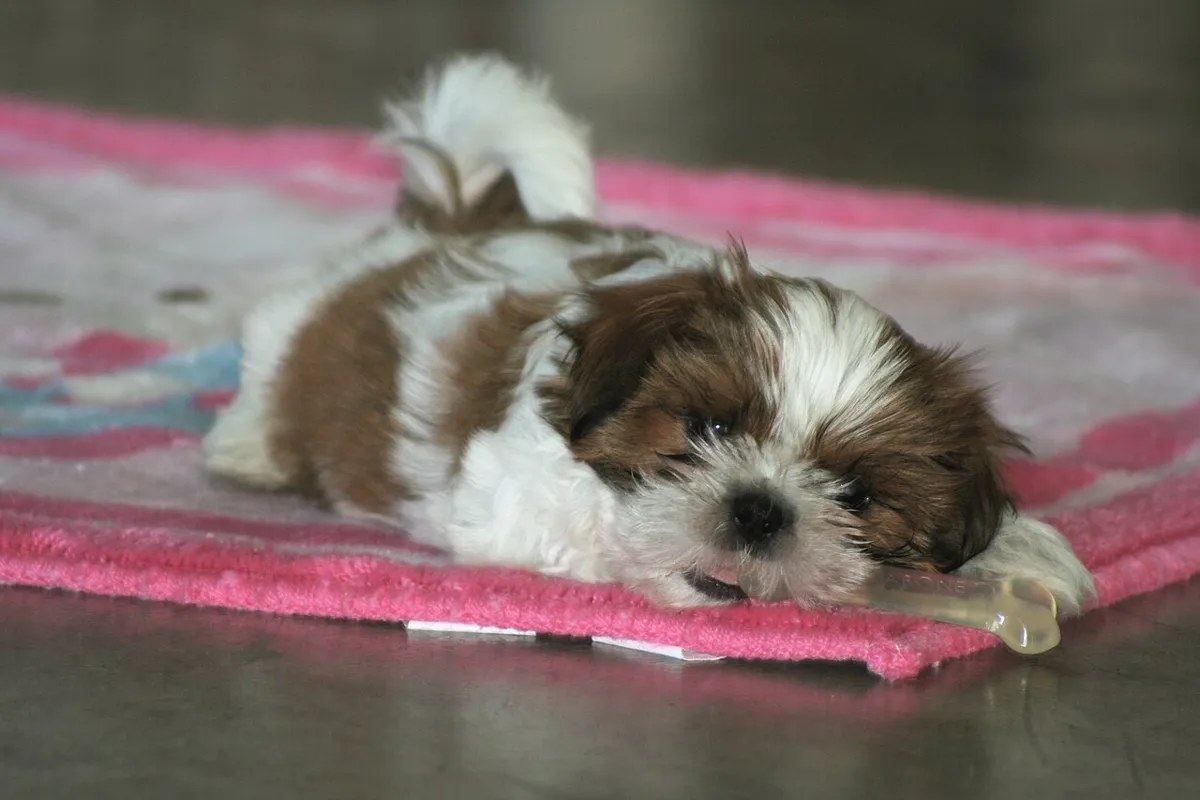
Squeaky latex toys like the one in the photo at the top of this page suit young gums, but keep them for supervised play, because a determined puppy can chew out the squeaker.
When to Retire a Puppy Toy
Retire a puppy toy for either of two reasons: it is damaged, or the puppy has outgrown it.
- Damage: VCA says to retire a toy when stuffing is showing, rope is frayed or rubber is broken, and to take a toy away if the puppy is chewing off chunks.
- Outgrown by size: a toy that fitted safely at ten weeks may fit entirely in the mouth at five months. Re-check size every few weeks during growth.
- Outgrown by teeth: once the adult teeth are in (normally by six months, per VCA), switch away from teething-only toys, following the maker limits in the table above.
Rotating a few toys, rather than leaving a pile out, keeps them interesting; VCA recommends keeping only a few out at any one time.
Signs Your Puppy Swallowed Part of a Toy
Teething puppies chew hard and swallow things they should not. Humane World for Animals warns that toys that are too small can be swallowed or become lodged in the throat, and advises discarding toys when they start to break into pieces.
VCA Animal Hospitals calls foreign body obstruction one of the more common and potentially life-threatening conditions in veterinary practice. Signs to watch for include:
- Vomiting or diarrhea
- Belly tenderness or pain
- Not wanting to eat
- Straining to poop or passing very little
- Lethargy, or growling when picked up around the belly
If you see a chunk missing from a toy and any of these signs, call your veterinarian. Bring the damaged toy so the vet can see what is missing.
Puppy Chew Toy FAQ
What are the best chew toys for puppies?
Soft, flexible toys made for teething, in a size the puppy cannot fit entirely in its mouth. Examples with clear maker guidance are the KONG Puppy, which can be stuffed and frozen, and Nylabone's Just for Puppies teething toys. Switch to adult toys once the adult teeth are in.
When do puppies stop teething?
According to VCA, baby teeth start falling out at around twelve weeks and normally all adult teeth have erupted by six months of age. Chewing often continues after that, but it is no longer driven by teething pain.
Are Nylabones safe for puppies?
Nylabone's puppy lines are designed for teething puppies, but its teething keys are not intended for powerful puppies or puppies with adult teeth. VCA notes that most veterinary dentists recommend against puppies chewing hard objects such as nylon, so choose the puppy material, check that it bends, and supervise.
Can I give my puppy ice cubes for teething?
The AKC lists ice cubes and frozen wet washcloths as cheap cold options for sore gums. VCA lists large ice cubes among chews that are too hard, so use small pieces or a frozen washcloth, and supervise.
How many chew toys does a puppy need?
A few is enough. VCA recommends rotating chew toys and keeping only a few out at a time so they stay interesting. Two or three toys with different textures, including one that can be frozen, covers most puppies.
What should I do if my puppy swallowed a piece of a chew toy?
Call your veterinarian, especially if your puppy vomits, will not eat, seems in pain, or strains to poop. VCA notes that foreign body obstruction is common and can be life-threatening. Bring the damaged toy with you.
Sources
- guide to puppy teeth and teething
- advice on what puppies can safely chew
- KONG Puppy
- Just for Puppies teething keys
- Nylabone Puppy Chew Freezer Bone
- Nylabone Puppy Chew Stages Triple Pack
- chew toy guide
- guidelines for use
- Humane World for Animals, How to Pick the Best and Safest Dog Toys.
- VCA Animal Hospitals, Ingestion of Foreign Bodies in Dogs.
Build a Puppy Starter Kit
Pair a soft teething chew with a plush toy for comfort and a small rope for gentle play. Our dog toy range ships free within the US.
Browse Dog Toys →