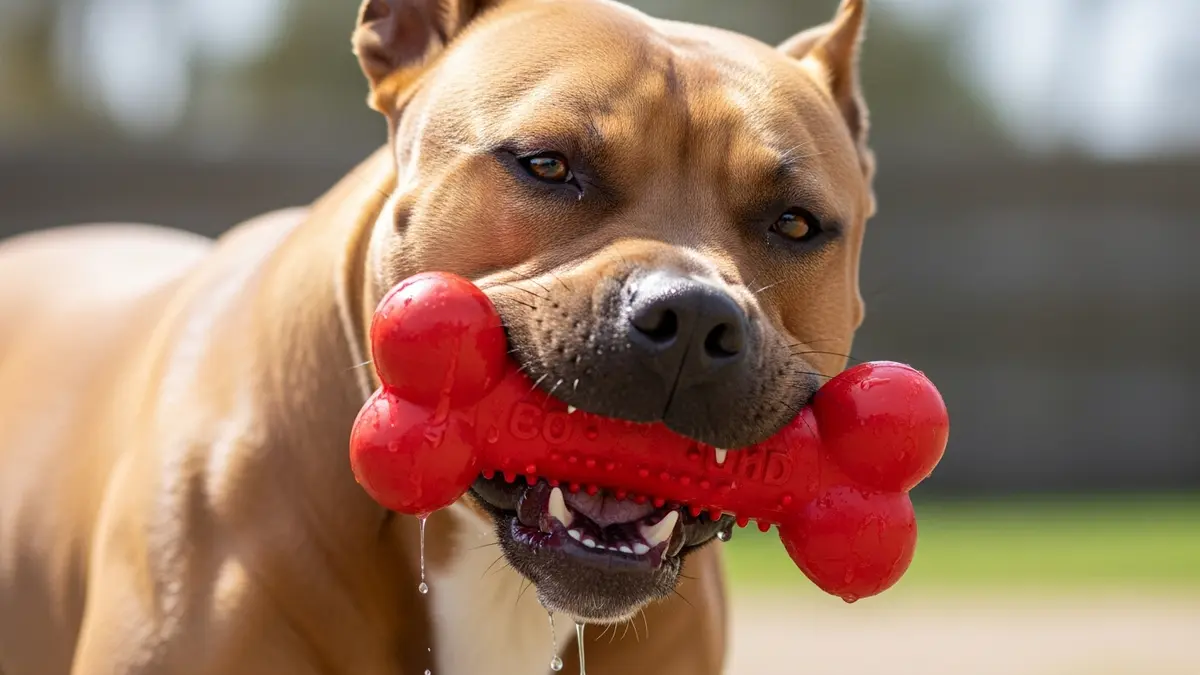
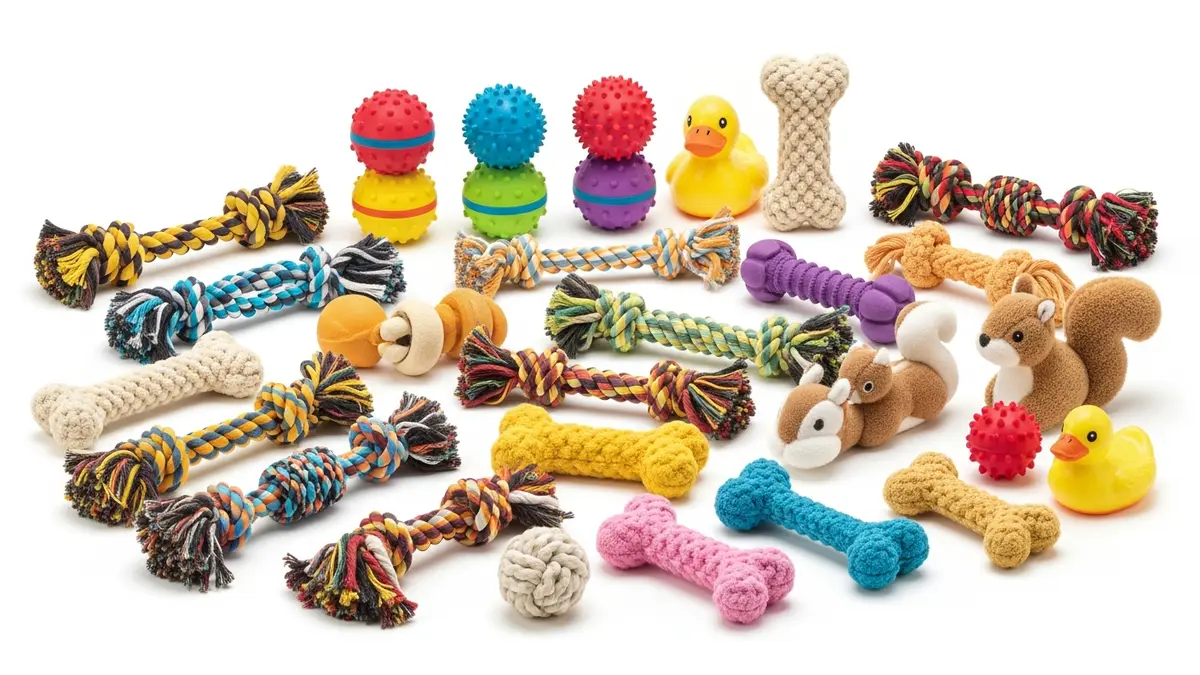
You have replaced three dog beds. Two throw pillows have been disemboweled. There is a corner of the baseboard that no longer exists, and your dog is sitting in the middle of it all looking genuinely pleased with himself. If this scene is familiar, you are not alone - and more importantly, you are not dealing with a bad dog. You are dealing with a dog whose needs are not being fully met, and whose instincts have found an outlet in the only material available: your belongings. According to the ASPCA common dog behavior issues guide, choosing the right toys can support your pet's mental and physical wellbeing.
Toys for destructive dogs are not just about buying something tougher. The right toys address the root cause of the destruction - boredom, anxiety, excess energy, teething, or a strong prey drive - so that your dog's instincts get a proper outlet before they turn on your furniture. This guide walks through 11 toys that genuinely work, explains the five root causes of destruction, and shows you how to match the toy to your specific dog. For a broader starting point, our roundup of the best dog toys covers every type and budget.
Why Dogs Destroy Things

Destruction is not a personality flaw - it is a symptom. Before you can choose the right toy, you need to identify which of the five root causes applies to your dog. Many dogs have more than one at play simultaneously.
In our experience writing about pet health topics like toys for destructive dogs, we've found that owners benefit most when guidance separates clinical signs from normal variation. We try to flag that distinction clearly throughout this piece.
If you want even more options, check out our guide to toys for dogs home alone.
1. Boredom
A dog that does not have enough to do will invent something to do. Chewing, shredding, and dismantling objects all stimulate the brain and the senses in ways that pure idleness does not. Working breeds - Belgian Malinois, Border Collies, German Shepherds, Huskies - are especially vulnerable because they were developed to think and move for hours at a stretch. When that cognitive and physical output has nowhere to go, the sofa becomes a project. Bored dogs typically destroy when left alone and show a marked preference for items with interesting textures, smells, or sounds - cushion stuffing, remote controls, shoe soles.
2. Separation Anxiety
Separation anxiety is a clinical stress response that occurs when a dog cannot cope with being left alone. Destruction is one of the most common manifestations: the dog chews, scratches, and tears at doors, windows, and owner-scented items in a panic-driven attempt to escape or self-soothe. Unlike boredom destruction, anxiety-driven destruction is typically focused on exit points (door frames, window sills) or items that carry the owner's scent (worn clothing, shoes, furniture they sit on). The dog is not misbehaving - they are experiencing genuine distress. For targeted solutions, our guide to dog anxiety toys covers the calming options in depth.
3. Teething
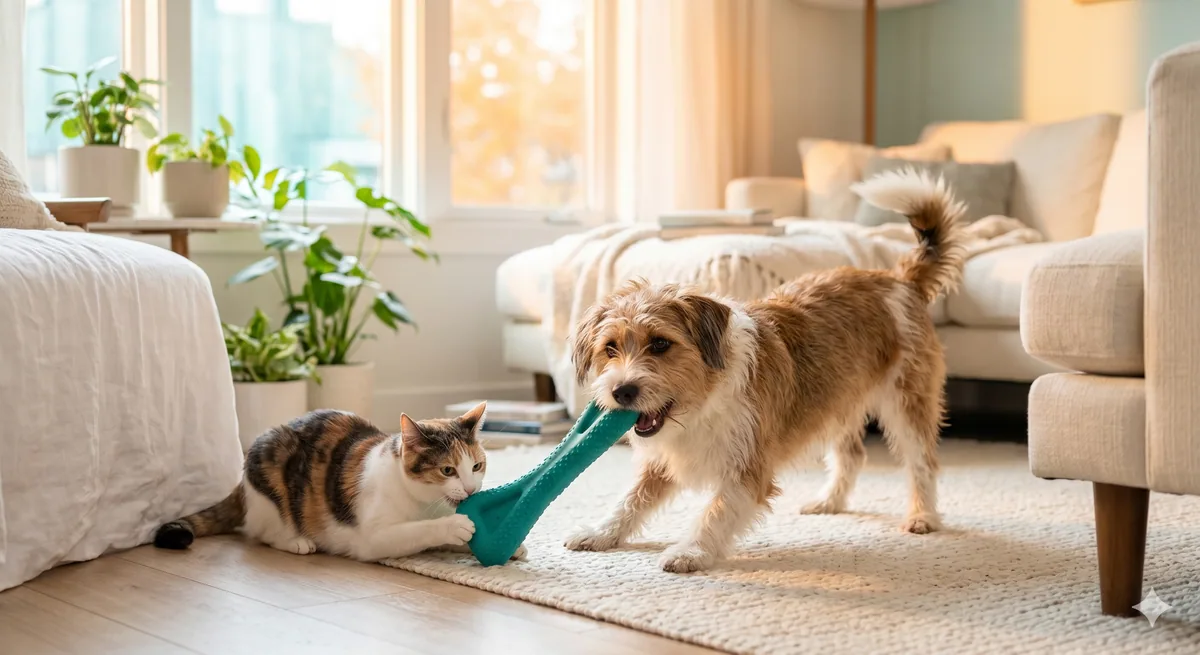
Puppies between three and seven months of age are going through a biologically driven teething process. Baby teeth are being shed, adult teeth are erupting, and the gums are sore and inflamed. Chewing provides direct pressure-based relief to the gums - it is not a behavioral choice but a physiological necessity. A teething puppy that does not have appropriate chew outlets will find them in chair legs, baseboards, and anything else at mouth height. The good news: with teething, the problem resolves on its own once adult teeth are fully in. The key is to survive that window with your belongings intact by offering appropriate alternatives.
4. Predatory Instinct
Dogs are predators by evolutionary origin, and all domestic dogs retain some degree of the predatory sequence: orient, stalk, chase, grab, bite, kill, dissect. The "kill-dissect" portion of this sequence is what you witness when your dog methodically removes stuffing from a plush toy or dismembers a squeaky animal. The squeak itself can trigger and intensify this drive - it mimics the sound of injured prey. Dogs with strong prey drive (terriers, sighthounds, high-energy working breeds) are far more likely to destroy soft toys in this fashion. This is normal behavior; it simply requires the right outlet.
5. Insufficient Exercise
Physical under-exercise is probably the single most common contributor to destructive behavior across all breeds. A dog that has not had adequate daily aerobic exercise carries a physiological load of unspent energy that must go somewhere. Destruction is one of the most effective ways a dog has found to burn that energy and stimulate their nervous system. The solution is not more toys but more exercise - though the right toys can extend the burn significantly and provide an outlet during the hours between walks.
Identify your dog's primary driver before shopping. A toy that works brilliantly for a bored dog may provide zero relief for an anxious one. Match the toy to the cause, not just to the breed or size.
11 Best Toys for Destructive Dogs
These picks are selected for durability, their ability to address specific root causes, and their track record with power-chewing, high-energy, and anxious dogs. Browse our full dog toys collection to complement these picks with accessories for your specific breed.
1. KONG Extreme - Best Overall Chew Redirector
The KONG Extreme is the black-rubber version of the classic KONG, formulated from a denser compound designed specifically for power chewers. Where the standard KONG (red rubber) wears down quickly under aggressive bite pressure, the Extreme resists puncture, tearing, and sustained gnawing far longer. The hollow center is the key feature for destructive dogs: stuff it with peanut butter, canned food, or wet kibble, freeze it overnight, and you have a high-value chew that keeps a dog focused on the right object for 30 to 60 minutes. The act of working the food out provides both mental stimulation and physical jaw satisfaction - two of the most effective boredom and excess-energy countermeasures available. Batch-prep five or six and rotate them from the freezer for a always-ready redirection tool. Size up for large and extra-large breeds: the XL is built to handle dogs over 60 pounds without splitting.
Honestly, the most important takeaway we share with readers on toys for destructive dogs is to involve a veterinarian early. We've seen how much smoother outcomes are when concerns are checked promptly.
2. West Paw Hurley - Best Indestructible Fetch Toy
The West Paw Hurley is a bone-shaped fetch and chew toy made from Zogoflex - West Paw's proprietary non-toxic compound that flexes under bite force rather than cracking or splintering. For dogs that demolish standard rubber or nylon fetch toys within minutes, the Hurley is a revelation: it survives hard chewing, absorbs throw impact, and bounces unpredictably enough to hold attention. It floats for water play and cleans up in the dishwasher. West Paw backs it with a one-time replacement guarantee - if your dog genuinely destroys it, they replace it. The fetch mechanic also addresses excess energy and predatory drive simultaneously, making it one of the most versatile picks on this list. For a full comparison of tough fetch options, our guide to indestructible dog toys covers the complete category.
You might also enjoy our recommendations for dog boredom toys.
3. Snuffle Mat - Best Mental Exhaustion Tool
A snuffle mat is one of the most underrated tools in a destructive dog's enrichment rotation. Dense fabric strips hide kibble or small treats, forcing the dog to use their nose - their most powerful and cognitively demanding sense - to hunt each piece out. Research consistently shows that 15 to 20 minutes of active scent work produces the same mental fatigue as a brisk 45-minute walk. For bored dogs, this is a game-changer: a snuffle feeding session turns every meal into a mentally draining enrichment activity at zero extra cost. The foraging posture (nose down, focused, methodical) also activates the parasympathetic nervous system, producing a measurable calming effect afterward. Use it as a pre-departure activity for dogs prone to anxiety destruction when left alone.
4. Nina Ottosson Puzzle Toy (Level 2–3) - Best Brain Game
Nina Ottosson's puzzle feeders are the benchmark for food-motivated enrichment, and Level 2 to Level 3 complexity is the right range for most destructive dogs. Level 1 puzzles are solved within minutes by intelligent dogs, providing no lasting engagement. Level 2 options like the Dog Brick feature sliding covers, flipping compartments, and multiple mechanism types that require genuine problem-solving to empty. Level 3 models add locking pegs and multi-step sequences. Load with part of the dog's daily kibble allowance - transforming a 30-second bowl-feed into a 15 to 20-minute cognitive workout. Puzzle toys directly address boredom and low mental stimulation, which are responsible for the majority of non-anxiety destructive behavior in adult dogs.
5. Flirt Pole - Best Physical and Prey Drive Outlet
A flirt pole - essentially an oversized cat wand for dogs - drags a lure through quick direction changes on the ground, triggering the orient-chase-grab sequence in a fully controlled, sanctioned play session. For dogs driven by predatory instinct, this is the most satisfying toy on the list: it lets them do exactly what their instincts are demanding, with a lure that survives the session. Ten minutes of active flirt pole play will tire most high-energy dogs more thoroughly than 30 minutes of leash walking, because of the explosive bursts and constant direction changes involved. Use each session to reinforce "sit," "wait," and "drop it" commands simultaneously - turning playtime into training time. Keep sessions to 10 minutes maximum to prevent overexertion and joint stress.
6. LickiMat Splash - Best Anxiety and Calming Toy
The licking motion has a demonstrably calming effect on dogs: it activates the parasympathetic nervous system, lowers heart rate, and reduces cortisol in the same way that rhythmic self-soothing behaviors reduce stress in anxious individuals. The LickiMat Splash spreads peanut butter, plain yogurt, or canned pumpkin across a textured surface that requires extended tongue work to clean, sustaining the calming effect for 10 to 20 minutes. For dogs whose destruction is anxiety-driven - particularly separation anxiety - a LickiMat given a few minutes before departure can interrupt the anxiety build-up that escalates into destructive behavior. The suction-cup base keeps it fixed to a wall, door, or floor surface; freeze the loaded mat for extended engagement. Pair with behavioral training and our deeper guide to dog anxiety toys for dogs with significant separation distress.
7. Goughnuts Ring - Best True Indestructible Chew
The Goughnuts Ring is widely regarded as the toughest chew toy on the market, and its unique safety system sets it apart from every other "indestructible" product. The outer black rubber layer covers an inner red layer: if your dog ever chews through to the red, you return it to Goughnuts for a free replacement. That visual safety indicator means you never have to guess whether the toy has been compromised to the point of hazard. The industrial-grade natural rubber construction is designed for dogs that destroy everything else - Pit Bulls, Rottweilers, Cane Corsos, Mastiffs - and it survives bite forces that crack or splinter every other product in the category. It is not stuffable or interactive, but as a pure chew satisfier for compulsive power chewers, nothing else comes close.
8. Tug-E-Nuff Tug Toy - Best Energy Drain Through Play
Tug-of-war, played correctly, is one of the most effective energy-draining activities available to high-drive dogs - and it carries the bonus of being intensely bonding for both dog and handler. The Tug-E-Nuff range is engineered for serious tugging: the materials hold up to sustained pulling from large, powerful dogs, and the handle design gives the handler control without hand fatigue. Tug directly engages the grip-and-pull instinct that many destructive dogs are satisfying on your furniture. The critical rules: always end the session with a "drop it" command rewarded with a treat, and put the toy away between sessions. A tug toy that lives on the floor loses its value quickly; one that appears only for special interactive play sessions retains high drive-triggering value indefinitely. Keep sessions to 5 to 10 minutes.
9. Benebone Wishbone - Best Long-Lasting Chew
The Benebone Wishbone is a nylon chew infused with real food flavor - bacon, chicken, or peanut - throughout the entire material, not just on the surface. The wishbone shape is ergonomically designed so the dog can pin one arm between their paws and get proper leverage while chewing the other, which makes it dramatically more satisfying to use than straight-shaft chews. Nylon construction resists the crushing bite forces that destroy rubber and rawhide options. As the dog chews, small amounts of nylon shred into harmless micro-particles that pass through the digestive system - unlike large chunks from cheap chew toys that can cause blockages. Replace when the arms wear down to stubs or when chunks larger than a thumbnail break free. A long-lasting chew provides hours of satisfying oral stimulation that significantly reduces the drive to chew inappropriate objects.
10. KONG Wobbler - Best Food-Motivated Engagement
The KONG Wobbler is a heavy-duty plastic food-dispensing toy with a weighted base that causes it to wobble and spin erratically when hit, dispensing kibble through an adjustable hole. For food-motivated dogs, this toy converts the daily meal into a 15 to 20-minute activity that requires continuous physical interaction - nosing, pawing, and chasing the toy around the room to get food out. The movement mimics the unpredictability of live prey, engaging the predatory sequence in a low-intensity, fully safe format. For destructive dogs that are also food-motivated, replacing bowl feeding with the Wobbler once or twice a day is one of the highest-return enrichment changes you can make: zero extra time investment, dramatically more stimulation per calorie consumed. The hard plastic construction survives even aggressive interaction without breaking down into hazardous pieces.
11. Automatic Ball Launcher - Best Independent Play Solution
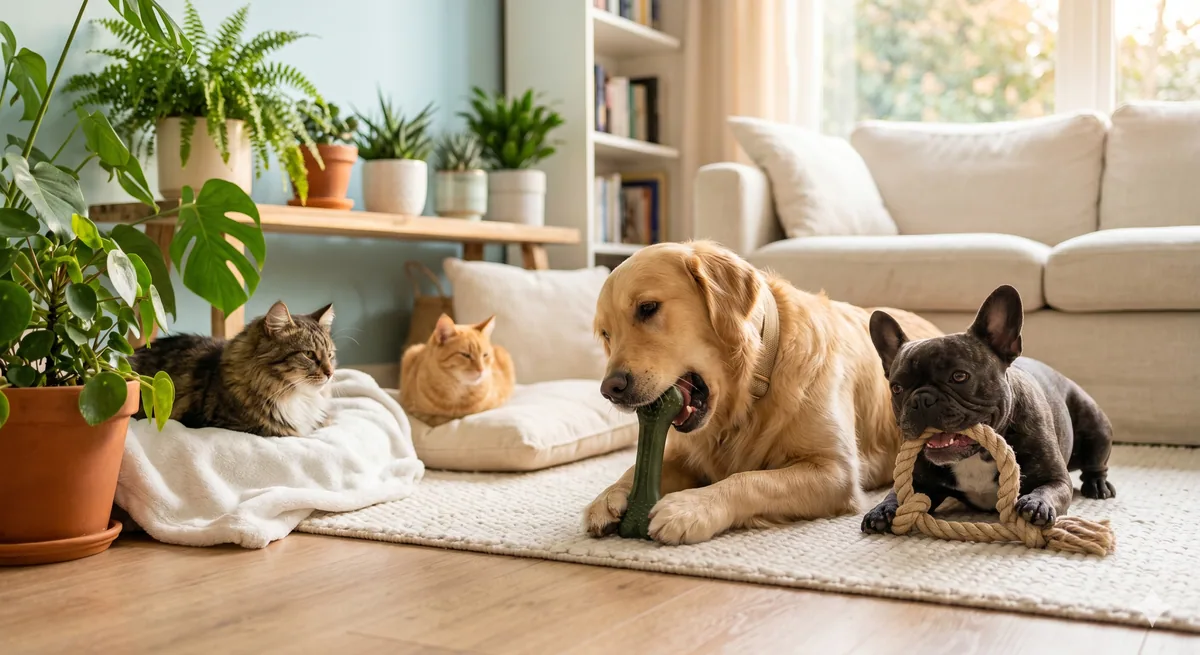
An automatic ball launcher allows a fetch-loving dog to play independently for extended periods - without requiring a human to throw every ball. The dog drops the ball into the funnel, the launcher propels it across the room or yard, and the cycle repeats. For high-energy dogs whose destruction stems from insufficient exercise during the day, this is one of the few devices that delivers real aerobic output without constant handler involvement. Most models include a motion-activated safety shutoff that stops the machine if the dog gets too close to the launch barrel, and adjustable distance settings to suit indoor or outdoor use. Introduce it gradually over several sessions: some dogs need encouragement to trust the mechanism before they engage independently. Best used outdoors or in a large room to avoid ball impact on fragile items.
For related picks, take a look at our mental stimulation dog toys roundup.
Addressing the Root Cause of Destruction
The right toy for your destructive dog depends entirely on what is driving the behavior. Here is a direct mapping of root cause to toy type, so you can build a targeted rotation rather than a random collection of tough rubber objects. For additional guidance, see the FDA Center for Veterinary Medicine safety information.
Boredom: Puzzle Toys and Mental Enrichment
If your dog destroys things primarily when under-stimulated - when they have been alone all day or have had minimal interaction - the priority is mental engagement. Puzzle feeders at Level 2 or Level 3 difficulty, snuffle mats, and food-dispensing toys like the KONG Wobbler convert idle time into problem-solving sessions. Rotate two or three puzzle options on a three-day cycle: a toy your dog has not seen in 72 hours registers as nearly as novel as a brand-new one, sustaining engagement across weeks without additional purchases.
Anxiety: Lick Mats and Calming Chews
Anxiety-driven destruction requires a different approach entirely. Tougher toys will not help a dog that is destroying your doorframe in a panic; what they need is tools that regulate their nervous system. The LickiMat Splash given pre-departure interrupts the anxiety escalation before it becomes destructive. Long-duration chews like the Benebone give the dog an appropriate oral outlet during the stressful period. Frozen KONGs combine both - the licking motion is calming and the long duration occupies the highest-anxiety window. Combine these tools with systematic desensitization training for dogs with diagnosed separation anxiety. See our dedicated dog anxiety toys guide for a full treatment-focused breakdown.
Predatory Instinct and Energy: Flirt Pole and Tug
Dogs with strong prey drive need an outlet that genuinely satisfies the chase-grab-bite sequence rather than just redirecting it onto a stationary object. The flirt pole and tug toy are the two best options because they engage the full predatory sequence under controlled, supervised conditions. A dog that gets a proper prey-drive outlet through 10 minutes of flirt pole play or tug each day is significantly less likely to displace that drive onto household objects. Schedule these sessions as a predictable part of the daily routine - immediately before periods when destruction has historically occurred works best.
Teething: Frozen Rubber and Appropriate Chews
Teething puppies need relief from gum pain, not redirection away from chewing entirely. Frozen KONG Extremes and cold rubber chews provide pressure-based gum relief that satisfies the teething drive without encouraging destruction of inappropriate items. The cold also reduces inflammation in erupting gum tissue. Keep two or three frozen KONGs in rotation so there is always one ready; supervise all chew sessions with teething puppies to catch immediately when they switch to furniture and redirect them to the appropriate toy with consistent praise.
Inspect every toy at every session. Remove and replace any toy that has missing chunks, exposed stuffing, cracked hard plastic, or frayed rope fibers. A toy that has been compromised by chewing presents ingestion and blockage hazards regardless of how tough it was when new.
When to Seek Professional Help
Toys and enrichment address the majority of destructive behavior in dogs that are otherwise healthy and well-adjusted. But some cases require professional intervention beyond what any toy can provide.
Signs of Serious Separation Anxiety
If your dog shows any of the following signs when left alone, the behavior has escalated beyond what enrichment toys alone can manage: self-injury (broken nails from digging at doors, cut paws from glass, damaged teeth from chewing metal crates), extreme vocalization that persists for the entire absence rather than settling within 20 to 30 minutes, escape attempts that destroy crates or cause the dog to jump through windows, or elimination accidents in a dog that is reliably housetrained in other contexts. These are signs of clinical separation anxiety, a recognized anxiety disorder that responds best to a combination of behavior modification, management, and - in moderate to severe cases - veterinary-prescribed anti-anxiety medication during the training period.
Aggression Associated with Destruction
If your dog guards destroyed objects from you, growls or snaps when you approach during a destructive episode, or has redirected aggression onto a person during a high-arousal play or destruction session, consult a certified applied animal behaviorist (CAAB) or veterinary behaviorist. Resource guarding and frustration-based aggression require professional assessment and a structured behavior modification plan - attempting to manage these behaviors without guidance can escalate the risk to household members.
Sudden Onset Destruction in a Previously Non-Destructive Dog
A dog that was never destructive and suddenly begins destroying things should be evaluated by a veterinarian before assuming the cause is behavioral. Sudden behavioral changes - including new or increased destructive behavior - can be a symptom of medical conditions including hypothyroidism, cognitive dysfunction in older dogs, neurological changes, or pain-related anxiety. Rule out medical causes before committing to a behavioral intervention plan.
Comparison: Budget vs Mid-Range vs Premium
This quick comparison helps you understand what you actually get at each price band, so you can decide where to spend and where to save without compromising safety.
Comparison reflects typical US retail ranges as of 2026. Always verify safety labels before purchase.
Conclusion
Picking the right option for your dog is less about finding a single "best" product and more about matching the choice to your dog's size, age, play style, and your home environment. The recommendations above cover the main scenarios most pet owners run into, so use them as a checklist when comparing options.
Start with one or two changes, watch how your dog responds for a week or two, then iterate. Pets show you very quickly what works for them. If a toy, feeder, or routine is ignored or causes stress, swap it out without hesitation. The goal is a happier, healthier dog every day.
Frequently Asked Questions
Should I consult a veterinarian about my pet's play and enrichment needs?
Yes, especially if your pet shows signs of anxiety, sudden behavior changes, or destructive habits that may indicate a medical issue. A licensed veterinarian or veterinary behaviorist can rule out pain, dental problems, or cognitive decline before you adjust toys or routines. The guidance in this article is educational, not a substitute for professional veterinary advice.
How long does it take to see results from new toys or enrichment?
Most pet owners notice small changes within a week (calmer evenings, less destructive chewing, more interest in mealtime puzzles) and clearer behavior shifts within 4 to 6 weeks of consistent rotation. Older pets and rescues may take 8 to 12 weeks to adjust. Keep a short weekly journal so you can track real progress instead of relying on memory.