A therapeutic dog, usually called a therapy dog, is a calm, friendly pet that visits hospitals, care homes, schools and libraries with its owner to comfort people who are not its owner. It is not a service dog and has no special public access rights. To do the work, a dog needs a steady, people-loving temperament, solid basic manners, and certification from a recognized therapy dog organization. This guide explains each of those pieces using guidance from the American Kennel Club, the U.S. Department of Justice, and published research summaries.
Published October 1, 2026. Header photo: U.S. Air Force, Airman 1st Class Zachary Wolf / Wikimedia Commons, Public domain, cropped and resized. Molly, a Sheltie on an animal assisted therapy visit, greets a patient at Langley Air Force Base hospital in Virginia.
In This Article
- The Short Answer
- What a Therapeutic Dog Actually Does
- Therapy Dog, Service Dog or Emotional Support Dog?
- The Main Types of Therapy Work
- Does Your Dog Have the Right Temperament?
- How Certification Works
- AKC Therapy Dog Titles
- What the Research Says About the Benefits
- Grooming and Gear Before a Visit
- Looking After the Dog Doing the Work
- Frequently Asked Questions
- Sources
The Short Answer
- It is a volunteer role, not a legal status. Therapy dogs visit other people with their handler. The AKC is explicit that therapy dogs are not service dogs.
- Temperament comes first. A good candidate is calm and social with strangers and copes with loud noises and sudden movement.
- Certification comes from an organization. Groups such as the Alliance of Therapy Dogs test the team, then supervise its first visits.
- The AKC rewards experience. Its titles start at 10 recorded visits (THDN) and go up to 600 visits (THDS).
What a Therapeutic Dog Actually Does
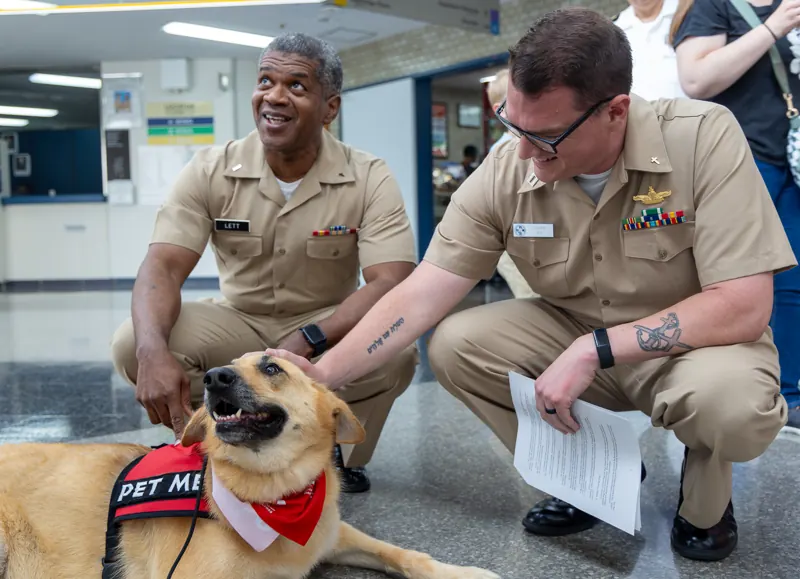
The job is simple to describe and hard to do well: walk into an unfamiliar, often noisy building, and let many strangers pet, hug and talk to you, calmly, for an hour or two. The AKC Therapy Dog program lists the places these teams go: nursing homes, classrooms, libraries, assisted living centers, hospices, funeral homes, schools, shelters and even courtrooms. The dog and its owner work as a team, and the owner is responsible for reading the dog and ending the visit before it gets tired.
The therapeutic value is not a trick or a trained task. It is the social contact itself. A patient who has not spoken much all week may talk about the dog they had as a child. A child who dreads reading aloud may read happily to a dog that does not correct mistakes. A resident with dementia may relax while stroking a soft coat. The dog does not need to understand any of that. It needs to enjoy people and stay relaxed while it happens.
The idea is older than most people think. According to the Wikipedia summary of therapy dog history, Florence Nightingale noted in the late 1800s that small pets seemed to reduce anxiety in patients, Sigmund Freud brought his own dog into sessions in the 1930s, and registered nurse Elaine Smith founded the first therapy dog organization in 1976 after seeing how hospital patients responded to dogs. Most of today's therapeutic visiting programs grew out of that volunteer model.
Therapy Dog, Service Dog or Emotional Support Dog?
These three terms get mixed up constantly, and the difference matters because only one of them carries legal access rights in the United States. The ADA requirements page from the Department of Justice defines service animals as dogs that are individually trained to do work or perform tasks for a person with a disability, such as guiding a person who is blind or alerting and protecting a person during a seizure. It adds that dogs whose sole function is to provide comfort or emotional support do not qualify as service animals under the ADA.
A therapy dog sits outside that definition entirely, because its role is therapeutic rather than a trained disability task. It provides comfort to many people who are not its owner, and it only enters a hospital or school because that facility has invited it. The AKC puts it plainly: a service dog must be with its person at all times and has special access privileges in public places, while a therapy dog does not. That is also why a therapy dog vest is a courtesy signal, not a legal pass. If you are shopping for gear, our guide to the service dog vest explains why patches that claim access rights your dog does not have cause real problems for genuine service dog teams.
The ADA page also notes that the Fair Housing Act and the Air Carrier Access Act use their own, broader definitions, so housing and air travel rules can differ from the public access rules above. If your question is about a landlord or an airline, check that specific law rather than relying on the ADA definition.
The Main Types of Therapy Work
Not every therapeutic role looks the same. The Wikipedia overview separates visitation work, where a volunteer team offers comfort and company, from animal assisted therapy, where a dog helps a health professional reach a specific treatment goal and the therapeutic plan is set by that professional. The difference shapes how structured each visit is and who leads it.
Most owners start with visitation, because it fits a family pet and a volunteer schedule. Reading programs are a popular second step. The Reading Education Assistance Dogs (R.E.A.D.) model uses therapy dogs as a patient listener, and the Wikipedia summary reports that these canine assisted reading programs aim to build fluency, motivation and confidence in reluctant readers.

Does Your Dog Have the Right Temperament?
Breed matters much less than personality. Therapy teams include big retrievers, tiny toy breeds and mixed breeds. A therapeutic setting asks a lot of a dog. What successful teams share is that the dogs actively like strangers and stay calm when the environment is not. The Wikipedia summary of certification guidance says a good candidate should be calm and social with strangers and able to adjust to loud noises and fast movements. In practice, that means a dog that:
- walks up to new people with a loose, wiggly body rather than hanging back or jumping;
- accepts being touched all over, including ears, paws and tail, by people it has never met;
- recovers within seconds from a dropped tray, a beeping machine or a wheelchair rolling past;
- ignores food on the floor and other animals when asked;
- settles quietly on a mat and does not bark, mouth or paw for attention.
Some breeds are popular in this work simply because so many of them are relaxed, social family dogs. Retrievers are a common sight, and our guides to toys for golden retrievers and labradors cover how to keep those busy minds satisfied between visits. Small dogs work well in bedside and lap visits, so if you share your home with a lapdog, our overview of the types of toy dogs is a useful read on which toy breeds tend to be outgoing.
Be honest with yourself here. A dog that is nervous, reactive, or anxious around strangers should not be pushed into therapeutic visiting, and doing so is unfair to the dog. If your dog shows the signs described in our guide to anxiety in dogs, work on that first, or accept that the dog is happier as a home companion.
How Certification Works
There is no single national therapy dog license. Instead, independent organizations test and register teams, and facilities usually ask for proof of registration and insurance before they allow therapeutic visits on their premises. Requirements differ between groups, so treat the steps below as an example of a typical path, not a universal rule.
The Wikipedia summary uses the Alliance of Therapy Dogs as its example. That organization requires the dog to be at least one year old, the handler to have owned the dog for at least six months, and the handler to pass a background check. Health requirements include up to date vaccinations and a negative fecal exam within the past year. The process starts with a handling assessment, where an evaluator watches the dog's temperament and obedience and the handler's control. Teams that pass then complete three supervised visits before final approval, and must keep visiting regularly to stay active.
Many owners prepare with the AKC Canine Good Citizen program first. The AKC describes CGC as a 10 skill test of good manners and says the CGC title is a prerequisite for many therapy dog certifications. Training for it with reward based methods, as explained in our guide to positive reinforcement dog training, builds exactly the calm, reliable behavior an evaluator wants to see.
AKC Therapy Dog Titles
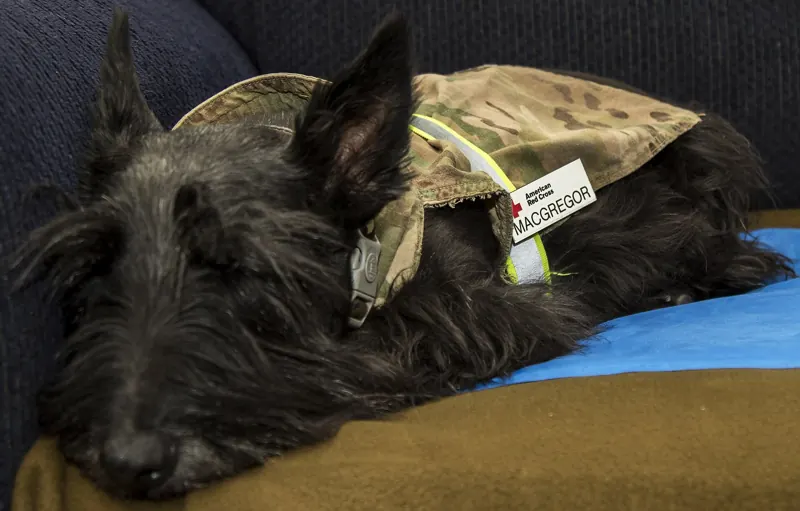
The AKC does not certify therapy dogs itself. It recognizes the work done through accepted organizations and awards titles based on the number of recorded visits. According to the AKC program page, the first step is to have your dog trained and certified by a qualified therapy dog organization, then keep a record of each visit. One visit means one day at one facility, however many people you see there.
Because a hospital morning where you see a dozen patients still counts as one visit, the higher titles represent years of steady volunteering. They are recognition for the team, not a requirement for doing therapeutic work.
What the Research Says About the Benefits
Research into therapeutic dog visits is broad but uneven, and the Wikipedia summary points out that studies do not always separate structured therapy from casual visiting. With that caveat, the reported benefits fall into a few groups. Physically, visits and animal assisted interventions have been linked with improvements in pain, blood pressure, stress and anxiety, and petting animals is associated with the release of mood related hormones such as oxytocin and serotonin. Studies summarized there also found lower cortisol levels after physical contact with a dog in groups ranging from hospital patients with heart failure to healthcare workers.
Socially and cognitively, the most visible results come from reading programs and care homes, where a dog gives people a reason to talk, move and engage. Occupational therapy patients have practiced fine motor skills by grooming a therapy dog. The honest summary is that dogs are not a treatment on their own, but a therapeutic visit can make the hard parts of a hospital stay or a school day easier.
Grooming and Gear Before a Visit
Facilities expect a therapy dog to arrive clean, healthy and under control. Most organizations ask for a bath or thorough brush within a day or so of the visit, short nails that will not scratch fragile skin, and a plain collar or harness with a short leash. Retractable leashes are usually banned because they are hard to control in a crowded corridor.
- Coat and skin: a gentle bath with a mild dog shampoo the day before, then a good brush using the right dog grooming tools for the coat type.
- Nails: trimmed short with a proper nail trimmer for dogs, since patients often have thin, easily torn skin.
- Leash and harness: a fixed length dog leash and a comfortable harness. A no pull dog harness helps if your dog gets excited in lobbies.
- Quick clean ups: a pack of dog wipes for paws after parking lots and rainy walks between buildings.
Leave squeaky toys and treats at home unless the facility allows them. Food can upset patients on special diets, and squeakers are loud in a quiet ward.
Looking After the Dog Doing the Work
Therapeutic visiting is tiring, even for a dog that loves it. Watch for yawning, lip licking, turning away, shaking off, or trying to leave, and end the visit early when you see them. Keep first visits short, and build up slowly, because a good therapeutic session depends on a dog that still wants to be there. Afterwards, give your dog quiet time at home and a chance to decompress with something relaxing, such as a lick mat or one of the calming toys for dogs in our guide.
As dogs age, their tolerance for noise, stairs and long days often drops. Many teams move from busy hospital wards to shorter library or care home visits as the dog gets older, and some retire the dog completely. Keeping an older dog mentally engaged at home, with ideas like those in our guide to senior dog toys, is a kind way to thank a dog that has spent years cheering up strangers.
Frequently Asked Questions
What is a therapeutic dog?
A therapeutic dog, usually called a therapy dog, is a calm and friendly pet that visits places such as hospitals, care homes, schools and libraries with its owner to comfort other people. It is not a service dog and has no special public access rights.
Is a therapy dog the same as a service dog?
No. Under the ADA a service dog is individually trained to perform tasks for one person with a disability and may go into most public places. A therapy dog comforts many people and only enters facilities that invite it. The AKC states that therapy dogs are not service dogs.
How old does a dog have to be to become a therapy dog?
It depends on the organization. The Alliance of Therapy Dogs, for example, requires dogs to be at least one year old and the handler to have owned the dog for at least six months.
Do therapy dogs need the Canine Good Citizen title?
Not always, but the AKC says the Canine Good Citizen title is a prerequisite for many therapy dog certifications, and training for its 10 skill test is good preparation either way.
How do you get an AKC Therapy Dog title?
First get your dog certified or registered by a therapy dog organization the AKC recognizes, then record your visits. The first title, THDN, needs 10 visits, and the THD title needs 50. One visit is one day at one facility.
What breeds make good therapy dogs?
Any breed or mix can do the work if it is calm, social with strangers and comfortable with noise and handling. Retrievers are common, and small breeds suit bedside and lap visits.
Can an emotional support dog visit hospitals?
Only if it is registered as a therapy dog team and the hospital invites it. The ADA says dogs whose only role is comfort or emotional support are not service animals, so they have no automatic access.
Sources
- American Kennel Club: AKC Therapy Dog program
- American Kennel Club: Canine Good Citizen (CGC)
- U.S. Department of Justice: ADA requirements, service animals
- Wikipedia: Therapy dog
Keeping a therapy dog happy off duty
Downtime matters as much as visits. Browse our calm, durable dog toys for quiet play at home.
Shop dog toys