If you are looking for the best service dog vest, this comprehensive guide covers everything you need to know. Whether you are a first-time pet owner or an experienced one looking to upgrade, you will find practical advice, safety tips, and honest comparisons below.
Are Service Dog Vests Legally Required?
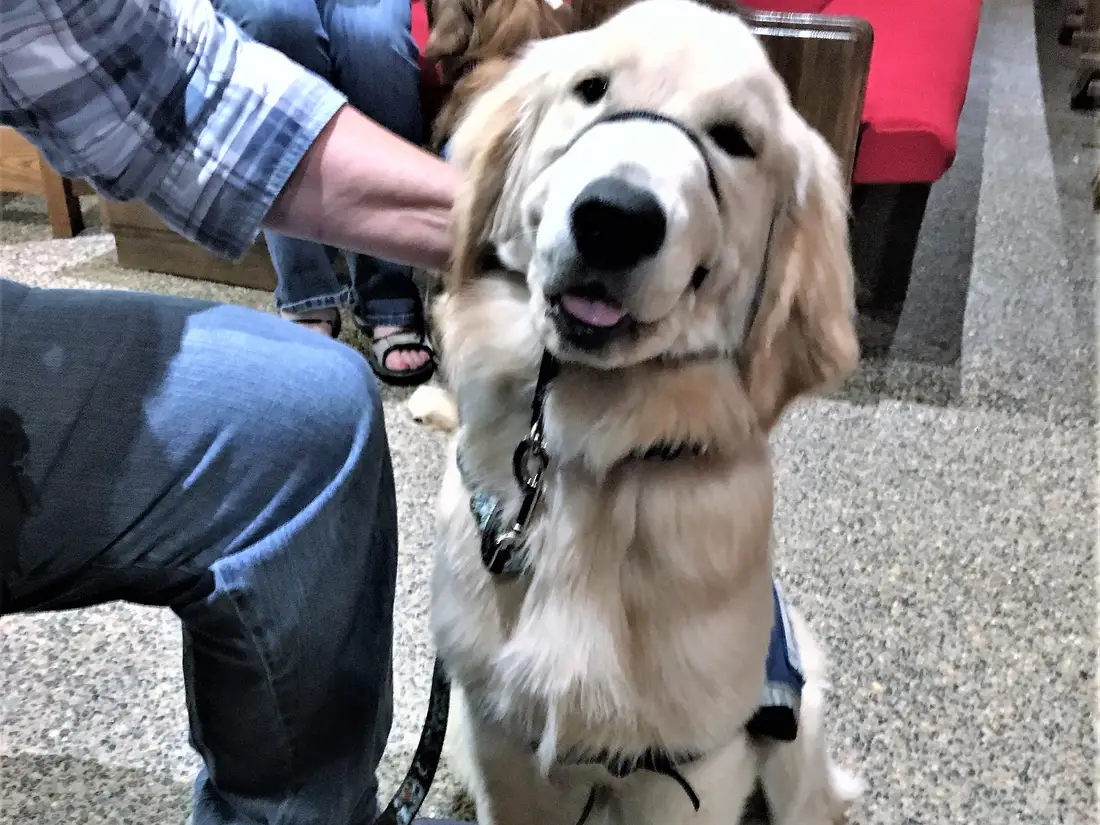
No. Under the Americans with Disabilities Act, a service dog is not required to wear a vest, patch, or any other identifying gear, and the handler is not required to carry an ID card. The official ADA guidance on service animals lists wearing a vest or other identifying item, and being certified or completing a professional training program, among the things a service dog is specifically not required to do.
This surprises a lot of people, since vests are so common in public that they can look like a legal uniform. In reality, the ADA defines a service animal by what it does, not by what it wears. A dog trained to perform a specific task related to its handler's disability qualifies as a service animal whether or not it has a vest on, and a vest by itself does not make an untrained pet into a legally recognized service animal either.
The gap between common practice and legal requirement exists because vests are genuinely useful in day-to-day life even though the law does not demand them. The rest of this guide covers why handlers choose to use one anyway, what businesses are and are not allowed to ask, and how the ADA actually defines a service dog, so the practical picture sits alongside the legal one.
One important boundary: this guide covers the ADA's rules for public access in the United States. State and local laws, workplaces, housing rules, and air travel each have their own separate frameworks that can layer additional requirements or protections on top of, or entirely apart from, the ADA. Where this guide references a rule, it is specifically the ADA's public accommodations standard unless stated otherwise.
Why Handlers Choose to Use a Vest Anyway
Even without a legal requirement, a visible vest solves a real, everyday problem: strangers approach dogs. A working service dog that is petted, called to, or fed by well-meaning strangers can be pulled out of task focus at exactly the wrong moment, and a vest with a clear 'working dog, do not pet' message cuts down on those interruptions before they start, simply by giving people a visual cue they respond to faster than a verbal request.
If you want even more options, check out our guide to squeaky toys for dogs.
A vest also speeds up everyday interactions with staff and other members of the public who are unfamiliar with service animal rules. Even though a business can only legally ask the two questions covered later in this guide, having a dog visibly identified as a service animal often means those questions never come up at all, which matters in places like crowded stores or restaurants where a handler would rather not explain their situation repeatedly throughout the day.
For dogs still working through public access training, a vest can double as a training tool rather than a finished-product label. Many handlers use a 'service dog in training' patch specifically to signal that the dog is not yet fully reliable in public settings, which sets more realistic expectations for onlookers and staff during the training period itself, separate from the legal status of a fully trained service dog.
None of these are legal requirements, which is worth repeating because the practical benefits are real enough that most handlers use a vest anyway. The point of understanding the ADA's actual rule is not to argue against vests; it is so a handler without one, for cost, comfort, or personal preference reasons, knows their dog's legal access rights do not depend on it.
The Only Two Questions a Business Can Legally Ask
When it is not obvious what a dog does for its handler, the ADA allows staff at a business to ask exactly two questions and no more. Per the ADA's official service animal guidance, those questions are whether the dog is a service animal required because of a disability, and what work or task the dog has been trained to perform.
Staff are not permitted to ask about the handler's specific disability, request medical documentation, require the dog to demonstrate its task on the spot, or ask for any kind of certification or registration paperwork. If a handler answers both permitted questions, that is the full extent of what the business can require before allowing the dog inside.
If a dog's task is already obvious, such as a dog visibly guiding a person who uses a white cane, staff should not ask either question at all, since the ADA's two-question standard specifically applies to situations where the service the dog provides is not apparent.
Understanding this exchange matters for both sides. A handler who knows exactly what can and cannot be asked can respond confidently and briefly rather than over-explaining, and staff who understand the same two-question limit avoid asking for documentation the law does not allow them to require in the first place.
What Actually Makes a Dog a 'Service Dog' Under the ADA
The ADA's definition centers on trained work or tasks directly related to a person's disability, not on temperament, breed, or how calm a dog is in public. A well-behaved pet that has not been trained to perform a specific disability-related task does not qualify as a service animal under the ADA, regardless of how it behaves in stores or restaurants.
You might also enjoy our recommendations for chewable dog toys.
The official guidance gives concrete examples of qualifying tasks: retrieving objects for a person who uses a wheelchair, reminding a person with depression to take medication, alerting a person with PTSD to an oncoming panic attack by licking their hand, and detecting the onset of a seizure and helping a person with epilepsy remain safe during one. Guiding a person who is blind and alerting a person who is deaf to sounds are among the most widely recognized examples as well.
What unifies these examples is specificity. Each task is a trained behavior aimed at a particular disability-related need, which is different from a dog simply providing comfort by being present. That distinction, trained task versus comforting presence, is the exact line the ADA draws between a service animal and other categories of assistance animals, covered in the next section.
Because the definition is about function rather than paperwork, there is no official government registry, certification, or ID card that makes a dog a service animal under the ADA. Any website or organization selling an official-looking certificate or registration for a fee is selling something the ADA does not require and does not recognize as proof of anything.
Service Dog vs Emotional Support Animal vs Therapy Dog
The ADA draws a sharp line here. Its own guidance states that if a dog's mere presence provides comfort, it is not a service animal under the ADA, but if the dog is trained to perform a task related to a person's disability, it is a service animal under the ADA. Emotional support animals fall on the comfort side of that line: the guidance is explicit that providing emotional support or comfort is not, by itself, a task related to a person's disability.
That means an emotional support animal does not have the same public access rights under the ADA that a task-trained service dog has. A business is generally not required to allow an emotional support animal into places pets are otherwise excluded, even though the animal may play a genuine, meaningful role in its owner's mental health and wellbeing. Emotional support animals may have protections under other laws, particularly around housing, but that is a separate legal framework from the ADA's public access rules, not an extension of them.
Therapy dogs occupy a third category entirely, distinct from both service dogs and emotional support animals. A therapy dog is typically trained to provide comfort to multiple people in settings like hospitals, schools, or nursing homes, usually alongside a volunteer handler, rather than being trained to perform tasks for one specific person's disability. Like emotional support animals, therapy dogs are not service animals under the ADA and do not carry the same public access rights.
Getting this distinction right matters because the categories are often used loosely in everyday conversation, even though the legal consequences differ significantly. A handler relying on an emotional support animal or therapy dog for public access based on a mistaken belief that ADA service animal rules apply to them is likely to run into access problems that a genuine task-trained service dog would not.
When a Service Dog Can Be Asked to Leave
Service dog access under the ADA is not unconditional. The official guidance is clear that a business may ask for a service animal to be removed if the dog is not housebroken, or if the dog is out of control and its handler cannot get it back under control. These are behavior-based grounds, not a general excuse to exclude a service animal for other reasons.
For related picks, take a look at our squeaky ball for dogs roundup.
Importantly, being asked to remove a specific dog for one of those two reasons is different from being denied entry outright. Even after a dog is removed for being out of control or not housebroken, the ADA guidance still requires that the business give the person with a disability the opportunity to obtain goods or services without the animal present, rather than turning the person away entirely.
On the paperwork side, states can require service dogs to be licensed and vaccinated under the same rules that apply to any dog, since that is a general public health requirement rather than something specific to service animals. What states cannot do is require certification or registration specifically because a dog is a service animal, which lines up with the ADA's broader position that no such certification exists at the federal level either.
Handlers benefit from knowing both sides of this. The legal protection for a well-behaved, task-trained service dog is strong, but it is tied to the dog's actual behavior in public, which is one more practical reason serious public access training matters even though the ADA itself does not mandate a specific training program or credential.
Choosing a Vest That Works for Real-World Handling
Since a vest is a practical choice rather than a legal box to check, fit and function matter more than branding. A vest that rides up, slips sideways, or restricts a dog's shoulder movement will get worked around or ignored during real tasks, especially for dogs trained in mobility work like bracing or retrieving, where full range of motion is part of the job.
For dogs performing mobility assistance tasks, a combination harness and vest with a sturdy top handle gives a handler something secure to hold for balance support, while still carrying the visible identification patches that reduce public interruptions. Our guide to the dog harness covers fit and sizing principles that apply directly to harness-style service dog gear, and the no-pull dog harness guide is useful background for handlers whose dogs need extra control during public access work.
Breathable, washable material matters more for a service dog than for an occasional-use pet harness, simply because of how many hours per day a working dog spends wearing it. Mesh panels, adjustable straps that accommodate a dog's changing weight or coat thickness across seasons, and durable stitching around handle attachment points all hold up better under daily real-world use than gear designed for occasional walks.
Some handlers add a small ID pocket to a vest, not because documentation is legally required, but because carrying a card listing the dog's trained tasks or a doctor's note can shorten an unwanted conversation even though staff are legally limited to the two questions covered earlier. That choice is entirely optional and about convenience, not a requirement the ADA imposes on any handler.
For more independent, vet-reviewed guidance on this topic, the American Kennel Club expert advice center is an excellent place to start.
Frequently Asked Questions
Is a vest legally required for a service dog?
No. The ADA explicitly states a service dog does not have to wear a vest, patch, or other identifying gear, and the handler does not need to carry an ID card. Many handlers use a vest anyway for practical reasons, but it is not a legal requirement.
Can a store legally ask for proof or certification that my dog is a service animal?
No. There is no official ADA certification or registration for service dogs, and businesses cannot require documentation, ask for a demonstration of the task, or ask about the handler's specific disability.
What are the two questions a business can legally ask about a service dog?
When it is not obvious what a dog does, staff may ask whether the dog is a service animal required because of a disability, and what work or task the dog has been trained to perform. If the task is already obvious, staff should not ask either question.
What's the difference between a service dog and an emotional support animal?
A service dog is trained to perform a specific task related to a person's disability, which qualifies it as a service animal under the ADA. An emotional support animal provides comfort through its presence alone, which the ADA does not count as a task, so ESAs do not have the same public access rights.
Can a service dog be asked to leave a business?
Yes, if the dog is not housebroken or is out of control and the handler cannot regain control. Even then, the business must still let the person access goods or services without the dog present rather than turning them away entirely.
Do states require service dogs to be registered?
States can require service dogs to be licensed and vaccinated under the same general rules that apply to any dog. States cannot require certification or registration specifically because a dog is a service animal, since no such official credential exists under the ADA.