A GPS locator for dogs is a small device on the collar or harness that works out where your dog is from satellite signals and sends that position to your phone, usually over a cellular network. It is the only common tool that can answer "where is my dog right now?" once your dog is out of sight. It does not stop a dog from running, it needs charging, and its dot on the map is an estimate rather than an exact spot, so the way you set it up matters as much as the model you buy.
Updated September 25, 2026. Header photo: Hal Steiner / Wikimedia Commons, CC BY-SA 4.0, resized. A working detection dog in the field wearing a GPS tracking harness.
In This Article
- The Short Answer
- What the Dot on the Map Really Means
- GPS Locator, Bluetooth Tag, or Microchip?
- Three Cellular Locators by the Maker's Numbers
- Handheld Radio Locators for Rural Dogs
- Using the Locator in the First 30 Minutes
- Setup That Pays Off on the Bad Day
- Which Dogs Benefit Most
- Frequently Asked Questions
- Sources
The Short Answer
- Choose a cellular GPS locator if your dog could end up anywhere: it reports position through the mobile network, so range is limited by coverage rather than by distance from you.
- Choose a handheld radio locator if your dog works or roams where phone signal is patchy, such as hunting ground or back country.
- Do not rely on a Bluetooth tag alone. It depends on strangers' phones passing nearby and was designed for belongings, not animals.
- Keep the microchip and ID tag either way. A locator helps you find your dog; a chip and tag help whoever finds your dog return it.
The good news is that most lost dogs do come home. In a national ASPCA survey of 1,015 pet-owning households, 15 percent had lost a dog or a cat in the previous five years, and 93 percent of the lost dogs were recovered. A locator is about shortening the hours in between and reaching your dog before traffic, weather, or a long run does.
What the Dot on the Map Really Means
Every locator shows a position with some uncertainty around it. The US government's GPS.gov accuracy page gives a useful reference point: GPS-enabled smartphones are typically accurate to within a 4.9 meter (16 foot) radius under open sky, and accuracy gets worse near buildings, bridges, and trees. A dog locator uses the same satellite system, so expect a similar pattern. In an open field the dot will be close; beside tall buildings, under dense woodland, or indoors it can drift or jump.
That uncertainty changes how you search. Treat the dot as the middle of a small search circle, walk toward it, then switch to your eyes, your voice, and the locator's light or sound features for the last stretch. If the position suddenly lands inside a building or across a river, wait for the next update before you commit to a route.
GPS Locator, Bluetooth Tag, or Microchip?
These three are often sold side by side, but they answer different questions. Only one of them tells you where your dog is while your dog is still moving.
Apple's own AirTag page explains that the tag sends a secure Bluetooth signal detected by nearby devices in the Find My network, and it pitches the product for keys and bags. When Apple addressed unwanted tracking, it said AirTag was designed to help people locate their personal belongings. On a quiet trail with no passing phones, a Bluetooth tag can go a long time without a fresh position.
The microchip does a different job. The American Veterinary Medical Association notes that a chip holds only a unique identification number, and a lost pet may not be returned if the registry details are incomplete or outdated. For a deeper look at the tracker categories, see our guide to dog trackers with GPS, and for what goes on the collar itself, read choosing a dog tag.
Three Cellular Locators by the Maker's Numbers
The table below lists three widely sold cellular locators using figures published on each manufacturer's own site, checked on September 25, 2026. We have not lab-tested these devices, and battery figures are best-case claims that shrink with frequent live tracking. Treat the rows as a way to compare how each maker positions its product, then confirm the current details before you buy.
Figures come from Tractive's dog tracker page, Fi's product page, and Halo's product page. The trade-off is easy to see: the longest battery claim sits on a collar you must fit your dog to, while the smallest clip-on needs charging more often, and the fence-focused collar needs charging most often of all. If your main worry is a dog slipping out of the yard, Halo's fence design is the closest fit; if it is a dog lost far from home, battery life and network coverage matter more. We compare two of these brands in depth in our Fi collar guide and Halo collar guide.
Handheld Radio Locators for Rural Dogs
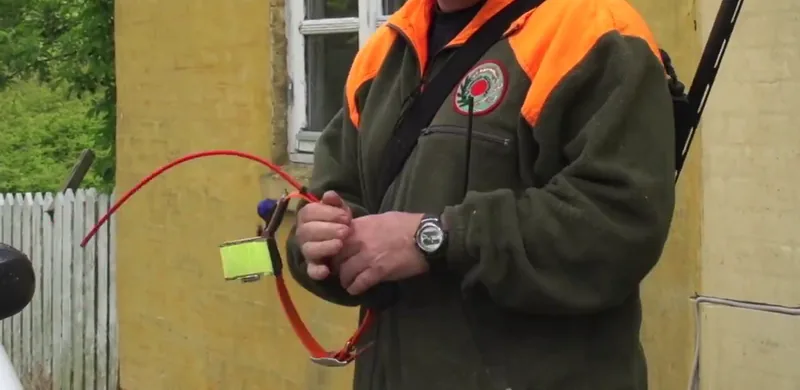
Hunters, search teams, and people with farm dogs often use a different design: a collar unit that transmits by radio to a handheld receiver carried by the owner. Because the link runs directly between collar and handheld, it keeps working where there is no phone signal, and there is typically no monthly plan. The trade-offs are cost, a bulkier collar with an external antenna, and a range that ends where the radio link does.
This category makes sense when your dog routinely works out of sight in open country. For a city or suburban dog, a cellular locator is simpler, because you can see its position from anywhere and share access with family.
Using the Locator in the First 30 Minutes
Most of the value of a GPS locator shows up in the first half hour after a dog gets loose. Having a plan written down before that happens keeps you from wasting it.
- Switch on live mode first. Most apps update position more often in a live or find mode. Turn it on before you leave the house, because the everyday setting updates less often to save battery.
- Split the search. One person follows the dot, another stays at home in case the dog returns on its own. Share the app with that person so both can see the same map.
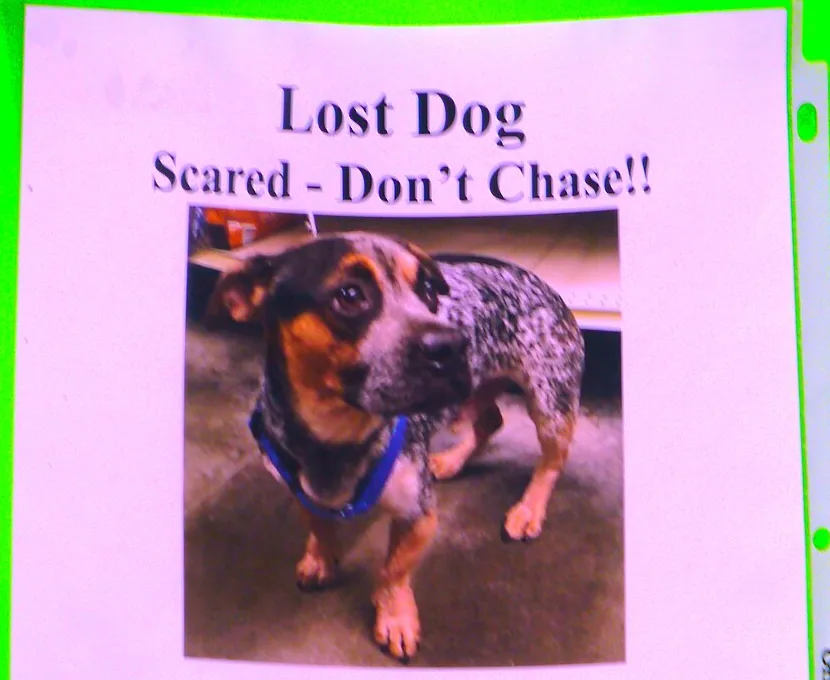
- Approach calmly and do not chase. A frightened dog may bolt from a running person. Slow down once you are close, crouch, and let the dog come to you.
- Watch the battery warning. Live mode drains battery quickly. If the charge is low, check the position at intervals instead of keeping live mode on continuously.
- Start the traditional steps anyway. Call local shelters and vets, post in neighborhood groups, and confirm your microchip registry details, in case the collar comes off.
Setup That Pays Off on the Bad Day
A locator that is flat, loose, or unfamiliar to you on the day your dog runs is not much use. Spend an hour on setup the week it arrives.
- Pick a charging routine. Tie charging to something you already do, such as a weekly bath night or every Sunday evening, and set a phone reminder.
- Draw your home zone carefully. Make the safe zone a little larger than the house and yard so the dot drifting near walls does not trigger false escape alerts.
- Run a test walk. Have someone take the locator around the block while you watch the app. You will learn how quickly it updates and how the dot behaves near buildings.
- Check the fit. The collar should be snug enough that it cannot slide over the head. Our canine GPS collar guide covers fitting and weight for smaller dogs.
- Keep ID on the collar too. An engraved tag with your phone number lets a neighbor call you without scanning anything.
Which Dogs Benefit Most
Any dog can slip a door, but some owners get far more value from a locator than others. The strongest cases are dogs with a history of escaping, scent hounds and sighthounds that follow their nose or eyes rather than your voice, newly adopted dogs who do not yet know their home, and dogs that hike, hunt, or run off leash. Households that move house, travel often, or leave dogs with sitters also benefit, since the locator keeps working in unfamiliar places.
A calm senior dog that rarely leaves the yard may need nothing more than a secure fence, a microchip, and a tag. If you are still comparing features beyond locating, our dog GPS tracker buying guide walks through subscriptions, battery, and fit in more detail, and what a GPS tracking device for dogs can and cannot do covers yearly costs.
Frequently Asked Questions
Is there a GPS locator for dogs without a monthly fee?
Handheld radio locators usually have no monthly fee because the collar talks directly to your receiver. Most cellular locators need a plan, since the built-in SIM uses mobile networks to send the position to your phone.
How accurate is a GPS locator for dogs?
Under open sky, GPS positions on consumer devices are typically within a few meters; GPS.gov cites 4.9 meters (16 feet) for smartphones. Accuracy drops near buildings, bridges, and trees, so treat the dot as a small search area.
Can I use an AirTag as a dog locator?
An AirTag has no GPS of its own; it relies on nearby Apple devices to relay its Bluetooth signal, and Apple describes it as designed for personal belongings. It can help as a backup in busy areas but is not a substitute for a GPS locator.
Does a GPS locator replace a microchip?
No. A locator can fall off or run flat, while a microchip stays with your dog. The AVMA notes the chip only works if its registry details are current, so keep both.
How long does the battery last on a dog GPS locator?
It depends on the model and on how often you use live tracking. Maker claims range from about 48 hours for a fence-focused collar to up to 3 months for a long-life smart collar, and heavy live tracking shortens any of them.
Sources
- ASPCA: How many pets are lost? How many find their way home?
- GPS.gov: GPS accuracy
- American Veterinary Medical Association: Microchips reunite pets with families
- Apple: AirTag product page
- Apple Newsroom: An update on AirTag and unwanted tracking
- Tractive: GPS tracker for dogs, technical specs and FAQ
- Fi: Series 3 Plus smart dog collar
- Halo: Halo Collar 5
Start with a collar that fits
A locator only works if the collar stays on. Pair it with a well-fitted everyday collar and leash.
See the Collar and Leash Set