A canine GPS collar is not a gadget you buy once and forget. It is a small cellular device that has to stay charged, stay correctly fitted, and stay on an active data plan to be worth anything on the night your dog actually slips the gate. This guide explains how these collars work, what separates a live tracker from a Bluetooth tag, and the questions worth answering before you spend money.
Why a GPS Collar Changes What Happens After Your Dog Gets Out
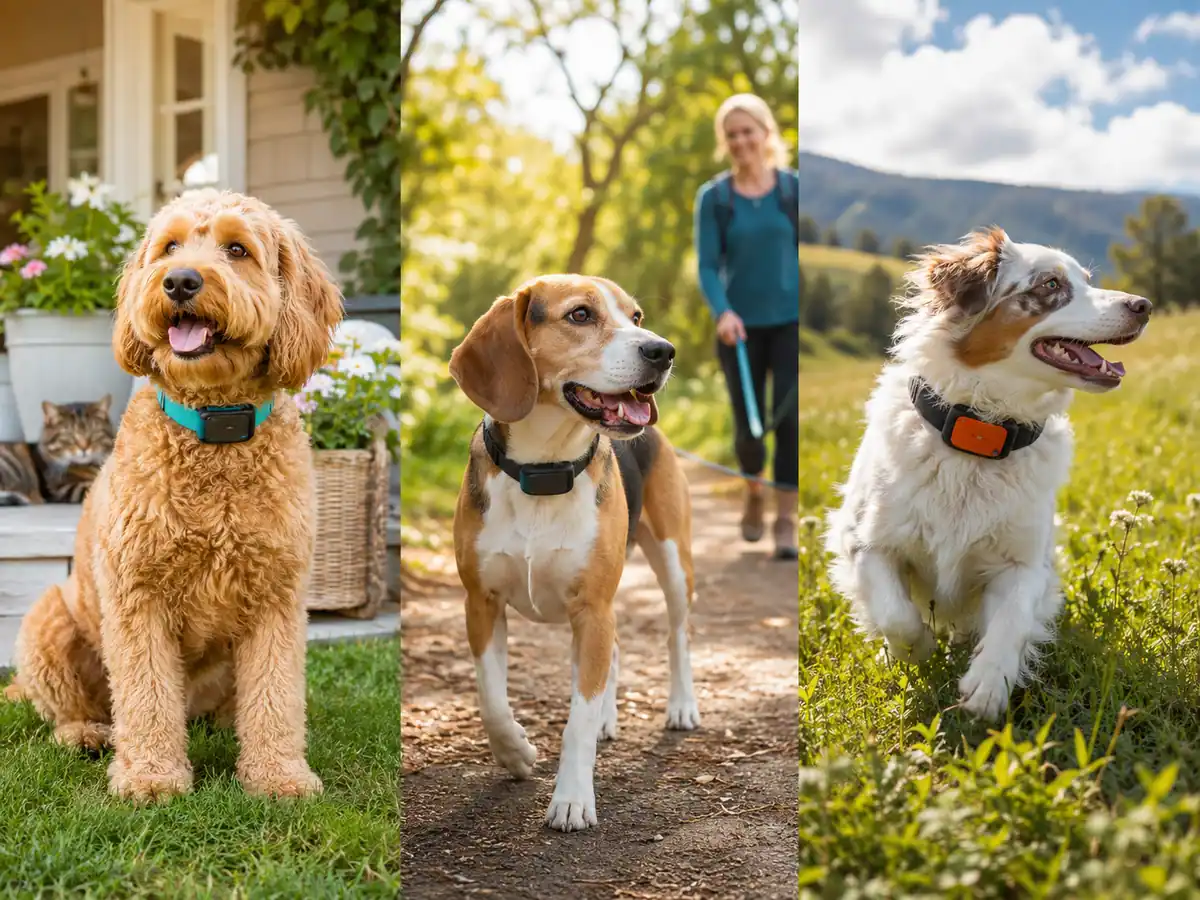
Most lost-dog stories are decided in the first hour. A dog that squeezes through a gate can cover several kilometres before anyone notices, and search effort spent guessing the wrong direction is effort you never get back. A live GPS collar removes the guessing: instead of asking neighbours whether they saw a brown dog, you open an app and walk toward a point on a map.
It is worth being precise about what a GPS collar is not. It is not a replacement for a microchip. A microchip is a permanent, battery-free identifier that a vet or shelter scans once your dog has already been found by someone else. A GPS collar is an active device that tells you where your dog is right now, and it stops working the moment the battery dies or the collar comes off. The two solve different halves of the same problem, so responsible owners run both.
The second thing a GPS collar changes is routine. Because most units also log activity and location history, you start noticing patterns: the fence corner your dog keeps testing, the time of day the barking starts, the walk that is shorter than you thought. That data is less dramatic than a rescue, but it is what most owners actually use day to day.
The Four Categories, and Why Only Two of Them Track
Cellular GPS collars are the real trackers. The device gets its position from GPS satellites and then sends that position over a mobile network to your phone, which is why every serious unit on the market requires a paid data plan. Range is limited by cellular coverage, not by distance from you, so a dog four towns away is still visible as long as there is signal.
For more expert recommendations, check out our shock collar for dogs guide.
GPS containment collars add a virtual fence on top of tracking. You draw a boundary in the app, and the collar warns the dog with sound or vibration as it approaches the line. These are marketed as a replacement for buried-wire fences, and they carry the same caveat as any containment system: they manage a trained dog, they do not physically stop a determined one.
Bluetooth tags and AirTag-style holders are the two categories that do not truly track. They report a position only when another phone in the network passes close enough to hear them, which works well in a city and fails in open country. They are useful as a cheap backup on the collar, but treating one as a GPS tracker is the single most common buying mistake in this category.
Fit and Safety Checklist Before the First Walk
Fit is a safety issue, not a comfort issue. A tracker collar must be snug enough that the GPS module sits against the top of the neck rather than swinging under the chin, because a rotating collar both weakens the signal and rubs. The standard check still applies: two fingers should slide flat between the strap and the neck, no more.
Pressure sores are the failure mode owners discover too late. Any hard module worn continuously can irritate skin, especially on short-coated dogs and in wet weather. Take the collar off during the daily charge cycle, run your fingers over the contact area, and move the collar a centimetre up or down every few days. If you see redness that does not fade within an hour, stop using it until the skin recovers.
Check the water rating against your dog, not against the marketing photo. A collar rated for splashes is not rated for a dog that swims, and a swimming dog will find that out for you. Also confirm how the collar attaches: a tracker on a quick-release buckle can be pulled off in undergrowth, while a tracker on a fixed collar stays on but offers no breakaway if the dog snags on a fence.
Matching a Tracker to Your Dog’s Size and Life Stage

Every GPS collar has a minimum weight recommendation, and it exists for a reason. On a very small dog, a module sized for a retriever changes head carriage and posture. If your dog is under about five kilograms, filter the market by weight first and by features second, because most of the well-known units are simply too heavy.
You might also find our personalized dog collar article helpful when shopping.
Puppies are a moving target. A dog under a year old will outgrow two or three collar sizes, so buying a premium tracker sized to an adult neck usually means months of poor fit. A lighter, cheaper unit during the growth phase, replaced once the dog stops growing, is the more practical sequence, and it also means the expensive device is not the one being chewed during teething.
Senior dogs shift the priority from escape to welfare. Older dogs wander less deliberately but get disoriented more easily, and many trackers surface a resting-heart-rate or activity trend that makes a gradual decline visible earlier than a monthly vet visit does. For a senior, battery life and a comfortable low-profile module matter more than the fastest location refresh.
Setting Up Geofences and Living With the Battery
Draw your home geofence slightly inside the property line rather than on it. Consumer GPS accuracy drifts by several metres, so a boundary drawn exactly along the fence will fire false alerts every time your dog naps near it. Pulling the boundary in a few metres removes most nuisance notifications without meaningfully reducing warning time.
Battery management is the part that decides whether the collar helps in a real emergency. Location refresh rate is the dominant power draw, so a unit set to update every few seconds may last a day while the same unit on a relaxed interval lasts a week. Pick the slowest refresh you are comfortable with for normal days and learn where the live-tracking button is for the days that are not normal.
Build the charge into an existing habit. Owners who charge the collar during the evening meal or the morning grooming session keep it topped up; owners who charge it when the app warns them are the ones with a dead collar at the worst moment. Test the whole chain once a month by walking out of the geofence yourself with the collar in your hand and confirming the alert arrives.
Mistakes That Make a GPS Collar Useless
Assuming the purchase price is the total price. Almost every live-tracking collar needs an ongoing cellular plan, and a plan that lapses turns a premium tracker into an ordinary collar without warning. Before buying, find the plan page on the manufacturer’s own site, check the term lengths, and confirm whether the plan is tied to the device or to your account.
Looking for more options? Our dog and leash roundup covers additional top picks.
Ignoring coverage where you actually walk. A tracker is only as good as the mobile network in the ravine, forest, or rural block your dog runs into. If the areas around you have known dead zones, look for a unit that keeps logging a breadcrumb trail offline and uploads it once signal returns, because a last-known-point from twenty minutes ago is far better than nothing.
Leaving the collar loose so it is "comfortable". A loose tracker rotates, loses signal, and slips over the head of exactly the kind of dog that escapes. And treating GPS as a substitute for recall training or a secure gate is the deepest version of this mistake: the collar tells you where the problem went, it does not prevent the problem.
Working Out the Real Cost Over Three Years

Compare devices on a three-year total, not a sticker price. Add the hardware, the subscription at the term you would realistically commit to, and one replacement strap. A cheaper collar on an expensive monthly plan frequently ends up costing more than a pricier collar on an annual plan, and that ranking is invisible if you only look at the product page.
Annual and multi-year plans are usually discounted, but they also lock you to one ecosystem before you know whether coverage works at your address. A reasonable compromise is to start on the shortest plan available, test it for a month on your actual walking routes, then convert to the longer term once you are confident.
Factor in the consumables. Straps wear out, charging cradles get lost, and batteries in any cellular device degrade over a few years. None of these are large individually, but they are the difference between a collar that stays in service and one that quietly stops being used after the first strap breaks.
What to Look for When You Compare Models
Halo Collar is built around GPS containment: you set virtual boundaries in the app and the collar gives the dog feedback as it approaches them, alongside standard tracking and an accompanying training programme. It is the option to shortlist if your primary problem is a dog that leaves an unfenced property rather than a dog you need to follow across town.
Fi and Whistle sit closer to the everyday-tracker end of the market, pairing live location with activity and sleep trends and pushing escape alerts when the dog leaves a saved place. Tractive is the most size-flexible of the group and attaches to a collar you already own, which makes it the easy first tracker for owners who do not want to change hardware.
Whatever the brand, judge it on four things you can verify before buying: the stated weight and minimum dog size, the refresh rate at the battery life you would actually run, the network the device uses in your country, and the published subscription terms. Every one of those is on the manufacturer’s own site, and every one of them matters more than the review score.
Best Canine GPS Collar: Feature Comparison
The table below compares what typically separates entry-level, mid-range, and premium canine GPS collars. Use it as a shortlist filter, then confirm the exact figures on the manufacturer’s own specification page.
Frequently Asked Questions
Do GPS dog collars work without a subscription?
Live-tracking GPS collars need a cellular data plan to send their position to your phone, so in practice they do not work without a subscription. Bluetooth tags work without one, but they only report a location when another phone in their network passes nearby, which makes them a backup rather than a tracker.
Is a GPS collar better than a microchip?
They do different jobs and you want both. A microchip is permanent, needs no battery, and identifies your dog once someone else has found them. A GPS collar tells you where your dog is right now but stops working if the battery dies or the collar comes off.
How accurate is a canine GPS collar?
Consumer GPS is typically accurate to within a few metres in open ground, and less accurate under dense tree cover or between tall buildings. That is close enough to find a dog in a field and not precise enough to tell you which side of a hedge they are on, which is why geofences should be drawn slightly inside your actual boundary.
How long does the battery last?
Battery life depends almost entirely on how often the collar reports its position. The same device can last a week on a relaxed update interval and under a day in continuous live-tracking mode, so compare manufacturers at the same refresh rate rather than on their headline number.
Can a GPS collar replace a fence?
No. GPS containment collars warn a trained dog as it approaches a virtual boundary, but nothing physically stops a dog that decides to cross. Treat containment features as a management tool that works alongside training and a secure yard, not as a substitute for either.
What size dog can wear a GPS collar?
Most cellular trackers publish a minimum dog weight, commonly around five kilograms, because the module and battery add real weight to the neck. Check that figure before anything else if you have a toy or small breed, since many popular models are simply too heavy for them.
Are GPS collars waterproof?
Ratings vary widely and the wording matters. Water-resistant usually means splashes and rain, while a dog that swims or rolls in a stream needs a unit rated for submersion. Check the specific rating on the product page rather than assuming, and rinse and dry the module after saltwater or muddy swims.