Short answer: The best chew toys for teething puppies are puppy-sized, slightly flexible, textured, and easy to inspect. Offer a small rotation of rubber, chilled, and supervised fabric or rope options, then remove anything that cracks, frays, or becomes small enough to swallow.
Why Do Teething Puppies Chew So Much?
Answer: Chewing gives a teething puppy pressure against sore gums, a safe way to explore texture, and an outlet for the extra restlessness that comes with discomfort. Your job is not to stop chewing. It is to make the approved choice easier and more rewarding than a shoe or table leg.
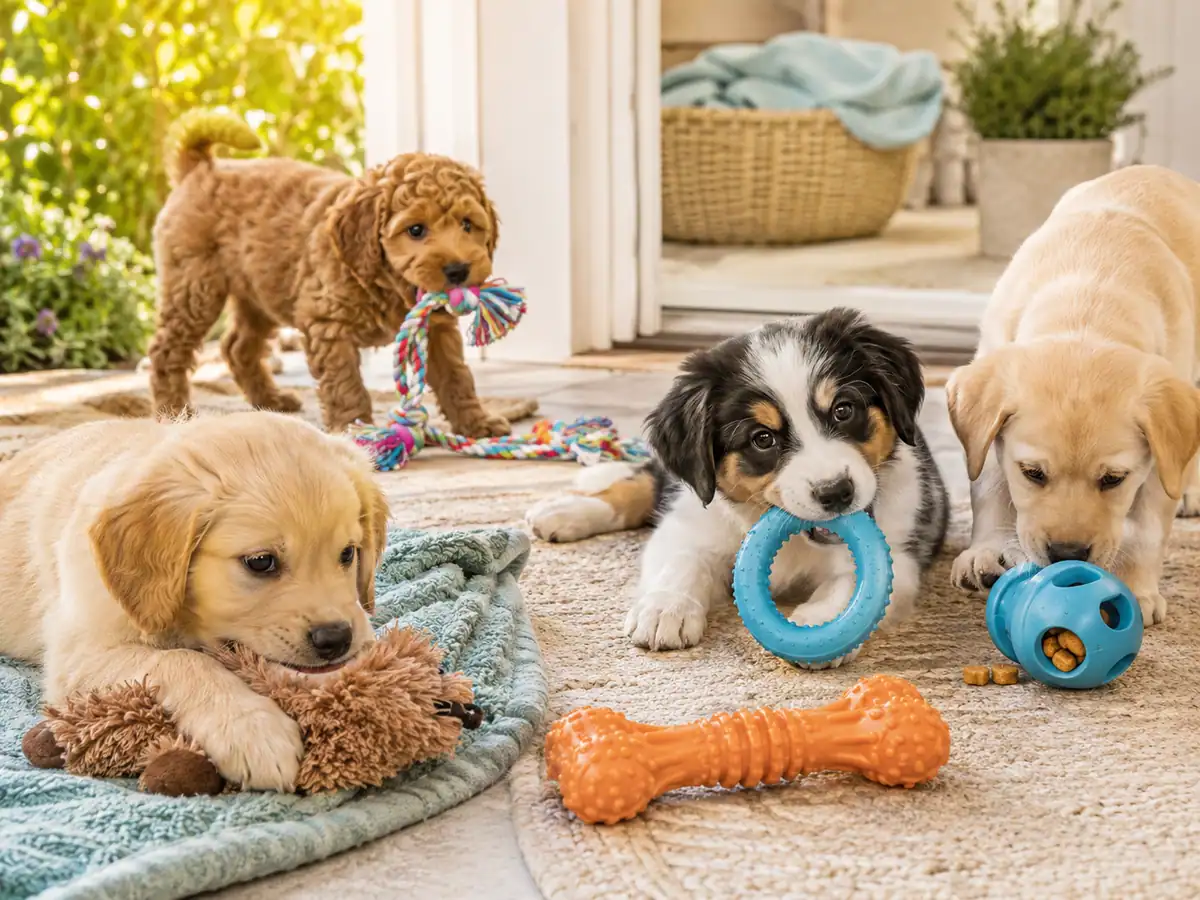
Teething is a physical process, not a training failure. A puppy starts with a temporary set of 28 baby teeth. As those teeth loosen, the gums can feel itchy, tight, or tender. Gnawing creates counter-pressure that feels relieving, which is why a puppy may suddenly spend long stretches working on one object instead of playing with it for a few seconds.
The same drive also supports normal exploration. Puppies use their mouths to learn whether an object is soft, resistant, movable, or interesting. During the teething window, that ordinary investigation becomes more persistent. If the home has no clear chew station, the nearest substitute may be a slipper, a chair corner, a phone cable, or a child's toy.
Set up the environment before the chewing gets intense. Keep a few approved toys in the rooms where the puppy spends time, store tempting personal items behind a door, and make the safe toy easy to reach. Calmly trade for an approved chew when the puppy chooses something forbidden. That prevents a chase game and gives the puppy a clear answer about what belongs in its mouth.
For a wider toy plan beyond teething, compare our guide to the best toys for puppies and our practical list of puppy teething toys.
When Does Puppy Teething Happen?
Answer: Baby teeth usually appear during the first weeks of life, while the noticeable chewing surge begins around three to four months when adult teeth start replacing them. Most puppies have their adult set by about six months, but toy size should be checked throughout the growth period.
Young puppies begin life without visible teeth, then develop sharp deciduous teeth during the nursing and early-socialization period. By the time most puppies go home, those small teeth are already useful for eating softened food and learning gentle play. The replacement phase is the part owners usually notice most because loose baby teeth and erupting adult teeth make the mouth uncomfortable.
From roughly three to six months, expect the intensity to come in waves. A puppy may chew constantly for several days, seem calmer for a short stretch, and then become mouthy again as another group of teeth moves. Incisors, canines, and premolars do not all change at once. Keep the toy basket available through the final weeks instead of assuming the first quiet day means the process is over.
A change in appetite is useful context. Mild gum tenderness can make a puppy prefer softened meals or chilled toys, but a puppy that refuses food, cries when the mouth is touched, or develops facial swelling needs more than a new toy. The VCA guide to retained deciduous teeth explains why a baby tooth that remains beside an adult tooth should be checked.
While the calendar gives you a rough guide, the puppy's mouth gives you the practical one. Look at the toy after each session, notice which textures the puppy chooses, and resize or replace toys as the jaw grows. A toy that was appropriate at eight weeks can become too small or too easy several weeks later.
What Materials Make a Teething Chew Toy Safe?
Answer: Choose durable puppy rubber or another purpose-made material that bends or dents slightly under pressure. Textured ridges can give sore gums more feedback. Avoid any product that is rock hard, sheds pieces, has loose decorations, or can fit completely inside the puppy's mouth.
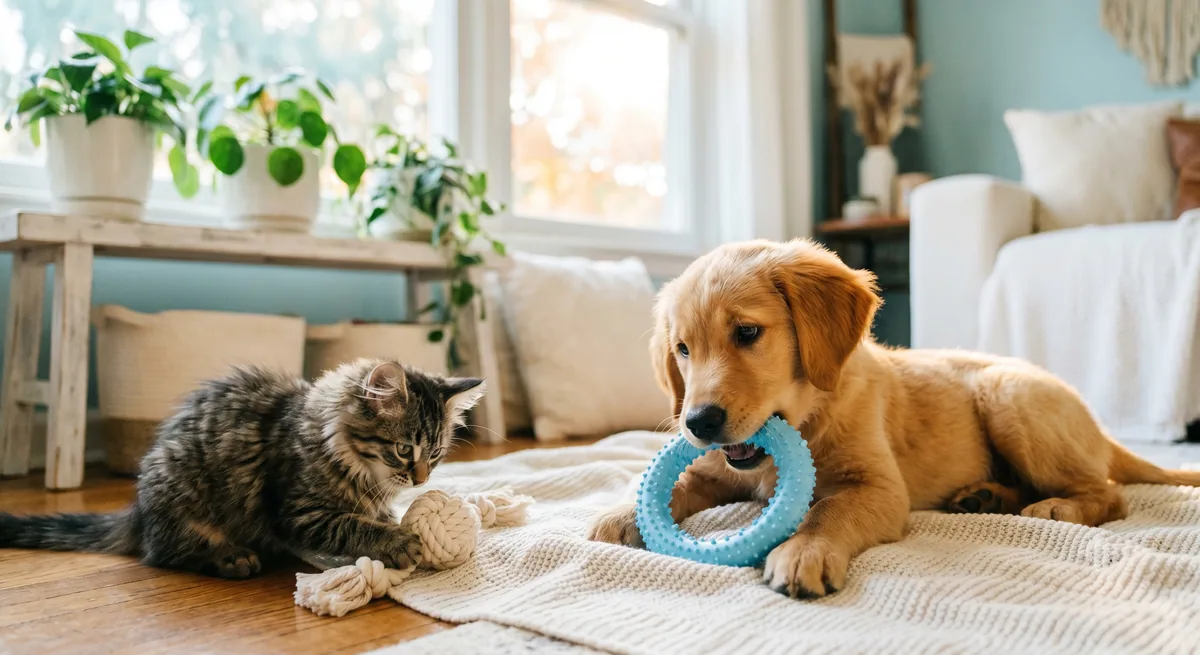
Material is only one part of the decision, but it is a useful first filter. A puppy teething toy should have some give. Press the surface with a firm thumbnail. A slight dent suggests that the material can yield to a sore mouth. If the surface feels like a stone, metal, or rigid bar, choose something else. This is a screening habit, not a substitute for the manufacturer's age and size guidance.
Texture can make a toy more useful without making it harder. Raised nubs, shallow ridges, and a grippy surface give the puppy different ways to position the jaw. Smooth rubber can still be a good option, especially when it is stuffable or chillable, so aim for a mix rather than a single design. The goal is relief and engagement, not maximum resistance.
Inspect construction before you offer the toy. Seams should be closed, molded parts should not wobble, and there should be no glued eyes, bells, plastic tabs, or thin appendages that a puppy can bite off. If the toy is hollow, check the opening and the plug area. A food-stuffable design is useful only when the puppy cannot tear the opening wider.
Rope has a place in a supervised rotation, but it needs a stricter inspection routine than solid rubber. A tightly woven rope can massage gums and support gentle tug play. Once strands loosen, cut them off or discard the toy. Swallowed fibers are not a feature of a teething toy. For more material comparisons, see our plush, rope, and durable-toy comparison and the guide to rubber dog toys.
Can Chilled Toys Soothe Sore Puppy Gums?
Answer: Chilled, flexible toys can provide temporary comfort for inflamed gums. Use a product made for chilling or offer a supervised damp washcloth that has been twisted and cooled. Do not give a rock-hard frozen object, and remove any cloth or toy as soon as the puppy starts eating pieces.
Cooling is a simple way to change the feel of a teething session. A refrigerated rubber ring or a toy designed to hold water can feel soothing when a puppy's gums are warm and tender. Chill one toy while another is in use, then rotate them so the puppy has a clean option ready without making every toy cold.
A damp washcloth can work when a puppy likes fabric texture. Wet a clean cloth, wring it well, twist it, and chill it. Offer it on a washable surface and stay close. The cloth is for chewing, not eating. Take it away when it becomes loose or warm, and never leave it in a crate or pen with an unsupervised puppy.
Use caution with the word frozen. A solid, rock-hard item does not become safe simply because it is cold. Hardness can put too much force on fragile teeth. Follow the instructions for freezer-safe toys, and if you are unsure, use the refrigerator rather than the freezer. The best relief is repeatable and gentle, not extreme.
Stuffable toys can combine cooling with a quiet activity. Add softened puppy food, a small amount of plain pumpkin if it suits the puppy, or water-soaked kibble, then chill the toy. Keep portions appropriate for the puppy's daily food plan. The activity should occupy the mouth without creating a new stomach problem.
Which Chews Should Teething Puppies Avoid?
Answer: Skip antlers, hooves, bones, very hard nylon, and any product that cannot bend or dent slightly. Avoid toys with detachable parts, exposed stuffing, cracked rubber, or fraying rope. A chew that lasts forever is not automatically a safe chew for a developing mouth.
The hardest chew is often the wrong choice for a teething puppy. Antlers, hooves, marrow bones, and rigid nylon can resist the bite so completely that the tooth takes the force instead. A puppy may look satisfied while quietly putting pressure on a tooth that is still developing. The Merck Veterinary Manual overview of mouth disorders in dogs is a useful reference when you are deciding whether a mouth problem is routine or needs care.
Small parts create a separate risk. Plastic eyes, squeaker pieces, ribbons, bells, and thin rubber tabs can become loose after a few bites. A toy does not pass inspection forever. Check it at the start of play and again when the puppy is finished, especially if the puppy is a determined shredder.
Plush toys can be part of a supervised play rotation, but they are not a default teething chew. If the puppy opens a seam, remove the stuffing and the toy. Do not hand over an old shoe or sock as a substitute. Puppies learn categories by repetition, so an approved toy should look and feel clearly different from household belongings.
When in doubt, choose a smaller session, not a harder product. Stay nearby for a new toy, watch how the puppy bites it, and remove it if the puppy carries off fragments. Supervision is what turns a product recommendation into a safer routine.
How Should You Choose Toy Size and Rotation?
Answer: Match the toy to the puppy's current weight and jaw size, then recheck the fit during growth spurts. Keep three or four different textures available and present only a couple at a time. Replace a toy before it becomes small, cracked, or frayed.
Size is a moving target during puppyhood. The right toy should be large enough that it cannot disappear into the mouth, but small enough for the puppy to hold and work comfortably. Follow the product's weight range and compare it with the puppy's current body, not the adult size you expect months from now.
Rotation solves two problems at once. It keeps the basket interesting and spreads wear across several objects. Start with a flexible rubber ring, a stuffable shape, and a supervised rope or fabric option. Offer two toys, store the rest, and switch them after cleaning or when interest fades. Novelty can make a safe toy more attractive without adding harder materials.
Wash toys according to their material. Solid rubber often rinses easily, while rope and fabric can hold moisture and need to dry fully. Do not return a toy that smells sour, has mildew, or has hidden food trapped inside. Clean storage also makes it easier to notice damage.
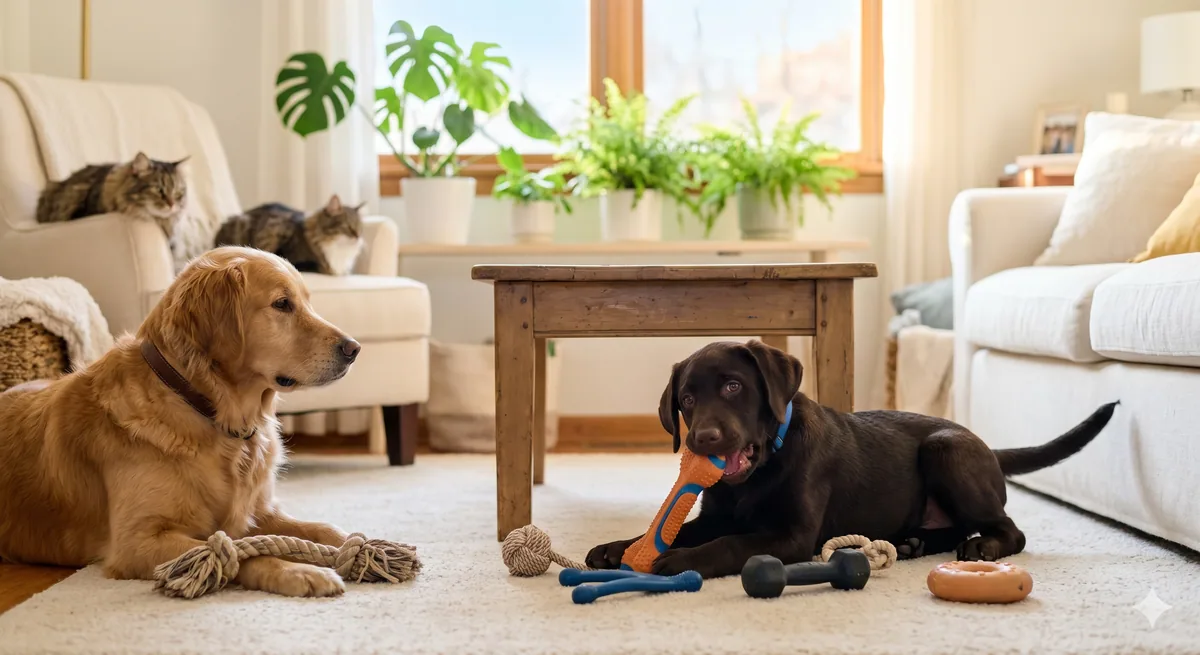
For households with multiple pets, keep puppy toys separate from adult chews. The adult dog's toy may be too large, too hard, or already damaged. A kitten or adult dog may also guard a toy the puppy needs. Supervise shared play and keep the puppy's teething options easy to access.
How Do You Teach a Puppy What to Chew?
Answer: Redirect quietly, reward contact with the approved toy, and teach a trade instead of grabbing objects away. Management matters too: put shoes and cables out of reach while the puppy is learning. Repetition makes the safe choice familiar.
When teeth land on a chair leg, do not turn the moment into a chase. Use a calm interrupter, bring an approved toy close, and praise the instant the puppy takes it. The reward can be your voice, a short game, or a tiny food treat that fits the puppy's daily plan. The lesson is simple: this object makes good things happen.
Practice trades when nobody is upset. Let the puppy hold a low-value toy, show a treat, say a release cue, and reward the release. Then return the toy. Returning it matters because the puppy learns that giving something up does not always mean losing it forever. This reduces the urge to run away with unsafe objects and makes future toy inspections easier.
Management prevents rehearsal. Use gates, closed doors, cable covers, and a puppy-safe rest area. Keep a toy beside the sofa and near the crate, but do not use a chew as a way to ignore a puppy that needs sleep, food, a bathroom break, or calm interaction. Many frantic chewing episodes are a mix of teething and overtiredness.
For enrichment ideas after the sharpest teething stage, our guide to keeping a puppy busy pairs toy rotation with short, age-appropriate activities. The aim is a puppy that can settle with a toy, not a puppy that needs constant high-energy play.
When Does Teething Need a Veterinarian?
Answer: Contact a veterinarian for ongoing bleeding, facial swelling, a broken or discolored tooth, refusal to eat, repeated mouth pawing, severe odor, or a baby tooth sitting beside an adult tooth. Those signs can indicate injury, infection, or a retained tooth rather than ordinary teething.
A small pink spot on a toy can happen when a loose baby tooth comes out. Mild drooling and a few lost teeth are also expected. The pattern should remain brief and the puppy should still be able to eat, play, sleep, and accept gentle handling. If the mouth looks painful rather than merely busy, move from toy shopping to a professional call.
Retained baby teeth deserve particular attention. If an adult tooth erupts while the baby tooth stays beside it, food and plaque can collect in the narrow space. The crowded position can also affect the bite. Look at the canine teeth when the puppy is several months old and ask your veterinarian to check anything that seems doubled or out of place.
Do not pull a tooth at home, apply human pain medicine, or try to file a toy-shaped object into a dental tool. A veterinarian can examine the mouth safely and decide whether observation or treatment is appropriate. Bring the damaged toy if a tooth may have broken, because its condition can help explain what happened.
Most puppies move through teething successfully. Keep the toy choices gentle, inspect them often, and use the six-month milestone as a reason to review the adult mouth rather than as a hard promise that every puppy follows the same schedule. The AKC puppy teething guide also offers practical owner-facing context for the transition.
Frequently Asked Questions
How old are puppies when teething begins?
Most puppies begin losing their baby teeth at about three to four months, after their 28 deciduous teeth have erupted. Adult teeth usually finish coming in around six months, although small breeds can vary. The exact timing matters less than watching the mouth and adjusting toy size as the puppy grows.
What makes a chew toy safe for a teething puppy?
A safe teething toy is puppy-sized, slightly flexible, made from a durable material, and free of detachable pieces. You should be able to make a small dent with a firm thumbnail press. Supervise the first sessions and remove the toy if it cracks, sheds pieces, or becomes small enough to swallow.
Are frozen chew toys good for teething puppies?
Chilled toys can soothe tender gums, and a freezer-safe rubber toy may be offered according to its instructions. Avoid turning ordinary hard objects into ice blocks because extreme hardness can damage teeth. A supervised damp washcloth twisted and chilled is another simple option, but take it away before the puppy eats the fabric.
Should puppies have rope toys while teething?
A tightly woven rope can provide a useful texture for a supervised puppy, but frayed strands are a hazard. Inspect the rope after every session, trim or discard it when threads loosen, and never leave a rope toy with a puppy that pulls off and swallows fibers. Rotate it with a solid puppy rubber toy.
What chew toys should puppies avoid?
Avoid antlers, hooves, bones, very hard nylon, and any chew that cannot yield slightly under pressure. Also skip toys with glued eyes, bells, loose ribbons, cracked rubber, or torn seams. Hardness and small detachable parts create more risk than relief during a puppy's teething months.
When should a veterinarian check a teething puppy?
Call a veterinarian for steady bleeding, facial swelling, refusal to eat, repeated mouth pawing, a broken tooth, severe odor, or a baby tooth that remains beside an adult tooth. Retained teeth can crowd the mouth and trap debris, so a quick oral check is worthwhile when the adult teeth erupt.