Cats are quiet travelers. One slips out of an open door, another wanders further than usual on a summer night, and suddenly you have no idea where they are. A cat GPS tracker can turn that guesswork into a dot on a map. This guide explains how the different tracker types work, why a tracker for a cat has to meet stricter rules than one for a dog, how to keep the collar safe, and how to fit one step by step.
In This Article
- Quick Answer: What Is a Cat GPS Tracker?
- How Does a Cat GPS Tracker Work?
- GPS, Bluetooth or Radio: Which Tracker Type Suits a Cat?
- Why Do Size and Weight Matter More for Cats?
- Does a Cat GPS Tracker Need a Breakaway Collar?
- How Long Do Batteries Last, and Do You Need a Subscription?
- Does an Indoor Cat Need a GPS Tracker?
- Is a Microchip the Same as a GPS Tracker?
- How Do You Fit a GPS Tracker on a Cat, Step by Step?
- How Do You Use Tracker Data When Your Cat Goes Missing?
- What Privacy and Etiquette Points Should You Consider?
- What Do People Ask Most About Cat GPS Trackers?
- Sources
Quick Answer: What Is a Cat GPS Tracker?
A cat GPS tracker is a small device on a collar or harness that works out your cat's position from satellites and sends it to your phone, usually over a mobile network with a paid plan. For cats, pick the lightest device you can, mount it on a breakaway collar, and keep the microchip and ID tag too.
Updated October 26, 2026- Best for: cats with outdoor access, escape artists, and cats in a new home who might try to find their old territory.
- Must have: a breakaway or snap-open collar, a snug fit, and a device small enough that your cat moves normally.
- Know the limits: GPS needs open sky, cellular trackers need coverage and usually a subscription, and every tracker needs charging.
- Not a replacement: a tracker adds to a registered microchip and a visible ID tag. It does not replace them.
How Does a Cat GPS Tracker Work?
Answer: The tracker contains a satellite receiver that calculates where it is, plus a radio that reports that position. Most true GPS models send the location over a mobile phone network to an app, so you can see your cat on a map from anywhere you have signal. That reporting link is what usually needs a subscription.
GPS stands for the Global Positioning System, a satellite service the United States runs to provide positioning, navigation and timing to anyone with a receiver. A GPS chip on your cat's collar listens to those satellites and works out its own position. On its own, though, the chip only knows where it is. It still has to tell you. Source: GPS.gov, What Is GPS?.
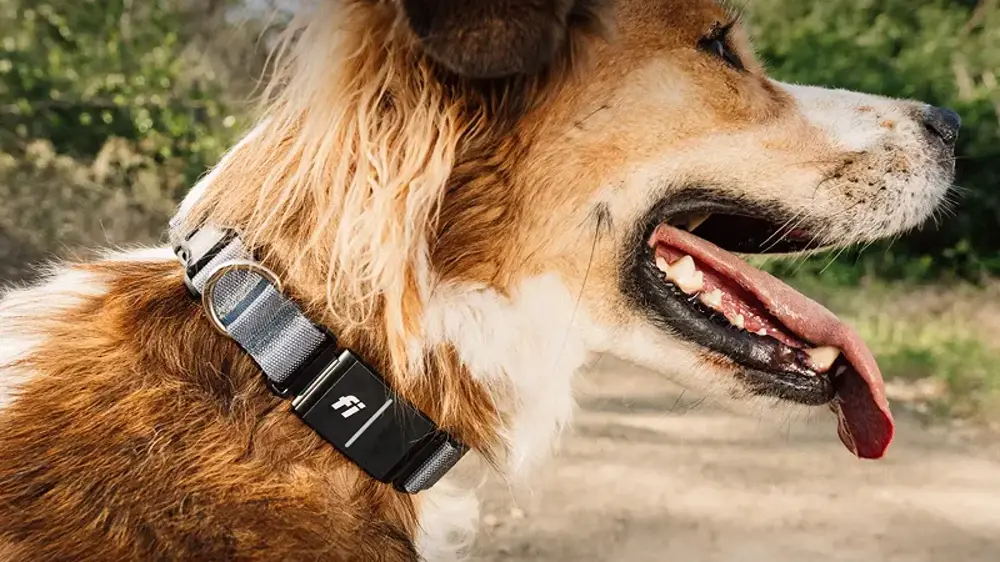
That is the job of the second radio in the tracker. Most GPS trackers for pets carry a small cellular modem, much like a basic phone, and send the position to the maker's servers, which pass it on to an app. Tractive, for example, describes its cat model as using GPS and LTE technology and connecting to the best available mobile network, so owners can follow the cat in real time and look back at past routes. Source: Tractive, GPS Tracker for Cats.
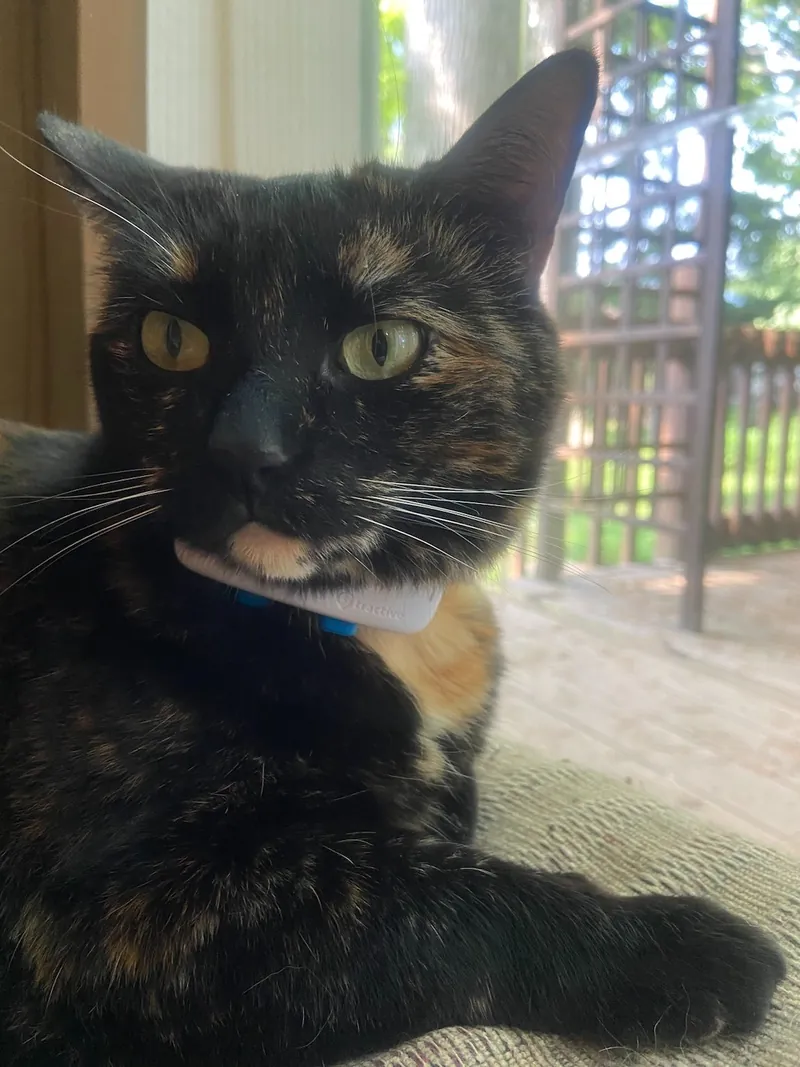
Because satellites have to be heard from the sky, GPS works best outdoors. Under a dense hedge, inside a shed or between tall buildings, the tracker may report a rougher position or take longer to find one. Many trackers therefore blend in other clues, such as nearby Wi-Fi networks or a home base, and switch to a power saving mode when your cat is at home. The practical point is simple: treat the dot on the map as a search area, not an exact spot.
If you already own a dog tracker, you may wonder whether it will do. Dog models are often larger and heavier because dogs carry them easily. Our dog GPS tracker and GPS dog collar guides cover that side. For a cat, the device, the collar and the fit all need a cat specific approach, which the rest of this guide explains.
GPS, Bluetooth or Radio: Which Tracker Type Suits a Cat?
Answer: Cellular GPS trackers show your cat's location from anywhere with coverage but need charging and usually a plan. Bluetooth tags are tiny and cheap to run, yet only show a location when a compatible phone passes nearby. Radio frequency trackers need no plan and work with a handheld receiver, but only over a short range.
The three families solve different problems. A cellular GPS tracker is the only kind that can tell you where a cat is when it has wandered far from home. A Bluetooth item tag is really a finder for lost objects. A radio frequency, or RF, tracker is a homing device: a tag on the collar sends a signal, and you walk around with a receiver that beeps or points as you get closer.
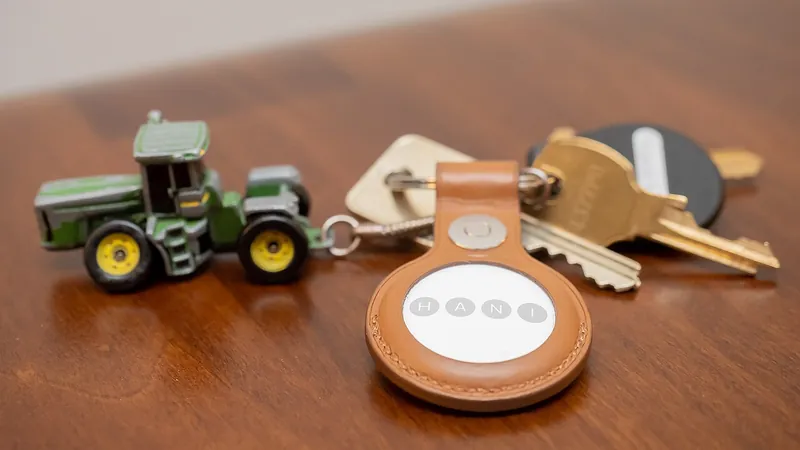
Bluetooth tags deserve a special warning, because they are often sold as a cheap shortcut. Apple says plainly that its AirTag is designed exclusively for tracking objects, and not people or pets. It works by sending a Bluetooth signal that nearby devices in Apple's Find My network pick up and report, which is useful in a busy city but far less so behind a hedge in a quiet garden. Source: Apple Newsroom, new AirTag announcement and Apple, AirTag.
RF trackers suit a different owner: someone whose cat hides close to home, under decking or in a neighbor's garage. They do not show a map, but they keep working where phone signal is weak. Some owners pair an RF tag for close searching with a GPS tracker for the bigger picture, accepting the extra weight only if their cat copes well with it.
Why Do Size and Weight Matter More for Cats?
Answer: Cats are small, climb, squeeze through gaps and groom their necks, so a bulky tracker can snag, rub or change how they move. No major veterinary or welfare body publishes a fixed weight limit for pet cats, so choose the lightest, slimmest device made for cats and check the maker's weight range.
A dog tracker can afford to be chunky. A cat tracker cannot. Cats jump onto fences, push through cat flaps and crawl under sheds, and a device that hangs low or sticks out is more likely to catch on something. A heavy unit can also swing when your cat runs or rub the fur away under the chin. The goal is a tracker your cat stops noticing after a day or two.
Makers of cat trackers usually state which cats a device is built for. Tractive, for example, says its current cat model weighs 32 g including its collar and is designed for cats between 3 and 8 kg, with an integrated safety release collar. That is the maker's guidance for its own product, not a veterinary standard, but it shows the kind of figure to look for before you buy. Source: Tractive, GPS Tracker for Cats.
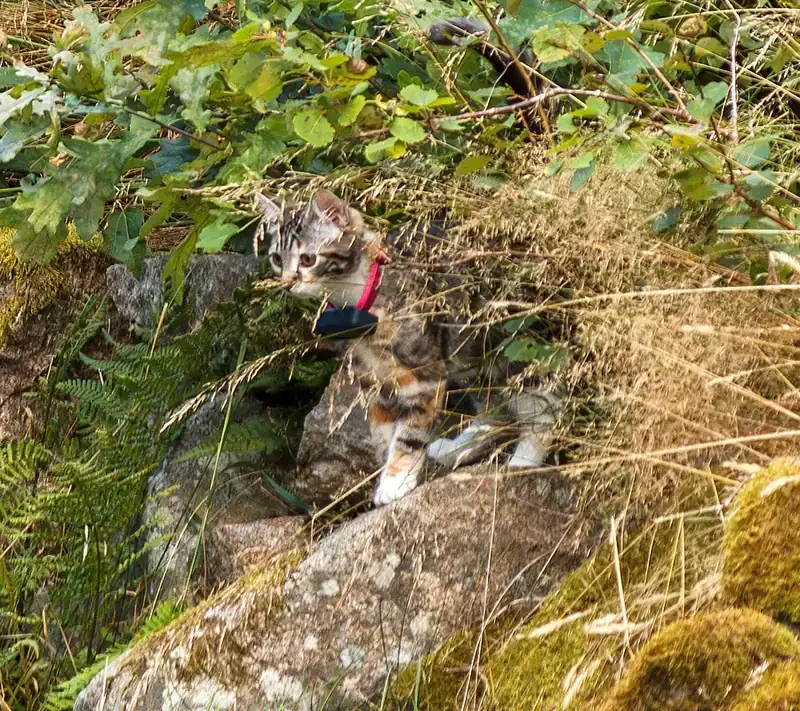
Kittens, very small adults, seniors and cats with neck or skin problems need extra thought. A kitten is still growing, so the collar needs frequent checks, and the device may simply be too large for now. If your cat is small for its age, has arthritis or has had surgery near the neck, ask your vet whether a tracker is a sensible idea before fitting one.
Whatever you choose, watch your cat after fitting. Signs that a device is too big include scratching at the collar, walking with the head held low, avoiding jumps it used to make, hair loss or redness under the chin, and getting stuck in places it used to pass through. Any of these means the setup needs to change.
Does a Cat GPS Tracker Need a Breakaway Collar?
Answer: Yes. Welfare groups and vets consistently recommend a breakaway, quick-release or snap-open collar for cats, because it opens if the collar catches on a branch or fence. Mount the tracker on that kind of collar, or choose a tracker with its own safety release, and never on a fixed buckle collar.
International Cat Care advises that if your cat wears a collar, it should have a snap-open mechanism, a plastic buckle that comes apart and releases your cat if it becomes trapped. It adds that some fastenings open more easily than others, so owners should test them. The RSPCA in England puts it simply: cat collars should be quick-release to stop them hurting themselves. Source: International Cat Care, Should my cat wear a collar? and RSPCA, Pet theft.
RSPCA Australia explains the trade-off well. It recommends a collar with a breakaway clip and an ID tag, notes that collar injuries are rare but can be serious, and links them mostly to collars that are too loose or too tight. Humane World for Animals, formerly the Humane Society of the United States, adds that breakaway collars may come off more easily but help ensure a safe release if the collar catches. Source: RSPCA Australia, What type of cat collar should I use? and Humane World for Animals, Should cats wear collars?.
The Cornell Feline Health Center gives the same advice in its emergency planning guidance: make sure your cat wears a breakaway collar with an identification tag at all times. The ASPCA also asks owners of outdoor cats to use a safety collar and ID tag, noting that a safety collar lets a cat break loose if it gets caught. Source: Cornell Feline Health Center, Disaster preparedness and ASPCA, General cat care.
There is one honest downside. A breakaway collar that does its job will sometimes come off outdoors, taking the tracker with it. That is the price of safety, and most trackers will at least show where the collar dropped. Choose a release that holds during normal play but opens under a real pull. Our breakaway cat collars guide compares the main release styles, and our cat collar guide covers materials and sizing.
How Long Do Batteries Last, and Do You Need a Subscription?
Answer: Cellular GPS trackers usually last days, not weeks, between charges, and most need a paid data plan. Live tracking mode drains the battery fastest. Bluetooth and RF tags last much longer and often need no plan, but they cannot show a distant cat on a map. Check the maker's own figures before buying.
Battery life is the trade-off you feel every week. A cellular tracker has to wake its satellite receiver and its modem regularly, and both use power. Small cat trackers also have small batteries. Tractive, for example, lists its cat model at up to seven days of battery, and it asks owners to choose a subscription after purchase. Real life use, such as frequent live tracking or a cat that spends hours in weak coverage, shortens that. Source: Tractive, GPS Tracker for Cats.
Prices and plan details change often, so read them on the maker's official site on the day you buy, and look at the full cost over a couple of years rather than the price of the device alone. A charging routine helps more than any spec. Many owners charge the tracker while the cat naps indoors, for example during an evening when the cat stays in anyway.
Does an Indoor Cat Need a GPS Tracker?
Answer: Usually a tracker matters most for cats with outdoor access, but indoor cats do escape. Research on missing cats found that indoor-only cats are usually found much closer to home, so a microchip, ID tag and a quick, thorough local search come first. A tracker is a useful extra for known escape artists or a move.
A study of missing cats, based on an online survey of owners, gives useful perspective. Of the 1210 cats, only 61 percent were found within a year, and 34 percent were recovered alive by the owner within seven days. Three quarters of the cats were found within 500 m of where they escaped, and for cats found alive the median distance was just 50 m. Source: Huang et al., Animals (2018), Search Methods Used to Locate Missing Cats.
The same study found that indoor-only cats stayed much closer than cats with outdoor access: the distance covering three quarters of indoor-only cats was 137 m, against 1609 m for cats used to going outside. The authors concluded that thorough physical searching is useful and should start within the first week. Source: Huang et al., Animals (2018).
Advice on outdoor access itself differs. The AVMA says that to reduce the risk of injury and disease, cats should be kept indoors with an enriched environment. International Cat Care says there is no right or wrong answer and that it depends on you and your cat, while noting that indoor cats are generally exposed to fewer physical risks. Source: AVMA, Selecting a pet cat and International Cat Care, Indoors or outdoor access?.
For an outdoor cat, a tracker shows you where your cat actually goes, which roads it crosses, and where to start looking if it does not come home. For an indoor cat, the tracker matters most when the risk is highest: after a move, during building work, or with a cat that dashes at the door.
Indoor cats also need plenty to do, so pair any safety plan with indoor cat toys, a cat window perch and ideas from our how to entertain a cat guide. If you want supervised time outside, a cat harness is a safer first step than free roaming.
Is a Microchip the Same as a GPS Tracker?
Answer: No. A microchip is a passive identification chip under the skin with no battery and no way to report a location. It only helps once someone finds your cat and scans it. A GPS tracker helps you find your cat yourself. Vets recommend a registered microchip for every cat, with or without a tracker.
The AVMA is clear on this point: a pet microchip is not a GPS device and cannot track your animal. The chip has no internal power source and stays inactive until a compatible scanner passes over it, at which point it sends back its identification number. Because it has no battery, it is designed to last for your pet's lifetime. Source: AVMA, Microchipping FAQ.
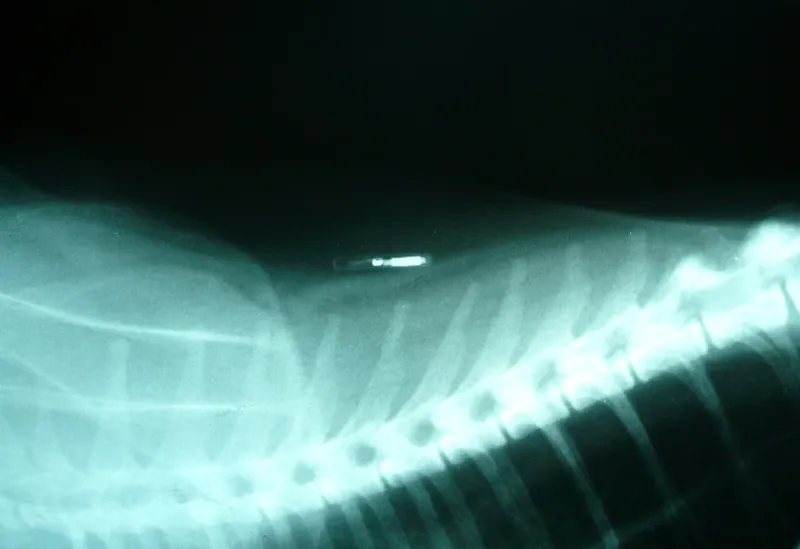
VCA Animal Hospitals describes a microchip as a small radio frequency identification device about the size of a grain of rice. When a lost pet reaches a vet or shelter, staff scan it, look up the number in a database and contact the owner. That is why registration and up to date contact details matter as much as the chip itself. Source: VCA Animal Hospitals, True or false: pet microchips via GPS.
Visible ID still matters too. Humane World for Animals notes that cats with both microchips and ID tags are more likely to be reunited when lost than cats with only one type of identification. A tracker can fall off or run flat, a tag can be read by any neighbor, and a chip cannot be lost. Use all three. Source: Humane World for Animals, Should cats wear collars?.
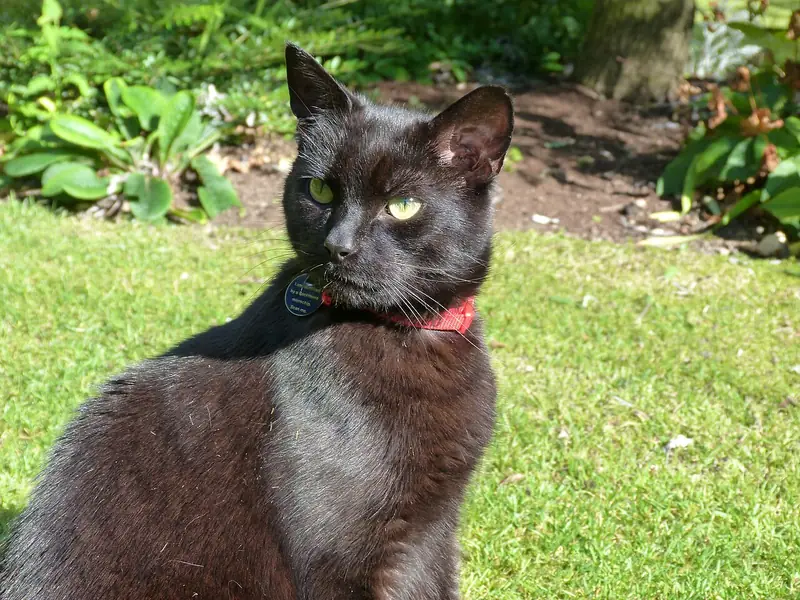
A tag with your phone number is cheap insurance. If you would like one that matches your cat's style, our personalized cat collar guide covers engraved and printed options that still use a safety release.
How Do You Fit a GPS Tracker on a Cat, Step by Step?
Answer: Charge and set up the tracker first, attach it to a breakaway collar, then introduce the collar indoors with treats. Fit it so one or two fingers slide underneath, recheck after a few minutes, and watch your cat closely for the first days before any outdoor trip. Check the fit and skin every week.
- Set it up indoors first. Charge the tracker fully, install the app, activate any plan and confirm the device reports a location while it sits by a window.
- Choose the mount. Use the maker's own safety collar or a breakaway collar the clip is designed for. Make sure the unit cannot slide round to a spot where your cat can chew it.
- Introduce it calmly. Let your cat sniff the collar, rub it with a cloth carrying your cat's scent, and reward with treats or play.
- Fit it snugly. International Cat Care says you should only be able to get one or two fingers under the collar. Too loose lets a paw or jaw get caught.
- Recheck after a few minutes. Cats often tense their neck muscles at first, so the fit can change once they relax.
- Supervise the first days indoors. Watch eating, grooming, jumping and sleeping. Remove the collar if your cat panics or gets a leg through it.
- Test before you rely on it. Walk around the garden with the tracker in your pocket and see how the map behaves at home, in the street and near outbuildings.
- Check weekly. Look for rubbing, hair loss or redness under the chin, test the release, and adjust as kittens grow or your cat changes weight.
The fit guidance in steps four and five comes from International Cat Care, which also notes that getting a cat used to a collar as a kitten is much easier than starting with an adult. If your adult cat has never worn a collar, take the introduction slowly over several days. Source: International Cat Care, Should my cat wear a collar?.
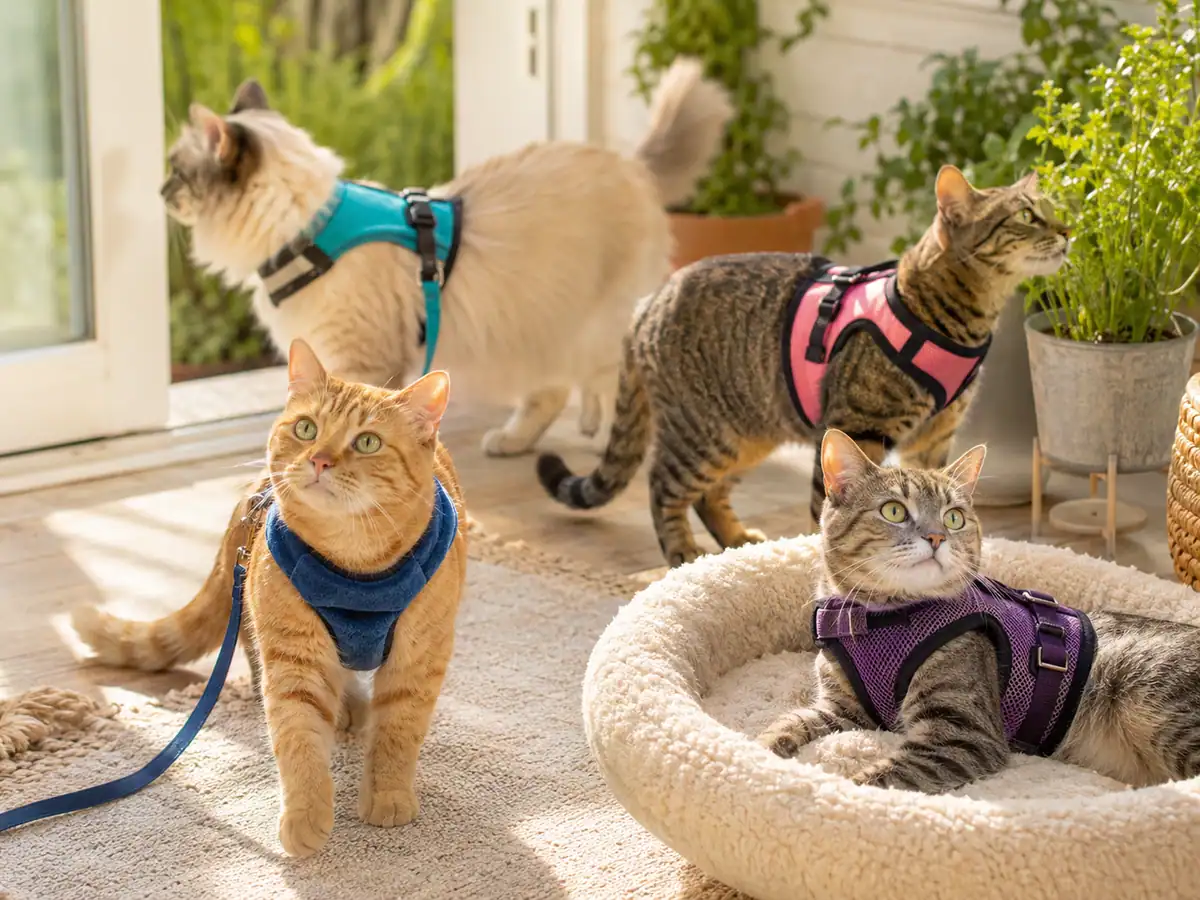
Some owners prefer to attach a tracker to a harness for supervised outings, because a harness spreads the load across the chest. That works well on a lead, but a harness should not be left on an unsupervised cat that roams. Our cat leash and harness guide explains how to train a cat to walk on one.
How Do You Use Tracker Data When Your Cat Goes Missing?
Answer: Open the app, switch to live mode if it has one, and go to the last reported position on foot. Search slowly and quietly, check under decks, sheds and cars, and ask neighbors to look in garages. If the signal goes silent, fall back on your microchip registration, ID tag and a normal lost cat search.
A frightened cat often hides silently rather than coming when called, so the tracker gives you a starting point, not the finish line. Move slowly, use a torch at dusk, shake a treat bag your cat knows, and give your cat time to respond. If the dot sits in a neighbor's property, knock and ask before you look around.
Plan for the moment the tracker cannot help. Keep your microchip contact details current, keep a recent photo of your cat on your phone, and know the numbers of local shelters and vets. Because many cats are found close to home, a calm, thorough search of the immediate area in the first days is worth more than any gadget.
Tracker history is also useful when your cat is not lost. Patterns can show that your cat crosses a busy road every evening, visits a particular neighbor, or spends cold nights in an outbuilding. That can guide decisions such as keeping your cat in at night or adding a warm outdoor cat house in your own garden.
What Privacy and Etiquette Points Should You Consider?
Answer: A tracker records where your cat goes, which often means where you live and which neighbors it visits. Read the maker's privacy policy, limit who can see live locations, avoid posting maps publicly, and be considerate if your cat's route crosses other people's property. Local rules on cats differ, so check yours.
Location history is personal data about your household as well as your cat. Before you buy, read how the company stores location data, how long it keeps it, and whether you can delete it. Share live access only with the people who will actually help search, and remove access when they no longer need it.
Be careful when sharing screenshots of your cat's routes on social media. A map that shows a home base reveals your address. If you post an appeal for a lost cat, share the area rather than your exact door.
Tracker maps can also show your cat wandering through other gardens. Use that information kindly. If a neighbor raises a concern, a calm conversation usually works better than sharing maps. Rules about roaming cats, registration and identification vary between countries, states and towns, so check what applies where you live.
What Do People Ask Most About Cat GPS Trackers?
Answer: Owners most often ask whether a Bluetooth tag will do, whether trackers work indoors, how heavy a tracker can be, whether a plan is needed, and whether kittens can wear one. The short answers below draw on the welfare, veterinary and maker sources listed at the end of this guide.
Can I put an AirTag on my cat?
Apple says its AirTag is designed for tracking objects, not people or pets. A Bluetooth tag only shows a location when a compatible phone passes nearby, so it often goes quiet in gardens and fields. A GPS tracker made for cats, on a breakaway collar, is the better tool.
Do cat GPS trackers work indoors?
Only roughly. GPS needs a view of the sky, so inside a house or shed the position can be vague or slow to update. Many trackers use your home Wi-Fi or a home zone instead and save battery while your cat is inside.
How heavy should a GPS tracker for a cat be?
No major veterinary or welfare body sets a fixed weight limit for pet cats. Choose the lightest, slimmest tracker built for cats, check the weight range the maker gives, and ask your vet if your cat is small, young, old or has neck problems.
Do all cat GPS trackers need a subscription?
Most trackers that show your cat on a map from anywhere use a mobile network and need a paid plan. Bluetooth tags and radio frequency trackers usually need no plan, but they only work at short range or near other phones.
Can a kitten wear a GPS tracker?
Small kittens are often below the weight range trackers are designed for, and they grow fast. Get a kitten used to a light breakaway collar first, keep it indoors with ID and a microchip, and ask your vet when a tracker makes sense.
Will a GPS tracker replace my cat's microchip?
No. A microchip is permanent identification that a vet or shelter can scan, while a tracker can fall off or run flat. Use a registered microchip, a readable ID tag and, if it suits your cat, a tracker together.
How often should I charge my cat's tracker?
It depends on the model and how you use it. Live tracking and weak signal drain the battery faster. Check the maker's figures, turn on low battery alerts, and charge on a fixed routine while your cat is indoors.
Is it safe for my cat to wear a tracker all the time?
It can be, if the tracker sits on a breakaway collar that fits snugly and your cat moves normally. Check the skin under the collar every week, test the release, and remove it if you see rubbing, hair loss or distress.
Sources
- International Cat Care: Should my cat wear a collar?
- International Cat Care: Should I keep my cat indoors or allow outdoor access?
- RSPCA: Pet theft and prevention
- RSPCA Australia: What type of cat collar should I use?
- Humane World for Animals: Should cats wear collars?
- Humane World for Animals: A microchip keeps you and your pet together
- Cornell Feline Health Center: Disaster preparedness
- ASPCA: General cat care
- AVMA: Microchipping FAQ
- AVMA: Selecting a pet cat
- VCA Animal Hospitals: True or false, pet microchips via GPS
- Huang L. et al. (2018), Search Methods Used to Locate Missing Cats and Locations Where Missing Cats Are Found, Animals
- GPS.gov: What is GPS?
- Apple Newsroom: New AirTag announcement
- Apple: AirTag (how it works)
- Tractive: GPS Tracker for Cats (product page)
Safe, happy cats at home
Browse our cat toys and accessories for busy indoor days and calm evenings.
Shop cat essentials