Searching for a tracker for my dog usually turns up a mix of very different products: GPS collars with monthly plans, small Bluetooth tags, and fence systems that all get marketed under the same "dog tracker" label. They solve different problems. The right tracker depends on how far your dog is likely to roam and whether you need real-time location or just a nearby check-in, and picking the wrong type is the main reason a tracker ends up unused in a drawer.
This buying guide compares tracker types, walks through how to match one to your dog's actual escape risk, lists the mistakes that waste money or leave you without coverage when it matters, and ends with a short checklist before you buy.
What a Dog Tracker Actually Does
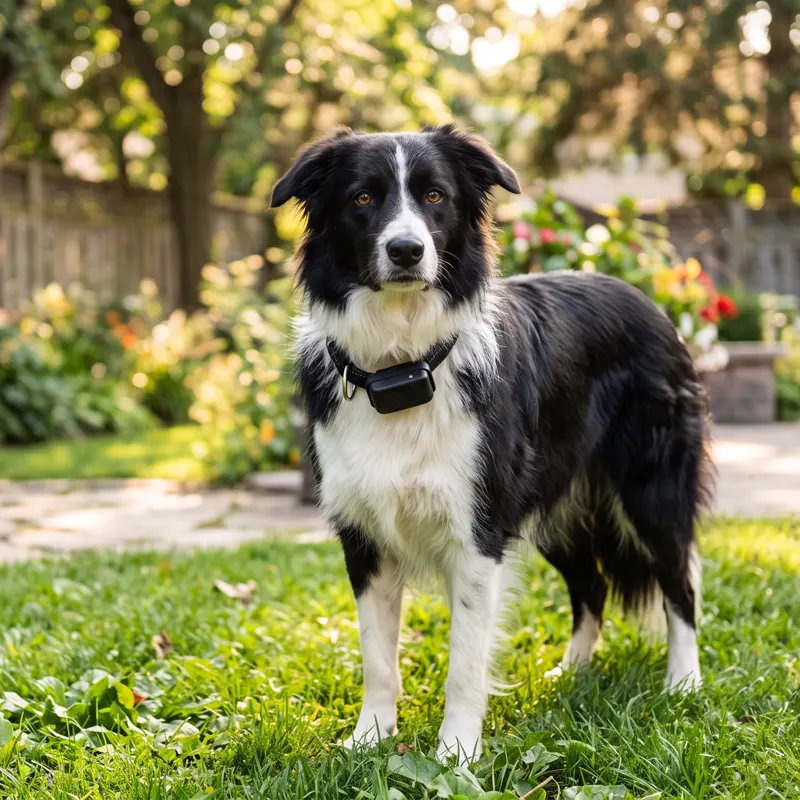
A dog tracker is a small device, usually clipped to a collar, that reports your dog's location so you can find them if they slip a leash, dig under a fence, or bolt during a storm. The category covers three different technologies, and they are not interchangeable: GPS trackers with cellular data, Bluetooth trackers with limited range, and radio-based fence systems. Buying the wrong type for how your dog actually gets loose is the most common mistake owners make.
Before comparing products, it helps to know what a tracker cannot do. It cannot replace a secure fence, a well-fitted collar, or supervision in unfamiliar areas. It also cannot report a location the instant your dog runs off; even a good GPS unit updates every few seconds to a few minutes depending on the plan and signal, so a tracker narrows a search area rather than pinpointing your dog in real time.
The American Kennel Club's overview of pet GPS trackers explains that most consumer units combine GPS for outdoor range with a subscription service for cellular data, which is the same distinction this guide uses below to separate real GPS trackers from short-range Bluetooth tags.
Dog Tracker Types Compared
A GPS tracker with a cellular plan uses satellite positioning plus a cell network (similar to a phone) to report location almost anywhere there is coverage. This is the only type that works if your dog gets out of your neighborhood entirely, but it requires a monthly or annual subscription and needs the battery charged, typically every few days to a couple of weeks depending on the update frequency you set.
A Bluetooth tracker (the same technology used in phone-finder tags) only reports location when it is within range of a paired phone or a network of other users' phones nearby. It is inexpensive and needs no subscription, but it is not useful for a dog that runs beyond a few hundred feet from people, which limits it mostly to indoor cats and dogs that stay close to home.
A radio-based fence or containment system is a different category entirely: it keeps a dog inside a boundary using a buried wire or GPS-defined perimeter and a warning tone or correction, rather than reporting location after the fact. Some products combine containment with a locator function, but the primary job is prevention, not search.
How to Choose a Tracker for Your Dog

Start with how your dog typically gets loose. If the risk is squeezing under a fence or slipping a leash near home, a Bluetooth tag paired with a secure yard may be enough. If your dog is a known runner, an escape artist, or spends time off-leash in open areas, a GPS tracker with a live cellular plan is the type that can actually find them once they are out of sight.
Check the update interval and battery life together, not separately. A tracker that pings every few seconds gives a tighter location but drains the battery faster, often in a day or two. A tracker set to update every few minutes lasts longer between charges but gives you a wider search radius if your dog is moving. Most apps let you choose the interval, so match it to how often you actually check.
Weight and size matter more than most buyers expect. A tracker built for a large dog can be uncomfortably heavy on a small or toy breed's collar, and manufacturers publish minimum weight or neck size recommendations for a reason. Check the device weight against your dog's size before buying rather than assuming one size fits all.
If your dog already wears a GPS collar for containment, compare whether it also functions as a locator, or whether you need a second device. Our canine GPS collar guide and our GPS dog collar comparison cover this overlap in more detail, and a properly fitted everyday collar is worth checking before adding hardware to it.
Dog Tracker Mistakes to Avoid
The most common mistake is buying a Bluetooth tag expecting GPS-level range. A phone-finder style tag only reports a location when a paired or crowdsourced phone is nearby, so it is a poor fit for a dog that runs loose in a park, a trail, or open countryside. Match the technology to the distance your dog is actually likely to cover.
A close second is skipping the subscription cost in the buying decision. Most GPS trackers require an active data plan to report location; without it, the hardware alone usually cannot communicate. Add the monthly or annual fee to the sticker price before comparing two products, because the cheaper device on the shelf is sometimes the more expensive one over a year.
Ignoring battery habits is another common issue. A tracker that is dead when your dog goes missing is no better than no tracker at all. Build a charging routine, such as topping it up every evening on a schedule, and check the app periodically to confirm the device is reporting rather than assuming it is working silently in the background.
The Federal Trade Commission's guidance on smart devices notes that any connected tracker sends data over a network, so it is worth checking a manufacturer's privacy policy for how location history is stored and shared before buying, particularly if the same account is used by multiple family members.
Dog Tracker Buying Checklist
Confirm the technology first: GPS with cellular data for real range, Bluetooth for close-range convenience, or a containment system if the goal is prevention rather than search. That single answer rules out most of the wrong options before you compare a single listing.
Check the device weight against your dog's size, the battery life at your intended update interval, and whether the coverage area (cellular network, country support) matches where you actually walk or travel with your dog.
Add the subscription cost to the purchase price before comparing two trackers, and read the manufacturer's data and location-sharing policy if privacy matters to your household.
Once your dog is set up with a tracker, pair it with a secure, well-fitted collar rather than treating the tracker as a substitute for one. A calm reward such as a favorite toy from our interactive dog toys selection after a fitting session can help a dog get used to new hardware on the collar. See also our dog GPS tracker overview and GPS locator for dogs guide for more model comparisons.
Frequently Asked Questions
What is the best type of tracker for a dog that runs off?
A GPS tracker with an active cellular subscription is the only type built to locate a dog that has left the immediate area, since Bluetooth tags only work within short range of a paired phone.
Do dog trackers need a monthly subscription?
Most GPS trackers with real range require a monthly or annual data plan to report location over a cell network. Bluetooth-only tags do not need a subscription but also have much shorter range.
How long does a dog tracker battery last?
It depends on the update interval you choose. Frequent updates every few seconds can drain a battery in a day or two, while longer intervals of several minutes can stretch battery life to a week or more on many devices.
Is a dog tracker the same as a GPS fence?
No. A tracker reports where your dog is so you can find them after they leave an area. A GPS fence or containment system is designed to keep your dog inside a boundary in the first place, and some products combine both functions.
Can a tracker replace a secure fence or leash?
No. A tracker helps you find a dog that has already gotten loose, but it does not prevent escape. A secure yard, a well-fitted collar, and supervision in unfamiliar areas remain the primary ways to keep a dog safe.
Will a tracker be too heavy for a small dog?
It can be. Manufacturers publish minimum weight or neck size guidance for a reason, and a device built for a large dog can be uncomfortable on a small or toy breed's collar. Check the specs against your dog's size before buying.
What should I check about a tracker's data privacy?
Since any connected tracker sends location data over a network, check the manufacturer's privacy policy for how history is stored, who can access it, and whether it is shared with third parties before adding an account for your dog.
Browse Accessories
Free US shipping on every order. No minimum purchase required.
Browse Accessories →