Rubber vs plush vs rope dog toys is not a contest with one universal winner. Rubber usually suits chewing and food-based enrichment, plush suits gentle carrying and comfort, and rope suits supervised tug and owner-led play. The best choice depends on your dog's chewing force, age, mouth, play style, and how closely you can supervise.
This comparison gives you a practical way to choose. Start with the table, then read the section that matches your dog's habits. If a toy becomes damaged, retire it even when the material is normally a good fit.
In This Article
Quick Answer: Rubber, Plush, or Rope?
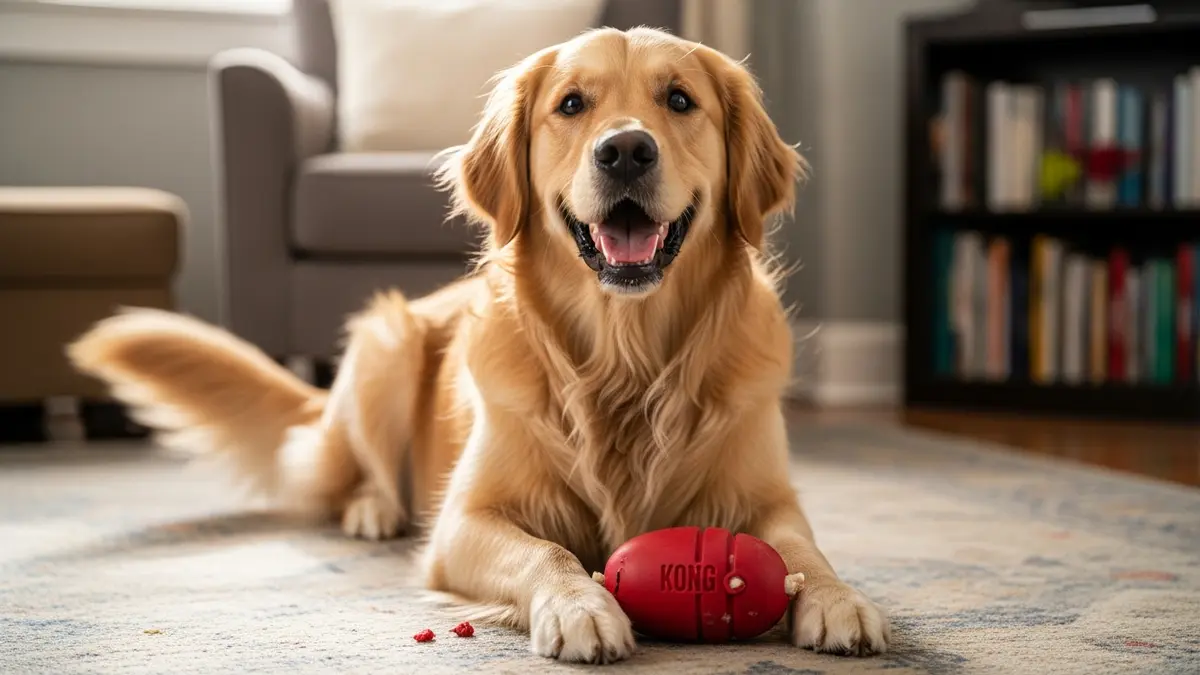
Choose rubber when your dog needs a durable chew or a treat-dispensing toy and you want a surface that is usually easy to rinse. Choose plush when your dog carries, cuddles, or gently shakes toys without opening seams. Choose rope when you want interactive tug, fetch, and short supervised chewing sessions.
There is an important limit to every category. Rubber can still be too hard or too small. Plush can expose stuffing and squeakers. Rope can fray and release fibers. Veterinary guidance from VCA Hospitals warns owners to remove damaged stuffed toys and supervise products that can become choking hazards. The safest toy is the one that matches the dog and is checked often.
Five-Point Comparison Table
Use these five criteria as a buying checklist. Ratings are practical guidance, not a promise that every product made from the material will behave the same way.
For a broader look at choosing durable products, see our guide to rubber dog toys. If you are comparing soft options, our article on whether plush toys are safe for dogs covers supervision and stuffing risks in more detail.
When Rubber Is the Better Choice
Rubber is the strongest starting point for many dogs that like to chew, lick, or work for food. A well-sized rubber toy can support calm solo enrichment, especially when it can be stuffed with treats or spreadable food. It also tends to be easier to rinse than fabric, so owners can inspect the surface after each session.
Do not treat the word rubber as a safety guarantee. Products vary in firmness, size, and construction. A small toy can become a swallowing risk, while a very rigid toy can be a poor match for a dog with dental sensitivity. VCA's puppy chewing guidance emphasizes that no toy is 100% safe and recommends supervision even when a product is marketed for chewing.
Rubber is especially useful for dogs that destroy plush quickly or need an activity while their owner is nearby but not actively tugging. Rotate it with play that uses movement and social interaction so the dog does not receive only one kind of enrichment.
When Plush Is the Better Choice
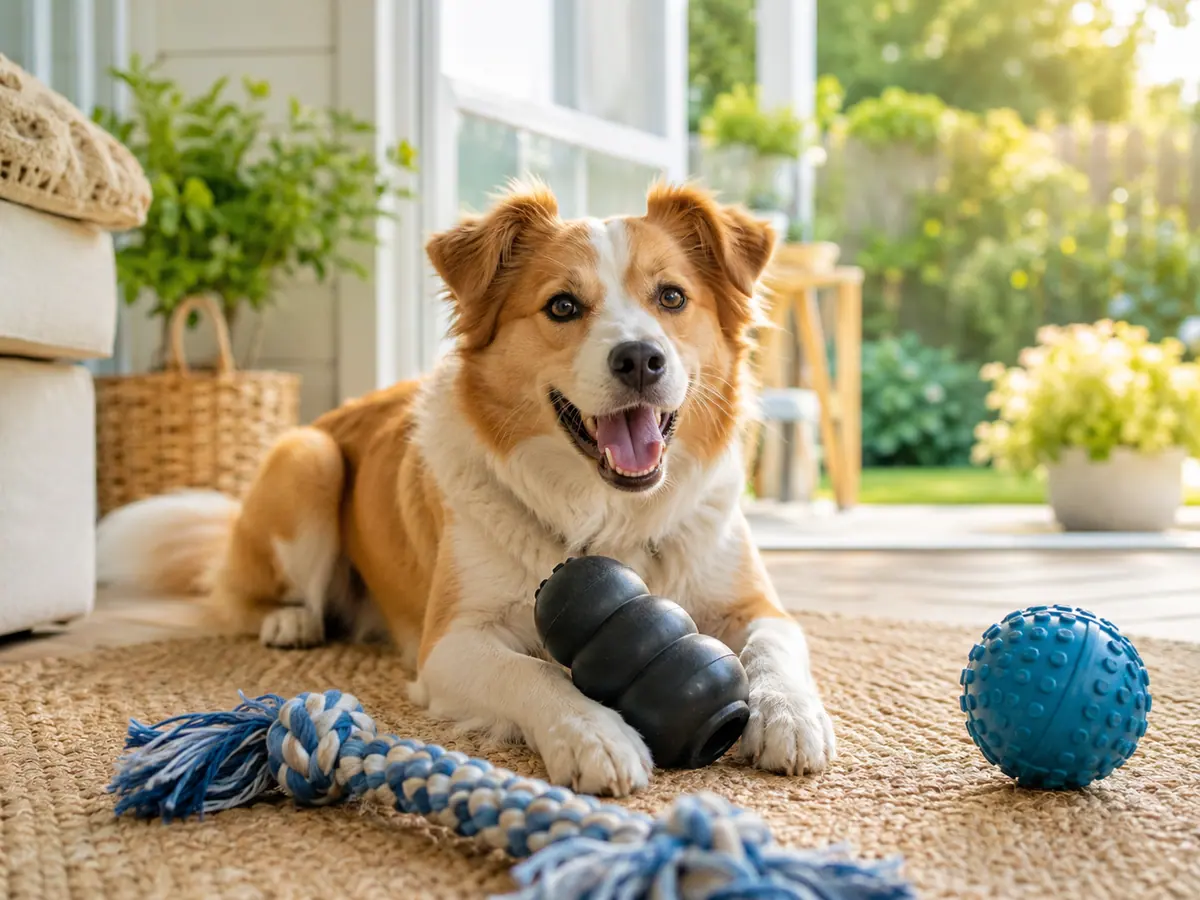
Plush is a good choice for dogs that carry toys, settle with them, or enjoy gentle indoor fetch. Soft toys can be comforting for puppies, small dogs, seniors, and dogs that do not need a heavy chew. They can also be easier to hold for a dog that prefers a light texture.
The deciding behavior is what happens after the first minute. If your dog carries the toy and leaves the seams alone, plush may be a useful comfort item. If your dog immediately hunts for the squeaker or pulls stuffing through a seam, the toy needs close supervision or a different material. Never let a dog ingest stuffing, squeaker parts, or fabric pieces.
Washable construction helps, but washing does not make a damaged toy safe. Check the seams after drying and retire the toy when a tear gives the dog access to the inside. You can keep plush in the rotation for gentle play without expecting it to survive a power chewer.
When Rope Is the Better Choice
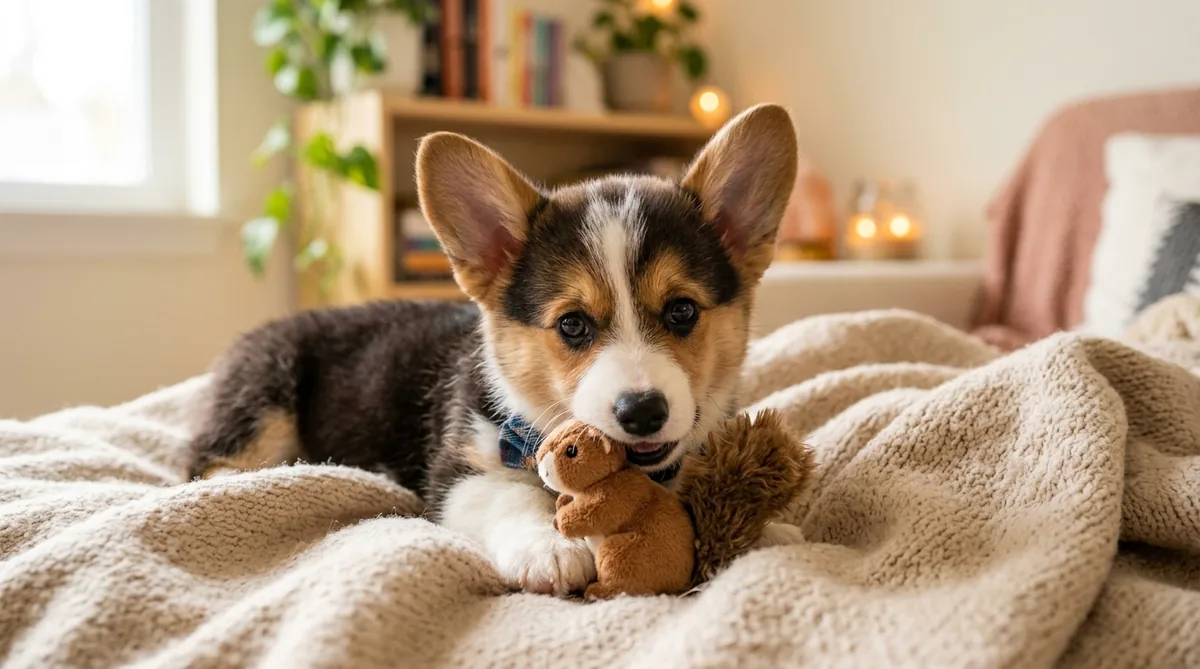
Rope toys are strongest as interactive tools. Tug can practice take-it and drop-it cues, provide exercise in a small space, and give the owner a clear role in the game. A rope can also be useful for fetch when the size and knot are appropriate.
Rope is not a set-and-forget chew. Fibers loosen as the dog works the toy, and some dogs swallow strands instead of spitting them out. Inspect the rope before and after use. Replace it when fraying is more than superficial, when knots loosen, or when your dog starts pulling and swallowing fibers.
For dogs that love tug, put the rope away after the session. That simple habit keeps the toy special and gives you control over when it is used. Combine it with a rubber chew for solo time and a soft toy for calm carrying if those categories suit the dog.
Safety and Replacement Checks
A material comparison is only useful when it leads to a repeatable inspection habit. Before a new toy reaches the dog, check the size, seams, edges, knots, and labels. During the first session, watch whether the dog carries, chews, shreds, or swallows pieces. That first observation tells you more than the product name.
- Choose a size that cannot be swallowed whole.
- Use extra caution with puppies, seniors, and dogs with dental history.
- Remove plush toys when stuffing or squeakers become accessible.
- Remove rope toys when strands or knots begin to separate.
- Remove rubber toys when cracks create sharp edges or missing chunks.
- Supervise a new toy until you know how the individual dog uses it.
The American Kennel Club's dog toy guidance is a useful companion source for matching toys to the individual dog. No product category replaces observation and regular replacement.
When in doubt, retire it.
The cost of replacing a toy is small compared with the risk of a swallowed piece, choking event, or broken tooth.
A Simple Toy Rotation
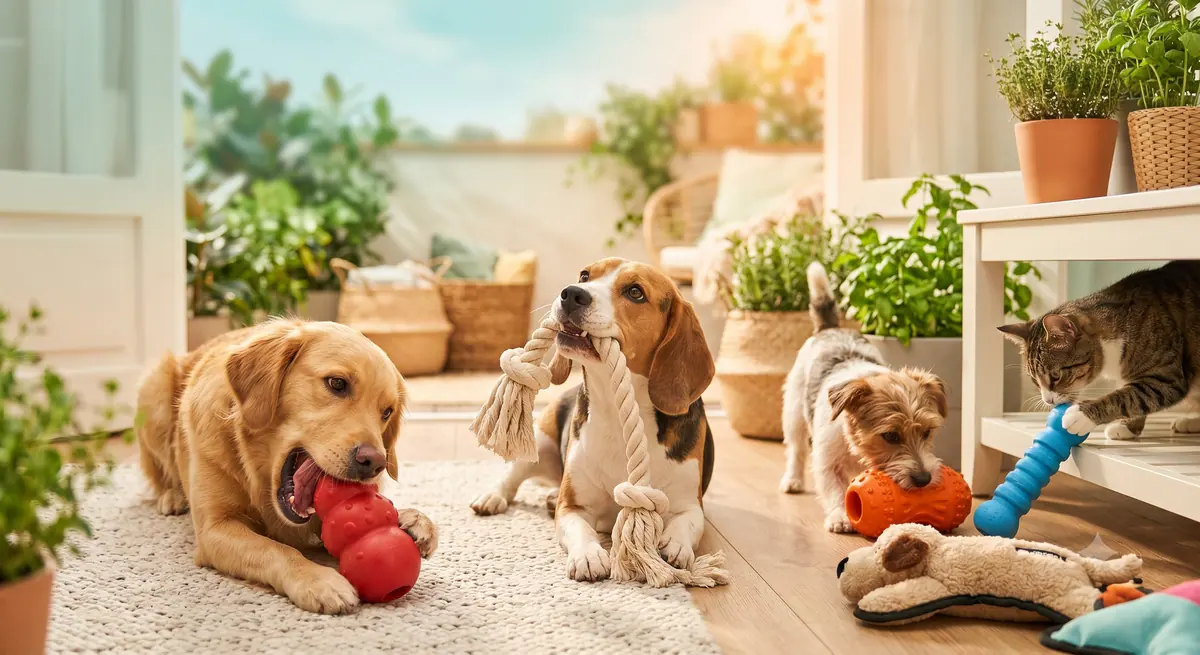
A practical rotation uses different materials for different jobs. Start with one rubber toy for chewing or food enrichment, one rope toy for supervised tug, and one plush toy for carrying if your dog handles soft toys safely. Keep only the suitable options available and store the rest.
Rotate every few days and inspect each item before it returns. A dog that changes with age, stress, or excitement may need a different mix next month. For a puppy, prioritize softer options and short supervised sessions. For a strong chewer, emphasize a properly sized durable toy while still keeping interactive play in the routine.
Browse Livehappypet dog toys after you have identified the job the toy needs to do. Shopping by behavior rather than by color or character makes it easier to choose a product you can supervise and replace responsibly.
Frequently Asked Questions
Which is safest, rubber, plush, or rope?
There is no universally safest material. Choose the size and construction that match your dog's chewing force, supervise use, and replace the toy as soon as it becomes damaged.
Which dog toy material lasts the longest?
Rubber usually lasts longest for steady chewing, but the answer depends on the dog. Plush can last for years with a gentle carrier, while rope lasts best when used for supervised tug rather than constant chewing.
Are plush toys safe for power chewers?
Usually not as an unsupervised toy. A power chewer may open seams and reach stuffing or squeakers quickly. Use plush only when the dog has shown that it can handle it safely.
Are rope toys safe for dogs that swallow fibers?
Rope is a poor choice for unsupervised chewing when a dog swallows loose fibers. Use it for short supervised play and replace it when fraying starts.
What should I buy first for a new dog?
Start with one properly sized rubber enrichment toy, one supervised interactive toy, and one soft toy only if the dog handles plush safely. Observe before buying a larger collection.
Choose the toy for the job
Compare your dog's chewing style, supervision needs, and favorite kind of play before you shop.
Shop Dog Toys