If you are looking for the best are rope toys safe for dogs, this comprehensive guide covers everything you need to know. Whether you are a first-time pet owner or an experienced one looking to upgrade, you will find practical advice, safety tips, and honest comparisons below.
This article is for general informational purposes only and is not a substitute for professional veterinary advice, diagnosis, or treatment. Always consult your veterinarian about any health concerns, dietary changes, medication, or product safety questions specific to your pet. If your pet shows signs of distress, illness, or injury, contact a licensed veterinarian or emergency animal hospital immediately. For background context, see the reference at ASPCA.
Comparing rope with soft toys? Our plush toys safety guide explains why stuffing, not fabric, is the main risk inside a plush toy.
If fraying is a recurring problem, compare rope with the other two common materials in our rubber vs plush vs rope dog toys breakdown, which lists rope alternatives that keep the tug game.
Why Material Safety Is Critical for Are Rope Toys Safe For Dogs
Pet toys are one of the few consumer products that animals put directly in their mouths for extended periods. Unlike human toys, which have strict safety regulations in most countries, pet toy manufacturing standards vary dramatically between brands and regions. Understanding material safety helps you protect your pet from exposure to harmful chemicals during daily play.
When we research rope toys safety for dogs, we lean on veterinary references and observed behaviour patterns rather than anecdote alone. We've found that combination produces the most actionable guidance for everyday owners.
Common toxic substances found in low-quality pet toys include lead, cadmium, phthalates, BPA, and formaldehyde. These chemicals can leach out during chewing, especially when toys are exposed to heat, moisture, or stomach acid. Long-term exposure has been linked to organ damage, hormonal disruption, and increased cancer risk in laboratory animal studies.
The cost of choosing unsafe materials extends beyond health concerns. Toys that break apart easily create choking hazards and potential intestinal blockages. Emergency surgery to remove swallowed toy fragments typically costs $2,000-$5,000. Investing in quality materials upfront is both a health decision and a financial one.
Safe Materials to Look for in Are Rope Toys Safe For Dogs

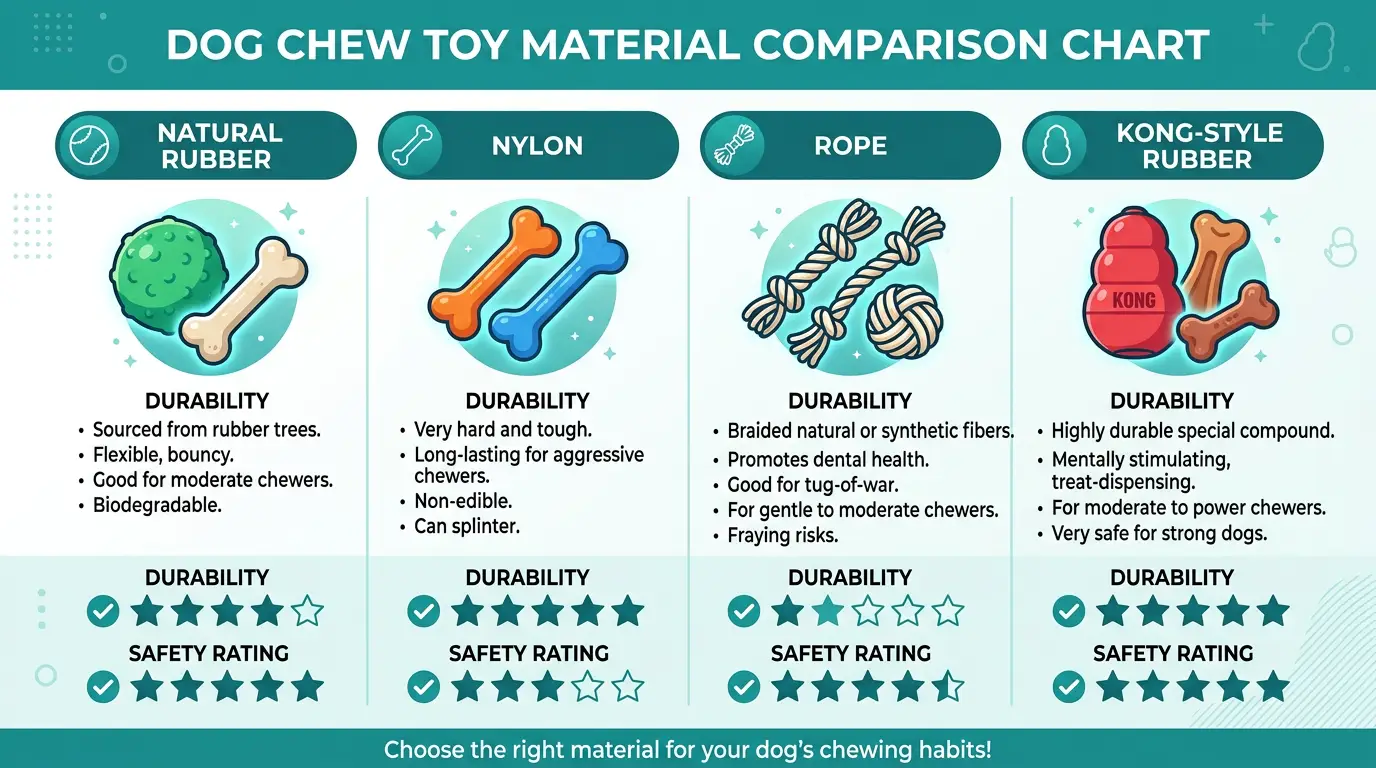
Natural rubber is the gold standard for chew toys. Harvested from rubber trees, natural rubber is inherently non-toxic, durable, and flexible enough to withstand aggressive chewing without splintering. Premium brands use 100% natural rubber without synthetic additives, dyes, or chemical softeners.
Honestly, we revisit our rope toys safety for dogs guidance every few months because veterinary advice continues to refine. We've updated this piece to reflect current best practice as we understand it.
Food-grade silicone provides another excellent option, especially for toys that contact food like treat-dispensing toys and lick mats. This material is heat-resistant, odorless, tasteless, and completely non-toxic. It does not leach chemicals even when heated and can be sterilized in boiling water.
Organic cotton and hemp ropes are the safest options for rope and tug toys. Conventional cotton ropes may be treated with pesticides, bleaches, or chemical dyes during manufacturing. Organic options skip these treatments entirely, making them safer for dogs that shred and ingest rope fibers during play.
Dangerous Materials to Avoid in Are Rope Toys Safe For Dogs
PVC (polyvinyl chloride) is one of the most concerning materials in pet toys. PVC requires phthalate plasticizers to remain flexible, and these chemicals are known endocrine disruptors. Cheap squeaker toys, flexible chew toys, and vinyl balls are common PVC products. If a toy has a strong chemical smell, it likely contains PVC or similar problematic plastics.
Chromium-tanned leather, often used in dog chew toys and tug toys, contains hexavalent chromium, a carcinogenic compound. Vegetable-tanned leather is a safer alternative, though more expensive. If a leather toy does not specify its tanning method, assume it uses chromium tanning and avoid it.
Synthetic dyes in brightly colored toys can contain heavy metals including lead, cadmium, and mercury. While most dogs will not consume enough dye from a single toy to cause acute toxicity, chronic exposure from daily chewing accumulates over time. Undyed or naturally colored toys eliminate this risk entirely.
Certifications and Standards for Are Rope Toys Safe For Dogs
Look for toys tested to ASTM F963, the US toy safety standard. While technically designed for children's toys, this standard covers material toxicity, choking hazards, and mechanical safety in ways directly applicable to pet toys. Several premium pet toy brands voluntarily test to this standard.
OEKO-TEX certification ensures that textiles used in plush and rope toys are free from harmful chemicals. This certification tests for over 100 substances including formaldehyde, pesticides, heavy metals, and phthalates. It is particularly relevant for fabric-based toys that your pet chews and carries.
USA-made and EU-made products generally meet stricter manufacturing standards than imports from unregulated regions. While country of origin alone does not guarantee safety, domestic manufacturers face stricter oversight regarding material sourcing, chemical use, and quality control. This is not a substitute for checking specific certifications but serves as an additional quality indicator.
Eco-Friendly and Sustainable Are Rope Toys Safe For Dogs
Sustainable pet toys made from recycled materials, organic fibers, and biodegradable rubber reduce environmental impact without compromising safety or durability. Several brands now offer toys made from recycled ocean plastics, reclaimed rubber, and organic hemp that perform as well as conventional alternatives.
Durability is the most sustainable feature any toy can have. A single high-quality rubber toy that lasts two years replaces twelve cheap toys that end up in landfills after two months each. When evaluating eco-friendly claims, consider the toy's actual lifespan alongside its material sourcing.
Avoid greenwashing by checking specific certifications rather than relying on marketing language. Terms like "natural," "green," and "eco" have no regulated meaning in the pet product industry. Look for specific third-party certifications like OEKO-TEX, GOTS (Global Organic Textile Standard), or FSC (Forest Stewardship Council) that verify environmental claims.
How to Test Are Rope Toys Safe For Dogs Safety at Home
The smell test is your first line of defense. Take a new toy out of its packaging and smell it at close range. Strong chemical odors, especially vinyl or plastic smells, indicate volatile organic compounds (VOCs) that should not be present in safe pet products. Quality toys made from natural rubber or food-grade silicone have little to no chemical odor.
The flexibility test reveals material quality. Bend and twist the toy repeatedly. Safe rubber and silicone will flex without cracking, crumbling, or leaving residue on your hands. Poor-quality materials may crack at stress points, leave colored residue, or feel sticky or oily to the touch.
The durability test should happen under supervision. Give your dog the toy and watch closely for the first 30 minutes. If any pieces break off, if the surface coating chips away, or if your dog can access internal components (like squeakers or batteries), the toy has failed the safety test and should be removed immediately.
Are Rope Toys Safe For Dogs: Material Safety Comparison Table
This table compares common pet toy materials by safety profile, helping you make informed choices when selecting are rope toys safe for dogs for your pet.
Conclusion
Choosing the right approach for your dog comes down to matching the recommendations in this guide with the specifics of your situation. Pay close attention to age, breed, activity level, and any existing health concerns. When in doubt, talk to your veterinarian before making changes.
Use this guide as a starting point, observe your dog closely after any change, and update your routine as your dog's needs evolve. Small adjustments over time lead to the biggest improvements in well-being and behavior.
Quick safety answers
Are rope dog toys safe for dogs?
Rope dog toys can be appropriate for many dogs when the size, material, construction, and play style match the individual animal. No toy is risk free. Check the toy before every session, supervise early use, and remove it if seams, surfaces, or attached parts begin to fail.
What risks should I check before offering rope dog toys?
Check for pieces that can be chewed off, openings that expose filling, sharp edges, loose fibers, cracked surfaces, and a size that could become a choking hazard. Also consider how your dog plays. A gentle carrier and a determined shredder need different materials, shapes, and supervision.
When should I replace rope dog toys?
Replace the toy when its shape changes significantly, seams open, fibers loosen, stuffing becomes visible, hard material develops deep cuts, or a component no longer stays attached. Do not wait for a toy to break completely. Small defects can quickly become swallowable pieces during energetic chewing or tugging.
Can puppies use rope dog toys?
Puppies may use a suitable version when it is large enough, easy to inspect, and designed for their current chewing stage. Supervise closely because puppy teeth and habits change quickly. Recheck fit and wear as the puppy grows, and ask a veterinarian about toys if dental pain or abnormal chewing appears.
How should I supervise play with rope dog toys?
Begin in the same room and watch how your dog grips, carries, chews, shakes, and releases the toy. Intervene before parts loosen, and end the session if play becomes frantic or destructive. Supervision means active observation, not simply being nearby while focused on a phone, television, or another task.
What should I do if my dog swallows part of rope dog toys?
Take the remaining toy away and contact a veterinarian promptly for case-specific advice. Do not induce vomiting unless a veterinary professional tells you to do so. Note what material is missing, approximately how much, when it happened, and whether the dog shows vomiting, pain, lethargy, appetite changes, or trouble passing stool.
For fabric and rope toys, a textile certification is one of the few material claims you can verify. Our non toxic dog toys guide shows how to look one up.
Frequently Asked Questions
Are rubber dog toys safe?
Natural rubber dog toys are among the safest options available. Look for toys made from 100% natural rubber without synthetic additives. Avoid toys made from PVC, which requires phthalate plasticizers that can leach during chewing. Quality natural rubber toys are non-toxic, durable, and flexible enough to withstand aggressive chewing without splintering into dangerous pieces.
What chemicals should I avoid in pet toys?
Avoid BPA, phthalates, lead, cadmium, formaldehyde, and hexavalent chromium. These chemicals are commonly found in cheap PVC toys, poorly dyed products, and chrome-tanned leather items. Check product labels for "BPA-free" and "phthalate-free" certifications. If a toy has a strong chemical or plastic smell, it likely contains harmful substances.
Are toys made in China safe for pets?
Country of origin alone does not determine safety. China manufactures both excellent and poor quality pet toys. The critical factor is whether the manufacturer follows safety standards and uses certified materials. Look for specific third-party certifications like ASTM F963 testing regardless of where the toy is made. Premium brands that manufacture in China often maintain strict quality control.
How do I know if a toy is non-toxic?
Look for specific certifications: BPA-free, phthalate-free, OEKO-TEX certified, and ASTM F963 tested. Perform a smell test at home by checking for strong chemical odors. Check that dyes do not transfer to wet hands when rubbed. Reputable brands list their materials and safety testing on packaging or their website. If this information is not available, choose a different product.
What is the safest material for chew toys?
Natural rubber and food-grade silicone are the safest materials for chew toys. Both are non-toxic, durable, and free from harmful plasticizers. Natural rubber is biodegradable and provides excellent flexibility for chewing. Food-grade silicone is heat-resistant and can be sterilized. Both materials maintain their safety profile even under aggressive chewing conditions.
Can pet toys contain lead?
Yes, lead has been found in some pet toys, particularly those with cheap paint, metallic decorations, or PVC components. Lead exposure causes neurological damage, kidney problems, and behavioral changes in pets. Choose toys from brands that test for heavy metals, and avoid brightly painted toys from unverified manufacturers. When in doubt, plain unpainted natural materials are the safest option.
Are eco-friendly pet toys safe?
Eco-friendly pet toys made from organic cotton, natural rubber, recycled food-grade plastics, and sustainable hemp are generally very safe. However, verify specific safety certifications rather than relying on marketing claims. Terms like "natural" and "eco" are not regulated in the pet industry. Look for OEKO-TEX, GOTS, or specific non-toxic certifications alongside environmental claims.