A litter mat is one of the cheapest things in the cat aisle and one of the easiest to buy wrong. The job is narrow and mechanical: intercept the grit a cat carries out of the tray on its paws and in its coat, and hold that grit somewhere you can empty on purpose rather than tread through the hallway. Nothing about that job involves odour, hygiene, or persuading a reluctant cat back into the box, which is where most of the marketing goes.
This guide works through what the mat is physically doing, why some litters travel further than others, how the four common mat materials differ in the only ways that matter, and where to put the thing so it catches anything at all. It also covers the part almost no product page mentions: a cat that dislikes the surface will simply step over it, and then you have paid for a decorative rectangle. The litter box guidance quoted throughout comes from the Cornell Feline Health Center and the ASPCA.
What a Litter Mat Actually Does, and What It Does Not
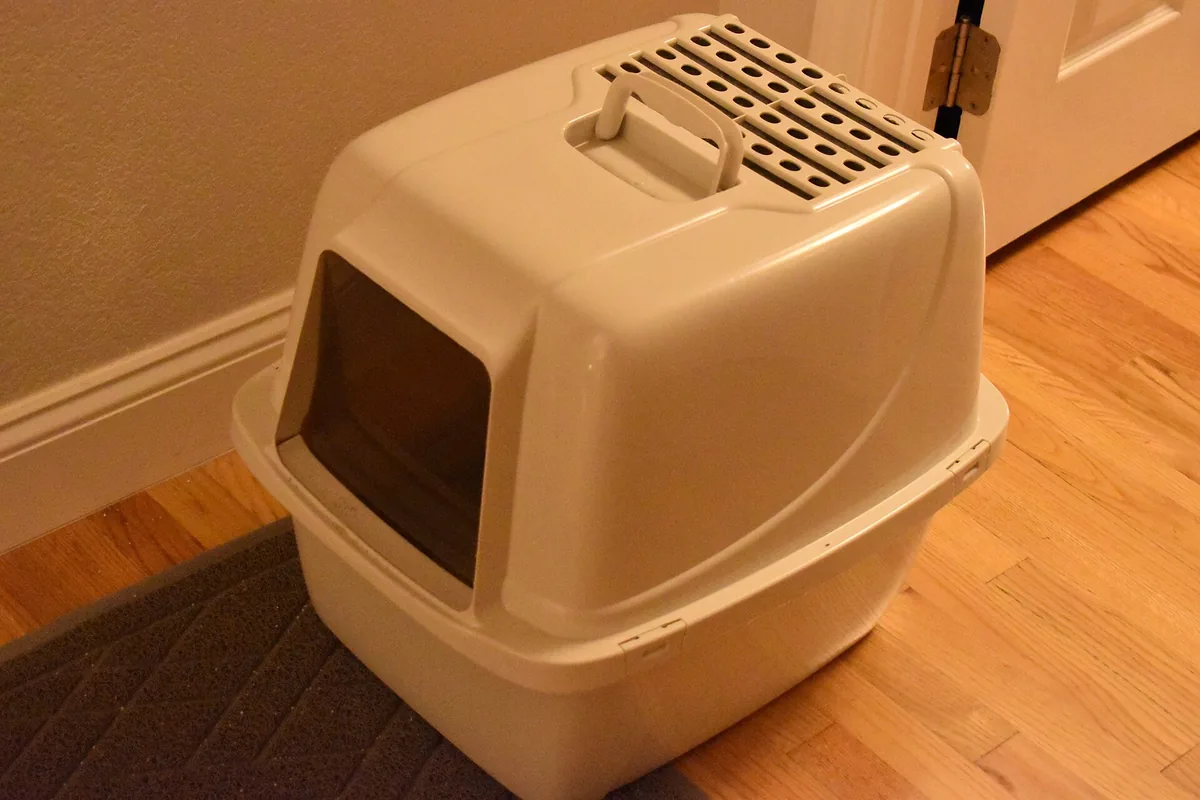
A litter mat is an interception device. It sits directly outside the tray entrance so that the cat's first two or three steps land on a surface designed to pull granules off the pads and hold them. Everything good about a mat follows from that one function, and everything disappointing about a mat follows from expecting it to do something else. It is not a deodoriser, it is not a hygiene barrier, and it has no effect whatsoever on how often the tray needs scooping.
It is also a different object from a box liner, even though shops often shelve them together. A liner goes inside the tray under the litter and is meant to make emptying easier. Both Cornell and the ASPCA note that many cats dislike liners, and Cornell lists a liner among the things that can put a cat off the box entirely, because claws catch in the plastic during digging. A mat sits outside the box and the cat never has to dig on it, which is precisely why a mat is the safer of the two purchases.
The realistic result is reduction, not elimination. A well chosen mat in the right place will catch the majority of what leaves the tray on a cat's feet, and almost none of what leaves in a long-haired cat's tail and trousers. Owners who expect a clean floor from the mat alone are usually disappointed within a week. Owners who expect the grit to end up in one liftable rectangle instead of a three metre trail are usually satisfied for years.
There is a second, quieter benefit that rarely appears on the packaging. A mat gives urine overspray and the occasional missed deposit somewhere non-porous to land, which matters a great deal if the tray sits on carpet, laminate joins, or unsealed wood. On those floors the mat is earning its money as a splash guard long before it earns anything as a granule trap.
Where the Tracking Starts: Digging, Granule Size and Depth

Tracking begins before the cat has finished using the tray. Cats dig a hollow first and cover afterwards, and both movements drive litter up between the toes and into the fur around the pads. A cat that digs enthusiastically for twenty seconds leaves the tray loaded; a cat that scratches twice at the rim and hops out barely leaves with anything. This is why two cats on identical litter in identical boxes can produce wildly different amounts of mess on the same floor.
Cat parents might also find our tidy cat litter guide helpful.
Granule size and weight then decide how far the load travels. Fine clay clumping litter packs tightly into the gaps between the pads and is carried the furthest before it drops, which is exactly why a mat with capture depth suits it. Large crystal, paper pellet and wood pellet litters are too big to lodge between the toes, so far less rides out on the paws, but what does leave is kicked over the rim during digging and skitters across hard floors. The mat you want is different in each case.
Litter depth is the variable most owners get wrong and the easiest to correct. Cornell advises unscented, finer textured litter at about one to two inches deep, and the ASPCA gives the same one to two inch figure while warning specifically against three to four inches. Deeper litter does not keep the tray cleaner. It gives the cat more material to throw over the side, and a good part of what a mat catches in a deep tray household is spray, not paw carry.
Coat length is the last factor and the one no mat fully solves. Litter clings to the fur between the pads and to the feathering on the back legs of long-haired cats, then falls out later, on the sofa, minutes after the cat has crossed the mat. Trimming the fur between the pads is the usual fix, and it belongs in the grooming routine rather than in the flooring budget.
The Four Mat Materials, Compared Honestly
Double layer EVA foam is the honeycomb style that dominates the category. The top sheet is perforated, the bottom sheet is solid, and granules drop through the holes into the cavity between them. You empty it by unzipping or folding one edge and pouring the contents into the bin. It is soft underfoot, which cats accept readily, and it has real capture volume, which is what fine clay litter needs. Its weakness is the seam: cheap ones split at the fold after a few months of being lifted while full.
Ribbed rubber and PVC mats work on a different principle. Granules settle into the channels between the ribs and stay there until you shake, brush or hose the mat. There is no hidden cavity to split, they are heavy enough to stay put on tile, and they survive outdoor hosing indefinitely. They also feel firm and cool underfoot, which some cats dislike, and the channels hold much less material than a honeycomb cavity, so they need attention more often.
Microfibre and short pile carpet mats are the best performers on dust and the finest clay, because the fibres grip particles a honeycomb hole would let bounce straight over. They are also the most comfortable surface of the four for a cat with sore paws. The cost is laundry: they need washing rather than emptying, they take a long time to dry, and a damp mat parked under a tray starts to smell faster than any other type in this list.
Silicone and moulded tray mats with a raised lip are the newest shape and the most specialised. They catch almost nothing from the paws because there is nowhere for granules to hide, but they contain liquid brilliantly, wipe clean in seconds, and are the sensible choice under a tray used by a cat that sprays or misses. Several owners end up running one of these directly under the box with a honeycomb mat in front of it, which is a perfectly reasonable answer.
Sizing and Placing the Mat So It Catches Anything
Buy the mat for the landing zone, not for the tray. The measurement that matters is how far the grit actually travels in your house, and you can establish that in a day: lay a sheet of dark paper or an old towel in front of the tray, leave it for twenty four hours, and look at where the scatter stops. Most households find the answer is further from the box than the mat they already own, and in a straight line along the cat's usual exit route rather than evenly in all directions.
For more feline-friendly picks, browse our electronic cat litter roundup.
The mat should be at least as wide as the tray and deep enough that the cat cannot clear it in a single stride. A cat leaving a low open tray steps down and walks; a cat leaving a hooded, top entry or self cleaning box lands from a height, often past the near edge of a small mat entirely. If your box has a hood, watch one exit before you buy, because the jump point can be thirty centimetres out from the door and a mat tucked neatly against the box will never see a paw.
Non-slip backing is not a luxury on tile, laminate or sealed wood. A mat that slides when a cat lands on it is both a genuine hazard and a surface the cat will learn to avoid, and avoidance is the failure mode that makes the whole purchase pointless. Rubber dot backing, a heavy base weight, or a couple of discreet strips of double sided carpet tape all solve it; check first that the tape will not lift your floor finish.
Finally, do not let the mat create an obstacle at the door of the tray. A thick mat with a stiff raised edge butted right against a low sided box turns the entrance into a small step, and for an arthritic or elderly cat that step is a reason to go elsewhere. Leave the mat flush with the floor at the entry point and let the thickness sit further out, away from the line the cat has to cross.
Paw Comfort: Why Some Cats Walk Around the Mat
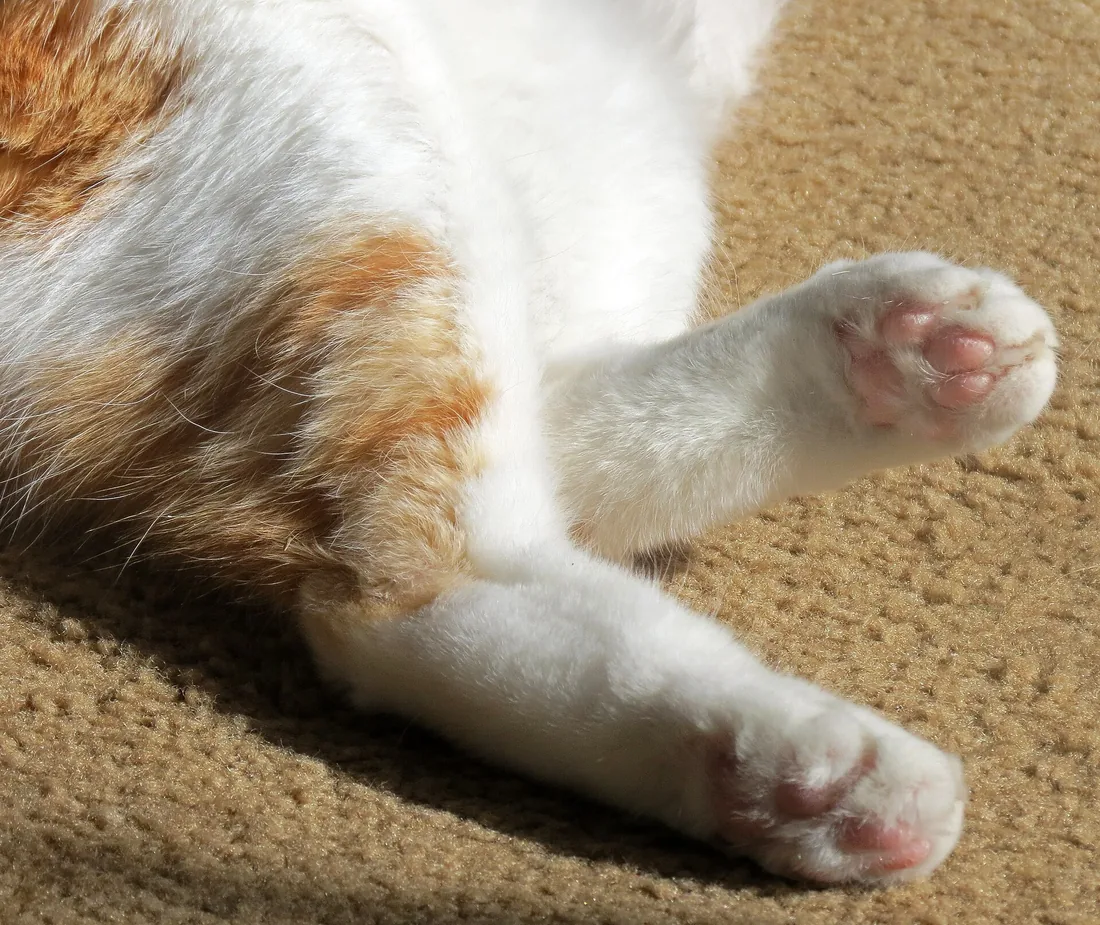
Cats read surfaces through their feet far more than people assume. The ASPCA points out that as predators who hunt at night, cats have highly developed senses of smell and touch, and that these same sensitivities shape how they react to what they are asked to stand on. A mat is simply another texture presented at the door of a place the cat already feels slightly exposed using, and a texture it dislikes is a texture it will route around.
The offenders are predictable. Hard moulded plastic with sharp pyramid spikes, stiff synthetic bristle, and cheap rigid honeycomb with unfinished hole edges all feel unpleasant on a bare pad. If the mat was a bargain and the cat began landing consistently beyond it within a few days of arrival, the texture is very likely the reason rather than coincidence, and no amount of retraining will change a cat's mind about how something feels.
Some cats need a softer surface than others as a matter of health rather than preference. Declawed cats, cats with arthritis in the toes and hocks, cats recovering from pad injuries, and cats with pododermatitis all land harder and more carefully than a healthy young cat, and all of them benefit from microfibre or soft foam rather than ribbed rubber. Reluctance to stand on a particular texture is worth mentioning to a vet if it appears suddenly in a cat that was previously untroubled.
The test is simple and takes three days. Put the new mat down, then watch where the cat's front paws land on the way out. If the cat uses the mat normally, it has passed. If the cat stretches, hops, or picks its way around the edge, swap the material rather than the size, because a bigger version of a surface the cat dislikes just gives it a larger thing to avoid.
Cleaning the Mat Without Creating a Second Chore
The mat has to be emptied on a schedule or it stops working, and the schedule is daily for the same reason the tray is. Both the ASPCA and Cornell advise scooping clumping litter and removing waste every day, and a mat that is already full of yesterday's grit has nowhere to put today's. In practice the mat takes about fifteen seconds: lift, fold, tip into the bin that the scooped waste is already going into, put it back.
Different breeds have different needs. Our new kitten essentials guide helps you choose.
Weekly cleaning depends on the material. Honeycomb foam can be taken outside, opened flat and rinsed, then stood on edge to drain. Ribbed rubber can be hosed or scrubbed in the bath. Microfibre goes in the machine. In every case the mat has to be completely dry before it goes back under the tray, because a damp mat wicks urine, holds it against the floor, and starts to smell far faster than the litter does.
Be careful what you clean it with. Cornell recommends scrubbing the box itself with a gentle detergent, and the same restraint applies to the mat, because heavily perfumed cleaners leave a residue on a surface the cat has to stand on. Both Cornell and the ASPCA report that most cats prefer unscented litter, and there is no reason to assume a cat that dislikes scented granules will be pleased by a citrus scented mat two centimetres from its nose.
Replace rather than repair once the mat starts shedding. Split honeycomb seams leak their contents across the floor, which is worse than having no mat; perished rubber goes brittle and sheds crumbs that a cat may ingest during grooming; matted microfibre stops releasing dirt in the wash. A mat that has reached any of those states has finished its useful life, and it is a low cost item to replace.
The Box Problems a Litter Mat Cannot Fix
It is worth being blunt about this, because the litter mat aisle sits next to a much larger problem that people try to solve with accessories. The ASPCA reports that at least ten percent of all cats develop elimination problems at some point, and none of those problems are caused or cured by what is on the floor outside the tray. If litter is appearing in odd places because the cat is eliminating in odd places, the mat is not the subject.
Cornell's guidance on the box itself is specific and short. Keep as many litter boxes as cats in the house, plus one. Use unscented, finer textured litter at one to two inches deep. Choose an uncovered box, which lets odours escape and gives the cat a full view of its surroundings. Give large or overweight cats a bigger box and give kittens, elderly cats and cats with mobility problems low sides. Put boxes in quiet, private places, well away from wherever the food and water bowls or the automatic feeder live, and reachable at any hour.
Location failures are the ones a mat most often gets blamed for. If the box is tucked into a dead end where the cat cannot see what is coming, or in a laundry that shares a wall with a noisy appliance, the cat rushes the visit, digs badly and leaves fast, which produces both scatter and, eventually, accidents. The ASPCA specifically notes that cats want to see people or animals approaching and want more than one escape route from the box. In a small flat, the cheapest way to create those routes is height: a cat tree or a window perch near the room gives a nervous cat somewhere to go that is not past the other cat.
Rule out medical causes before behaviour, and before shopping. Cornell lists urinary tract inflammation, kidney disease, thyroid disease and diabetes among the conditions that change how and where a cat urinates, and a cat that has begun associating the box with pain will avoid it regardless of how good the flooring is. A change in litter box habits is a veterinary question first. Once the vet has cleared the cat, come back to the mat, which by then is the small and easy part.
Kittens, Senior Cats and Multi-Cat Households
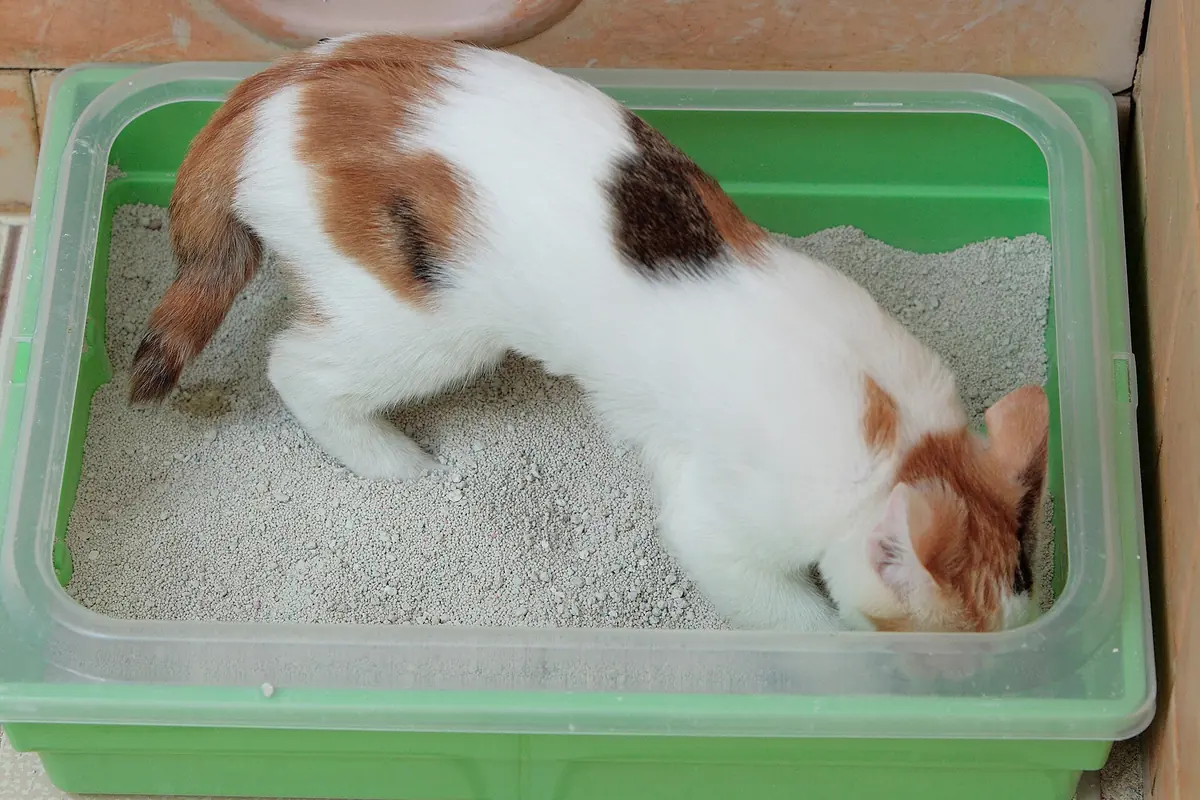
Kittens track more than adult cats and there is nothing wrong with them. A kitten treats the tray as terrain, digs far beyond what the job requires, and occasionally plays in it, so the volume leaving on eight small paws is out of all proportion to the size of the animal. A generous, soft, easily emptied mat in front of the tray is a sensible part of setting up for a new arrival, alongside the low sided box Cornell recommends for cats that cannot climb well and a starter set of kitten toys to keep the digging instinct pointed at something other than the tray.
At the other end of life the priorities invert. An older cat with stiff hips wants the shortest, flattest, most predictable path in and out, and Cornell explicitly advises against putting the box up or down a flight of stairs for a cat that struggles with climbing. A thick mat at the threshold is a small climb of its own. Thin, soft and flush is the right specification for a senior cat, even though it holds less than the deep honeycomb you would choose for a healthy adult. The same logic applies to everything else in the room: a low, easy to enter bed beats a high sided one for the same animal.
In multi-cat households, give every box its own mat. Cats queue, and a second cat waiting near the tray changes the first cat's behaviour: faster digging, quicker exits, more scatter. The box count is the real lever here and Cornell's number is one per cat plus one, spread across different areas of the house rather than lined up in a row, since four boxes in one room function socially as a single site. The same duplicate-and-separate rule applies to the other contested resources, which is why households with tension between cats do better with two scratching posts, two water sources and more raised furniture than they think they need.
One last practical note for busy households. Self cleaning and covered trays change where the cat lands and therefore where the mat needs to sit, and they do not reduce tracking; they simply move the moment at which the litter leaves. If you are weighing one of those up, read about how electronic cat litter systems actually work day to day first, and choose the mat to match the exit they create rather than the one your old tray had.
Organizations like the International Cat Care advice hub also offer trusted, science-backed advice that is well worth bookmarking.
Frequently Asked Questions
Do litter mats actually work?
Yes, within a narrow definition of work. A mat with real capture depth, placed where the cat genuinely lands, catches most of what leaves the tray on the pads and turns a trail across the room into one rectangle you empty on purpose. It does not catch what rides out in a long-haired cat's coat, and it has no effect on odour or on how often the box needs scooping. Judge it on whether the grit is now in one place, not on whether the floor is spotless.
What size litter mat do I need?
Bigger than the tray, and deep enough that the cat cannot clear it in one stride. Rather than guessing, lay a sheet of dark paper or an old towel in front of the box for a day and look at where the scatter actually stops; that outline is your minimum size. Hooded and top entry boxes need more depth than open trays because the cat lands from a height and often past the near edge of a small mat.
Which litter mat material catches the most litter?
Double layer EVA honeycomb holds the most, because granules fall through the perforated top sheet into a cavity you empty by folding the mat. Ribbed rubber holds less but survives hosing and stays put on tile. Microfibre grips the finest dust better than either but needs washing and drying rather than emptying. Match the material to your litter: honeycomb for fine clay, ribbed rubber for pellets and crystals.
How often should I clean a litter mat?
Empty it daily, at the same moment you scoop. Cornell and the ASPCA both advise removing waste and clumps from the box every day, and a mat that is already full has nowhere to put anything new. Wash it properly once a week according to its material, and make sure it is completely dry before it goes back, because a damp mat under a tray holds urine against the floor and develops a smell far faster than the litter does.
My cat jumps over the mat. What should I do?
Change the material, not the size. Hard moulded spikes, stiff bristle and rigid honeycomb with sharp hole edges are unpleasant on a bare pad, and a cat that has decided a surface is uncomfortable will step around a larger version of it just as readily. Swap to soft foam or microfibre and watch the front paws for three days. If a cat that previously used the mat suddenly starts avoiding it, check the paws for injury and mention it to your vet.
Can a litter mat replace a box liner?
They do different jobs, and the mat is the safer of the two. A liner sits inside the tray under the litter, and both Cornell and the ASPCA note that many cats dislike liners, partly because claws catch in the plastic while digging. Cornell lists liners among the things that can put a cat off using the box at all. A mat sits outside the tray, so the cat never has to dig on it, and it carries none of that risk.
Will a mat stop litter getting through the whole house?
It will stop most of the paw carried grit at the source, which is the majority of the problem in short-haired households. What it cannot catch is litter held in the fur between the pads and in the leg feathering of long-haired cats, which falls out gradually and several rooms away. Trimming the fur between the pads, keeping litter at one to two inches deep, and a second mat at the doorway of the room are the practical additions.
Does litter tracking cause any health problems?
For most cats and households it is a housekeeping issue rather than a health one. The situations worth attention are a cat that ingests significant quantities of clumping clay while grooming litter out of its paws, dust sensitivity in a cat or person with airway disease, and crumbling perished rubber mats that shed small fragments. Any change in litter box habits, including sudden reluctance to cross a surface the cat used happily before, is worth raising with a veterinarian.
Browse Cat Toys
Free worldwide shipping on every order. No minimum purchase required.
Browse Cat Toys →