A front clip dog harness is a harness with the leash ring on the chest instead of between the shoulder blades. When a dog pulls, the leash tension turns its body sideways, back toward you, so pulling stops paying off. This guide explains how front clip harnesses work, how they compare with back clip and dual clip designs, how to measure and fit one, and how to use it as part of loose leash training.
In This Article
- Quick Answer: Does a Front Clip Dog Harness Stop Pulling?
- How Does a Front Clip Dog Harness Work?
- How Does a Front Clip Compare With Back Clip and Dual Clip Harnesses?
- Which Dogs Benefit Most From a Front Clip Harness?
- How Do You Measure Your Dog for a Front Clip Harness?
- How Should a Front Clip Harness Fit?
- How Do You Train Loose Leash Walking With a Front Clip Harness?
- What Are the Most Common Front Clip Harness Mistakes?
- What Do People Ask Most About Front Clip Dog Harnesses?
- Sources
Quick Answer: Does a Front Clip Dog Harness Stop Pulling?
A front clip harness reduces pulling for many dogs because the chest ring turns a pulling dog sideways instead of letting it lean forward, and it keeps pressure off the throat. It is a management tool, not a cure: pair it with reward based loose leash training, fit it carefully, and switch to a back clip for running.
Updated October 14, 2026- The ring position is the whole point. Chest ring for pullers, back ring for calm walkers and running.
- Fit decides comfort. A loose front clip harness slides to one side and rubs under the legs.
- Use a standard leash. Retractable leashes and long lines undo the steering effect.
- Train at the same time. Reward your dog for a loose leash so it learns what you want.
How Does a Front Clip Dog Harness Work?
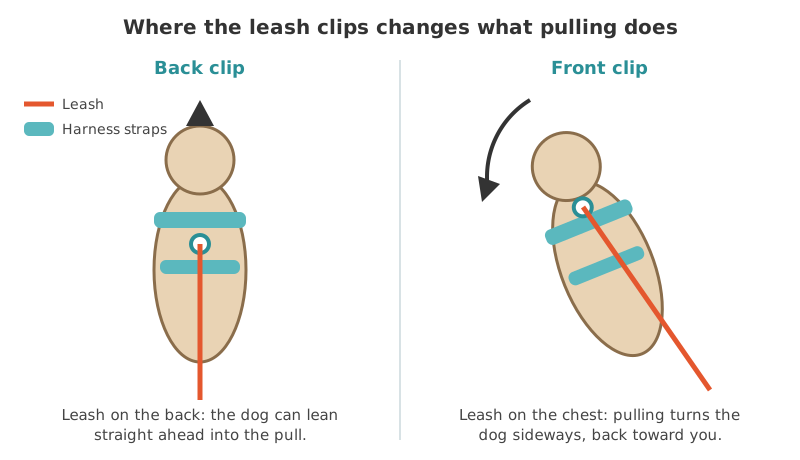
Answer: The leash attaches to a ring on the strap across your dog's chest. When your dog surges ahead, the leash pulls from the front, which swings its shoulders around toward you instead of letting it drive forward. Many designs also tighten slightly across the chest when the dog pulls, which adds a gentle cue without pressing on the neck.
On a back clip harness, the leash pulls from the top of the back, so a dog that leans into it can use its whole body weight, much like a sled dog pulling a load. Moving the ring to the chest changes the geometry. The pull now acts in front of the shoulders, so the harder the dog leans, the more it is turned to the side.
Some front clip harnesses add a martingale style loop on the chest strap. PetSafe describes the loop on its Easy Walk Harness as tightening when the dog pulls or lunges, putting gradual pressure on the shoulders to help redirect the dog's attention, while the harness rests across the chest instead of the throat. Source: PetSafe Easy Walk Harness.
That last point is why many owners switch from a flat collar. A dog that pulls hard on a collar presses on its throat with every step, which can cause coughing and gagging. A harness spreads the force across the chest and shoulders instead. Our dog collar guide covers when a collar is still the right choice, for example for ID tags.
How Does a Front Clip Compare With Back Clip and Dual Clip Harnesses?
Answer: A front clip harness gives the most steering control and suits dogs that pull. A back clip harness suits calm walkers, running and hiking, but does nothing to discourage pulling. A dual clip harness has both rings, so you can start with the front ring for training and switch to the back later.
Dual clip designs have become popular because they let one harness do two jobs. PetSafe's 3 in 1 Harness, for example, has a front clip for no pull walking, a back clip for standard use and a seat belt loop for car travel, and its Easy Walk Comfort harness pairs a front martingale loop with a back clip for running. Sources: PetSafe 3 in 1 Harness, PetSafe Easy Walk Comfort.
For a wider look at harness styles, see our best dog harness and no pull dog harness guides. For more general background, see our dog harness overview. If you are comparing PetSafe's own models, our Easy Walk harness guide goes into more detail.
Which Dogs Benefit Most From a Front Clip Harness?
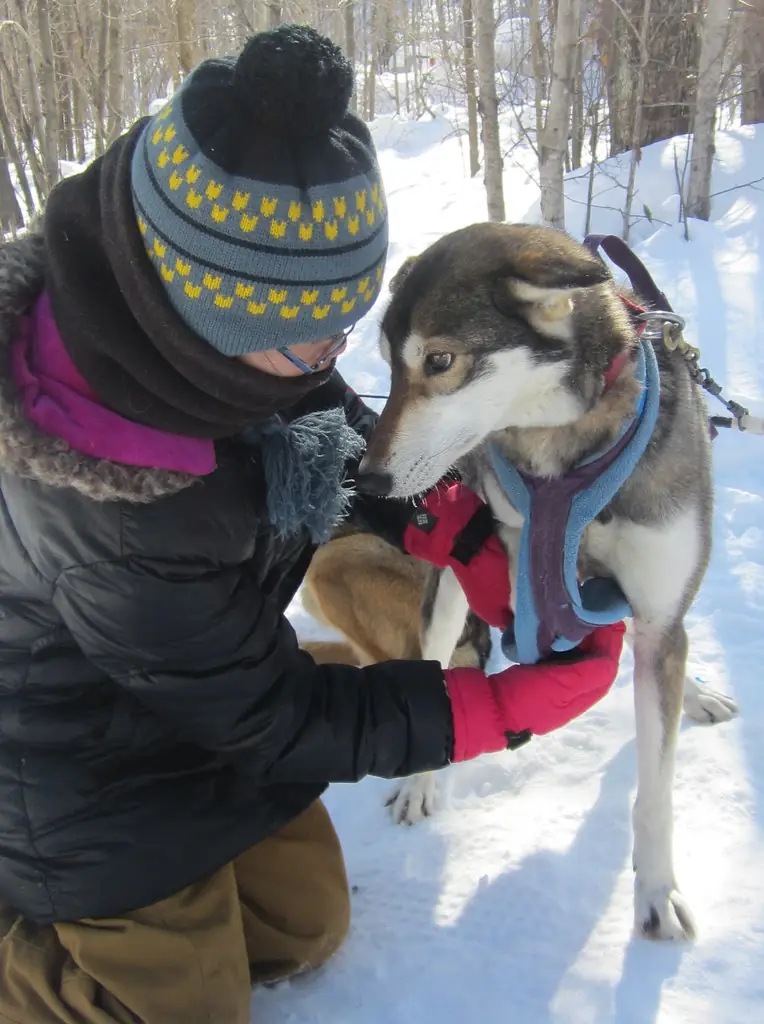
Answer: Front clip harnesses help most with adolescent dogs, strong medium and large breeds, dogs that lunge at other dogs or wildlife, and dogs that cough or gag on a collar. They also help people who find a strong dog hard to hold. Very small dogs, deep chested sighthounds and dogs with shoulder problems may need a different design.
Young, excited dogs are the classic case. They have not yet learned that a loose leash gets them where they want to go, and a front clip takes the reward out of pulling while they learn. Strong breeds benefit because the handler no longer has to match the dog's strength; steering does the work instead.
Dogs with breathing or throat sensitivity, such as flat faced breeds, also do better in a harness than on a collar, and a front clip adds control on top. If your dog lunges at triggers, a front clip gives you a quicker way to turn it away, but pair it with a plan for the underlying reaction. Our anxiety in dogs guide is a good starting point, and our harness on a dog guide covers first introductions.
A front clip is not ideal for every dog. Tiny dogs may find the chest ring and leash weight awkward, and sighthounds with very deep chests can be hard to fit. If your dog has an orthopedic condition or a history of shoulder problems, ask your vet which harness style puts the least strain on its joints.
How Do You Measure Your Dog for a Front Clip Harness?
Answer: Measure the girth, around the widest part of the rib cage just behind the front legs, with a soft tape. Many brands also ask for chest width or neck size. Use the maker's chart rather than weight alone, and if your dog falls between two sizes, follow that brand's advice, since some suggest sizing up and others sizing down.
Weight is only a rough guide because two dogs of the same weight can have very different shapes. PetSafe's Easy Walk sizing chart, for example, lists chest width and girth for each size and notes that weight ranges are only approximate. It advises choosing the larger size if a dog is between two. Source: PetSafe Easy Walk sizing chart.
The full chart has in between sizes too. Measure twice, write the numbers down and check them against the exact model you plan to buy, because sizing differs between brands and even between models from the same brand.
How Should a Front Clip Harness Fit?
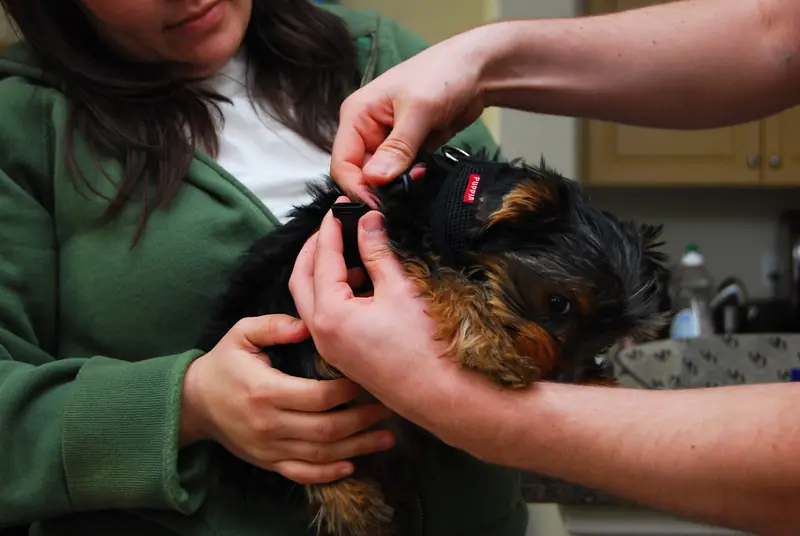
Answer: The chest strap should sit across the breastbone, below the throat and above the front legs, with the ring centered on the chest. You should be able to slide two fingers under every strap. The belly strap should sit a few inches behind the front legs so it does not rub the armpits. Recheck fit after the first walk.
Fitting is where most front clip problems start. A chest strap that sits too low drifts down over the front legs and restricts the stride; one that sits too high presses on the throat, which defeats the purpose. A loose harness slides to one side whenever the dog pulls, so the ring ends up under a leg and the steering effect disappears.
- Loosen everything first. Open all buckles and lengthen the straps before you start.
- Put on the shoulder loop. Slip it over the head or clip it around the neck, depending on the design.
- Close the belly strap. Buckle it behind the front legs; many brands use a different color for this strap.
- Center the ring. Move the chest strap so the ring sits in the middle of the chest.
- Tighten evenly. Adjust each strap until two fingers fit under it.
- Test it. Walk a few steps and pull gently from the front; the harness should stay centered.
Check for rubbing under the front legs after the first few walks, especially on short coated dogs. A padded model can help if your dog's skin is sensitive. PetSafe, for instance, marks the Easy Walk belly strap in a different color so it is easier to put the harness on the right way round. Source: PetSafe Easy Walk Harness.
How Do You Train Loose Leash Walking With a Front Clip Harness?
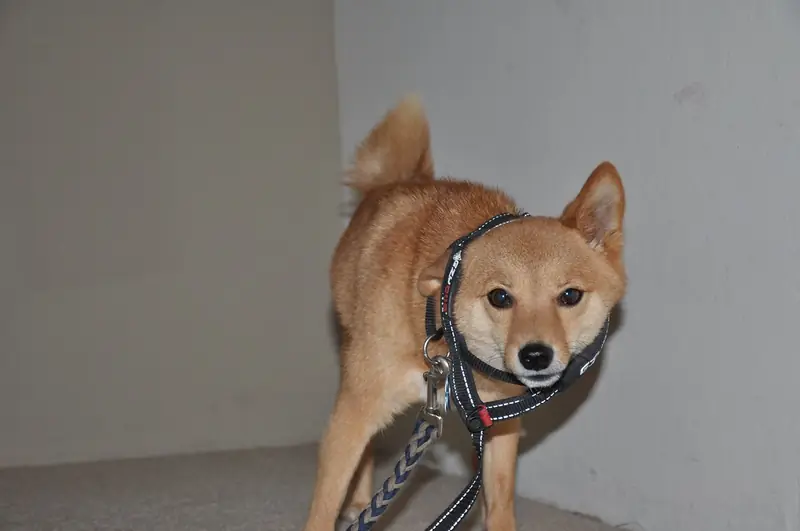
Answer: Use the harness to make pulling less effective, and use rewards to make walking beside you worth it. Carry small treats, reward your dog often when the leash is loose, stop or change direction when it tightens, and keep early sessions short and in quiet places. Over a few weeks, reward less often as the habit builds.
A harness changes the mechanics, but your dog still needs to learn what you want. The American Veterinary Society of Animal Behavior recommends reward based methods for all dog training, so the most effective plan pairs a well fitted front clip with plenty of rewards for a loose leash. Source: AVSAB Position Statement on Humane Dog Training.
- Mark and reward the position you want. Treat at your side, not in front of you, so your dog learns where to walk.
- Be a tree. When the leash goes tight, stop. Move again only when it loosens.
- Turn around. If your dog surges, change direction cheerfully and reward when it catches up.
- Start easy. Practice at home and in quiet streets before busy parks.
- Never jerk the leash. Sharp pulls on a front clip twist the dog's body and can hurt.
Use a standard leash of about four to six feet. Our dog leash and collar guide covers lengths and materials, and for night walks the reflective dog collar guide covers visibility.
What Are the Most Common Front Clip Harness Mistakes?
Answer: The most common mistakes are a harness that is too loose, a chest strap sitting too low, using a retractable leash, letting the leash hang between the front legs, leaving the harness on all day and expecting the harness alone to fix pulling. Each one either reduces the steering effect or makes the harness uncomfortable for your dog.
A retractable leash is the biggest mismatch. It keeps constant tension on the leash, which tells the dog that pulling is normal and cancels the turning effect of the chest ring. Long lines have a similar problem on walks, although they are useful for recall practice in open spaces.
Leash tangling is the other everyday annoyance. Because the ring is low on the chest, a slack leash can drop between the front legs. Hold the leash at your side, not out in front, and keep it short enough that it cannot reach the ground. If tangling keeps happening, check that the ring is centered and the harness is tight enough.
Finally, take the harness off at home. Straps worn all day can mat the coat and rub the skin, and a harness can catch on furniture or crates. A plain collar with ID tags, such as those in our personalized dog collar guide, is safer for indoor wear.
What Do People Ask Most About Front Clip Dog Harnesses?
Answer: Owners most often ask whether front clip harnesses really stop pulling, whether they are safe for joints, how tight they should be, whether puppies can wear one, whether they work for running, how they compare with head halters and whether the dog can wear one all day. The short answers below cover each of these questions.
Does a front clip harness really stop pulling?
It reduces pulling for many dogs because a pulling dog is turned sideways instead of moving forward, but it works best combined with reward based loose leash training.
Is a front clip harness bad for a dog's shoulders?
A well fitted front clip harness keeps pressure off the throat. If your dog has joint or shoulder problems, ask your vet which design suits it, and never jerk the leash.
How tight should a front clip harness be?
Snug enough that it does not slide to one side, loose enough that you can slide two fingers under every strap. The ring should sit centered on the chest.
Can puppies wear a front clip harness?
Yes, as long as it fits. Puppies grow quickly, so recheck the fit every week or two, and introduce the harness at home with treats before the first walk.
Can I run with my dog in a front clip harness?
Switch to a back clip for running or jogging. The chest ring is designed to slow and turn a dog, which gets in the way at a steady running pace.
Is a front clip harness better than a head halter?
A front clip harness is easier for most dogs to accept. A head halter gives more control of very strong pullers but needs careful, gradual introduction.
Can my dog wear a harness all day?
It is better not to. Take the harness off at home to avoid rubbing and matting, and use a plain collar with ID tags indoors.
Why does the leash get tangled in my dog's legs?
The chest ring sits low, so a slack leash can drop between the front legs. Keep the leash shorter, hold it at your side and check that the ring is centered.
Sources
- PetSafe: Easy Walk Harness
- PetSafe: 3 in 1 Harness
- PetSafe: Easy Walk Comfort No-Pull Dog Harness
- American Veterinary Society of Animal Behavior: Humane Dog Training Position Statement
Better walks start here
Browse leashes, collars and toys that make daily walks more fun.
Shop dog accessories