A flat dog collar is the collar most dogs wear every day: a plain band of nylon, leather or coated webbing that closes with a buckle or a clip and stays the same size no matter what the dog does. It sounds too simple to need a guide, yet most collar problems (a dog backing out on a walk, a rubbed patch of fur, a tag caught on a crate) come down to the wrong material, the wrong closure or a poor fit. This guide covers all three, plus when a martingale or a harness is the better tool.
In This Article
- Quick Answer: What Is a Flat Dog Collar?
- What Exactly Is a Flat Dog Collar?
- Which Material Is Best: Nylon, Leather or BioThane?
- Buckle or Quick-Release: Which Closure Should You Pick?
- How Do You Measure and Fit a Flat Collar?
- What Size and Width Flat Collar Does Your Dog Need?
- When Should You Use a Flat Collar, a Martingale or a Harness?
- How Should ID Tags Go on a Flat Collar?
- When Is a Flat Collar Not Safe to Wear?
- How Do You Clean a Flat Collar and Know When to Replace It?
- What Do People Ask Most About Flat Dog Collars?
- Sources
Quick Answer: What Is a Flat Dog Collar?
A flat dog collar is a fixed size band of nylon, leather or BioThane that closes with a pin buckle or a quick-release clip and does not tighten under pull. It carries ID tags and a leash ring. Fit it so two fingers slide underneath, and switch to a martingale or harness if your dog slips out or pulls.
Updated October 16, 2026- What it is: a single strap with a closure, a keeper loop and a D-ring for the leash and tags.
- Materials: nylon is light and cheap, leather is soft and long lasting, BioThane is waterproof and wipes clean.
- Closures: a pin buckle is the most secure; a quick-release clip is faster to take on and off.
- Fit: snug enough not to slip over the head, loose enough for two fingers on most dogs.
- Use something else when: your dog backs out of collars, pulls hard, is a toy or flat faced breed, or has an airway problem.
What Exactly Is a Flat Dog Collar?
Answer: A flat dog collar is a strap of webbing or leather that wraps the neck at one fixed size once fastened. Unlike a martingale, choke chain or prong collar, it cannot tighten when the leash goes taut. The AKC describes flat and buckle collars as the most widely available type, because they are convenient and hold a name tag.
The American Kennel Club calls flat and buckle collars the standard dog collar and notes they are the most widely available kind, for good reason: they are simple to use and give you a place to hang your dog's name tag. Source: AKC, Choosing the Right Collar for Your Dog.
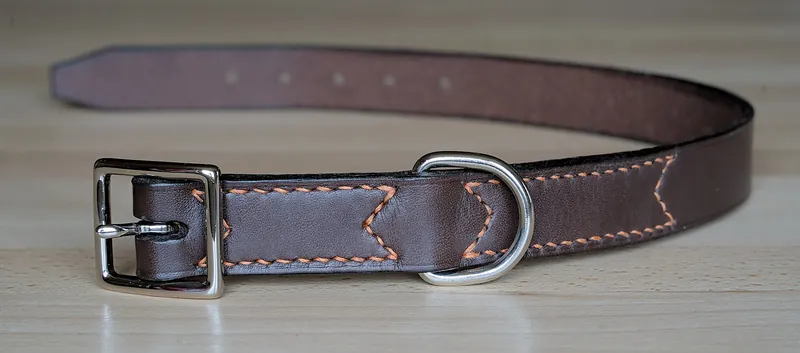
Every flat collar has the same basic parts, whatever it costs:
- The strap: nylon webbing, leather, or coated webbing such as BioThane. Its width is the main thing that changes from a toy breed collar to a giant breed collar.
- The closure: a metal pin buckle that goes through punched holes, or a side release clip with a sliding adjuster.
- The keeper: a small loop that holds down the loose tail of the strap so it does not flap or snag.
- The D-ring: the metal ring where you clip the leash and hang ID tags. Some collars have a separate small ring just for tags.
"Flat" simply separates this design from rolled collars, which are stitched into a round tube, and from limited slip designs such as the martingale. A flat collar spreads contact over a wider area than a rolled one, which is why it is the default for most dogs. Rolled leather collars are worth a look for long coated dogs whose fur mats under a flat band, a point our leather dog collars guide covers in more depth.
If you want a broader tour of every collar style, from GPS to cooling collars, start with our dog collar guide. If you already know you want a flat collar and just need to pick a good one, our best dog collar roundup compares specific options. This article stays focused on how a flat collar works and how to use one well.
Which Material Is Best: Nylon, Leather or BioThane?
Answer: Nylon suits growing puppies and budget buyers because it is light, cheap and easy to replace. Leather suits adult dogs and softens with age, but needs drying and care. BioThane, a coated polyester webbing, suits swimmers and muddy dogs because it does not soak up water or smell. Pick for your dog's lifestyle, not looks.
The AKC points out that nylon is a sensible choice for a puppy because it is inexpensive, and a costly material may not be worth it for a collar the puppy will outgrow within weeks. For mature dogs it describes leather as a more durable material that copes with water, heat and scuffs from play. Source: AKC, Choosing the Right Collar for Your Dog.
BioThane is a brand of coated webbing made in the United States. Collar maker LupinePet describes it as a woven polyester core coated in a soft, flexible PVC, and uses it for its waterproof collar line. Because the coating does not absorb water, a BioThane collar dries with a quick wipe instead of staying damp against the skin. Source: LupinePet, Splash Waterproof Dog Collar.
Hardware matters as much as the strap. Look for a welded D-ring rather than a ring that is simply bent closed, because a bent ring can open under a sudden lunge. Stainless steel and solid brass resist rust better than plated hardware, which is worth paying for if your dog swims or lives near the sea. For dogs that are always wet, our waterproof dog collar guide goes further into coated materials.
If you walk at dawn or after dark, a flat collar with reflective stitching or a reflective strip is an easy safety upgrade that does not change the fit at all. Our reflective dog collar guide explains what to look for.
Buckle or Quick-Release: Which Closure Should You Pick?
Answer: A metal pin buckle works like a belt and is the most secure closure, but it takes longer to fasten and sits at fixed holes. A quick-release side clip snaps shut in a second and adjusts with a slider, which suits puppies and frequent removal. For strong dogs, choose a metal or heavy duty plastic clip and check it often.
The two closures solve different problems. Here is how they differ in daily use:
- Pin buckle: the tongue passes through a punched hole, so the size cannot drift. It suits leather collars and strong dogs. The trade off is that you only get the sizes the holes allow, and fastening it on a wriggly dog takes a moment.
- Plastic quick-release (side release) clip: squeeze the sides and it opens. A slider lets you set any size within the range. It is the usual closure on nylon collars and is handy for puppies whose necks change size every few weeks.
- Metal quick-release clip: the same idea in aluminum or steel, with a lever or locking latch. It combines speed with more strength and is common on heavier working style collars.
- Breakaway clip: a special clip designed to pop open under strong force so a snagged dog can get free. It is a safety feature for unsupervised wear, covered in the safety section below.
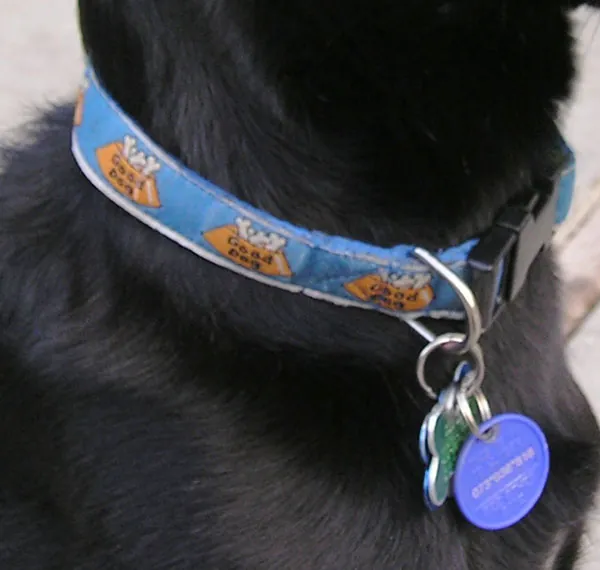
Whatever the closure, test it before trusting it. Give the fastened collar a firm tug away from the clip. A plastic clip that clicks loosely, has a cracked prong or opens under a hand tug should be replaced, not taped. Sliders on nylon collars can creep looser over weeks of wear, so recheck the fit after the first few walks. Our adjustable dog collar guide covers slider styles in more detail.
How Do You Measure and Fit a Flat Collar?
Answer: Measure around the middle of the neck with a soft tape, then fasten the collar and slide two fingers flat under it. If two fingers will not fit, it is too tight; if several fit and the collar slips toward the ears, it is too loose. Small dogs may need closer to one finger of room.
The AKC suggests wrapping a soft measuring tape around the neck, tightening it if it slips over the head, and relying on your dog's real measurements rather than size labels. Once the collar is on, try to slide two fingers underneath: if you cannot, it is too tight, and if more fingers fit, it is too loose. Source: AKC, Choosing the Right Collar for Your Dog.
Follow these steps the first time you fit a flat collar:
- Wrap a soft tailor's tape around the middle of your dog's neck, where a collar naturally sits, not right behind the ears.
- Read the measurement while the tape is snug but flat, without squeezing the fur.
- Choose a collar whose adjustment range puts your dog's measurement near the middle, so there is room to tighten or loosen it.
- Fasten the collar and slide two fingers flat between the strap and the neck. Adjust until they fit without force.
- Gently try to pull the collar forward over the ears. If it slides off, tighten it a notch or switch to a martingale.
- Trim or tuck any long tail of strap into the keeper so it cannot catch.
- Recheck the fit after a bath, a haircut, or a few weeks of puppy growth.
Size matters for the finger check. The AKC's harness and collar comparison suggests about one finger of space for small dogs and two for large breeds, because two fingers are proportionally a lot of slack on a tiny neck. Source: AKC, Dog Harness vs. Collar.
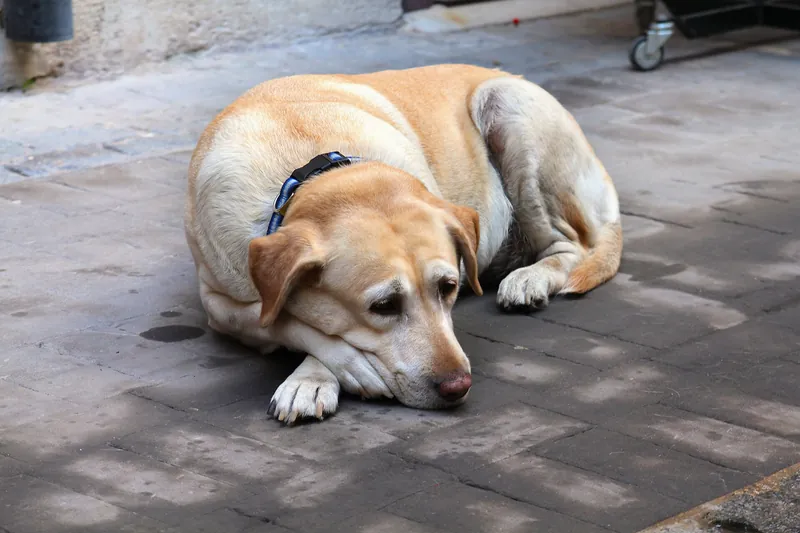
A collar that is too tight does real harm. A veterinary advisor quoted by PetMD explains that collars that are too tight can cause hair loss, and the skin under them can become more prone to infection. Watch for broken hair, redness or a damp, smelly band of skin under the collar. Source: PetMD, 5 Ways Collars Can Harm Your Dog.
What Size and Width Flat Collar Does Your Dog Need?
Answer: Choose by neck measurement first and width second. Narrow collars suit toy and small dogs because they are light and do not rub, medium widths suit most mid sized dogs, and wider straps suit large, strong dogs because they spread pressure. Sizes differ by brand, so always compare your measurement with the maker's own chart.
Size labels such as "small" or "medium" are not standardized, so the same dog can be a small in one brand and a medium in another. The table below shows one brand's real ranges as an example of how widths and neck sizes line up. LupinePet lists these ranges for its Basic Solids nylon collar and recommends choosing the smallest range that fits your pet. Source: LupinePet, Basic Solids Dog Collar.
Notice how the ranges overlap. A dog with a neck in the overlap zone could wear either width, and that is where the dog's build decides it. A slim, short coated dog is often more comfortable in the narrower strap, while a broad chested, strong dog does better in the wider one. Because LupinePet advises the smallest range that fits, a dog near the top of one range may still be better off in the next size up so the slider is not at its very end.
For puppies, buy a cheap adjustable nylon collar and expect to replace it as they grow, rather than paying for leather they will outgrow. Our new puppy essentials checklist covers the rest of the starter gear.
When Should You Use a Flat Collar, a Martingale or a Harness?
Answer: Use a flat collar for ID and walks with a calm dog that does not pull. Choose a martingale if your dog's head is narrow enough to back out of a flat collar. Choose a harness for strong pullers, small and toy breeds, and any dog with tracheal collapse or neck problems, and keep a flat collar on for tags.
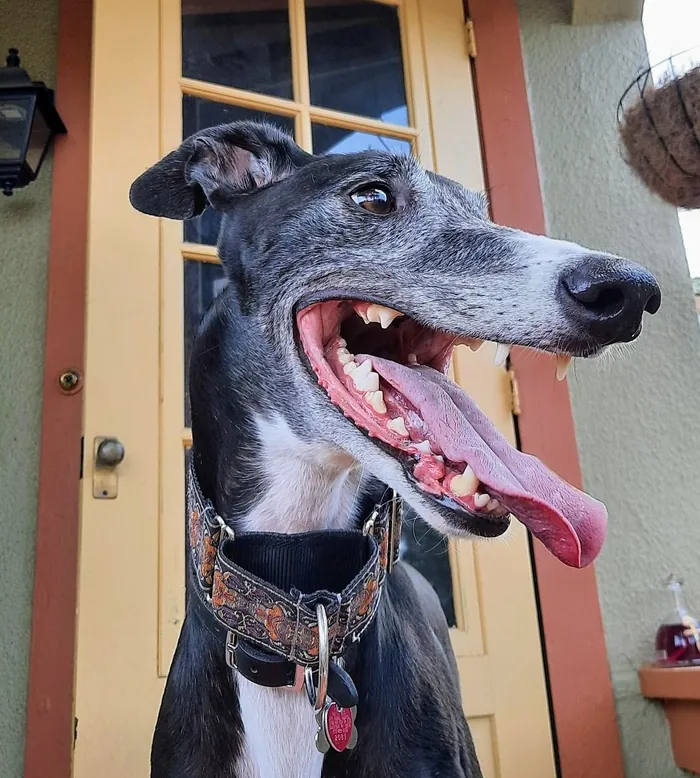
The AKC notes that martingale collars are great for dogs whose necks are about the same size as their heads, and that sighthounds such as Greyhounds and Whippets can slip out of ordinary collars because their heads are often smaller than their necks. Source: AKC, Dog Harness vs. Collar.
Harnesses move the pull from the throat to the chest. VCA Animal Hospitals lists toy breeds such as Chihuahuas, Pomeranians, Shih Tzus, Lhasa Apsos, toy Poodles and Yorkshire Terriers among those often affected by tracheal collapse, and advises using a harness rather than a collar for affected dogs. Source: VCA Animal Hospitals, Tracheal Collapse in Dogs.
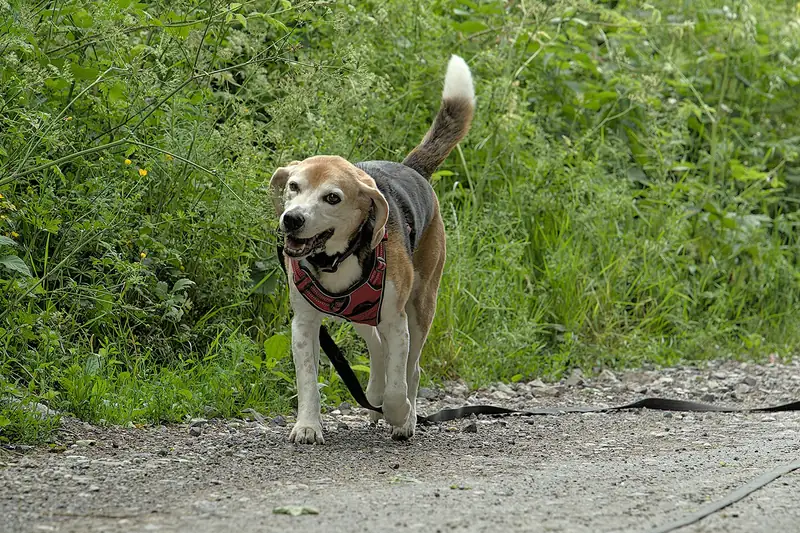
For many dogs the best answer is both: a flat collar that carries tags all day, and a harness for walks. If your dog pulls, a front clip design is usually the first thing trainers suggest; see our guides to the best dog harness, the no-pull dog harness and the front clip dog harness. Livehappypet also sells a no-pull dog harness and leash set for larger dogs. If you are considering a limited slip collar, our martingale collar guide explains how to size the loop safely.
Gear does not replace teaching. A flat collar on a dog that lunges still puts sudden force on the neck. PetMD quotes a veterinary advisor who warns that jerking a dog by the collar can damage the neck and suggests a chest harness as a safer option. Reward based training changes the pulling itself; our positive reinforcement dog training guide is a good place to begin. Source: PetMD, 5 Ways Collars Can Harm Your Dog.
How Should ID Tags Go on a Flat Collar?
Answer: Hang a tag with your phone number from the collar's D-ring or a separate tag ring, or choose a collar with your number embroidered or engraved on it. Keep a microchip registered as a backup, because collars can come off. Fewer, smaller tags are quieter and less likely to snag on crates or furniture.
Vetstreet advises that even a microchipped pet also needs a regular ID tag with your contact information on its collar, and reminds owners that a microchip is only as good as the information attached to it, so update the registry when you move or change numbers. Source: Vetstreet, What You Should Know About Pet IDs and Microchips.
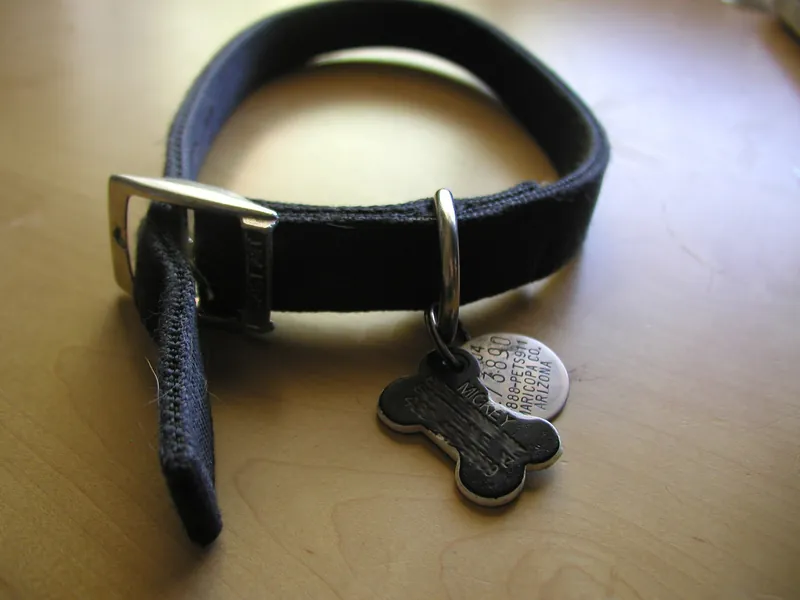
A few practical tips for tags on a flat collar:
- Lead with a phone number. A mobile number is the fastest way for a finder to reach you. Add a backup number if there is room.
- Use a split ring or a tag clip rather than a thin S hook, which can open and drop the tag.
- Consider a slide on tag or a personalized collar. Engraved plates and embroidered collars sit flat, so nothing dangles to catch on crate wire. Our personalized dog collar guide covers both.
- Check local licensing rules. Many areas require a license or rabies tag, which can share the D-ring with the ID tag.
Our dog tags guide goes deeper into tag materials, shapes and what to engrave. If you want location tracking as well as ID, a tracker that clips to a flat collar is an option; see our GPS dog collar guide.
When Is a Flat Collar Not Safe to Wear?
Answer: Take a flat collar off, or swap to a breakaway style, whenever your dog is crated, playing rough with other dogs, or left unsupervised around things a collar or tag can catch on. Never use a flat collar alone to tie a dog out unattended. When in doubt, the AKC's advice is simple: remove the collar.
An AKC article on collar dangers describes a puppy that died when another dog's jaw caught in its buckle collar during play, and lists time in a crate with a collar on as a risk factor. Its bottom line is: if in doubt, remove the collar. Source: AKC, Could Your Dog's Collar Endanger His Life?.
Tie-outs deserve special care. A veterinary advisor quoted by PetMD warns that even a well fitting collar can be dangerous if used to tie up a dog in the backyard, and another vet notes that hanging tags can catch on crates and other objects. Source: PetMD, 5 Ways Collars Can Harm Your Dog.
Use this checklist to keep everyday collar wear safe:
- Crate time: take the collar off, or at least remove dangling tags, before closing the crate door.
- Rough play: remove collars when dogs wrestle, because a jaw or paw can twist into another dog's collar.
- Tie-outs: clip the line to a well fitted harness, stay within sight, and keep the area clear of fences, decks and posts the line could wrap around.
- Unsupervised time: consider a breakaway collar for ID only, and never clip a leash to its breakaway point unless the design allows the leash through both rings.
- Grooming and scratching: a loose collar can catch a paw or jaw, so recheck the fit if your dog scratches at its neck.
Livehappypet's own dog tie-out stake listing gives the same advice: use it only while you are nearby and never leave a tied-out dog unattended. For leash choices that fit flat collars well, browse our dog leash guide.
Aversive collars are a separate category and are not flat collars at all. If you are weighing a choke chain, prong or electronic collar, read our dog training collars guide first, and talk with a qualified trainer or your veterinarian.
How Do You Clean a Flat Collar and Know When to Replace It?
Answer: Wash nylon in warm soapy water or a laundry bag and let it dry fully before putting it back on. Wipe BioThane with a damp cloth. Clean leather gently and dry it slowly away from heat. Replace any collar with fraying edges, cracked leather, a weak clip, rust, or holes stretched out of shape.
The AKC advises against using furniture or shoe leather cleaners on a leather collar and suggests a gentle baking soda and vinegar solution applied with a toothbrush instead. Source: AKC, Choosing the Right Collar for Your Dog.
A simple monthly routine keeps a flat collar safe and fresh:
- Take the collar off and look at the skin and fur underneath for redness, broken hair or smell.
- Clean the collar for its material: wash nylon, wipe BioThane, gently clean and dry leather.
- Dry it completely, because a damp collar against the skin invites irritation.
- Inspect the stitching, the D-ring weld, the buckle tongue or clip prongs, and the punched holes.
- Refit it with the two-finger check before your dog wears it again.
Keeping a second collar on hand makes this painless, since your dog never has to go without ID while one dries. Replace any collar at the first sign of a weak point; a collar is cheap compared with a lost dog.
What Do People Ask Most About Flat Dog Collars?
Answer: Owners most often ask what counts as a flat collar, whether a buckle collar is the same thing, how tight it should be, whether a harness is better for walks, why dogs slip out, and whether collars are safe in crates or on tie-outs. The short answers below draw on AKC, VCA, PetMD and Vetstreet guidance.
What is a flat dog collar?
A flat dog collar is a single band of webbing or leather that closes with a pin buckle or a plastic quick-release clip. It does not tighten when the dog pulls. It holds ID tags and gives you a place to clip a leash.
Is a buckle collar the same as a flat collar?
Mostly yes. A buckle collar is a flat collar that closes with a metal pin buckle, like a belt. A quick-release collar is also a flat collar, but it closes with a plastic or metal side release clip instead of a pin.
How tight should a flat collar be?
The AKC suggests sliding two fingers under the collar. If you cannot, it is too tight. If more fingers fit easily, it is too loose. Small dogs may need closer to a single finger of room, so check that the collar cannot slide over the head.
Is a flat collar or a harness better for walks?
It depends on the dog. A flat collar works for a calm dog that walks on a loose leash. Dogs that pull hard, toy breeds, flat faced breeds and dogs with airway or neck problems are usually better off clipped to a harness for walks.
Can a dog slip out of a flat collar?
Yes. Dogs whose heads are narrower than or about as wide as their necks, such as Greyhounds and Whippets, can back out of a flat collar. A martingale collar, which tightens a limited amount, is the usual choice for those dogs.
Should my dog wear a flat collar in the crate?
Many experts advise against it. Collars and dangling tags can catch on crate wire. Take the collar off for crate time, or use a breakaway style collar designed to release under force.
Can I use a flat collar on a tie-out?
Only with great care, and never unattended. A veterinary advisor quoted by PetMD warns that even a well fitting collar can be dangerous on a tie-out. A harness is the safer attachment point, and you should stay close by.
What should I put on my dog's ID tag?
Put your phone number first, ideally a mobile number, then a backup number and the dog's name if you like. Keep the microchip registration current too, because a collar can come off and a tag can be lost.
Sources
- American Kennel Club: Choosing the Right Collar for Your Dog
- American Kennel Club: Dog Harness vs. Collar
- American Kennel Club: Could Your Dog's Collar Endanger His Life?
- VCA Animal Hospitals: Tracheal Collapse in Dogs
- PetMD: 5 Ways Collars Can Harm Your Dog
- Vetstreet: What You Should Know About Pet IDs and Microchips
- LupinePet: Basic Solids Dog Collar
- LupinePet: Splash Waterproof Dog Collar (BioThane)
Everyday gear for happy walks
Browse our harnesses, leashes, toys and accessories for dogs of every size.
Shop dog accessories