The wishbone chew is one of the genuinely good ideas in the dog aisle. Two arms meeting at a curve give a dog something it can pin under its paws and work on from the end, which is how dogs prefer to chew and which a straight stick shape never allows. The design solves a real problem, it keeps determined chewers occupied for a long time, and it is deservedly popular.
It also raises a question that the packaging almost never addresses, which is how hard the thing is. Most wishbone chews are moulded from rigid nylon, and rigid is the property veterinary dentists spend their working lives warning about. This guide takes the shape seriously, takes the hardness seriously, and gives you the test that veterinary dentists actually use, drawn from the Cornell Riney Canine Health Center and VCA Animal Hospitals.
What a Wishbone Chew Is, and Why the Shape Sells
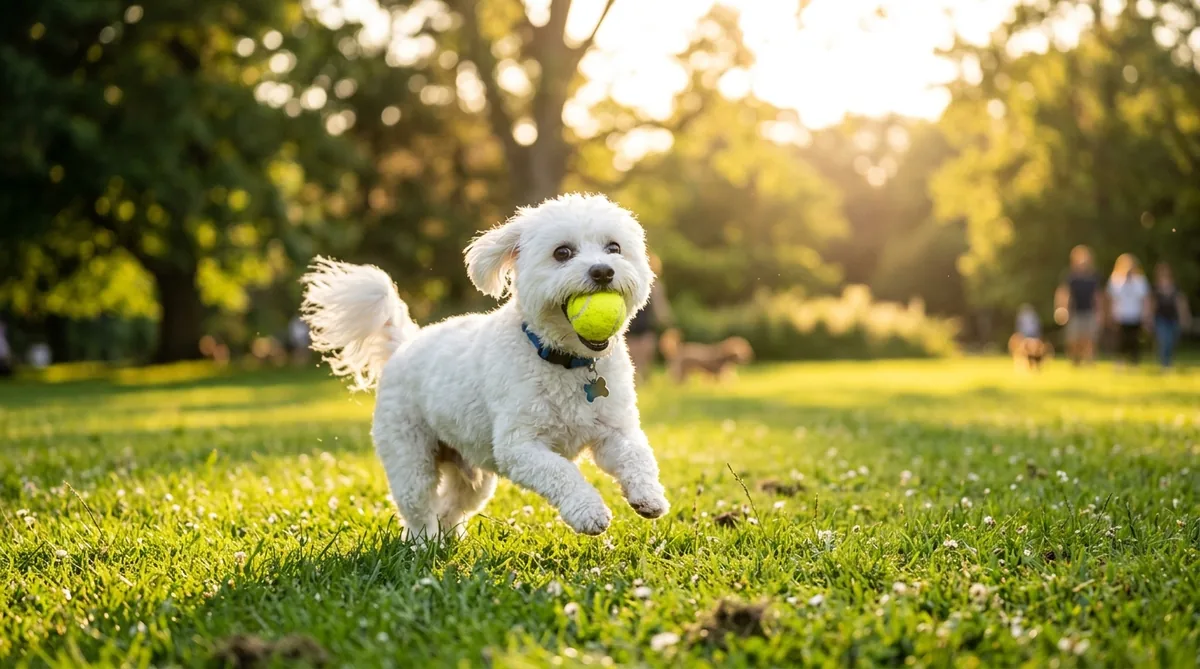
A wishbone chew is a Y shaped block, usually moulded nylon, often flavour infused through the material rather than coated on the surface. The two arms and the curved junction are the whole point of the design: a dog can trap one arm under a forepaw, brace the junction against the floor, and gnaw along the other arm at an angle that suits its back teeth. Watch a dog with a wishbone for a minute and the ergonomics become obvious.
Compare that with a straight bar or a ball. A straight chew skitters away under pressure, which means the dog spends half the session chasing it, and a ball has no purchase point at all for the carnassial teeth at the back of the mouth. The wishbone shape is the reason this category outlasts the novelty toys beside it on the shelf, and it is a legitimate reason to prefer one over a plain nylon bone of the same material.
Flavour through the material rather than on it is the second design decision worth understanding. A surface coating is gone in an afternoon and the dog loses interest; scent dispersed through the block keeps releasing as the surface is abraded, which is why a wishbone can hold a dog's attention for weeks. That is also why a wishbone gets worn down rather than eaten in chunks, at least by a dog with an ordinary bite.
So the shape is good, the flavour engineering is good, and none of that settles the safety question. The material is the safety question, and a chew being well designed in every other respect does not make rigid nylon any softer. The next section is about what that rigidity does to teeth, because it is the part that the marketing copy around this category consistently skips.
The Hardness Problem, and the Test Vets Actually Use
Veterinary dentists have a simple field test and it takes three seconds. Cornell's Riney Canine Health Center puts it plainly: most veterinary dentists go by the thumbnail test for chewing items, and suggest that you should be able to make a dent in the item with your fingernail. VCA gives the same rule and adds a second part for long objects, which is that a long toy should have enough give to bend a little between your two hands.
If you want even more options, check out our guide to kong extreme dog toy.
Apply both tests to a moulded nylon wishbone and it fails them. A fingernail leaves nothing on rigid nylon, and the arms do not flex between your hands. That is not a manufacturing defect, it is the design intent, because the same rigidity is what makes the chew last for weeks instead of an afternoon. Longevity and tooth safety are pulling in opposite directions in this product category, and buyers are rarely told that trade off exists.
It is worth being precise about what the veterinary sources are and are not saying. Cornell names antlers, hooves and bones as things to avoid because they may break a tooth or splinter, adds ice cubes to the list, and notes that even chew toys can be a cause of fractures. VCA's list of items too hard to be safe is bones, cow hooves, pig ears, hard rawhides and large ice cubes. Neither source names a wishbone chew specifically. What they give you is a property test, and rigid nylon fails the property test.
None of which means every dog with a nylon wishbone will break a tooth. Plenty of dogs chew them for years without incident, particularly gentle chewers and dogs who lick and gnaw rather than crunch. It does mean that if you are weighing one up, you are choosing to override a rule that veterinary dentists apply uniformly, and you should do that knowingly, with a closer eye on the dog's mouth than you would otherwise keep.
Which Teeth Break, and How You Would Know
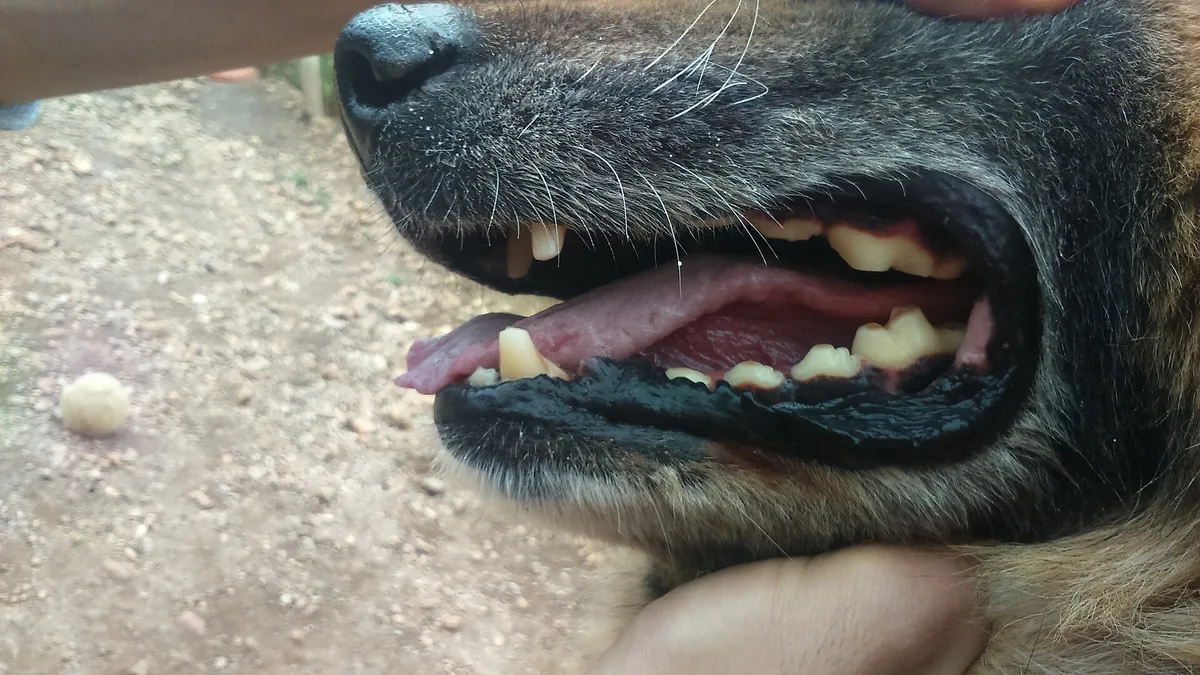
VCA is specific about the anatomy. Fractured teeth in dogs result from external trauma or from chewing hard objects such as antlers, bones or other hard, non bending chew toys, and the most frequently broken teeth are the canine teeth, the long fangs at the front, and the large pointed cheek teeth at the back of the upper jaw. Those back teeth are the ones a dog uses to crush, which is exactly the action a wishbone arm invites.
The thing that makes this worth taking seriously is how quietly it happens. Cornell's Dr Nadine Fiani notes that very often there is no specific history of the fracture at all, and that it turns up incidentally during an oral examination. Dogs do not yelp and stop using the tooth. They adjust, chew on the other side, and carry on, which is why a broken tooth can go unnoticed for months in a household that is paying attention in every other respect.
The signs to watch for come from the same Cornell source, and they are about pain rather than about visible damage. A fracture that exposes the pulp, the sensitive inner tissue with the nerve and blood supply, will hurt. The dog may react to hot and cold, may avoid drinking cool water, may stop taking hard biscuits, may leave chew toys alone, and may approach the food bowl and then walk away without eating. A long standing broken tooth can go on to abscess, with swelling and pain.
The practical routine is brief. If you brush your dog's teeth, which you should, you are already looking in the mouth several times a week and you will notice a chip. If you do not, make a point of lifting the lip and checking the big upper cheek teeth and the canines once a week, especially on any dog with a rigid chew in rotation. Cornell's advice on finding damage is unambiguous: make a veterinary appointment, and the sooner it is addressed the easier the process.
Swallowed Fragments and the Gut
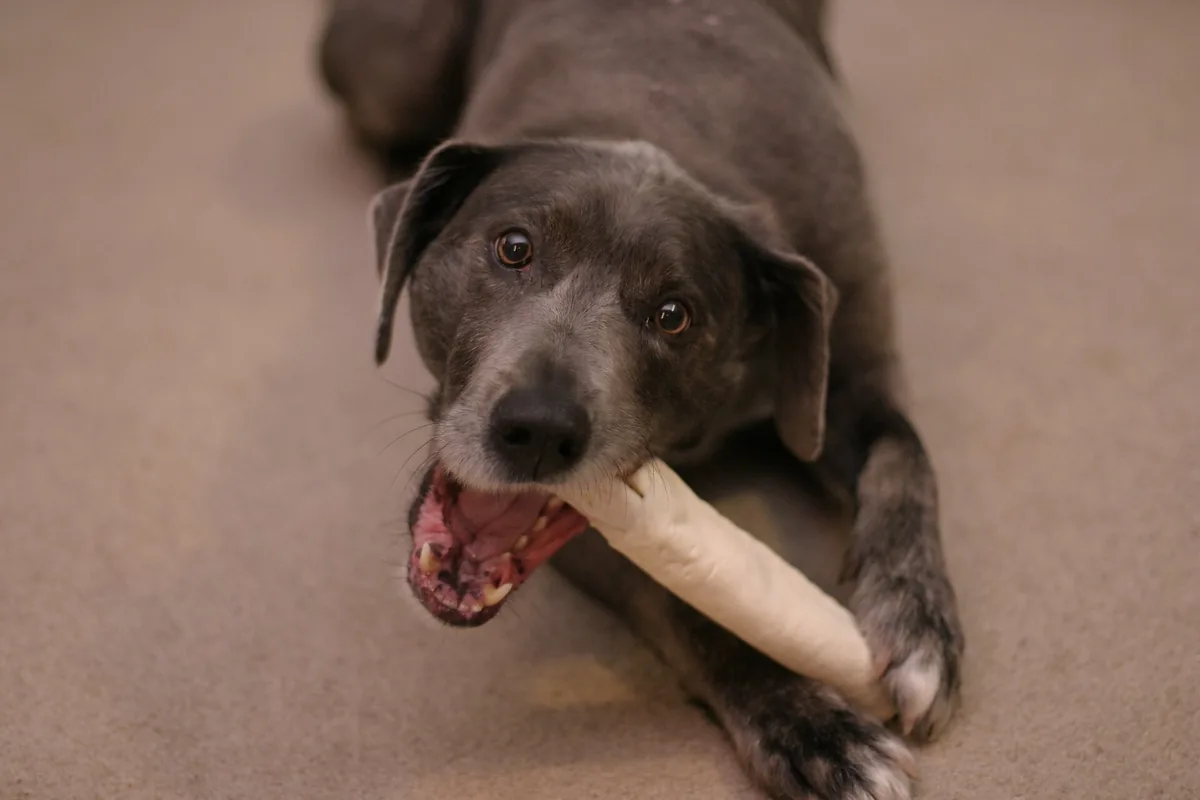
Teeth are the first hazard of a hard chew and the gut is the second. VCA's chew toy guidance states the problem directly: the wrong chew toy can crack teeth, obstruct the gut, or pose a choking hazard, and swallowed chunks of toy can lodge in the stomach and require surgery for removal. A nylon wishbone that has been worked down to a short stub is precisely the size and shape that gets swallowed whole.
For more on pet-safe products, read our safe dog toys recommendations.
Know your own dog's demolition style, because it decides the risk. VCA makes this a rule of its own: every dog has a different drive to destroy its toys, some will tear even rubber apart within minutes, and you should choose toys you know can withstand your dog's bite force. A dog that shears pieces off a nylon chew rather than abrading it is telling you that this material is the wrong one for that animal, whatever the packaging claims about being indestructible.
Rawhide belongs in this conversation because owners often use it in the same rotation. Cornell's position is that while some rawhides are safe for dogs, they always require supervision, and VCA lists hard rawhide among items that are too hard. A rawhide that has been chewed into a soft, slippery mass is a swallowing hazard in a different way from a rigid nylon shard, and neither is a chew to leave with a dog in another room.
If your dog does swallow a piece, do not wait to see what happens. The signs of a gastrointestinal obstruction are non specific enough that your account is the most useful thing the practice has: say what material it was, roughly how much is missing, and when. Vomiting, going off food, abdominal pain and lethargy in a dog that has a hard chew in the house is an urgent appointment, not a watch and wait.
Sizing, Supervision and How Long a Session Should Be
Size is the one specification buyers regularly get wrong in both directions. VCA's rule is to go big: a toy should never be small enough to fit entirely inside the dog's mouth, because that is when it becomes a choking danger. Cornell adds the counterweight, which is that larger chews are harder and may not be the right choice for a small dog. The target is a wishbone the dog cannot engulf but can still hold comfortably under a paw.
Supervision is not a formality with this category. A rigid chew with a determined dog is a situation that changes over the course of an hour: the arms get shorter, the surface gets sharper, and the object gets more swallowable rather than less. Give the chew during a period when you are in the room and take it back when you leave, the same way you would with a rawhide.
Keep sessions short and end them on purpose. Twenty to thirty minutes is plenty for a dog that chews hard, and a session that ends while the dog is still interested makes the chew more valuable next time rather than less. The dogs that get into trouble with hard chews are almost always the ones left alone with one all afternoon, working at the same spot on the same tooth for hours.
Rotation is the underrated part of the routine. A dog that has a rigid chew on Monday, a rubber food toy on Tuesday and a snuffle mat on Wednesday spreads the load across different behaviours and different parts of the mouth, and gets more enrichment out of all three. The site's guide to rotating dog toys covers the mechanics of doing that without buying more things.
Wear, Abrasion and When a Chew Is Finished
Two different kinds of wear matter here and only one of them is on the toy. The obvious one is the chew: a wishbone that has lost an arm, developed a sharp edge, or been reduced to something that fits in the dog's mouth has finished its working life and goes in the bin. Thin flakes lifting from the surface are the point at which it stops being a chew and starts being a source of fragments.
For related picks, take a look at our dog dental chews roundup.
The less obvious wear is on the dog. Abrasion is the gradual flattening of the chewing surfaces of the teeth, and unlike a fracture it happens so slowly that nobody notices until the crowns are visibly shortened. It is the cumulative price of years of hard chewing, and it is the reason a dental examination at each annual check matters more for a household that keeps rigid chews in the toy box than for one that does not.
Abrasion and fracture are also different in what they do. A fracture can expose the pulp immediately and cause acute pain. Abrasion usually does not, because the tooth lays down protective dentine as it wears, but it can advance far enough to reach the pulp cavity, and a worn tooth has less structure left to resist the next hard bite. Ask your veterinarian to look specifically at the cheek teeth if your dog is a habitual hard chewer.
The practical rule is to inspect both the chew and the mouth on the same schedule, which for a habitual chewer means weekly. Run a thumb over the chew for sharp edges, look at the length, then lift the lip and look at the big upper cheek teeth. The whole routine takes under a minute and it catches both failure modes long before either becomes a surgical problem.
What Actually Passes the Fingernail Rule
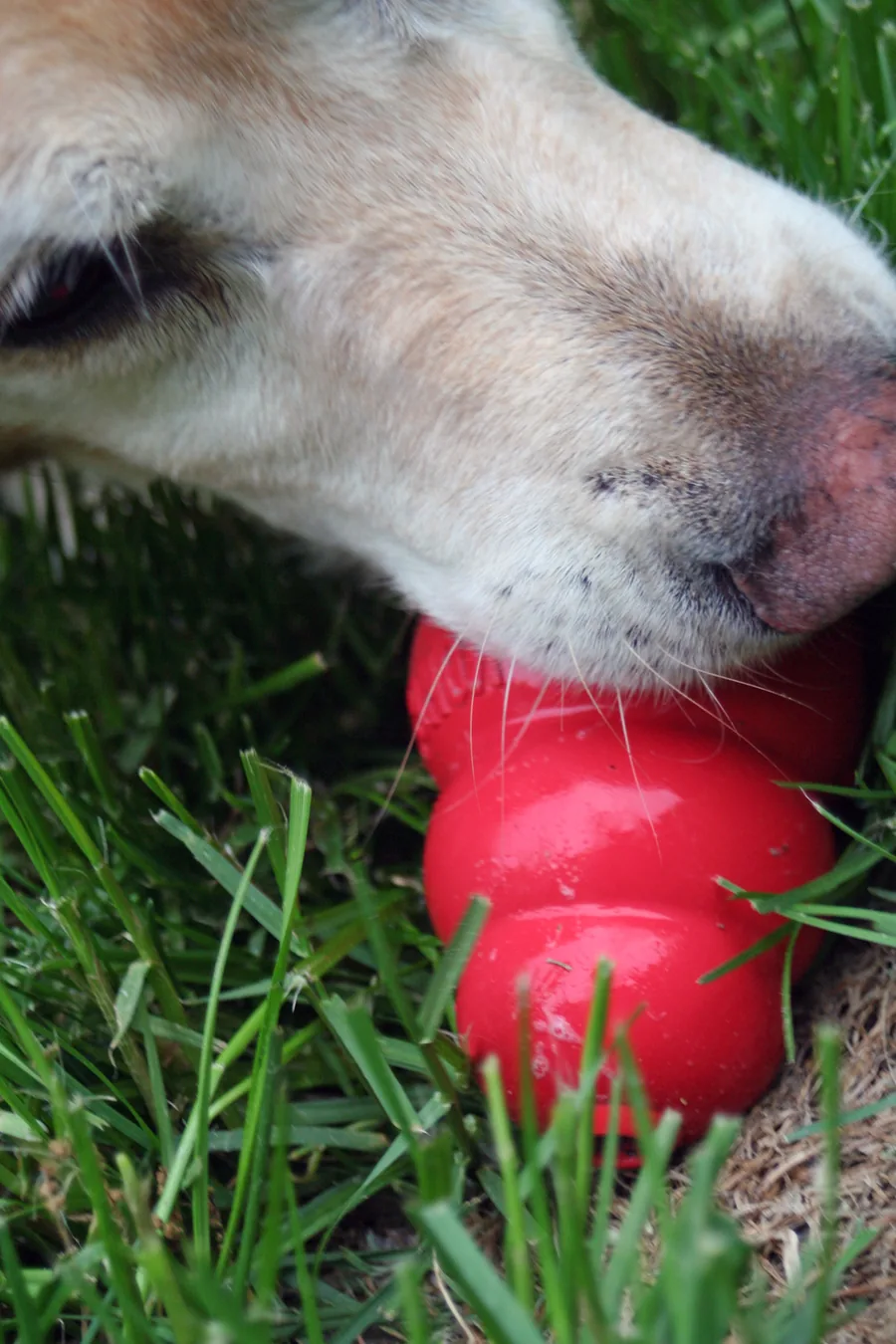
Flexible rubber is the category that passes, and it is the one Cornell points to by name, listing rubber toy brands among the good options alongside the observation that some rawhides are acceptable under supervision. A solid rubber chew compresses under the tooth instead of resisting it, which is the whole mechanical difference, and the better ones are hollow so they double as food puzzles. The site's guide to the classic black rubber chew covers how to use one for a strong chewer.
For dogs that need the dental benefit rather than the occupation, Cornell points to the Veterinary Oral Health Council, which publishes a list of chews it has assessed as meeting its standards. That list is the closest thing to an independent shortcut in this market, and it is more useful than any marketing claim about plaque control. The site's overview of dog dental chews covers how those products differ from a durable chew toy.
VCA's remaining rules narrow the field usefully. Choose no frills: nothing with ribbons, eyes or other removable parts that can be swallowed or inhaled. Avoid abrasive surfaces, which wear enamel over time even when the object itself is not hard enough to fracture a tooth. And match the toy to the dog's actual bite force rather than to the label, since a dog that destroys rubber in minutes needs a different solution rather than a tougher version of the same idea.
If the appeal of the wishbone was that it lasts, the honest substitutes are enrichment rather than hardness. A frozen stuffed rubber toy occupies a dog for a long time without asking anything of its teeth, and so do puzzle feeders, lick mats and scatter feeding. Those solve the real problem, which is a dog with time to fill, rather than the proxy problem of finding something indestructible.
Dogs That Should Not Have a Rigid Chew At All
Puppies are the clearest case. A puppy is working through a full change of dentition, the adult teeth arriving underneath are not yet fully mineralised, and sore gums want something that yields rather than something that resists. A rigid nylon chew is the wrong object for that mouth in every respect, and the site's guide to teething chew toys for puppies covers what to use instead.
Senior dogs are the second group, for the opposite reason. An older dog has already spent a decade wearing its teeth down, may have existing fractures nobody has found, and often has some degree of periodontal disease loosening the attachment. Handing that mouth a rigid chew is asking a weakened structure to do the hardest job it has ever done. Softer, food based enrichment from the senior dog toy range is the better answer.
Then there are the dogs whose style rules them out regardless of age. A dog that cracks rather than gnaws, a dog that has already broken a tooth on anything, a dog that swallows what it breaks off, and any dog recovering from dental work all need the rigid category taken away rather than managed. If you have a demolition specialist, the site's guide to dog toys for aggressive chewers is a better starting point than a harder chew.
For everyone else, the reasonable position is neither a ban nor a shrug. If you keep a wishbone in the rotation, buy it in the right size, use it in supervised sessions of half an hour, retire it early, and look in the dog's mouth once a week. And if your dog shows any of the pain signs Cornell describes, take the chew out of the rotation and book the appointment. The shape really is a good idea. The material is the part that needs your judgement.
If you want to dig deeper into the research, the ASPCA pet care library publishes practical, expert-reviewed resources for pet owners.
Frequently Asked Questions
Are nylon wishbone chews safe for dogs?
They fail the test veterinary dentists use. Cornell's Riney Canine Health Center reports that most veterinary dentists go by the thumbnail test, meaning you should be able to dent a chewing item with your fingernail, and VCA adds that a long toy should bend a little between your hands. Rigid moulded nylon does neither. Neither source names wishbone chews specifically, but both give a property test that this material does not pass.
Why is the wishbone shape so popular?
Because it matches how dogs actually chew. The Y shape lets a dog trap one arm under a forepaw and brace the junction against the floor, so the chew stays put while the back teeth work along the free arm. A straight bar skitters away and a ball offers no purchase for the cheek teeth. Flavour dispersed through the material rather than coated on the surface is the other reason these hold a dog's interest for weeks.
Which teeth do dogs break on hard chews?
VCA reports that the most frequently broken teeth in dogs are the canine teeth at the front and the large pointed cheek teeth at the back of the upper jaw, and that fractures result from trauma or from chewing hard objects such as antlers, bones or other hard, non bending chew toys. The back teeth are the crushing teeth, which is exactly the action a rigid chew arm invites.
How would I know if my dog has broken a tooth?
Often you would not, which is the problem. Cornell notes that there is frequently no history of the fracture and that it is found incidentally on oral examination. The signs to watch for are about pain: reacting to hot and cold, avoiding cool water, refusing hard biscuits, leaving chew toys alone, or approaching the food bowl and walking away. A long standing fracture can abscess. Lift the lip and check weekly.
What is the thumbnail or fingernail test?
Press your thumbnail into the chew. If it leaves a dent, the item has enough give to be reasonable; if it leaves nothing, the item is harder than a tooth is comfortable resisting. VCA adds a second part for long objects: you should be able to flex them slightly between your two hands. It is the quickest useful safety check available to an owner, and it takes three seconds in a shop.
Can my dog swallow pieces of a wishbone chew?
Yes, and VCA states the consequence plainly: swallowed chunks of toy can lodge in the stomach and require surgery for removal, and the wrong chew toy can crack teeth, obstruct the gut or pose a choking hazard. A nylon wishbone worn down to a short stub is the right size to be swallowed whole. Retire it well before it reaches that point, and supervise every session.
What size wishbone chew should I buy?
Large enough that the dog cannot fit it entirely in its mouth, which is VCA's go big rule against choking, but no larger than that. Cornell adds the counterweight: larger chews are harder, and may not be the right choice for a small dog. The target is a chew the dog cannot engulf and can still hold comfortably under a paw, and it is worth re-checking as a growing dog changes size.
What should I give a strong chewer instead?
Flexible rubber is the category that passes the fingernail rule, and Cornell names rubber toy brands among the good options. A hollow rubber chew stuffed and frozen occupies a determined dog for a long time without loading the teeth. For dental benefit specifically, Cornell points to the Veterinary Oral Health Council's list of accepted chews. Puzzle feeders, lick mats and scatter feeding solve the underlying problem, which is a dog with time to fill.
Browse Dog Toys
Free worldwide shipping on every order. No minimum purchase required.
Browse Dog Toys →