A kitty tower is one of the few purchases that changes how your cat experiences your entire home. Cats are vertical animals. Give them a safe route upward and you give them territory, security, and a front-row seat to everything happening in the house.
This guide focuses on the decisions that actually matter when picking a kitty tower: how to size it for your cat's weight, how to judge stability before you buy, and where to put it so it does not become expensive clutter.
Why Indoor Cats Crave Vertical Territory
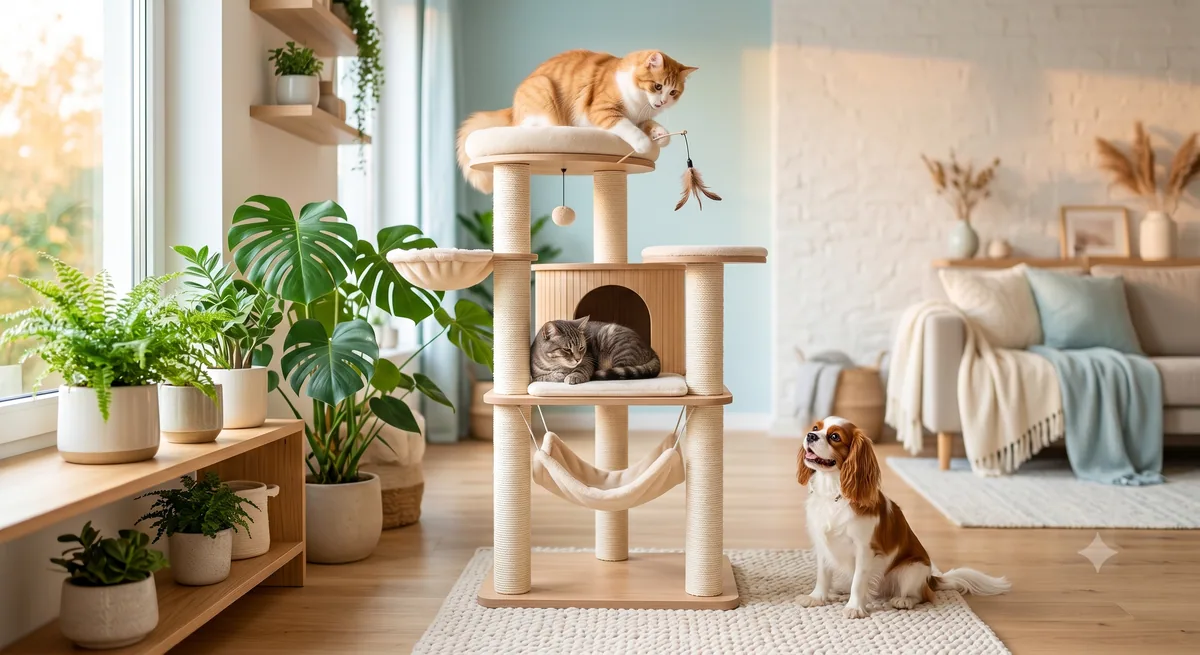
In the wild, cats climb to survey their territory and to stay out of reach of anything bigger than they are. Your living room triggers the same instincts. A kitty tower satisfies that drive without sacrificing your bookshelves, curtain rods, or kitchen cabinets.
Height also defuses tension in multi-cat homes. When two cats can occupy different levels of the same tower, they can share a room without staring contests. Behaviorists often recommend adding vertical space as the first step when cats in the same household start squabbling.
Finally, a tower parked near a window doubles as entertainment. Birds, squirrels, and passing dogs become a rotating show that fills the hours you are away at work.
Sizing a Kitty Tower to Your Cat
Weight rating is the first spec to check and the one shoppers skip most often. A tower that feels rock solid under a 6 pound kitten can sway alarmingly under a 15 pound adult. If you have a large breed like a Maine Coon or Ragdoll, look for reinforced posts and platforms rated for large cats.
Platform size matters just as much as height. Your cat should be able to lie down fully on the top perch with room to spare. Measure your cat from nose to tail base and compare it against the listed platform diameter. Cramped perches get ignored.
For kittens and senior cats, prioritize lower overall height and closely spaced levels. A senior cat with stiff joints will stop using a tower that requires long jumps between platforms. Steps or a ramp extend the useful life of the purchase across your cat's whole lifetime.
The Stability Checklist
Wobble is the number one reason cats abandon towers. One bad sway during a jump and many cats will never trust the structure again. Before buying, run through this checklist:
- Base width: the base should be at least half the height of the tower. Tall and narrow means tippy.
- Base material: thick particle board or plywood beats thin pressed board. Heavier is better at the bottom.
- Post diameter: support posts of 3 inches or more resist flexing when a cat launches off the top.
- Wall straps: the best tall towers include anti-tip straps. Use them, especially with multiple cats.
- Sisal coverage: full sisal wrapping on at least one post satisfies scratching needs and protects the structure. If your cat is a dedicated scratcher, pair the tower with a separate cat scratching post.
Where to Put a Kitty Tower
Placement decides whether the tower gets used daily or gathers dust. The best spot combines three things: a window view, proximity to where the family spends time, and a wall or corner behind it for stability and security.
Avoid the empty spare room. Cats climb partly to be near you while staying above the action, so a tower exiled to an unused room misses the point. Living rooms and home offices are consistently the highest-traffic winners.
If you run a robot vacuum, check the base clearance too. A base that constantly gets bumped teaches your cat the tower is unstable even when it is not.
Kitty Towers for Apartments and Small Rooms
Small homes benefit most from vertical thinking. A slim corner tower with a 16 by 16 inch footprint can deliver five feet of climbing without eating floor space. Look for designs that go tall and narrow but include wall anchoring.
Wall-mounted shelves and window perches also pair beautifully with a compact tower, creating a connected highway around the room. For more ideas on combining pieces, see our guide to cat furniture layouts.
For broader independent guidance on feline environmental needs, the ASPCA cat care center is a solid reference.
Getting a Reluctant Cat to Use the Tower
Never place your cat on the tower by force. Being grabbed and deposited somewhere new is stressful, and the tower absorbs that negative association. Instead, make the tower the most interesting object in the room and let curiosity do the work.
Rub a little catnip or silvervine on the platforms, trail a wand toy up the levels during play, and reward any voluntary contact with a treat. Most cats claim a new tower within a week. If yours ignores it longer, try moving it closer to a window before giving up on the location.
Frequently Asked Questions
How tall should a kitty tower be?
Match height to your cat's age and confidence. Most adult cats do well with a tower between 4 and 5.5 feet, which puts the top perch near human eye level. Kittens and senior cats are better served by 3 to 4 feet with closely spaced platforms, while confident adults in multi-cat homes appreciate 6 feet or more with wall anchoring.
What is the difference between a kitty tower and a cat tree?
The terms overlap heavily, but towers usually describe vertical designs with stacked platforms on posts, while cat trees tend to branch outward with perches, condos, and hammocks spread wider. Towers suit smaller rooms because of their compact footprint. Trees offer more variety per piece but need more floor space.
Will a kitty tower stop my cat from scratching furniture?
It helps a lot if the tower has generous sisal-wrapped posts, because it gives your cat an approved outlet right where they spend time. Cats scratch to mark territory and stretch, so place the tower near the furniture they currently target and reward them for using the posts instead.
How do I stop a kitty tower from wobbling?
First check that all bolts are tight, since posts loosen after a few weeks of use. Then make sure the tower sits on a flat, hard surface rather than thick carpet. If it still sways, anchor it to the wall with the included strap or an inexpensive furniture anti-tip kit. A wobbling tower quickly teaches cats to avoid it.
Do older cats still use kitty towers?
Yes, as long as the design respects their joints. Seniors prefer lower towers with steps or ramps and platform gaps under 12 inches. Soft, padded perches also matter more with age. Many older cats spend most of the day on a low warm perch by a window, so height is far less important than easy access.
Browse Cat Accessories
Free worldwide shipping on every order. No minimum purchase required.
Browse Cat Toys →