Dog enrichment toys are useful when they provide an appropriate outlet for something your dog wants to do. Build a small toolkit around sniffing, foraging, suitable shredding, chewing and moving objects, rather than collecting expensive products. Match materials and placement to your dog and home, then use observations to keep, adapt or retire each item.
Give each enrichment toy a job
Describe the behavior you want to accommodate before choosing equipment. A dog pulling cushions apart may need a carefully managed tearing outlet, while a dog investigating cupboards may enjoy searching. Neither observation proves boredom or identifies a medical or behavioral cause. It simply helps you frame a supervised option.
Dogs Trust's enrichment advice emphasizes individual preferences, health, abilities and safe opportunities for natural behavior. Use those considerations to assign practical jobs:
| Behavior | Possible toolkit item | Selection boundary |
|---|---|---|
| Sniff | A familiar toy to locate. | A reachable search area. |
| Forage | A washable searching surface. | No material swallowing. |
| Shred | Suitable plain paper or cardboard. | Close supervision; reject ingestion. |
| Chew | An appropriately sized, yielding chew toy. | No detached chunks. |
| Manipulate | A suitable object to carry or nudge. | Comfortable movement; secure components. |
The toolkit is a menu, not a daily checklist. An item can serve several purposes, and a dog need not enjoy every category. Start with equipment you already own if it meets the relevant checks.
Separate searching from collecting more equipment
Sniffing means investigating scent; foraging adds a search for something edible. For a non-food option, use a familiar toy your dog already enjoys locating. Dogs Trust specifically suggests hiding a favorite toy for a scent search. You do not need perfume, essential oils or a specialist scent kit.
Inspect the intended search area as part of the equipment choice. Keep objects away from electrical cables, cleaning supplies and gaps that require squeezing under furniture. A reachable familiar item is more useful than an elaborate hiding place that creates unsafe access or encourages climbing.
For foraging, choose material your dog investigates without consuming. Fabric is unsuitable if your dog pulls out and swallows strips. A paper-filled container is unsuitable if paper becomes the snack. Food used still counts toward the normal allowance; dietary restrictions take priority over any toy recipe.
Judge the purchase by access, inspection and cleanup, not the number of pockets. You can retain the searching opportunity while changing the material. There is no obligation to turn ordinary meals into projects.
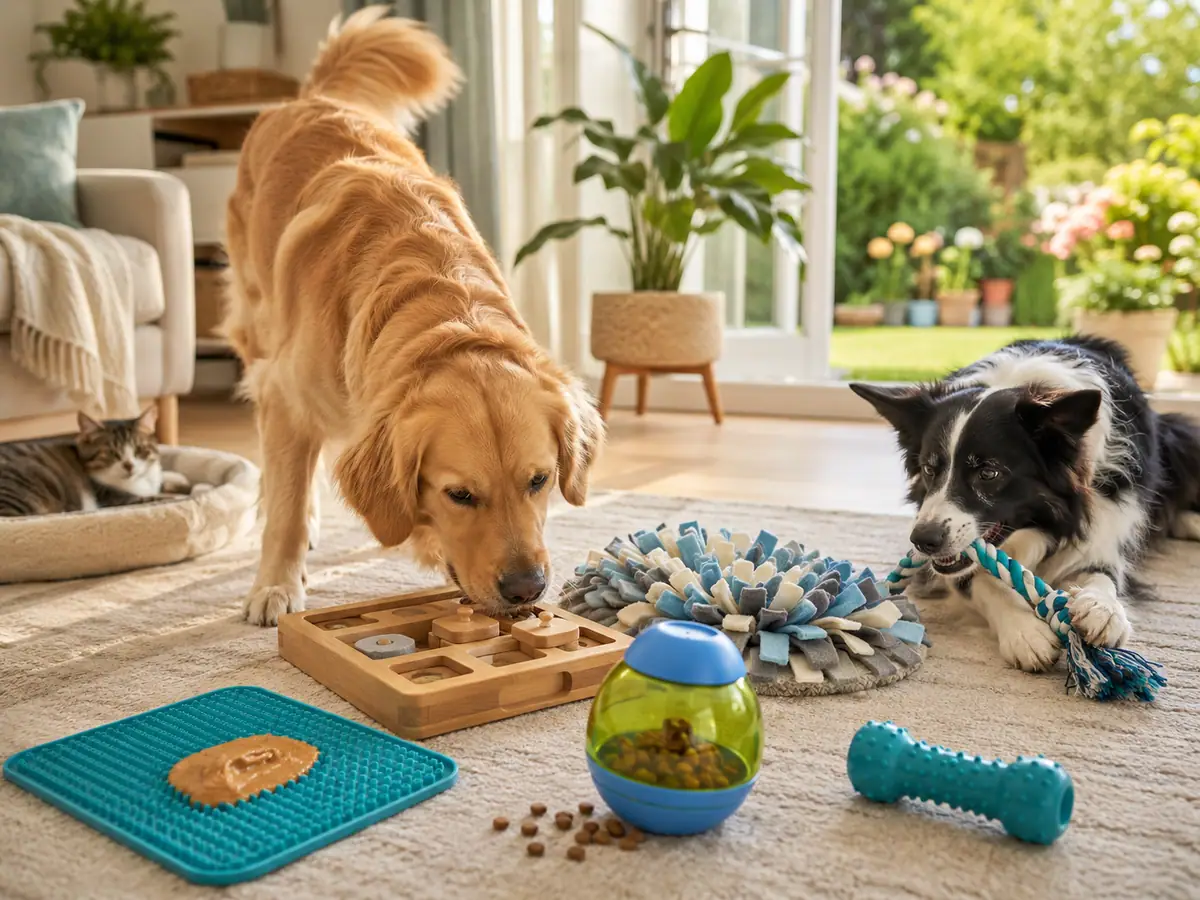
Offer tearing only when the material is appropriate
Tearing and swallowing are different behaviors. Dogs Trust recognizes ripping soft toys as natural but warns against swallowing small parts. Its homemade enrichment examples include cardboard and paper, with supervision. These examples do not establish that every dog can safely shred packaging.
For a suitable individual, consider clean, plain paper or cardboard you can inspect completely. Reject packaging with staples, tape, string, plastic windows or unknown residues. Choose another outlet if you cannot remove questionable components or if your dog has a history of swallowing non-food material. Recycled does not automatically mean appropriate.
Stay close enough to notice whether pieces are being discarded or eaten. Stop the activity if ingestion begins or you cannot account for material. Contact your veterinarian about suspected swallowing; do not assume paper, fabric or stuffing will pass harmlessly.
Do not substitute a worn stuffed toy for disposable paper. Exposed squeakers, loose stuffing and fraying fabric are retirement signs, not permission to finish destroying the item. Our safe dog toy guide covers broader selection checks.
Keep chewing and object manipulation separate
Carrying, nudging and chewing place different demands on an object. A dog may carry a plush toy gently but dismantle the same toy when left to chew. Label equipment by its permitted use: shared carrying game, supervised investigation or an appropriate chew. A puzzle casing is not automatically chew equipment.
VCA's chew-toy guidance recommends suitable size, no easily swallowed attachments, some material give and supervision. It warns that excessively hard objects can damage teeth and that swallowed toy fragments can cause obstruction. Maximum hardness is therefore not a sensible replacement for appropriate construction.
For manipulation, check how the dog moves the whole object, not merely whether the mechanism functions. Can they pick it up without struggling or nose it without trapping it against furniture? Avoid pieces they detach and carry away. Stop if an intended pushing game becomes forceful biting at the housing.
Ask your veterinarian about suitable chewing when dental health is uncertain. A toy that survives longer is not necessarily kinder to teeth.
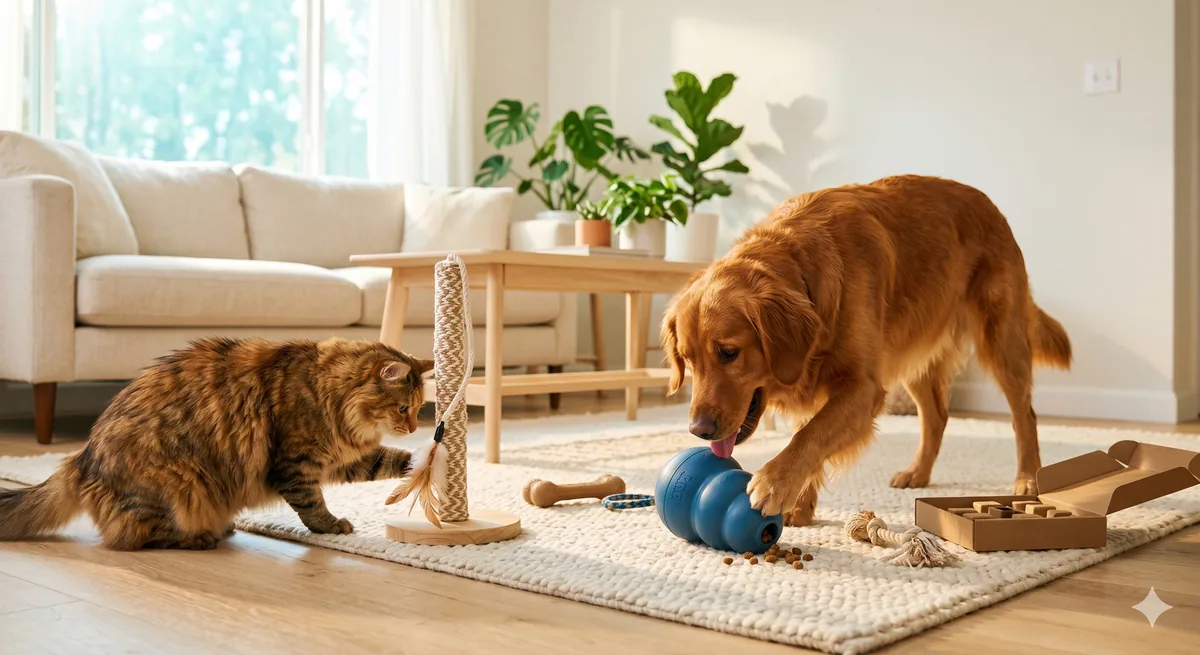
Fit the toolkit to the home and the dog
Housing affects which equipment is practical. In an apartment, choose a search area that does not block a doorway. If a rolling object repeatedly strikes furniture or startles your dog on hard flooring, use a different object or location. More floor space does not make unsuitable material safe.
For shared housing, agree where supervised play happens and where equipment is stored afterward. Keep walkways clear and separate occupied play areas from children and other pets. Our dog toy storage guide offers organizational ideas; storage should support access control, not require a dog to negotiate a crowded container.
Accessibility includes comfortable reach, stable footing and an uncomplicated route away. PDSA recommends consistent surroundings for blind dogs, so avoid repeatedly rearranging their play area. For mobility restrictions or recovery, ask the veterinary team about positioning and permitted movement. Do not improvise raised platforms or require climbing.
Offer suitable alternatives without presenting the entire collection. Let the dog select an available activity or decline. Choice remains bounded by supervision, health needs and material safety.
Rotate opportunities, not a fatigue target
Rotation means storing some usable items and reoffering them later, not constantly replacing familiar favorites. Humane World for Animals recommends a small accessible selection with varied purposes and allowing a favorite comfort toy to remain available. Safety checks still apply to that favorite.
Organize the stored collection by behavior so variety does not become several versions of the same activity. Reintroduce an intact item your dog previously enjoyed, rather than buying novelty automatically. Our dog toy rotation guide provides a separate organizing reference.
Leave ordinary downtime between opportunities. Do not keep presenting another toy whenever the dog finishes, or wake a resting dog to complete the rotation. Dogs Trust explicitly includes rest alongside enrichment. Interest, comfortable participation and an easy finish matter more than visible exhaustion or time spent occupied.
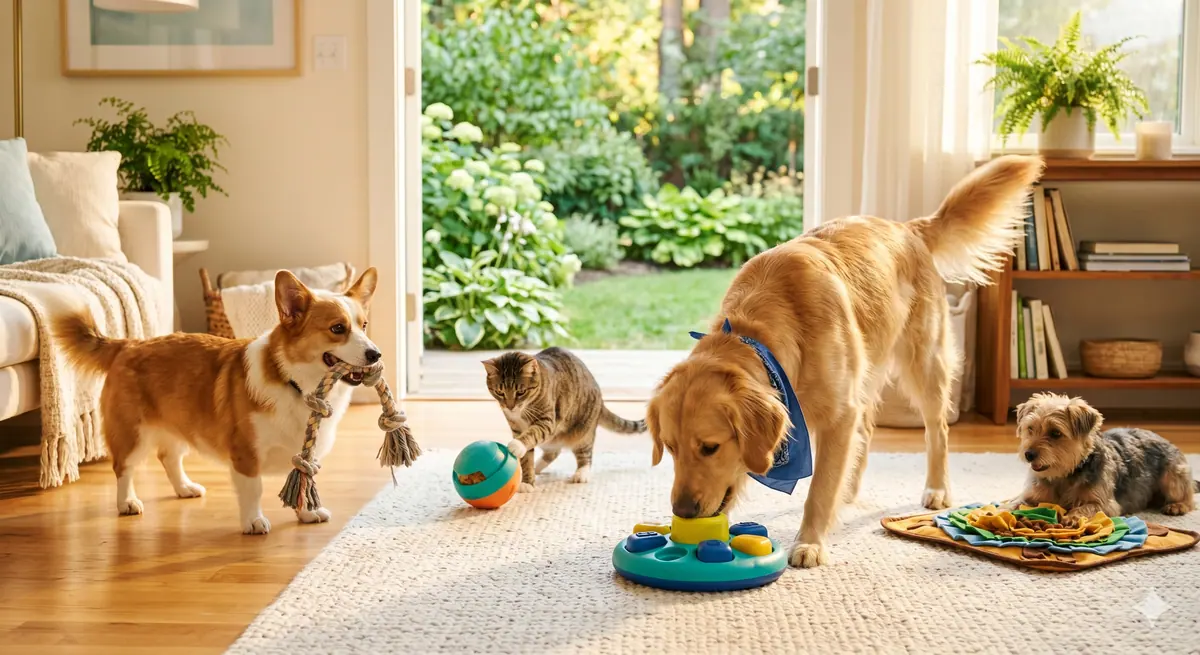
Use a log to repair the mismatch
Record what actually happened instead of rating a toy as universally good or bad. Dogs Trust recommends observing engagement and considering what to change. The following is a suggested household note format, not a validated welfare test:
- Context: Location, nearby activity and who was present.
- Choice: Which item the dog approached or ignored.
- Action: Sniffed, carried, nudged, tore or chewed.
- Material: Intact afterward, damaged or missing pieces.
- Next decision: Keep, reposition, restrict to supervised use or retire.
For example, write 'carried the toy to the rug; left it intact,' rather than 'finally exhausted.' Write 'pulled stuffing through a seam' as a retirement decision, not evidence that the dog needs a premium version.
If an item slides, change the suitable surface or choose a stable design. If it cannot be cleaned or repeatedly sheds pieces, retire it. Follow cleaning instructions before storage. VCA recommends retiring toys with exposed stuffing, frayed rope or broken rubber. Replace the failed function only when needed; a higher price does not resolve an unsuitable material or household setup.
Include equipment that was ignored in the log, without treating it as a failure. Note whether the room was busy or the dog had already chosen to rest. If the same item is repeatedly unwanted, stop offering it rather than making it more insistent or elaborate. Before buying a replacement, name the missing opportunity clearly: a reachable search, a suitable chewing surface or a comfortable object to carry.
Manage guarding before changing the shopping list
Stiffening over an item, blocking access, growling or snapping can indicate resource guarding. Do not approach to test whether the dog will share. Dogs Trust's guarding guidance recommends creating space, avoiding forced removal and obtaining veterinary assessment and qualified behavioral support.
Keep children, visitors and other animals safely separated using appropriate doors or barriers. Avoid introducing items already known to trigger guarding while you arrange help. Do not punish growling or wrestle for the toy. Retrieve an item only when the dog is safely elsewhere; ask for professional guidance on a workable household plan.
Record the setting and events without provoking another incident. Contact your veterinarian and a qualified, reward-based behavior professional, particularly when guarding is new or escalating. Suspected choking, swallowed pieces or injury need urgent veterinary advice. This toolkit supports everyday opportunities; it is not a treatment plan or a guarantee against conflict.
Put this guide in context
Choose the next guide for the care question you actually have: mental stimulation for dogs; mental stimulation dog toys; puzzle feeders for dogs; interactive puzzle toys for cats. These pages cover different decisions, rather than interchangeable products or a prescribed schedule.
Frequently Asked Questions
Do dog enrichment toys need to be expensive?
No. A familiar intact toy can support carrying or searching, and suitable household materials may offer supervised exploration. Spend according to a specific unmet function, not a premium label. If existing equipment is inappropriate, change the material, placement or activity. Price alone does not demonstrate safety or usefulness.
Can I let my dog shred cardboard?
Only consider it when the material is appropriate and your dog does not eat the pieces. Remove questionable packaging components and supervise closely. Skip cardboard if your dog swallows non-food objects or you cannot inspect it completely. Contact your veterinarian if ingestion is suspected rather than assuming it is harmless.
What belongs in an apartment enrichment toolkit?
Choose equipment that fits a clear, supervised area without obstructing household routes. A familiar searching toy, an appropriate chew and a comfortable carrying toy may suit different behaviors. Avoid objects that repeatedly collide with furniture or create distressing noise. Access, storage and the individual dog's preferences matter more than collection size.
Should I remove my dog's favorite toy during rotation?
Not simply to create novelty. Humane World for Animals allows a favorite comfort toy to remain available while other toys rotate. Keep checking its condition and suitability. If it becomes damaged, retire it safely. Rotation should offer useful choices without depriving the dog of a suitable familiar comfort item.
What should I write in an enrichment observation log?
Note the setting, available item, voluntary approach, actual behavior and equipment condition afterward. Record practical changes such as moving play away from a busy doorway or retiring exposed stuffing. Avoid interpreting time occupied as a welfare score. The log helps household decisions and can provide context for veterinary or behavioral advice.
What if my dog guards an enrichment toy?
Give space and keep children and other animals safely separated. Do not punish growling, reach in to test sharing or force the item away. Arrange a veterinary assessment and qualified behavioral support. Record incidents without recreating them. Buying more toys or a tougher version is not a guarding treatment.