Few things test a cat lover's patience like a shredded sofa arm. Double sided cat tape is one of the cheapest, gentlest tools for protecting that spot while you teach your cat a better place to scratch. This guide explains how anti-scratch tape works, where it helps and where it falls short, which surfaces it can damage, how to apply and remove it, how long to keep it up, and why it only works when a good scratching post sits right beside it.
In This Article
- Quick Answer: Does Double Sided Cat Tape Stop Scratching?
- How Does Double Sided Cat Tape Work?
- What Do Vets and Welfare Groups Say About Sticky Tape?
- Where Does Anti-Scratch Tape Work, and Where Does It Fail?
- Which Surfaces Can Double-Sided Tape Damage?
- How Do You Apply Double Sided Cat Tape Step by Step?
- How Do You Remove the Tape and Its Residue?
- How Long Should You Leave the Tape On?
- Why Must Tape Be Paired With a Scratching Post?
- How Does Tape Compare With Covers, Nail Caps and Sprays?
- Why Is Tape a Better Choice Than Declawing?
- What Do People Ask Most About Double Sided Cat Tape?
- Sources
Quick Answer: Does Double Sided Cat Tape Stop Scratching?
Yes, as a short term helper. Cats dislike the sticky feel under their paws, so taped spots lose their appeal. Tape works best on small areas, paired with a sturdy scratching post placed right beside the protected spot and rewards for using it. Patch-test first, because the adhesive can mark leather, finished wood and delicate fabric.
Updated October 24, 2026- Best use: sofa corners, chair arms, door frames, speaker sides and other small, flat targets your cat already favors.
- Must pair with: a tall, stable scratching post or pad placed directly next to the taped spot, plus treats or play when your cat uses it.
- Test first: leather, finished or painted wood, vinyl, microfiber and wallpaper can be marked by the adhesive.
- Remove it: once your cat reliably uses the post instead, take the tape off gradually.
How Does Double Sided Cat Tape Work?
Answer: It makes a favorite scratching spot unpleasant to touch. One sticky face holds the tape to the furniture, and the other stays tacky toward your cat. Most cats dislike the way the adhesive grabs their paw pads and fur, so they stop returning to that surface, especially when a better option sits close by.
Scratching is not bad behavior. The AVMA describes it as a normal cat behavior that conditions the claws, leaves a visual and scent marker, helps with self defense and gives the muscles a healthy stretch. Your cat is not trying to ruin the sofa. It has found a surface that does those jobs well. Source: AVMA, Declawing of domestic cats (policy).
That is why sticky tape is a deterrent, not a cure. It changes how one spot feels so your cat looks elsewhere. If "elsewhere" is a well placed, satisfying scratching post, the habit moves there. If there is nothing better nearby, your cat will simply pick the next corner, the rug or the stairs.
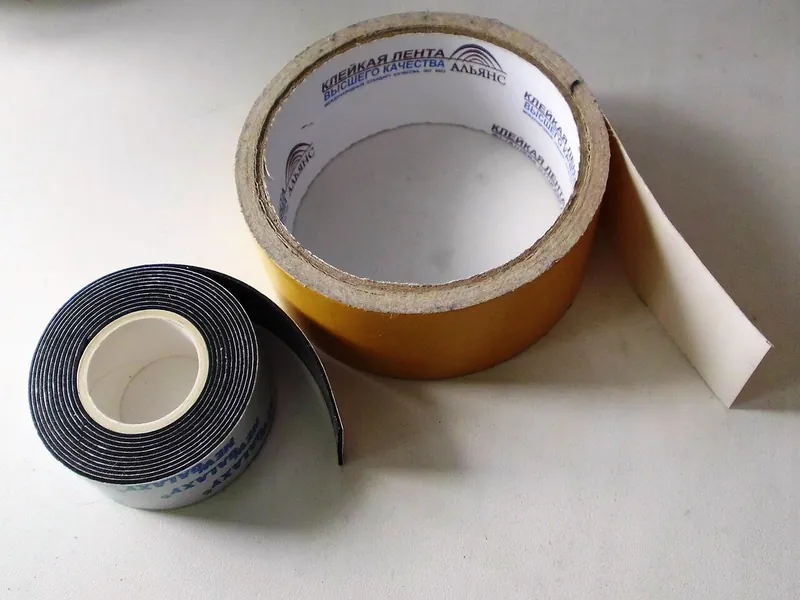
You can use ordinary double-sided tape from a hardware store, but products made for cats are designed for the job. Pioneer Pet, for example, describes its Sticky Paws strips as transparent, medical grade adhesive strips with a texture formulated to feel unpleasant to cats' paws. Clear strips are also easier to live with on a visible sofa arm than a roll of carpet tape.
What Do Vets and Welfare Groups Say About Sticky Tape?
Answer: They accept it as one short term tool inside a bigger plan. The ASPCA, Cornell, VCA, the AAFP and Humane World for Animals all list double-sided tape among the coverings that make a target less attractive, and every one of them pairs it with an appealing scratching post placed beside the target, plus rewards.
The ASPCA suggests putting plastic, double-sided sticky tape, sandpaper or an upside-down vinyl carpet runner (knobby side up) on furniture, or on the floor where your cat would stand to scratch. In the same breath it says to place scratching posts next to those objects as legal alternatives. Source: ASPCA, Destructive Scratching.
The Cornell Feline Health Center says covering items with blankets, plastic sheets or double-sided tape may deter scratching, and it tells owners to redirect the behavior by placing the post next to an area the cat likes to scratch, then rewarding the cat with treats, strokes and praise for using it. Source: Cornell Feline Health Center, Destructive Behavior.
VCA Animal Hospitals calls covering the scratched surface with a less appealing material, such as plastic, loosely draped fabric, aluminum foil or double-sided tape, the simplest approach. It adds a key warning: no deterrent will succeed unless the cat has an alternative scratching area that is comfortable, appealing, well located and free of deterrents. Source: VCA Animal Hospitals, Scratching Behavior.
The American Association of Feline Practitioners (AAFP) toolkit for vets notes that two-sided sticky tape, tinfoil, plastic or furniture covers may reduce scratching on surfaces owners want protected. It also cautions that cats that like to chew plastic should not have access to that type of cover. Source: AAFP, Claw Friendly Educational Toolkit (PDF).
Humane World for Animals, the new name of the Humane Society of the United States, suggests double-sided sticky tape for smaller surfaces and a tight fitting sheet for whole pieces of furniture. International Cat Care does not name double-sided tape, but suggests covering the damaged area with a thick, heavy blanket or a one-sided sticky plastic film so it becomes less attractive to scratch.
Where Does Anti-Scratch Tape Work, and Where Does It Fail?
Answer: Tape works best on small, smooth, vertical targets your cat hits in one spot, such as a sofa corner, a chair arm or a door frame. It fails on large areas, textured or stain treated fabric, carpets, dusty or hairy surfaces, and in homes where no tempting scratcher has been placed beside the taped spot.
Where it tends to work. A cat that rakes the same sofa corner every morning is the classic case. The target is small, the tape covers the whole contact zone, and you can stand a post right in front of it. Door frames, speaker sides, the end of a bed base and table legs behave the same way.
Where it tends to fail. Large areas are hard to cover completely, and cats simply move a few inches over. Carpets and stairs need a different approach, because tape will not hold well on pile and your cat stands on it rather than scratching against it. For floor scratchers, a horizontal pad laid on the favorite step or rug spot is usually the better fix.
Tape also loses its grip on stain repellent fabric. Pioneer Pet states that Sticky Paws is ineffective on surfaces treated with non-stick or stain repellent products such as Scotchgard, and its help page says some newer stain resistant fabrics do not hold the tape well. Source: Pioneer Pet, Sticky Paws XL Sheets.
Finally, tape stops working once it is coated with hair and dust, and it never works for a cat scratching out of stress. If your cat scratches doors or windows where it can see other cats outside, or starts scratching much more than before, look at the cause. VCA notes that pheromone products can help with anxiety related marking, and your vet can check for pain or stress.
Which Surfaces Can Double-Sided Tape Damage?
Answer: The adhesive can lift finish or leave residue on finished and painted wood, leather, vinyl, microfiber and wallpaper, and it can pull fibers from delicate fabric. Always test a small piece on a hidden spot for a day or two before you tape a visible area, and remove it promptly if it fails to stick.
This is not a theoretical risk. The maker of Sticky Paws warns that its strips may damage certain surfaces, including wood finishes, painted surfaces, leather, vinyl, microfiber and wallpaper, and tells buyers to always test a small piece on an inconspicuous area first. It also says the user must decide whether the product fits a given surface. Source: Pioneer Pet, Sticky Paws Furniture Strips.
Use this table as a starting point, then trust your patch test over any general rule. The care label and the furniture maker's cleaning advice matter too.
A useful trick for precious surfaces is to tape a sheet of clear plastic or stiff card, not the furniture itself. Fix the sheet in front of the target with a little low tack tape on the back side, then put the sticky strips on the sheet. Your cat meets the same tacky surface, and the adhesive never touches the leather or wood.
How Do You Apply Double Sided Cat Tape Step by Step?
Answer: Set up the scratching post first, then clean and dry the target, patch-test the tape, and cover the full area your cat reaches when stretching. Press the strips down firmly, leave the top liner off so the sticky side faces out, and reward your cat every time it uses the post instead.
- Place the alternative first. Stand a sturdy scratching post or lay a pad directly in front of, or right beside, the spot you are protecting.
- Watch how your cat scratches. Note the height of its paws at full stretch and whether it scratches upright or flat, so the tape and the post both cover that zone.
- Clean the surface. Remove hair and dust with a lint roller or a slightly damp cloth suitable for the material, then let it dry fully.
- Patch-test. Stick a small piece on a hidden area of the same material, leave it for a day or two, then peel it off and check for marks or lifted finish.
- Cut and apply. Cut strips to size, press them on firmly from the center outward, and overlap the edges slightly so there are no bare gaps.
- Expose the sticky side. Peel off the top liner so the tacky face points toward your cat.
- Reward the right choice. When your cat scratches the post, give a treat, a bit of play or praise right away.
- Check daily. Replace strips that are hairy, dusty or curling, since a dead surface stops deterring.
Timing matters when you reward. The AAFP toolkit advises giving the reward immediately, within 3 seconds, after redirecting a cat to the new post or pad. If your cat starts on the furniture anyway, gently pick it up, take it to the scratcher, and reward it there rather than scolding. Source: AAFP, Claw Friendly Educational Toolkit (PDF).
How Do You Remove the Tape and Its Residue?
Answer: Peel the tape back slowly at a low angle, folding it over itself rather than pulling straight out. Warm stubborn adhesive gently with a hair dryer on a low setting if the surface allows it, then clean any residue with a cleaner suited to that material. Test every cleaner on a hidden spot first.
- Start at a corner. Lift one corner with a fingernail or a plastic card, never a metal blade.
- Peel low and slow. Fold the strip back on itself and pull close to the surface, so you shear the glue rather than lift the finish.
- Warm stubborn spots. On surfaces that tolerate gentle heat, a hair dryer on low can soften the adhesive.
- Clean the residue. Use a cleaner made for that material, and test it out of sight first.
- Wipe and dry. Rinse with a clean damp cloth if the material allows it, then dry thoroughly.
For wood, Pioneer Pet suggests Murphy Oil Soap diluted in water for light residue, or applied straight for stickier spots, wiped with a soft cloth and rinsed with clean water. It also lists a commercial adhesive remover and gentle warming with a hair dryer, depending on the surface. Follow your furniture maker's care advice for leather and upholstery. Source: Pioneer Pet, Sticky Paws XL Sheets (FAQ).
Keep used strips away from your cat. The maker warns that Sticky Paws is not intended for animal or human consumption and that medical help is needed if it is swallowed. Fold each strip sticky side in and put it straight in a closed bin, and call your vet if your cat chews or swallows tape.
How Long Should You Leave the Tape On?
Answer: Only until your cat reliably uses the new scratcher instead of the furniture, which may take days or weeks depending on the cat. Refresh the strips whenever they lose their tack. Once the habit has moved, remove the tape gradually and keep the scratching post exactly where it is.
Humane World for Animals says that once your cat is consistently using the scratching post or pad, you can remove the covering from the objects it used to scratch. There is no fixed number of days. Watch your cat, not the calendar. Source: Humane World for Animals, How to stop cats' destructive scratching.
The product itself also wears out. Pioneer Pet's own instructions for Sticky Paws say to replace the strips weekly, since hair, dust and handling dull the adhesive. A tape that no longer grabs is just a smooth patch, and your cat will soon notice. Source: Pioneer Pet, Sticky Paws Furniture Strips.
When you start removing it, take away one strip at a time over several days rather than everything at once. If your cat drifts back to the furniture, put the tape back for a while longer and make the post more attractive with catnip, treats or a play session. Leaving tape up for months on a valued piece only raises the chance of residue.
Why Must Tape Be Paired With a Scratching Post?
Answer: Because your cat still needs to scratch. Tape only says "not here," while a good post says "here instead." Experts agree the post should sit right next to the deterred spot, match your cat's preferred texture and direction, be tall and sturdy enough for a full stretch, and come with rewards.
Humane World for Animals notes that cats prefer tall, sturdy objects they can dig their claws into, and that most cats prefer, even over furniture, a sisal rope post that is at least 32 inches tall and does not wobble. It adds that if your cat enjoys scratching the couch, the post should go next to the couch. Source: Humane World for Animals, How to stop cats' destructive scratching.
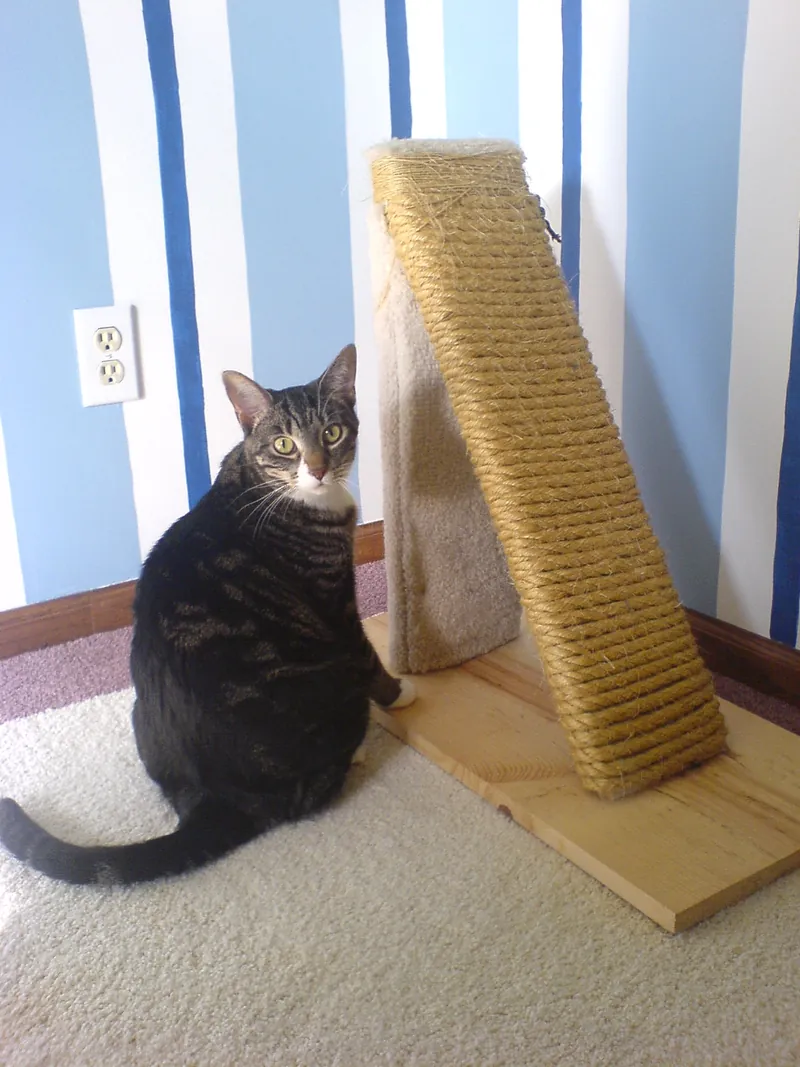
International Cat Care adds that the alternative should offer a similar experience to what your cat was damaging. A cat raking textured wallpaper at a certain height needs a vertical surface with similar texture at that height, and upright posts must let your cat scratch at full stretch. It also suggests putting treats on or around the new scratcher and rewarding use with treats or gentle praise.
Match direction as well as texture. The AAFP toolkit says most cats like to scratch vertically, but a cat scratching carpet may do better with a horizontal scratcher, and scratchers should also go near sleeping areas, because cats often stretch and scratch when they wake up. Our cat scratching post guide covers height, base size and covering materials in detail.
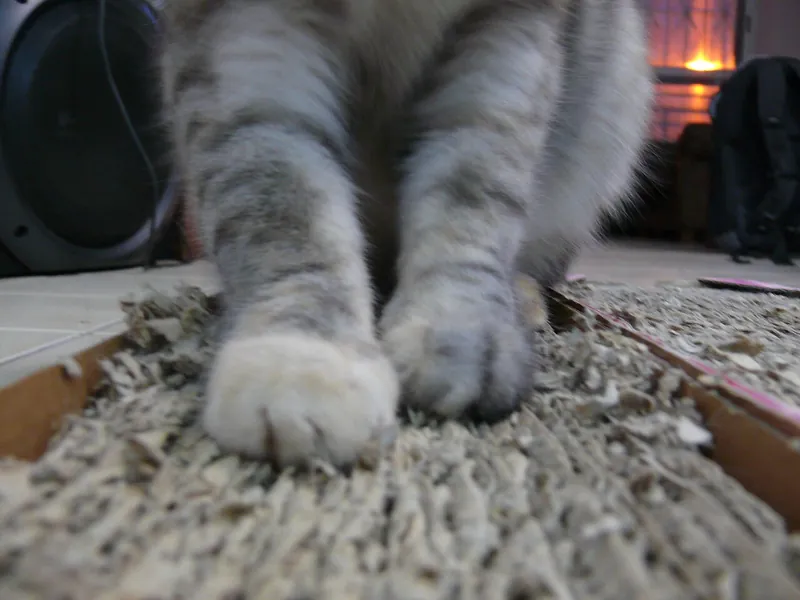
If your cat targets the floor, a flat cardboard cat scratcher or a cat scratching pad laid on the favorite spot often solves it outright. For upright scratchers, compare options in our cat scratcher guide, our cat scratching board guide and our cat scratch pole guide. A tall cat tree with sisal wrapped legs doubles as a climbing spot, and the scratching toys in our shop are an easy place to start.
Catnip can help draw your cat to the new post, but not every cat reacts. The AAFP toolkit notes that most kittens under four months old do not respond to catnip and some adult cats never do. Our guide on why cats like catnip explains the difference, and treats or a wand toy work for the rest. Source: AAFP, Claw Friendly Educational Toolkit (PDF).
How Does Tape Compare With Covers, Nail Caps and Sprays?
Answer: Tape is cheap and targeted but can mark delicate surfaces. Furniture covers protect large areas without adhesive. Nail caps blunt claws but need regular reapplying. Pheromone sprays calm stress related scratching, and motion activated sprays startle. All of them work better alongside a well placed scratching post, never instead of one.
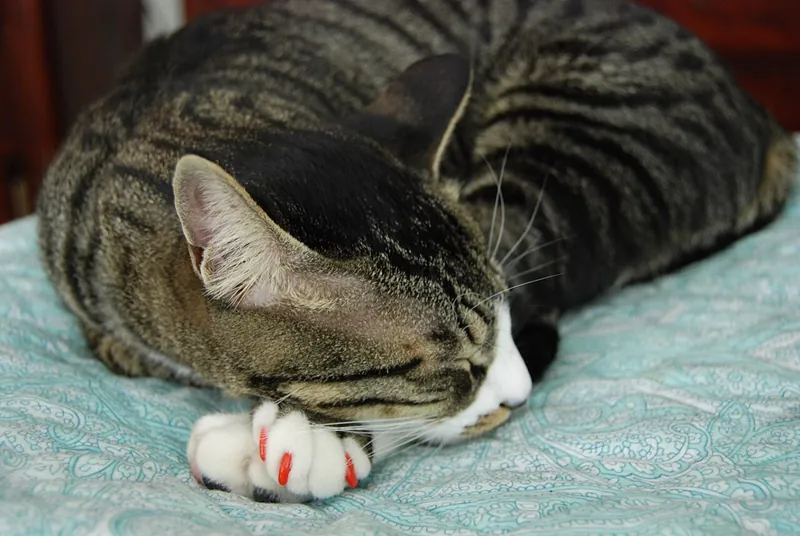
Cornell suggests regular nail trimming and plastic nail caps glued over the claws to further limit damage, and VCA lists trimmed nails and commercial nail covers as useful for some owners. The AAFP calls temporary synthetic nail caps an option that works well for some cats. Ask your vet team to show you how to trim or fit caps safely the first time.
Sprays come in two very different kinds. International Cat Care suggests washing scratched wood with unscented soapy water and then using a synthetic feline pheromone spray to help your cat feel secure. VCA lists motion activated air sprays among booby traps, which can work when you are not home, but only if a comfortable scratcher is close by. Avoid anything that frightens a nervous cat, and see our calming toys for cats guide for low stress ways to help an anxious scratcher.
Why Is Tape a Better Choice Than Declawing?
Answer: Declawing is not a nail trim. It amputates the last bone of each toe, carries risks of pain and behavior problems, and major veterinary and welfare groups oppose or strongly discourage it. Tape, covers, nail care and good scratchers protect furniture while leaving your cat's paws and natural behavior intact.
The AVMA strongly discourages veterinarians from performing declawing or any other surgery to stop normal claw use when it is not medically necessary. It describes the amputation as acutely painful, with possible chronic pain, behavior problems and disability, and says vets should counsel owners about natural scratching and effective alternatives to surgery. Source: AVMA, Declawing of domestic cats (policy).
The AAFP opposes elective declawing and explains that it removes the third toe bone. Its toolkit notes that protecting furniture is the main reason owners consider it, and that many change their minds once they learn what the surgery involves and how to live with a clawed cat. The ASPCA is strongly opposed to declawing, and Cornell calls it an absolute last resort. Tape is one of the simplest first steps on that path.
If you are raising a kitten, start early. A kitten that learns to use a post from day one rarely needs tape later. Our kitten scratching post guide and new kitten essentials list help you set things up, and a sturdy piece of cat furniture gives growing cats somewhere to climb and scratch that is truly theirs.
What Do People Ask Most About Double Sided Cat Tape?
Answer: Owners usually ask whether tape is safe for cats, whether regular tape works, if it ruins leather, how long it takes, what to do when a cat ignores it, and whether it works on carpets and kittens. The short answers below draw on the vet, welfare and maker sources listed at the end of this guide.
Is double-sided tape safe for cats?
Used on furniture, it is generally considered a gentle deterrent, and vets and welfare groups list it as an option. The risk is chewing or swallowing. Keep cats that chew plastic away from covers like this, throw used strips away in a closed bin, and call your vet if your cat swallows any.
Can I use regular double-sided tape instead of pet tape?
Often, yes, for a short trial on a sturdy surface. Pet strips are made to feel unpleasant to paws and are usually clear, which looks neater. Strong household or carpet tapes can be harder to remove, so patch-test either kind on a hidden spot first.
Will double-sided tape ruin a leather couch?
It can. Leather is one of the surfaces the maker of a popular anti-scratch tape warns may be damaged. Test a small piece on the back or underside first, or stick the tape to a clear plastic sheet placed in front of the leather instead of the leather itself.
How long does it take for tape to stop a cat scratching?
It varies by cat. Some lose interest in a taped spot within days, others take weeks. Progress is fastest when a tempting scratching post stands right beside the spot and you reward your cat every time it uses the post.
Why is my cat still scratching next to the tape?
Usually the tape does not cover the whole area your cat reaches, or there is no appealing scratcher close by. Extend the tape to cover the full stretch zone, check that the post is tall and stable enough, and move it right next to the problem spot.
Does double-sided tape work on carpet?
Not well. Tape does not hold on carpet pile, and cats tend to scratch carpet while lying flat. Put a horizontal cardboard or sisal scratch pad on the favorite spot instead, and reward your cat for using it.
Can I use anti-scratch tape with a kitten?
Yes, but the main job with a kitten is teaching the right habit early. Give it scratchers near where it sleeps and plays, reward every use, and use tape only on the odd spot it keeps returning to.
Should I take the tape off once my cat stops?
Yes. Once your cat reliably uses its scratcher, remove the tape gradually, one strip at a time. Keep the post in the same place, and put tape back for a while if the old habit returns.
Sources
- AVMA: Declawing of domestic cats (policy)
- AAFP: Claw Friendly Educational Toolkit, scratching resources (PDF)
- ASPCA: Destructive scratching
- International Cat Care: Scratching on furniture and carpets
- Humane World for Animals (formerly HSUS): How to stop cats' destructive scratching
- Cornell Feline Health Center: Feline behavior problems, destructive behavior
- VCA Animal Hospitals: Cat behavior problems, scratching behavior
- Pioneer Pet: Sticky Paws Furniture Strips
- Pioneer Pet: Sticky Paws XL Sheets and residue FAQ
Give your cat a better place to scratch
Browse our scratchers, cat trees and toys to pair with your furniture protection.
Shop cat essentials