Top illustration: a tabby cat playing on the floor with a paper ball, a cardboard box and a feather wand. Illustration: Livehappypet.
Cats are famously unimpressed by price. Plenty of owners have watched a cat ignore a carefully chosen gadget and spend the evening batting a bottle cap or sitting in the box it came in. That is good news for your budget. A cat mostly wants something that moves like prey, something to pounce on, and someone to play with. You can provide all three with cheap cat toys and a few free household items. The part that needs care is safety, because the cheapest toys are often the ones with loose parts, thin strings and glued-on decorations that a cat can swallow. This guide covers what makes a budget toy good value, the red flags to check, which inexpensive toys get the most use, free toys you can make tonight, and how rotation keeps a small collection interesting for months.
Quick Answer: Are Cheap Cat Toys Worth Buying?
Yes, cheap cat toys are worth buying when they are simple and sturdy: crinkle balls, ping pong balls, small plush mice without glued parts and a basic wand toy used only with you. Avoid toys with loose strings, ribbons or small decorations, put wand toys away after play, and rotate a few toys each week instead of buying more.
What Makes a Cheap Cat Toy Worth Buying?
Answer: A cheap cat toy is worth buying when it triggers your cat's hunting instincts, survives normal play and has no parts that can come off and be swallowed. The best budget toys are simple shapes that roll, crinkle or flutter. Novelty features add cost far more often than they add play.
Cats play like hunters. VCA Animal Hospitals describes cats as natural hunters that will stalk, chase, pounce on and capture things that move, and notes that most cats enjoy a variety of toys they can hunt, seek, attack and carry. None of those actions require an expensive toy. A light ball that skitters across a hard floor ticks the chase box. A small soft toy is something to grab, kick and carry. A wand toy that you move like a bird or mouse covers the stalk and pounce.
That is why a modest budget goes a long way with cats. What makes a toy valuable is how well it imitates prey and how long it stays safe, not how many lights or sounds it has. A simple ball that your cat chases for months is far better value than a battery toy that gets ignored after the novelty wears off.
The pattern is simple. Save money on toys your cat uses while you are around, and be pickier about anything your cat plays with unsupervised. If you want to compare budget choices with premium favorites, our roundup of the best cat toys shows what different play styles respond to.
Which Safety Red Flags Should You Check on Budget Cat Toys?
Answer: Check every budget cat toy for strings, ribbons, feathers or small parts that can come loose, and for decorations that are glued rather than sewn on. Avoid yarn and streamers entirely, keep wand toys out of reach between sessions, and never leave a cat alone with a toy that has a cord.
The biggest risk with cats is anything long and thin. According to Hill's Pet Nutrition, string and yarn are very dangerous for cats, and one of the biggest concerns is a condition veterinarians call a linear foreign body, where swallowed string damages the intestine. The same article says swallowing string can also cause intussusception, a telescoping of the intestine, which can be fatal.
The Cornell Feline Health Center gives similar advice for choosing toys: avoid toys with small pieces or linear, strand-like parts such as feathers and string that may separate from the toy, especially when chewed, and be swallowed. Cornell also warns against anything with an electrical cord that a cat can chew.
- No ribbons, yarn or streamers. Hill's specifically lists streamers, yarn, wands with dangling toys and toys with accessories sewn or glued on as things to keep away from unsupervised cats.
- Pull-test small parts. Tug gently on eyes, tails, bells and feathers in the shop. If anything moves, assume a determined cat will remove it.
- Size matters. A toy small enough to fit in the back of your cat's mouth is a toy that can be swallowed.
- Watch for chewers. Some cats chew rather than bat. For them, soft plastic, foam and thin fabric toys need to be checked after every session.
- Put wand toys away. VCA advises never leaving cats unattended with wand or fishing pole style toys, because cats can get tangled or swallow the string.
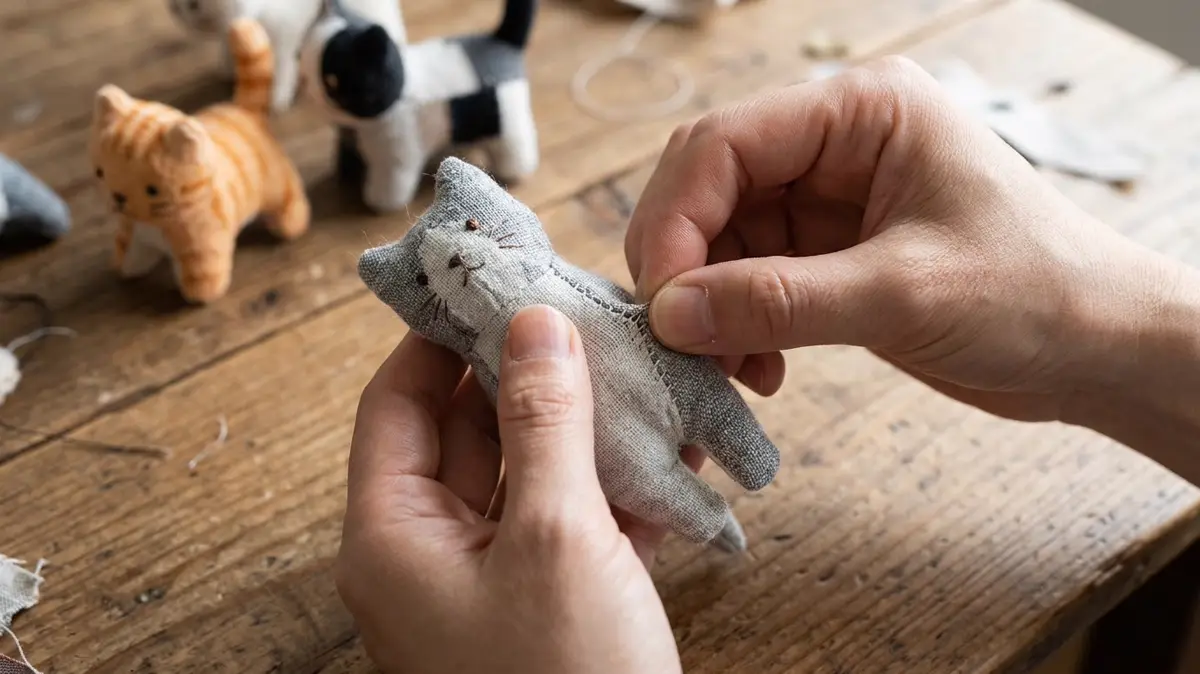
Illustration: Livehappypet.
Know the warning signs as well. Hill's notes that vomiting is the most common sign a cat has eaten string, and owners may also see signs of abdominal pain, such as hiding or being unusually defensive when picked up. If a toy goes missing and your cat starts vomiting or stops eating, call your veterinarian promptly. A saving of a few dollars on a toy disappears quickly next to the cost of surgery.
Which Cheap Cat Toys Get the Most Play?
Answer: The cheap cat toys that get the most play are the ones that imitate prey: light balls that roll and bounce, small soft mice to grab and kick, a wand toy you move for your cat, and a simple food puzzle. Together they cover chasing, pouncing, carrying and problem solving for very little money.
VCA lists mouse toys and other small stuffed options, ping pong balls, crinkle balls or crinkled paper among the toys cats enjoy for solo predatory play. Those happen to be some of the cheapest toys on any shelf. A pack of ping pong balls costs very little, and on a hard floor they bounce and skitter in a way that many cats find irresistible.
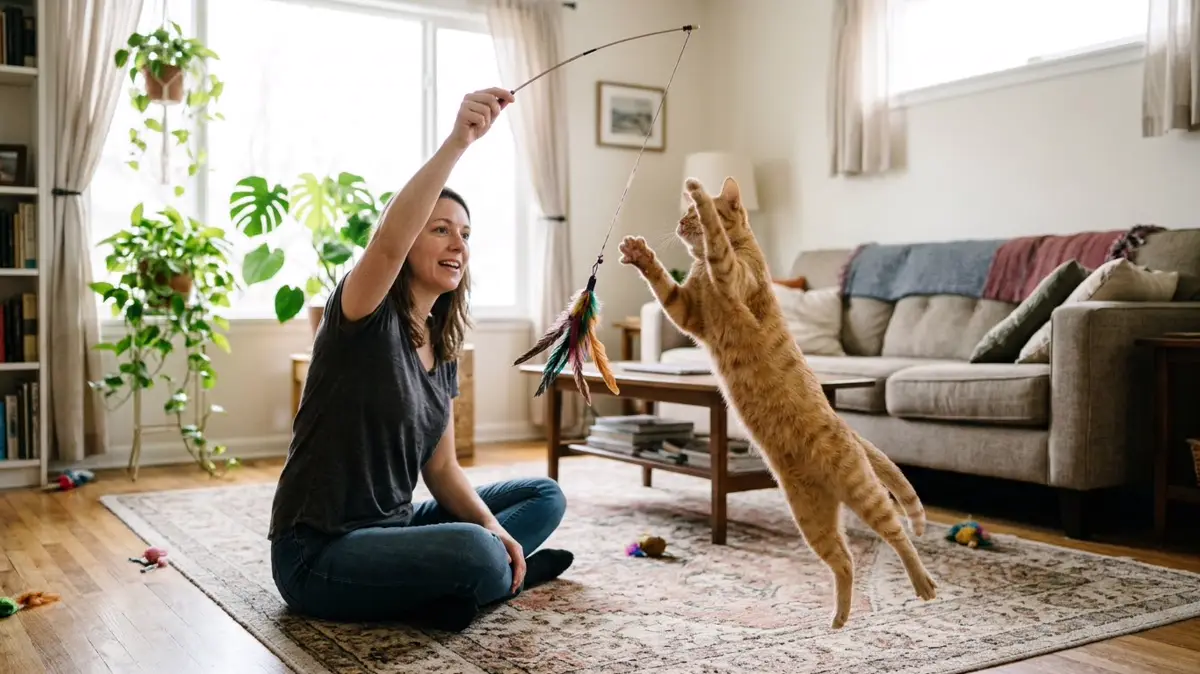
Illustration: Livehappypet.
Catnip toys are another inexpensive favorite, although not every cat reacts to catnip. If yours does, a simple sock-style catnip toy or a refillable pouch can be refreshed with dried catnip instead of being replaced. Our guide to catnip toys for cats explains how to choose and refresh them.
Laser pointers are cheap too, but use them thoughtfully. A good habit is to end a laser session by letting your cat catch a real toy or a treat, so the hunt has a finish. Our article on the laser cat toy covers how to do that well.
What Free Household Items Make Good Cat Toys?
Answer: Cardboard boxes, paper bags without handles, scrunched paper balls, cardboard tubes cut into short rings and a small box with holes holding kibble all make good free cat toys. Skip string, rubber bands, hair ties and plastic bags, and supervise play with anything your cat might chew.
You really do not need to buy everything. ASPCApro, the professional arm of the ASPCA, notes that cats love repurposed household items, so you do not have to stretch your budget for new purchases. Its suggestions include wadding up paper headed for the recycling bin and tossing it for the cat, and cutting holes in a small box or plastic container with the cat's kibble inside to make a simple food puzzle.
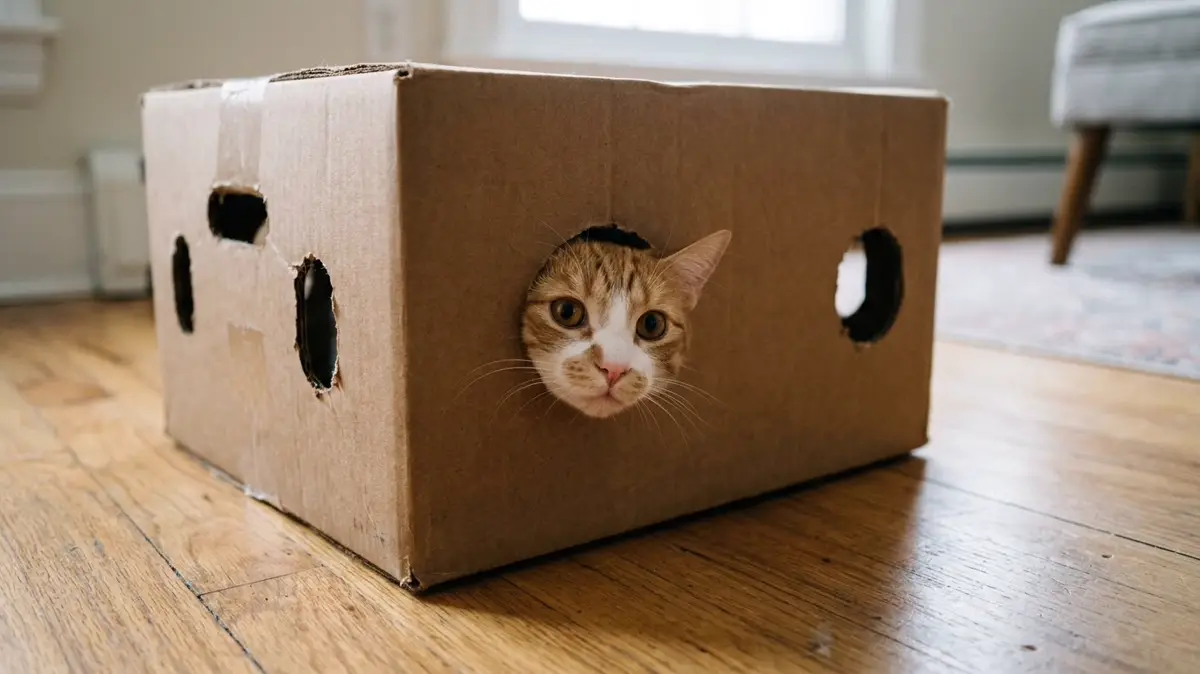
Illustration: Livehappypet.
- Kibble box puzzle. Cut a few paw-sized holes in a small box, drop in part of your cat's normal food ration, and let your cat fish it out.
- Paper ball toss. Scrunch scrap paper into a tight ball and throw it across a hard floor. Replace it when it gets soggy.
- Tube rings. Cut a cardboard tube into short rings that roll and bounce. Discard them once they are chewed.
- Box fort. Leave a cardboard box on its side with a toy or treat inside. Many cats will use it for days.
- Paper bag tunnel. Cut the handles off first, then let your cat explore. Never use plastic bags.
Keep free toys to supervised play and tidy them away afterward, especially for cats that chew. ASPCApro also reminds shelter staff to disinfect toys before reusing them, which is a good habit at home if you share toys between cats. For more ideas, our guide to DIY cat toys walks through projects that use things you already own.
Why Does How You Play Matter More Than What You Spend?
Answer: Interactive play with you makes even the cheapest toy exciting, because you can move it like real prey. Several short sessions a day, ending with a catch and a small treat or meal, satisfy a cat's hunting drive better than any toy left on the floor.
The most valuable part of a wand toy is the person holding it. VCA says most cats benefit from several 10-minute play sessions every day, with the length adjusted to the cat's interest. Move the toy away from your cat, not toward it, let it hide behind furniture, and give your cat a few chances to catch it. Prey that runs away is far more interesting than prey dangled in a cat's face. Source: VCA Animal Hospitals, play and play toys
Short, frequent sessions also fit around a busy day. A few minutes before you leave for work and a longer session in the evening can make a noticeable difference for an indoor cat with energy to burn. Our guide on how to entertain a cat has more session ideas, and the best toys for bored cats helps if your cat seems restless.
- Let your cat catch the toy at the end of each session so the hunt feels complete.
- Follow play with a meal or a small treat, which many cats treat as the natural end of a hunt.
- Stop while your cat is still interested rather than playing until it walks away.
- Put the wand toy away in a closed cupboard so it stays special and the cord stays out of reach.
How Do You Make a Small Toy Collection Last?
Answer: Rotate toys weekly so only a few are out at a time, and they will feel new each time they return. VCA suggests offering four or five toys at once from a larger collection. Inspect toys whenever you swap them and throw away anything that is splitting or losing parts.
Boredom retires more cat toys than damage does. VCA suggests keeping an assortment of toys on hand but giving your cat only four or five options at a time, and rotating them weekly to hold your cat's interest. The Cornell Feline Health Center agrees that rotating toys can prevent a cat from becoming bored with them.
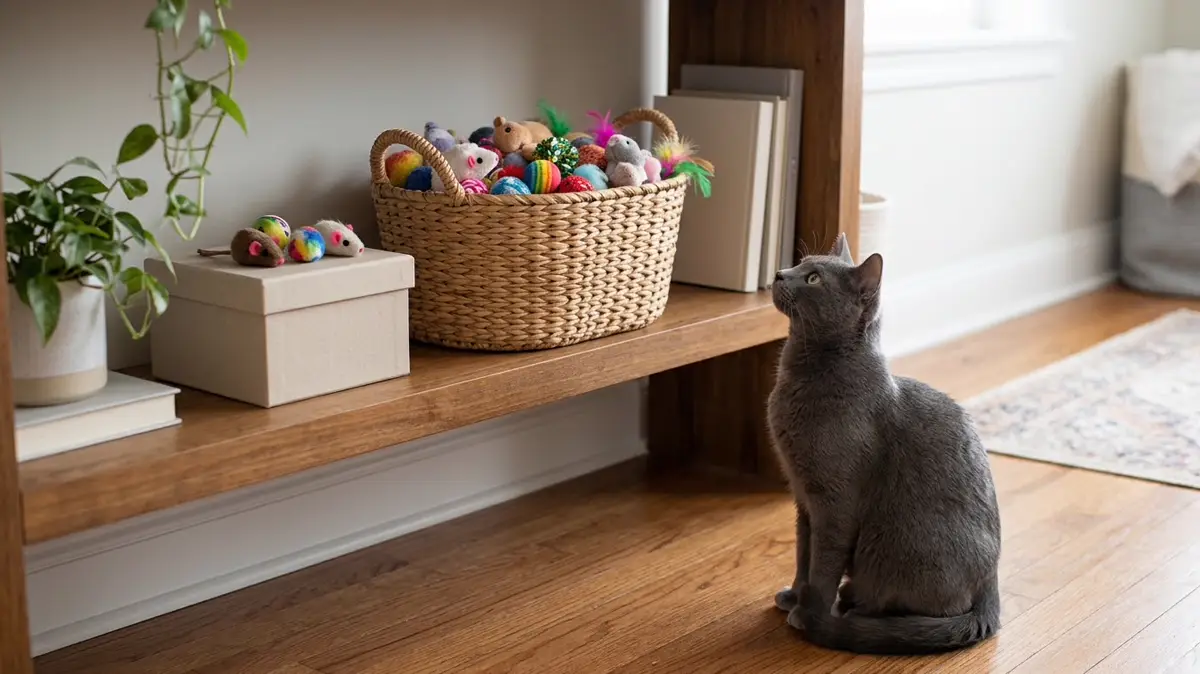
Illustration: Livehappypet.
Rotation stretches a budget in two ways. Your cat stays interested without you buying more, and each toy gets less wear. It also turns safety checks into a habit. Every swap is a chance to spot a loose tail, a split ball or a frayed wand cord before it becomes a problem.
A simple system works well. Split your toys into three groups, each with something to chase, something to grab and something to hunt with you. Store the other groups in a closed box, ideally one your cat cannot open, and swap the whole group at the weekend. Keep a refillable catnip toy in the box between rotations so the scent lasts longer.
When Is It Worth Spending More on a Cat Toy?
Answer: It is worth spending more on toys your cat will use alone, toys for heavy chewers, and anything electronic. Sturdier construction matters most when nobody is watching. For everything you play with together, cheap and simple is usually all your cat needs.
Some cats spend long stretches home alone, and toys for those hours need to be safe without supervision. Look for well-made balls, track toys and puzzle feeders without detachable parts rather than the cheapest option. Our guide to toys for cats home alone covers what works when you are out.
Kittens are another case for care. They explore everything with their mouths and are more likely to chew small parts off a budget toy. Our article on kitten toys explains which toys suit young cats. If your cat is a determined chewer, consider toys designed for chewing, such as those in our guide to cat chew toys.
Electronic and automatic toys are the last category to be careful with. Very cheap units often have thin plastic housings and small parts. If you want one, a sturdier model used under supervision at first is the safer choice. Read our guide to automatic cat toys before you buy.
When you are ready to add a few new toys, every order from Livehappypet ships free in the US with no minimum, so you can try one toy before buying more. Browse our cat toys and accessories for options picked with cat safety in mind.
Finally, remember that the best budget plan is not a big pile of toys. It is a small, safe collection that you rotate, combined with a few minutes of play with you every day. That costs very little, and it gives your cat exactly what it needs from play: a chance to hunt, catch and relax.
What Questions Do Owners Ask About Cheap Cat Toys?
Answer: Most questions about cheap cat toys come down to whether budget toys are safe, which free items work, how many toys a cat needs and how to keep a cat interested without buying more. The answers below cover strings, household items, rotation, wand toys and when to spend more.
Are cheap cat toys safe?
Many are, as long as they are simple and have no loose strings, ribbons or small parts that can be chewed off. Check seams and decorations before buying, put wand toys away after play and replace anything that is splitting.
What is the cheapest toy most cats will play with?
A crumpled paper ball or a ping pong ball is hard to beat. Both are almost free, roll and bounce like prey on a hard floor, and suit most cats. A cardboard box is another favorite that costs nothing.
Is string or yarn a good cheap cat toy?
No. Swallowed string or yarn can cause a serious intestinal injury called a linear foreign body. Keep string, yarn, ribbons, rubber bands and hair ties out of your cat's reach and use a proper wand toy with you instead.
How many toys does a cat need?
Fewer than most owners think. VCA suggests giving a cat four or five toys at a time and rotating them weekly from a larger collection, so each toy feels new when it returns.
Can I leave a wand toy out for my cat?
No. Wand and fishing pole style toys should only be used while you are playing, then stored in a closed cupboard. Cats can get tangled in the cord or swallow parts of it when left alone.
Are dollar store cat toys okay?
Some are fine for supervised play, but inspect them closely. Avoid glued eyes, loose feathers, bells that can be pulled off and anything with a ribbon or string. Do not rely on them as toys your cat plays with alone.
How long should I play with my cat each day?
Several short sessions usually work better than one long one. VCA says most cats benefit from several ten-minute play sessions every day, adjusted to the cat's interest.
When should I throw a cat toy away?
Throw it away when seams split, filling shows, small parts come loose, a ball cracks or a wand cord frays. Damage gets worse once a cat finds a weak point, so do not wait for the toy to fall apart.
Sources: VCA Animal Hospitals, Cat behavior and training: play and play toys (hunting play, toy types, session length, rotation, wand toy safety); Hill's Pet Nutrition, My cat ate string (linear foreign body, intussusception, warning signs, toys to avoid); Cornell Feline Health Center, Safe toys and gifts (strand-like parts, electrical cords, rotation); ASPCApro, Six ideas for feline enrichment (repurposed household items, kibble box puzzle).