If you are looking for the best undestroyable dog toy, this comprehensive guide covers everything you need to know. Whether you are a first-time pet owner or an experienced one looking to upgrade, you will find practical advice, safety tips, and honest comparisons below.
What Undestroyable Really Means
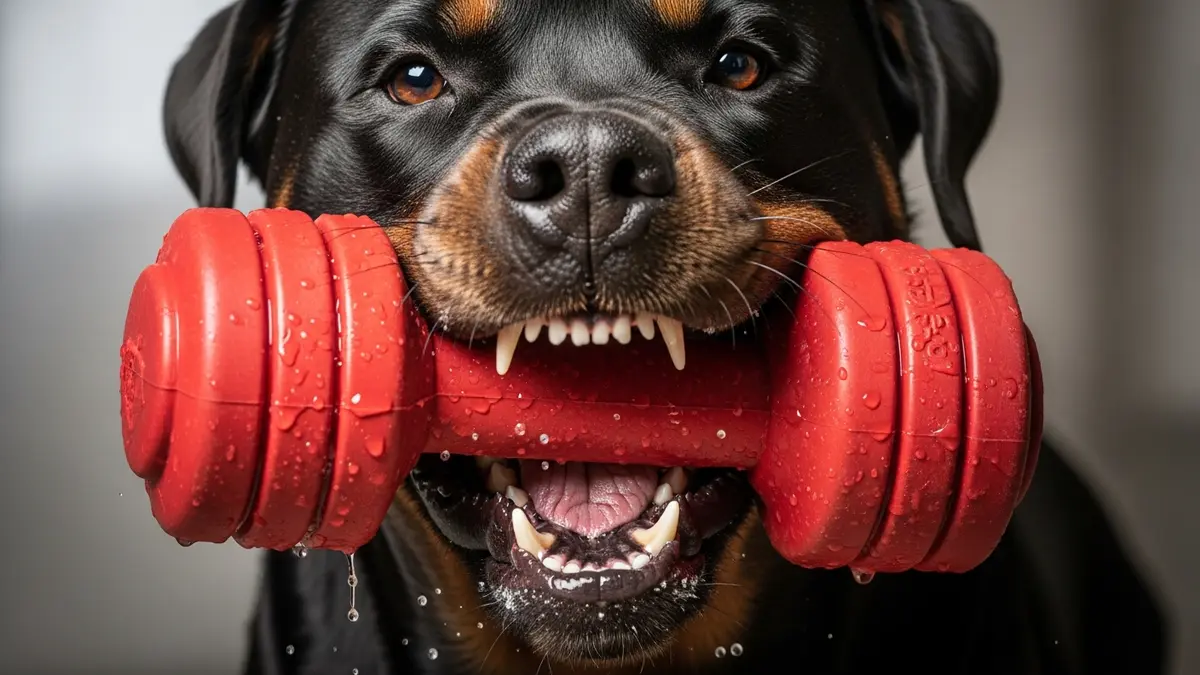
Let us clear something up before you spend another dollar: a truly undestroyable toy does not exist. Every rubber compound, every nylon bar, every layered fabric ever sold has met a dog that took it apart. When shoppers type undestroyable into a search bar, what they actually mean is a toy that lasts weeks or months with a determined chewer instead of minutes. That is an achievable goal, and it is exactly what this guide is about.
The word undestroyable is a shopper's word, not an engineering claim. Manufacturers are careful to say chew resistant, durable, or built for power chewers, because any brand that promised a genuinely undestroyable product would be writing refund checks forever. Reading the label this way protects you: when packaging hints that nothing can destroy the toy, treat it as marketing, and judge the toy by its material, construction, and guarantee instead.
There is a useful spectrum hiding behind the word. At one end sit plush squeakers that survive a Labrador for about ninety seconds. In the middle live rope toys, standard rubber, and most rubber-blend chews. At the far end are dense natural rubber toys and solid one-piece designs, the closest thing to undestroyable that money can buy. Knowing where a toy sits on that spectrum before you buy is most of the battle.
This guide walks through why dogs shred toys, which materials genuinely resist them, how the near undestroyable champions earn their reputation, and how to test any new toy safely. If your dog has already destroyed a toy box worth of failures, our roundup of indestructible dog toys pairs well with everything below.
Why Dogs Destroy Toys in the First Place
Destruction is not misbehavior; it is biology doing its job. Chewing and dissecting sit inside the natural canine predatory sequence, the same instinct chain that once ended with a wild canid opening its catch. A modern dog ripping the stuffing out of a plush duck is completing that sequence on the only prey available. Expecting a strong-jawed dog not to dissect a soft toy is expecting the dog not to be a dog.
If you want even more options, check out our guide to automatic ball launcher.
Jaw strength and persistence vary enormously between individuals. Working breeds such as Rottweilers, German Shepherds, pit bull types, and many terriers combine powerful jaws with a low frustration threshold for giving up. But plenty of medium-sized mixed breeds out-chew them all through sheer dedication. The dog, not the breed chart, tells you what durability level you need, which is why our guide to dog toys for aggressive chewers starts with reading your own dog first.
Boredom multiplies destructive power. A dog with unspent physical and mental energy funnels all of it into whatever is in front of its teeth, and a toy that might survive a tired dog for months can die in an afternoon with an under-exercised one. If every toy in the house is dying quickly, the honest first fix is often more walks, more sniffing time, and more training games, not a tougher toy.
Texture and sound feedback also matter. Toys that crinkle, squeak, or give way slightly reward the dog for biting harder, which accelerates destruction. The most durable designs deliberately avoid that escalation loop: they compress and spring back without tearing, offering satisfying resistance while giving the dog nothing to unravel, no seam to find, and no edge to peel.
Toy Materials Ranked by Survival Odds
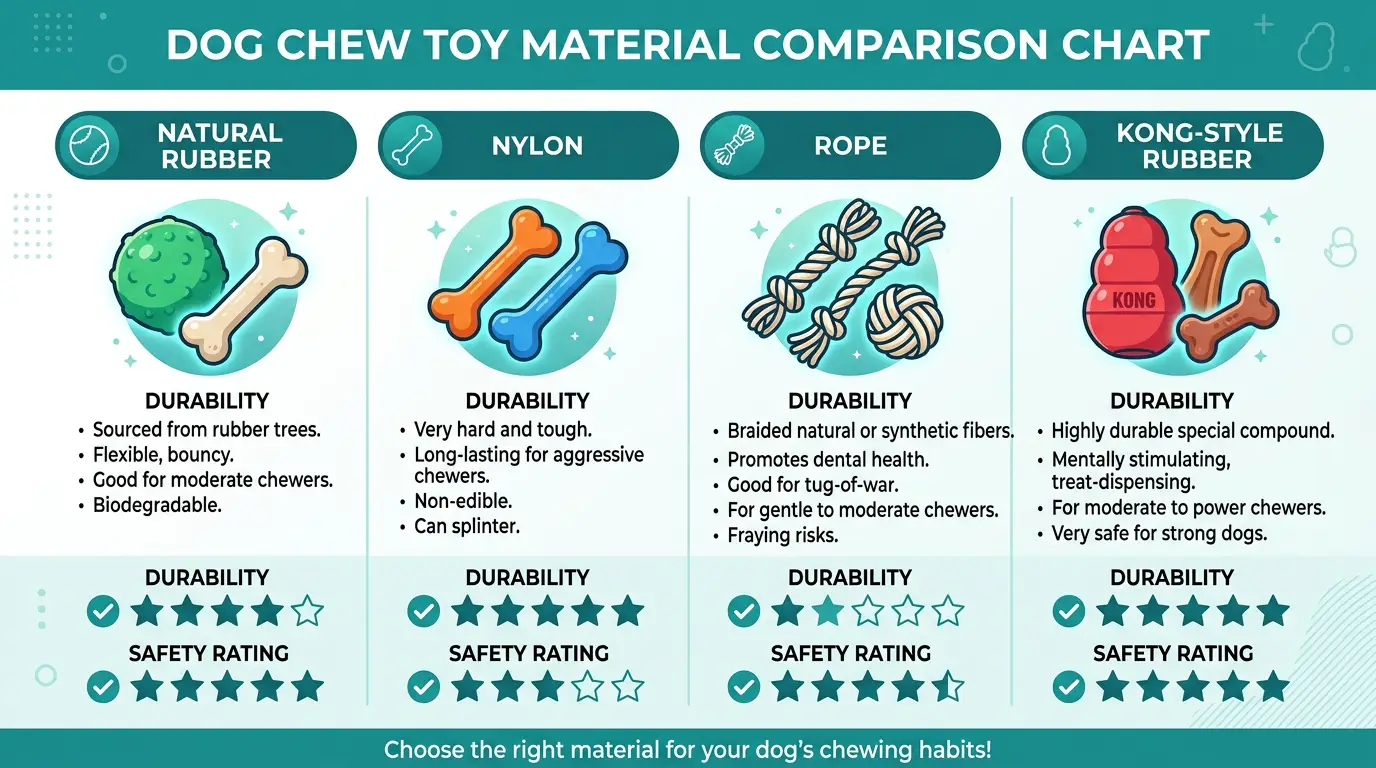
Plush and fabric toys sit at the bottom of the durability ladder. They have a real role in play, and some dogs carry a soft toy gently for years, but for a power chewer a seam is an invitation and stuffing is a prize. If your dog dissects plush, reserve it for supervised cuddle play only and never leave it in the crate.
Rope toys rank slightly higher, and they earn their place in tug games, but long strands become a hazard once the rope frays. Swallowed strands can cause serious intestinal trouble, so a fraying rope should be retired immediately. Standard vinyl and thin rubber toys also fail fast under strong jaws; they are priced for average chewers, not for demolition experts.
Nylon chews are genuinely hard to destroy, which is why they dominate the heavy chewer aisle. The trade-off is hardness: nylon does not flex, so aggressive chewers can wear their teeth on it, and shed slivers need watching. Dense natural rubber is the sweet spot for most power chewers, hard enough to resist tearing yet flexible enough to protect teeth. Our comparison of tough dog toys breaks these categories down model by model.
Construction matters as much as material. One-piece designs with no glued seams, no embedded squeakers, and no thin protrusions last dramatically longer than multi-part toys made from the same compound. A tail, an ear, or a raised nub is where destruction starts; a smooth, solid form gives teeth nowhere to begin. When in doubt, pick the toy with the fewest features to grab.
The Closest Things to an Undestroyable Toy
If any product family has earned the near undestroyable reputation, it is the black KONG Extreme. KONG describes it as its most durable natural rubber formula, built specifically for the strongest chewers, and the official KONG Extreme page positions it for stuff, chew, and play use. The snowman shape bounces unpredictably, the hollow core takes food stuffing, and the dense rubber compresses instead of tearing. We covered it in depth in our KONG Extreme guide.
You might also enjoy our recommendations for plush vs rope vs indestructible dog toys.
Solid rubber balls and one-piece rubber chew bars are the other reliable finishers. Because they are solid all the way through, there is no core to breach and no wall to collapse, only slow surface wear that you can monitor for months. Choose versions sized well beyond your dog's gape so the ball can never slip behind the back teeth.
Some owners land on ultra-hard natural chews or nylon wishbone shapes as their nearly undestroyable answer. These last impressively, but hardness cuts both ways: anything that does not flex at all shifts the stress onto tooth enamel. A practical middle path many households settle on is rubber for daily solo chewing and harder chews only for short, supervised sessions.
One more honest note: even the champions lose eventually. A KONG Extreme with a power chewer is measured in months, not forever. The realistic promise of a nearly undestroyable toy is not immortality; it is that the toy fails slowly, visibly, and safely, giving you time to replace it before any piece ends up swallowed.
How to Test a New Toy Without Losing It in Five Minutes
Give every new toy a structured trial instead of an unsupervised debut. Hand it over when your dog is calm and lightly exercised, not at peak zoomies, and stay in the room for the entire first session. Ten to fifteen minutes is enough to learn how your dog approaches it: mouthing and carrying is a good sign, immediate corner-seeking dissection means the toy is outmatched.
Check the toy after each of the first several sessions. Run your fingers over the surface feeling for punctures, deep tooth gouges, thinning walls, or a developing flap. Surface scratches are normal and expected; a hole that catches your fingernail is the beginning of the end. Retire a toy the moment your dog can lift an edge, because from there destruction accelerates fast.
Time-limit access in the early weeks. A toy that lives on the floor full time gets ground down as background entertainment, while a toy that appears for focused sessions keeps both its novelty and its structure. This is doubly true for food-stuffed rubber toys, which should come out for a purpose and go away after.
Keep a simple mental log of survival times. If a style of toy consistently lasts under a week, stop rebuying that category and step up a durability tier. The pattern across a few purchases tells you more than any label, and it usually points power chewer households toward the same short list of dense rubber survivors covered in our heavy chewer toy guide.
Safety Rules for Power Chewer Toys

Size up, always. The single most dangerous toy in a power chewer household is one small enough to wedge behind the molars or block the airway. A toy should be clearly larger than the widest opening of your dog's mouth, and when your dog sits between two sizes, take the bigger one. Big dogs with small toys are how emergencies happen.
For related picks, take a look at our toy cup yorkie roundup.
Inspect on a schedule, not on a whim. Once a week, squeeze the toy, flex it, and look inside any cavity with a flashlight. You are looking for cracks, chunks missing, sharp chewed edges, and walls that flex more than they used to. Damaged toys do not get one more day; they go in the bin while your dog is not watching.
Know the swallowing red flags before you need them: gagging, repeated vomiting, refusal to eat, lethargy, or a suddenly missing chunk of toy. If a piece disappears and you cannot find it, call your veterinarian rather than waiting to see. General husbandry resources such as the ASPCA dog care library are useful background reading, but a swallowed object is a same-day phone call.
Finally, match the toy to the moment. Crate time and alone time get only the most trusted, most solid items. Interactive play with tug ropes or plush happens when you hold one end. That two-tier system, bombproof toys for solo time and fun fragile toys for supervised time, prevents most toy disasters before they start.
Making Durable Toys Last Even Longer
Rotation is the cheapest durability upgrade there is. Keep three or four heavy-duty toys in circulation but only one or two out at a time, swapping every few days. Each toy gets rest, your dog gets novelty, and the total chewing load spreads across the set instead of grinding down a single favorite.
Use food stuffing to change how the toy is used. A hollow rubber toy packed with kibble and a smear of dog-safe peanut butter turns raw destruction energy into licking and problem-solving, which is dramatically gentler on the toy. Freeze the stuffed toy and a session stretches even longer. The toy lasts longer and the dog finishes calmer, a rare double win.
Teach a trade game early. A dog that happily swaps a toy for a treat lets you remove damaged items without a chase or a guarding standoff. Trade also lets you end sessions before the frantic final minutes when most toy damage actually happens, keeping arousal lower and toys intact.
Store toys clean and dry. Rubber that sits outside in sun and rain hardens and cracks years early, and cracked rubber tears where healthy rubber would flex. A quick wash, a full dry, and a spot in the toy bin after each session keeps a quality toy in service for its full lifespan.
Choosing Your Next Nearly Undestroyable Toy
Here is the buying checklist that survives contact with a real power chewer. One: dense natural rubber or solid one-piece construction. Two: sized larger than you think you need. Three: no seams, squeakers, or thin appendages. Four: a shape that supports stuffing or unpredictable bouncing so the toy earns play value beyond raw chewing. Five: a brand with a track record among heavy chewer owners.
Set your expectations in months and treat anything beyond that as a bonus. A twenty dollar toy that lasts four months costs less per week than a parade of five dollar toys dying every weekend, and it removes the steady risk of swallowed fragments that comes with every quick kill.
Our shop stocks its chew lineup with exactly this checklist in mind, from classic stuffable rubber to solid chew bars, and the guide to what toys dogs actually like can help you balance durability with genuine fun, because the perfect toy is the one that survives and gets chosen off the shelf by your dog every day.
The bottom line: undestroyable is a direction, not a destination. Buy dense and solid, size up, supervise the debut, inspect weekly, rotate the roster, and retire casualties early. Do that, and the toy graveyard in your living room finally stops growing, replaced by a small, battered, loyal squad that keeps showing up for duty.
For more independent, vet-reviewed guidance on this topic, the American Kennel Club expert advice center is an excellent place to start.
Frequently Asked Questions
Is there any dog toy that is truly undestroyable?
No. Every toy can be destroyed by a sufficiently determined dog given enough time. The realistic goal is a toy that fails slowly and safely over weeks or months, such as dense natural rubber one-piece designs, rather than a toy that promises to be undestroyable forever.
What is the closest thing to an undestroyable dog toy?
Dense natural rubber toys with one-piece construction come closest. The black KONG Extreme is the best-known example, and solid rubber balls and chew bars are strong alternatives, because they have no seams, cores, or thin parts where destruction can start.
Why does my dog destroy every toy in minutes?
Strong jaws plus instinct plus unspent energy. Dissecting toys completes a natural predatory sequence, and boredom multiplies the intensity. Step up to power chewer materials, add more daily exercise and mental work, and reserve soft toys for supervised play only.
Are nylon chews safe for power chewers?
Nylon resists destruction well but does not flex, so very aggressive chewers can wear or crack their teeth on it over time. Many owners use flexible dense rubber for daily chewing and give harder nylon chews only in short supervised sessions.
When should I throw away a durable dog toy?
Retire a toy as soon as your dog can lift an edge, a hole catches your fingernail, a chunk is missing, or a hollow toy's wall has thinned or cracked. Surface scratches are normal; structural damage means the toy comes out of service that day.
What should I do if my dog swallows part of a toy?
Call your veterinarian the same day, especially if you notice gagging, vomiting, refusal to eat, or lethargy. Do not wait for a missing piece to reappear on its own, because swallowed toy fragments can cause serious intestinal blockages.