A teddy bear dog is not one official breed. It is the popular nickname for a family of small companion crosses bred for a soft rounded face, button eyes, and a plush low-shedding coat. The classic version is the Shichon (also called Zuchon), a Shih Tzu and Bichon Frise cross, though Maltipoos, Cavapoos, and similar mixes often wear the same label.
This guide covers what actually matters if you are considering one: realistic size and lifespan, temperament with kids and other pets, the honest grooming workload, and how to set one up for a happy life.
What Exactly Is a Teddy Bear Dog?
The name started as a breeder marketing term in the 1990s and stuck because it is accurate: these dogs genuinely look like plush toys. The most common crosses sold as teddy bear dogs are the Shichon (Shih Tzu x Bichon Frise), the Maltipoo (Maltese x Poodle), and the Cavapoo (Cavalier King Charles Spaniel x Poodle).
Because they are crossbreeds, teddy bear dogs are not recognized by the American Kennel Club, and traits vary more than in purebreds. Two puppies from the same litter can differ noticeably in coat and personality. Meeting the parents tells you more than any listing photo. For background on the parent breeds, the AKC expert advice center has detailed profiles.
What the crosses share is the goal: a small, affectionate, people-oriented companion that stays puppy-like in looks and temperament well into adulthood.
Size, Coat, and Lifespan
Most teddy bear dogs land between 9 and 15 pounds and stand 9 to 12 inches at the shoulder, small enough for apartments and airline cabins but sturdier than true teacup breeds. Poodle-heavy crosses can run slightly larger.
Their coat is the signature feature: soft, dense, wavy to curly, and low-shedding. Low-shedding does not mean no-maintenance or guaranteed hypoallergenic; hair that does not fall out must be brushed out, and allergy responses vary from person to person. Spend time with the individual dog before assuming allergy compatibility.
Small companion breeds are generally long-lived, and teddy bear crosses typically enjoy lifespans in the low-to-mid teens with good care. Dental care is the most commonly neglected factor in small-breed health, so start tooth brushing young.
Temperament and Family Fit
Teddy bear dogs were bred purely for companionship, and it shows. They are affectionate, eager to please, and typically get along well with children, other dogs, and cats when socialized early. Their gentle mouths and moderate energy make them safer around small kids than many terrier-type small breeds.
The flip side of that people-focus is separation sensitivity. A teddy bear dog left alone for long workdays is a candidate for anxious barking and destructive chewing. They do best in homes where someone is around much of the day, or with structured alone-time training from puppyhood.
They are alert enough to announce visitors but are not guard dogs, and most meet strangers as future friends.
The Honest Grooming Workload
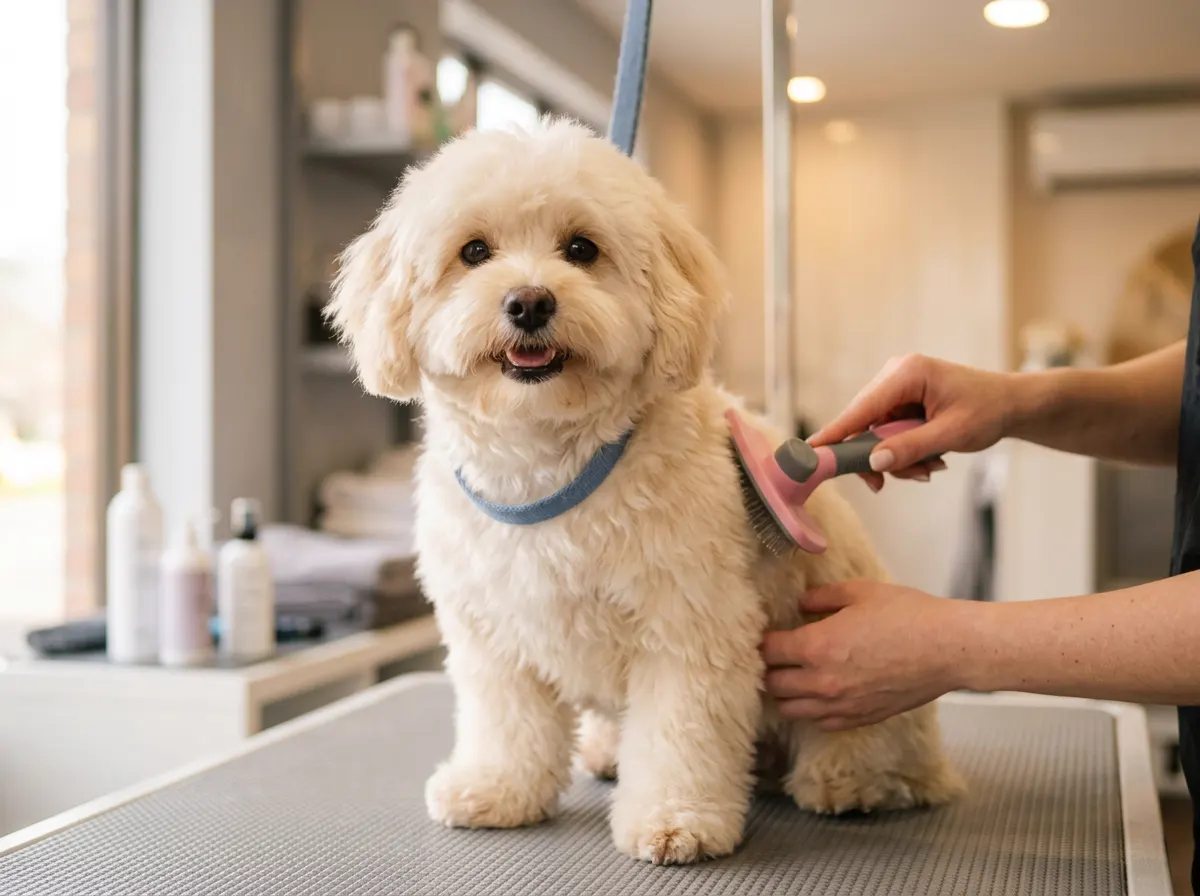
The teddy bear look is earned, not automatic. Plan on brushing several times a week (daily during seasonal coat changes) to prevent mats, which form fastest behind the ears, in the armpits, and under the collar. A slicker brush plus a metal comb covers most needs.
Professional grooming every 6 to 8 weeks keeps the coat at the classic rounded teddy trim. Skipping appointments leads to matting that sometimes can only be fixed by shaving the coat short and starting over.
Light-coated dogs often develop tear staining under the eyes. Daily face wipes and keeping the face trim short manage it well. Add weekly ear checks (floppy ears trap moisture) and monthly nail trims to round out the routine.
Exercise, Training, and Daily Life
Two short walks plus a play session, roughly 30 to 45 minutes of total activity, satisfies most teddy bear dogs. They adapt happily to apartment living as long as their people are present and engaged. Puzzle feeders and sniffing games tire them out as effectively as extra mileage.
Training is usually a pleasure. These crosses are people-pleasers that respond quickly to positive reinforcement and small treats. House training can take patience, as with most small breeds, so consistency and a predictable schedule matter more than technique.
Set up your home before the puppy arrives: appropriately sized puppy teething toys save your furniture during the chewing months, and our new puppy essentials checklist covers the rest of the shopping list.
Frequently Asked Questions
What breeds make a teddy bear dog?
The classic teddy bear dog is the Shichon or Zuchon, a cross between a Shih Tzu and a Bichon Frise. The nickname also covers other small plush-coated crosses such as the Maltipoo (Maltese x Poodle) and Cavapoo (Cavalier King Charles Spaniel x Poodle). It is a descriptive label, not an officially recognized breed.
How big do teddy bear dogs get?
Most reach 9 to 15 pounds and stand 9 to 12 inches tall at the shoulder as adults. Size varies with the parent breeds, and Poodle-heavy crosses can be a little larger. Be cautious of listings promising extreme miniature sizes, since extreme downsizing is linked to health problems.
Are teddy bear dogs hypoallergenic?
They are low-shedding, which many allergy sufferers tolerate well, but no dog is truly hypoallergenic. Allergens live in dander and saliva, not just shed hair, and individual reactions vary widely. Spend time with the specific dog before committing if allergies are a concern in your household.
How long do teddy bear dogs live?
Small companion crosses are generally long-lived, and teddy bear dogs typically reach 12 to 16 years with good care. Dental hygiene, weight management, and regular veterinary checkups are the biggest owner-controlled factors in helping a small dog reach the high end of that range.
Are teddy bear dogs good with kids?
Generally yes. They were bred for companionship and tend to be gentle, patient, and playful with children. As with any small dog, supervise interactions with toddlers, since rough handling can injure a 10 pound dog and teach it to fear kids. Early socialization makes the best family dogs.