Top illustration: a tabby cat crouched to pounce on a small robotic mouse toy. Illustration: Livehappypet.
Robotic cat toys promise to keep an indoor cat busy while you are out, and some of them genuinely do. This guide explains what kind of movement cats respond to, which designs let a cat finish the hunt, how to keep a robotic toy interesting, and where it stops being useful.
Quick Answer: What Should You Know About Robotic Cat?
Choosing a robotic cat toy well comes down to four things: movement that behaves like prey, with real pauses; a lure the cat can actually catch; short scheduled sessions rather than all-day running; and a check of every moving part before the toy is left running unsupervised. The sections below cover each one, plus the mistakes owners make most often.
What People Mean by Robotic Cat, and Which One You Are Looking For?
Answer: This search splits in two, and the two have almost nothing in common. One group wants a robotic toy, a motorised thing that moves by itself so the cat can hunt it. The other wants a robotic companion animal, a lifelike mechanical pet for somebody who cannot keep a living one. Deciding which you are.
This search splits in two, and the two have almost nothing in common. One group wants a robotic toy, a motorised thing that moves by itself so the cat can hunt it. The other wants a robotic companion animal, a lifelike mechanical pet for somebody who cannot keep a living one. Deciding which you are after saves a lot of disappointment.
A robotic toy earns its place by covering the hours you are not home. It cannot replace you, but it can give a bored indoor cat something that moves at eleven in the morning while you are at work. Judged that way, the good ones are genuinely useful and the bad ones are an expensive object the cat ignored after a week.
A robotic companion pet is a different purchase entirely. These are built for people, usually older adults or anyone in housing where a real animal is not allowed, and they purr, turn their heads and respond to touch. They are not toys for cats, and a real cat will usually treat one as either furniture or an intruder.
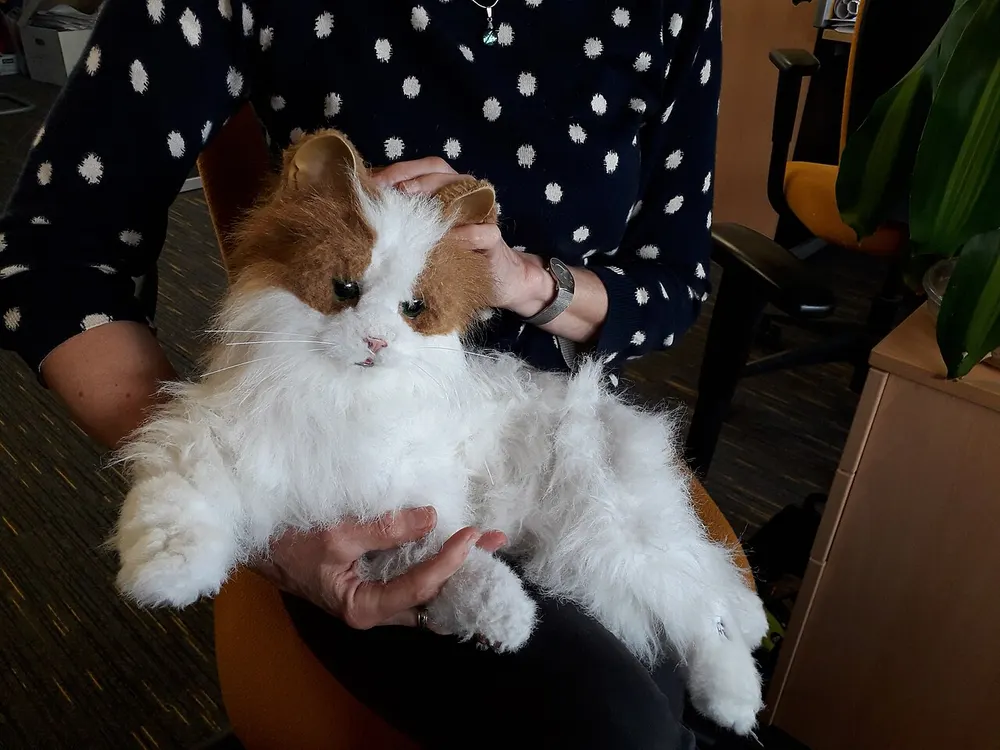
Photo: Becsta94 / Wikimedia Commons, CC BY-SA 4.0
What Kind of Movement Makes Robotic Cat Work on a Real Cat?
Answer: Cats are triggered by motion that behaves like prey, which means erratic, low to the ground, and moving away rather than toward them. A robotic toy that travels in a smooth predictable circle is read, correctly, as a machine. Cats watch it twice and then ignore it, which is why so many of these end.
Cats are triggered by motion that behaves like prey, which means erratic, low to the ground, and moving away rather than toward them. A robotic toy that travels in a smooth predictable circle is read, correctly, as a machine. Cats watch it twice and then ignore it, which is why so many of these end up in a cupboard.
Sensor-triggered designs try to solve this by moving only when the cat comes close, and our motion-activated cat toys guide looks at that approach.
The feature that matters most is the pause. Real prey stops, freezes, then bolts, and a robotic toy that builds random pauses into its pattern holds a cat's attention far longer than one that never stops. If you are comparing two, look for irregular timing and a genuine stop rather than a change of speed.
Height matters nearly as much. Most cats default to a ground-hunting pattern, so toys that scuttle under a rug edge or dart behind furniture do better than toys that hover. A motorised feather on a flexible arm that disappears below a dome is working the same instinct, which is why that design has outlasted most of the others.
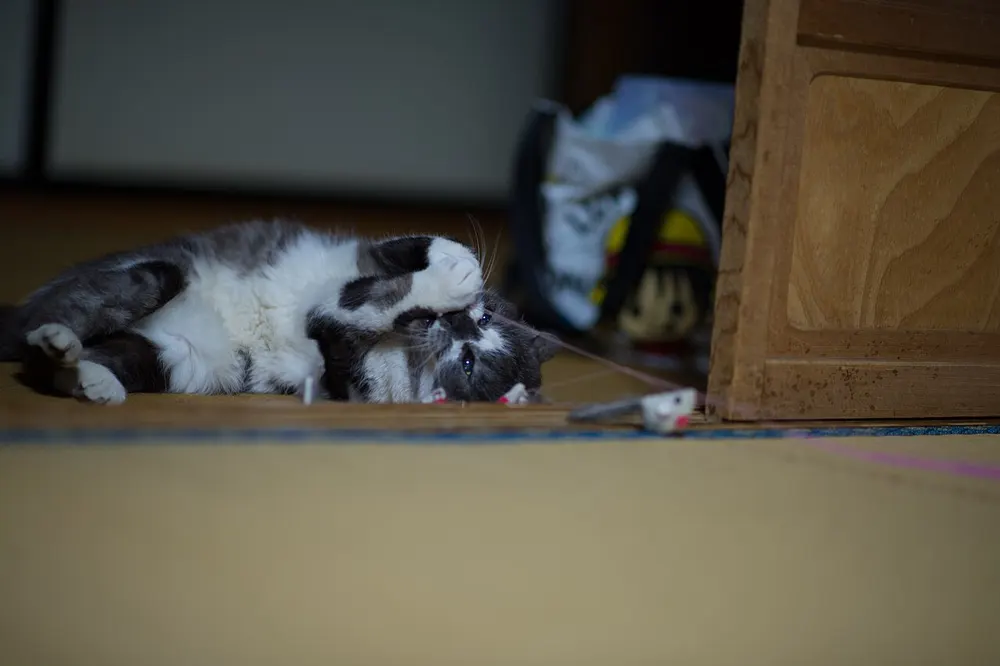
Photo: Takashi Hososhima / Wikimedia Commons, CC BY-SA 2.0
Why Robotic Cat Must Let the Cat Win Sometimes?
Answer: A cat's hunting sequence runs from stalk to chase to pounce to catch to bite, and the catch is the part that resolves it. A robotic toy the cat can never actually pin leaves that sequence hanging, and an unfinished sequence builds frustration rather than satisfaction. This is the single biggest design flaw in the.
A cat's hunting sequence runs from stalk to chase to pounce to catch to bite, and the catch is the part that resolves it. A robotic toy the cat can never actually pin leaves that sequence hanging, and an unfinished sequence builds frustration rather than satisfaction. This is the single biggest design flaw in the category.
Lasers are the clearest example. A dot cannot be caught, ever, so a cat chasing one is being run through an endless loop with no resolution. If you use a laser at all, finish every session by landing the dot on a physical toy or a few treats so the cat catches something solid. Many behaviourists avoid them entirely for this reason.
Better robotic toys give the cat something to grab: a feather that can be pinned, a ball that can be trapped against a wall, a track toy the cat can hook with a claw. Those let the hunt finish. Add a meal or a treat after a session if you can, since hunt, catch and eat is the natural order and following it is what leaves a cat settled.
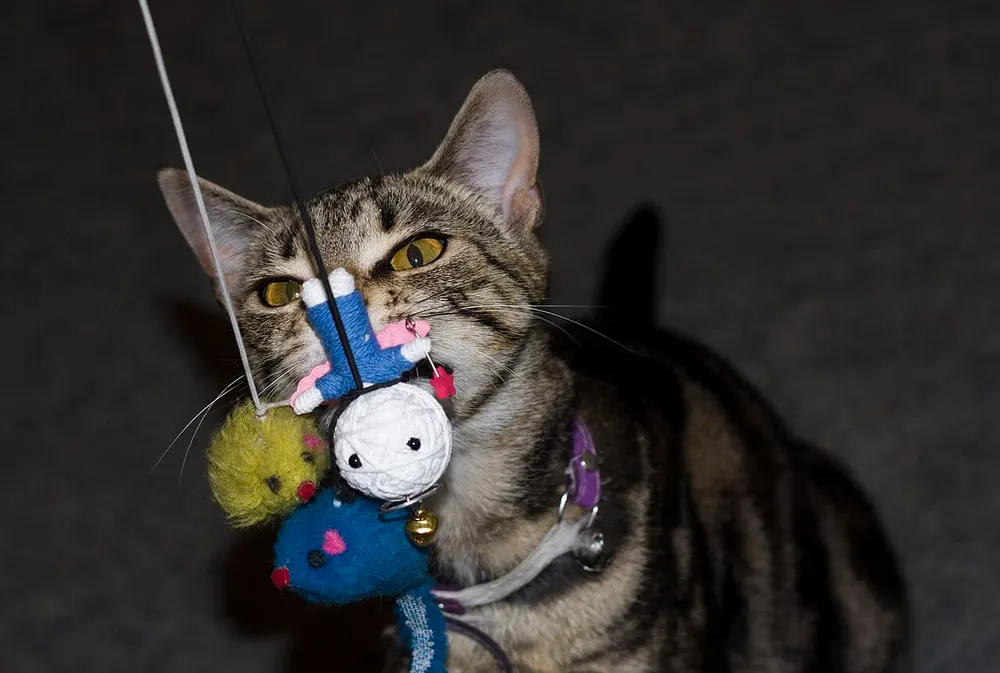
Photo: Rachel Hofton / Wikimedia Commons, CC BY 2.0
What Should Pet Owners Know About Different Types of Robotic Cat and When to Use Each?
Answer: Motorised wand towers hide a flexible arm with a feather or ribbon on the end under a dome, and sweep it out at intervals. They are the most reliably interesting design because the lure vanishes and reappears, and the cat can actually catch it. They are also the noisiest, so check where the motor sits.
Motorised wand towers hide a flexible arm with a feather or ribbon on the end under a dome, and sweep it out at intervals. They are the most reliably interesting design because the lure vanishes and reappears, and the cat can actually catch it. They are also the noisiest, so check where the motor sits before putting one near where you work.
For the wider category these sit in, see our automatic cat toys guide.
Self-propelled balls and rolling robots wander across the floor, bump obstacles, and change direction. They cover more ground than anything else and suit cats who chase rather than stalk. Their weakness is hard floors and furniture legs, which turn an unpredictable path into a repetitive bounce in one corner of the room.
Track toys with a ball in a circular channel are technically not robotic at all, since the cat provides the power, and they are frequently the better buy. Nothing to charge, nothing to break, no noise, and the cat sets the pace. For a household testing whether a cat enjoys solo play at all, this is the cheapest honest experiment.
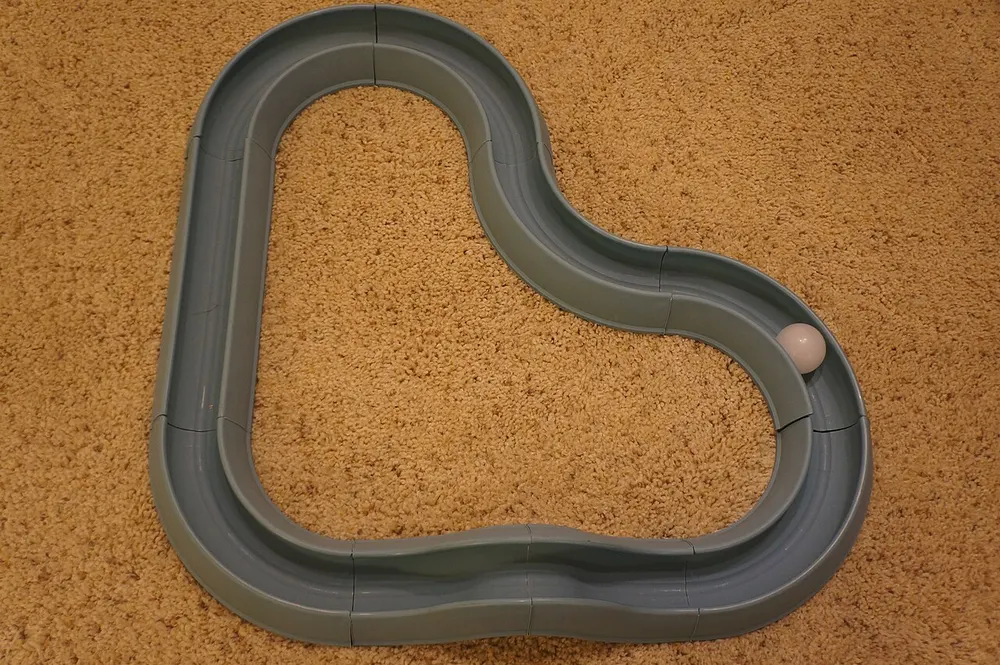
Photo: FASTILY / Wikimedia Commons, CC BY-SA 4.0
Treat-dispensing robotic feeders and puzzle rollers combine food with movement, which holds attention far longer than motion alone. Count whatever they dispense as part of the day's food rather than as extra, and clean them properly, because a dispenser with stale crumbs in the chamber is the reason cats abandon them.
What Should Pet Owners Know About Safety Checklist for Robotic Cat?
Answer: Switch it off when you leave, at least until you have watched a full cycle. The point of these toys is unsupervised play, but you only know what a robotic toy does to your particular cat and your particular floor after you have seen it run. Treat the first few sessions as supervised and go.
Switch it off when you leave, at least until you have watched a full cycle. The point of these toys is unsupervised play, but you only know what a robotic toy does to your particular cat and your particular floor after you have seen it run. Treat the first few sessions as supervised and go from there.
Check the moving parts for fur traps. Exposed wheels, open gear slots and the gap where a motorised arm retracts are all places a whisker, a claw or a long coat can be pulled in. Run a finger around every moving edge, and skip any design with an open mechanism if you have a long-haired cat.
Look for parts that detach. Feathers, pompoms and clip-on lures on robotic toys are meant to be replaced, which means they come off, which means they can be swallowed. Replace them when they are chewed down, keep charging cables out of reach, and never leave a toy charging where a cat can chew the lead.
How to Use Robotic Cat Without the Cat Losing Interest?
Answer: Novelty is the whole game, and permanent availability destroys it. A robotic toy left out on the same patch of carpet becomes part of the room within days. Put it away, bring it out, and move it to a different spot and a different room, and the same toy keeps working for months rather than.
Novelty is the whole game, and permanent availability destroys it. A robotic toy left out on the same patch of carpet becomes part of the room within days. Put it away, bring it out, and move it to a different spot and a different room, and the same toy keeps working for months rather than weeks.
If a laser is one of the toys in that rotation, read our laser cat toy guide before you add it.
Use a timer or a scheduled mode where the toy has one, and set it for the hours your cat is naturally active rather than the hours that suit you. Dawn and dusk are when most cats wake up and go looking for something to do, and a robotic toy that starts moving at those times is far more likely to be used.
Rotate two or three different types rather than buying several of the same. A motorised feather, a rolling ball and a track toy exercise different parts of the hunt, so alternating them keeps all three interesting. Keep them in a cupboard between turns and bring one out at a time.
What Robotic Cat Cannot Replace?
Answer: No robotic toy replaces playing with your cat. A machine is predictable within a few sessions, while a person holding a wand can read the cat, change the rhythm, hide the lure and let it be caught at the right moment. The gap between those two is the reason a short daily session with a.
No robotic toy replaces playing with your cat. A machine is predictable within a few sessions, while a person holding a wand can read the cat, change the rhythm, hide the lure and let it be caught at the right moment. The gap between those two is the reason a short daily session with a wand outperforms any amount of automated motion.
Nor do they fix loneliness. A cat that is destructive, vocal or clingy when alone is telling you something about its day as a whole, and a toy that moves for ten minutes does not change the other hours. Look at feeding routine, vertical space, window access and whether a second cat would suit the household.
If your cat ignores every robotic toy you try, that is information rather than failure. Some cats simply do not hunt objects that a person is not holding. Spend the money on a cat tree, a window perch or a good wand instead, and keep the automated options for the cats who genuinely take to them.
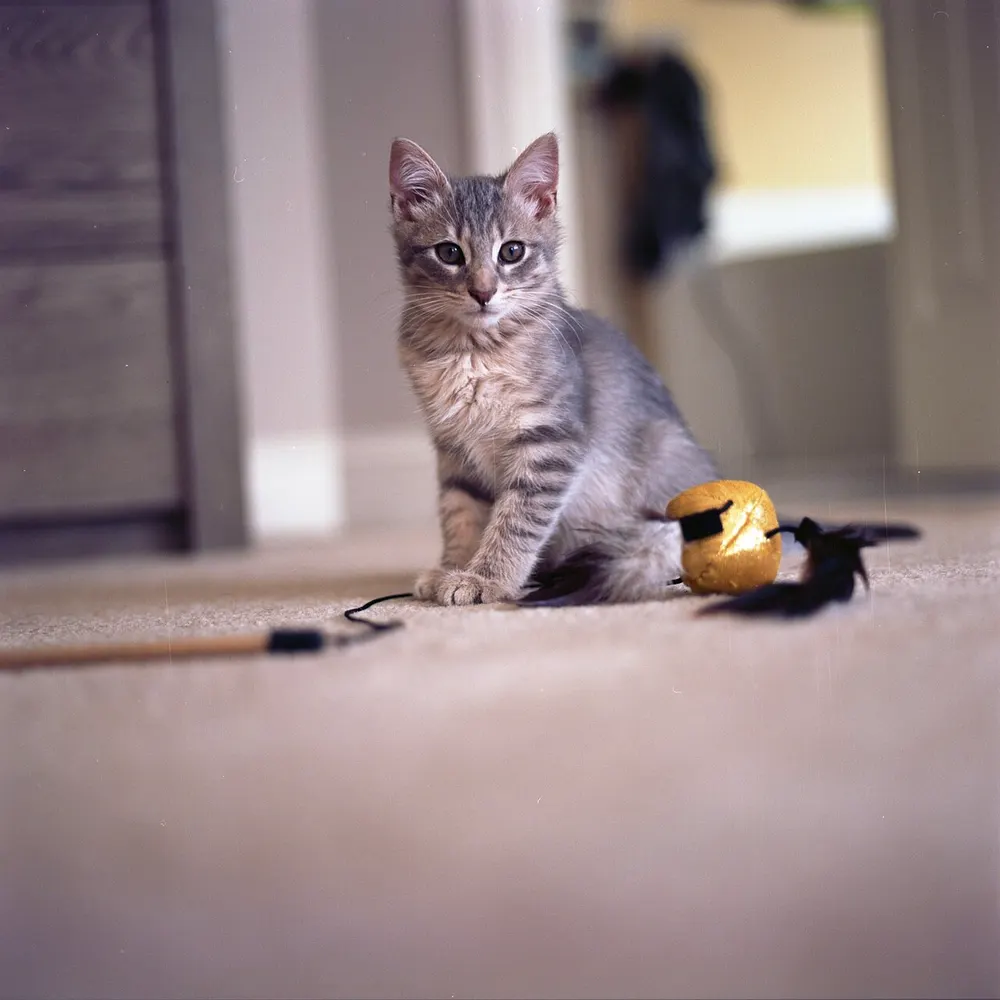
Photo: Tom Mills / Wikimedia Commons, CC BY-SA 2.0
What Should Pet Owners Know About Common Mistakes Pet Owners Make with Robotic Cat?
Answer: Leaving it running all day is the first. A toy that moves constantly stops being prey and becomes background, and the battery is flat by the time anybody is there to see whether the cat engaged. Short scheduled bursts work far better than continuous motion.
Leaving it running all day is the first. A toy that moves constantly stops being prey and becomes background, and the battery is flat by the time anybody is there to see whether the cat engaged. Short scheduled bursts work far better than continuous motion.
Buying on features rather than on movement is the second. Application control, colour-changing lights and voice prompts are sold to people; cats respond to erratic low movement with pauses. A simple toy with a good motion pattern beats a connected one with a predictable path every time.
Expecting a robotic toy to tire out a young, high-energy cat is the third. It will take the edge off boredom, and that is worth having, but a kitten or an adolescent needs real sessions with a person and something to climb. Buy the toy for the hours you are out, not as a substitute for the hours you are in. Our cat toy range covers the interactive side.
If the problem is a stressed or unsettled cat rather than a bored one, the International Cat Care advice hub has veterinary-led guidance on behaviour and indoor living.
What Questions Do Pet Owners Ask About Robotic Cat?
Answer: Owners mostly ask whether robotic toys work at all, whether they are safe to leave running, and how to stop a cat losing interest. In short: they work for cats that hunt erratic, low movement, they need watching for a few sessions first, and rotation keeps them interesting.
Do robotic cat toys actually work?
For some cats, very well, and for others not at all. The ones that hold attention move erratically, stay low, and pause the way real prey does. Toys that travel in a smooth predictable path get ignored within a few sessions. Expect to try one and accept that your cat may simply not hunt objects nobody is holding.
Is a laser pointer a good automatic toy for a cat?
It is the one to be most careful with. A dot can never be caught, so the hunting sequence never resolves and some cats become frustrated or obsessive. If you use one, always finish by landing the dot on a physical toy or some treats so the cat catches something solid, and never shine it in a cat's eyes.
Can I leave an automatic cat toy on while I am out?
Yes, once you have watched a full cycle with the cat in the room. Check first that no whisker, claw or long coat can be caught in wheels or gear slots, that the lure cannot be pulled off and swallowed, and that nothing is charging within reach of a chewing cat. After that, a scheduled burst while you are out is exactly what these are for.
Will a robotic toy stop my cat being bored or lonely?
It helps with boredom during the hours you are out and does not address loneliness. A cat that is destructive, vocal or clingy when alone is reacting to its whole day, so look at the feeding routine, vertical space, window access and whether a companion would suit. No machine replaces a daily wand session with a person.
What is a robotic companion cat?
It is a lifelike mechanical pet built for people rather than for cats, often used by older adults or anyone living where real animals are not allowed. They purr, turn their heads and respond to touch. They are not a toy for a real cat, and a resident cat will generally treat one as furniture or as an intruder.
How do I stop my cat losing interest in an automatic toy?
Put it away between sessions. Permanent availability is what kills these toys, because a machine on the same patch of carpet becomes part of the room within days. Move it to different rooms, run it at dawn and dusk when cats are naturally active, and rotate two or three different types rather than leaving one out.
Are track toys better than motorised ones?
Often, and they cost far less. A ball in a circular channel has nothing to charge, nothing to break and no motor noise, and the cat sets the pace. If you are not sure whether your cat enjoys solo play at all, a track toy is the cheapest way to find out before spending on anything motorised.
How do I clean an automatic or treat-dispensing toy?
Unplug or remove the batteries first, wipe the shell, and take out any food chamber to wash and dry completely. Stale crumbs in a dispenser are the usual reason a cat stops using one. Check the lure attachment at the same time and replace it once it is chewed down rather than letting the cat finish it.