If you are looking for the best prong collar, this comprehensive guide covers everything you need to know. Whether you are a first-time pet owner or an experienced one looking to upgrade, you will find practical advice, safety tips, and honest comparisons below.
What a Prong Collar Is and What It Is Designed to Do
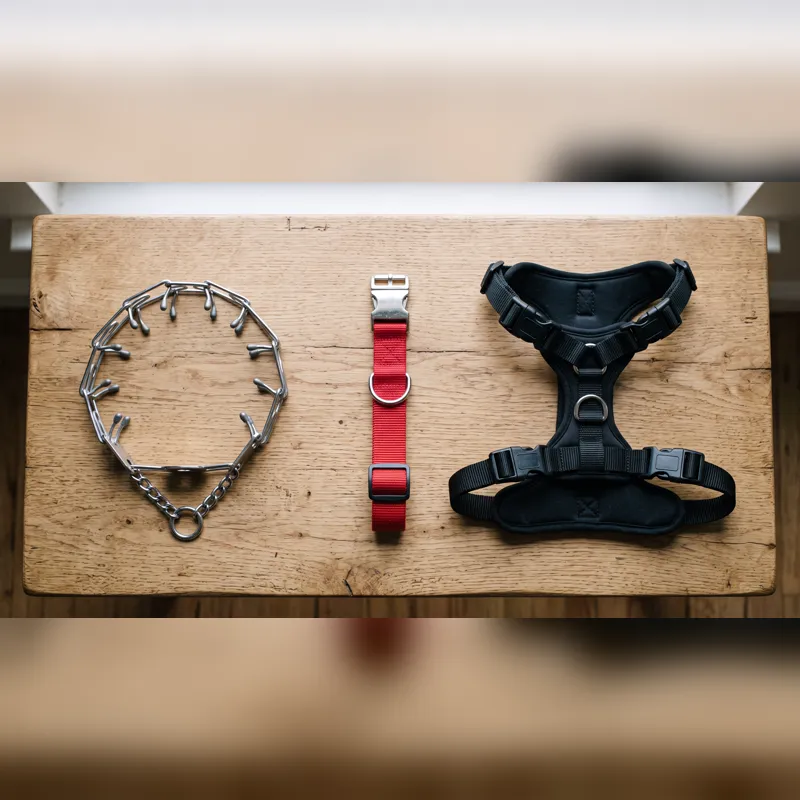
A prong collar, also called a pinch collar, is a training collar made of interlocking metal links, each with blunt prongs that face inward against the dog's neck. When the leash tightens, the collar constricts to a limited degree and the prongs press into the skin around the neck. The design intent is simple: make pulling uncomfortable so the dog stops pulling. Most models limit how far the collar can close, which separates the prong design from choke chains that can tighten without limit.
The tool is marketed mainly for strong dogs that pull hard on leash, and for handlers who feel physically overpowered. Supporters describe the effect as pressure distributed evenly around the neck rather than a concentrated pull against the throat, and often claim it mimics a mother dog's corrective nip. Critics, including a large share of modern trainers and veterinary behavior professionals, describe it more plainly: it is a device that works because it hurts or intimidates, and the mimicry story is marketing rather than science.
This guide takes the same approach as our shock collar article: explain honestly how the tool works, lay out what can go wrong physically and behaviorally, and show the humane alternatives that solve the same walking problems. Wherever you land, the decision should be made with accurate information, because the thing being decided is what your dog wears around its neck every day.
How Prong Collars Apply Pressure
Mechanically, a prong collar converts leash tension into pinching pressure at many points around the neck. In learning terms it works through positive punishment and negative reinforcement: pulling adds discomfort, and slack removes it, so the dog learns that a loose leash is the safe state. When the collar appears to work instantly, that is the mechanism operating, and it is the same mechanism whether the handler calls it pressure, communication, or correction.
For more expert recommendations, check out our adjustable dog collar guide.
The neck is a sensitive place to apply that pressure. It carries the trachea, the thyroid, major blood vessels, lymph nodes, and the cervical spine, and dogs vary in coat thickness, skin sensitivity, and neck build, so the same collar produces very different experiences on different dogs. Fit and placement strongly affect how sharp the sensation is, which is one reason outcomes with this tool are so inconsistent between households.
It is also worth naming what the collar does not do. It does not teach the dog where you want it to walk; it only makes one option unpleasant. Dogs trained primarily through leash corrections often walk politely on the prong and pull again the moment it comes off, because the behavior was suppressed by equipment rather than replaced by a trained skill. Trainers call this being collar-wise, and it is the most common complaint from owners who hoped the tool would be a permanent fix.
The Controversy: What Critics and Supporters Say
The professional argument against prong collars rests on two pillars. The first is welfare: the tool works through discomfort, and modern behavior science offers effective methods that do not. The second is fallout: pain arriving while a dog looks at another dog, a stranger, or a child can build exactly the wrong association, and leash reactivity that started or worsened on a corrective collar is a story trainers hear regularly. Veterinary behavior organizations broadly recommend reward-based methods; the American Veterinary Society of Animal Behavior position statements are the clearest public summary of that professional stance.
Supporters answer that a properly fitted prong, used with timing and restraint by an experienced handler, is safer than an endless choking pull against a flat collar, and that for a physically overmatched owner it can be the difference between walking the dog and not walking it. That argument deserves a fair hearing: chronic hard pulling against a flat collar is genuinely bad for a dog's throat, and an owner being dragged into traffic is a real safety problem, not a preference.
The strongest reply to that argument is not moral but practical: the situations the prong is defended for are handled at least as well by tools that change the physics of pulling without pain, notably front-clip harnesses and head halters, combined with training that teaches the dog where to walk. Some countries have restricted or banned prong collars outright, and several mainstream retailers have stopped selling them, which tells you where the broader consensus has been heading. When a painless tool and a painful tool solve the same problem, the burden of proof sits on the painful one.
Physical and Behavioral Risks
The physical risks concentrate where the pressure does. Repeated pinching can bruise skin, wear away coat, and in thin-coated or sensitive dogs break the skin, especially when the collar is worn too loose and slides, or too low against the base of the neck. Hard corrections and chronic tension load the same structures a veterinarian worries about with any neck pressure: the windpipe, the thyroid region, and the small joints of the upper spine. Dogs with existing neck or airway issues, including breeds prone to breathing problems, have no business in any corrective neck collar.
You might also find our halo dog collar article helpful when shopping.
The behavioral risks are quieter and often costlier. A dog that experiences sharp discomfort while looking at another dog does not file it under my handler corrected my pulling; it files it under other dogs make bad things happen near my neck. That is how leash reactivity is born or intensified. Other dogs shut down instead: they walk in a flat, careful way that owners sometimes mistake for calm obedience, when it is closer to a person tiptoeing around a bad-tempered boss.
There is also a relationship cost that is easy to underestimate. Leash time is most of many dogs' access to the world, and when the leash becomes a channel for intermittent discomfort, some dogs begin to associate walks, gear, or the handler's hand reaching for the collar with tension. None of this is guaranteed to happen to any particular dog; all of it is common enough that the people who see the aftermath professionally keep warning about it. Risk that lands on some dogs unpredictably is still risk.
When a Prong Collar Is the Wrong Tool
Some cases are bright lines. Puppies and adolescent dogs still building their picture of the world should never wear one; the same is true of fearful, anxious, or reactive dogs, because adding pain to fear reliably deepens the fear. Small breeds, dogs with delicate throats, short-nosed breeds with compromised airways, and any dog with a history of neck or spine trouble are physically poor candidates regardless of temperament. And no corrective collar of any kind belongs on a tie-out, on an unattended dog, or on a dog playing with other dogs, where a paw or jaw can catch in the links.
The tool is also wrong whenever the actual problem is something pulling equipment cannot fix. A dog that drags you toward other dogs while barking and lunging is not a pulling problem; it is a reactivity problem, and it needs a behavior plan, not more pressure on the neck. A dog that pulls from raw excitement and under-exercise needs its energy budget fixed. A dog that has simply never been taught loose-leash walking needs teaching, and punishing a skill the dog does not have is unfair by any training philosophy.
Finally, the prong is the wrong tool when it becomes permanent. Even trainers who defend it describe it as a temporary training aid to be faded once the dog learns. In practice, because the collar suppresses rather than teaches, many dogs wear it for life, which is the clearest sign the underlying training never happened. If a tool's exit plan never arrives, the tool is not working; it is just being worn.
Humane Alternatives for Pulling and Leash Control
For the core problem the prong is sold to solve, pulling, the front-clip harness is the first tool to try. With the leash attached at the chest, a pulling dog is gently turned back toward the handler instead of gaining ground, which removes the reward for pulling without any discomfort. Head halters offer even more mechanical advantage for very strong dogs, steering the head the way a halter steers a horse, though they need a careful, treat-heavy introduction because many dogs dislike them at first. Both tools let a smaller handler manage a big dog safely today, while training does the permanent work.
Looking for more options? Our waterproof dog collar roundup covers additional top picks.
The permanent work is teaching loose-leash walking, and the recipe is unglamorous: reward the dog generously for walking at your side, stop moving the instant the leash tightens so pulling never pays, and practice first in boring places before expecting success outside the squirrel cafe. A treat pouch, a standard six-foot leash, and ten patient minutes a day outperform any correction collar over a span of weeks, and the result transfers to any equipment because the dog, not the collar, learned the skill.
Round out the toolkit with management honesty. A dog bursting with unspent energy will pull no matter what is on its neck, so add sniff walks, fetch, and enrichment before judging the training. For reactivity, hire a credentialed reward-based trainer or a veterinary behaviorist rather than reaching for stronger hardware. The comparison table below puts the main neck and body options side by side.
If a Trainer Recommends One: Fit and Supervision Basics
Some owners will encounter a trainer who recommends a prong collar, and pressure in the moment is a poor environment for a first decision. Ask the questions that reveal the plan behind the tool. Why this instead of a front-clip harness or head halter? What reward-based steps were tried first, and for how long? What is the exit plan for fading the collar, and what marks the milestone? A professional with good answers will welcome the questions; a professional who bristles at them has answered a different question.
If it is used at all, the standard harm-reduction rules from balanced trainers are strict. The collar sits high on the neck, snug enough not to slide, and is never worn loose so it saws across the throat. It goes on for structured training sessions only, never for daily wear, never on a tie-out, and never in play. Corrections, if any, are the mildest that changes behavior, and the session stays heavy on rewards for the walking you do want. Skin under the collar gets checked after every session.
Above all, watch the dog rather than the plan. Stress signals, flattened body language, reluctance to have the collar put on, or new tension around other dogs are the early warnings that fallout is being purchased along with the quiet leash. If any appear, stop and change course; no walking problem is worth installing a behavior problem. And if the collar is still on the dog months later, the exit plan has failed and the approach deserves a rethink, with different professional help.
Deciding What Goes on Your Dog's Neck
Reduced to essentials, the decision looks like this. The prong collar can suppress pulling quickly, carries real physical and behavioral risk, and requires skill and restraint to use without harm. The humane alternatives control pulling immediately through mechanics rather than pain, carry almost no risk, and pair naturally with training that makes all special equipment unnecessary. For nearly every pet home, that comparison resolves itself, which is why this site stocks flat collars and harnesses and leaves corrective metalwork off the shelf.
Weigh the failure modes the same way we suggested with the shock collar. If a front-clip harness fails, your dog still pulls somewhat and you adjust the training plan; nothing has been lost but time. If a prong experiment fails, you may own a dog that now associates other dogs, strangers, or the leash itself with pain, and undoing that costs far more than any harness. Choosing the tool with the survivable failure is simply good risk management for your dog's one temperament.
Spend the prong collar money on a properly fitted front-clip harness, a standard leash, a treat pouch, and a session or two with a reward-based trainer if the pulling is severe. Add management for energy and a behavior professional for reactivity. That package solves the walking problem the prong promises to solve, leaves your dog's neck and nervous system out of it, and gets better results the longer you use it. The final table compares the common walking equipment at a glance.
Organizations like the VCA Animal Hospitals pet health library also offer trusted, science-backed advice that is well worth bookmarking.
Frequently Asked Questions
Do prong collars hurt dogs?
They work by making leash tension uncomfortable, so some level of discomfort is the operating principle, not a malfunction. How much a given dog feels depends on fit, coat, skin sensitivity, and how the leash is handled. Beyond immediate discomfort, the bigger concerns are skin damage from poor fit and the behavioral fallout that can follow pain paired with the wrong target, such as another dog passing by.
Are prong collars banned?
In some jurisdictions, yes, and several major retailers have voluntarily stopped selling them. Rules differ widely between countries and change over time, so check current local law if it matters to your decision. The regulatory trend in animal welfare law has generally moved toward restricting aversive training equipment rather than loosening it.
Is a prong collar safer than a choke chain?
Most designs limit how far they can constrict, which removes the unlimited tightening that makes choke chains dangerous, so in that narrow sense the prong is the less bad of the two. That is a low bar. Front-clip harnesses and head halters control pulling without applying punishing pressure to the neck at all, which makes the safer-than-a-choke-chain argument mostly irrelevant for a pet home.
What should I use instead of a prong collar for a dog that pulls?
Start with a properly fitted front-clip harness, which redirects pulling immediately without discomfort, and pair it with loose-leash training: reward walking beside you, stop when the leash tightens, practice in easy places first. For very strong dogs, a gradually introduced head halter adds control. If pulling comes with barking and lunging, bring in a reward-based professional, because that is reactivity, not rudeness.
Can a prong collar cause aggression or reactivity?
It can contribute. When sharp discomfort repeatedly arrives while a dog is looking at another dog or a stranger, some dogs form exactly that association and begin reacting to the trigger with fear or aggression. Not every dog develops fallout, but the risk is well recognized by trainers and veterinary behavior professionals, and it is one of the main reasons reward-based methods are recommended instead.
Why do some trainers still recommend prong collars?
Usually for rapid control of a large, powerful dog, particularly with a handler who is being physically overpowered, and some experienced trainers use them with strict rules and an exit plan. The disagreement is less about whether the tool can suppress pulling, which it can, and more about whether the same result is achievable without pain, which modern tools and methods generally make possible.
How tight should a prong collar be if a trainer insists on one?
The standard given by trainers who use them is high on the neck and snug enough that it does not slide down or rotate, worn only for supervised training sessions and removed afterward. A loose prong that saws across the lower throat is both harsher and less predictable. That said, correct fit reduces physical harm; it does not remove the behavioral risks, which is why the alternatives in this guide come first.
Browse Accessories
Free US shipping on every order. No minimum purchase required.
Browse Accessories →