The Halo dog collar is a GPS wireless fence: instead of burying a wire or planting flags, you draw a boundary in an app and the collar gives your dog feedback as it approaches that line. It also works as a location tracker and ships with an accompanying training programme. This guide explains how the virtual fence behaves in practice, where GPS accuracy sets the limits, and which households it actually suits.
What Problem a GPS Fence Solves
Plenty of properties cannot take a physical fence. Rural acreage, rented homes, land with awkward boundaries, and neighbourhoods with covenants against fencing all leave owners with a dog and no perimeter. A GPS fence is aimed squarely at that gap: you define the boundary in software, so there is nothing to dig, install, or get permission for.
It also solves a maintenance problem. Buried-wire systems fail at the wire, usually invisibly, and finding a break in a few hundred metres of buried cable is a genuinely miserable afternoon. A GPS boundary has no wire to break, and moving it is a matter of dragging a line in an app rather than digging a new trench.
The important framing is that this is a training system with hardware attached, not a barrier. A physical fence works on a dog that has learned nothing. A virtual fence works on a dog that has learned what the feedback means, which is why the training programme is bundled and why skipping it is the usual reason these systems disappoint.
Virtual Fence, Buried Wire, and Plain Trackers
A buried-wire containment system uses a physical loop of cable that emits a signal the collar detects. It is accurate to within a very short distance of the wire, which is its main advantage, and it is fixed in place, which is its main limitation. Changing the shape of the area means re-laying cable.
For more expert recommendations, check out our harness for cats guide.
A GPS virtual fence like Halo puts the boundary in software. That makes it instantly reconfigurable and portable, so you can set a different boundary at a holiday house or a relative’s property. The trade-off is accuracy: satellite positioning drifts by several metres, so the warning zone has to be wider than a wire system’s.
A plain GPS tracker is the third option and it contains nothing. It tells you where the dog is and alerts you when they leave a saved area, but it offers the dog no feedback at all. If your dog reliably stays home and you only want to find them if something goes wrong, a tracker is the cheaper and simpler purchase.
Fit, Wear Time, and Skin Checks
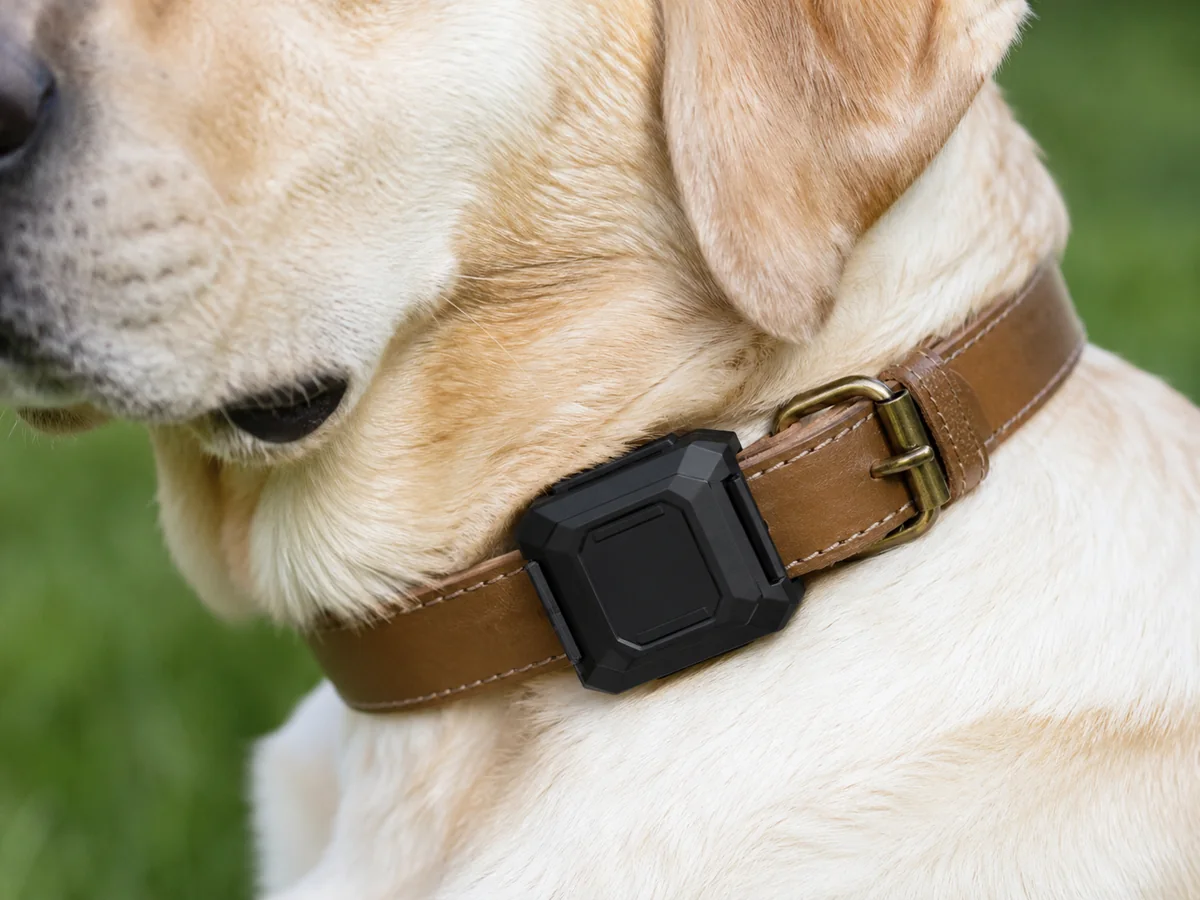
Contact and fit matter more on a containment collar than on a plain tracker, because feedback that only lands intermittently teaches a dog that the boundary is negotiable. The collar needs to sit high on the neck and stay there, snug enough that it does not rotate during running, with two fingers of clearance as the upper limit.
Wear time needs managing regardless of brand. Any hard module worn against skin for long periods can cause irritation and, at the extreme, pressure sores. Take the collar off during the daily charge, check and move the contact area, and give the skin a break rather than running the collar around the clock.
Do not treat the fence as supervision. A containment collar manages a trained dog on a normal day; it does not stop a dog that is genuinely determined, and it does nothing about what comes in from the outside. Dogs on GPS fences still need the gate closed, the road respected, and an adult paying attention.
Which Dogs This Suits, and Which It Does Not
Check the manufacturer’s minimum neck size and weight before anything else. Containment collars carry a battery and a GPS module, so they are heavier than a plain collar, and small breeds fall below the recommended range for most systems. On a very small dog this is a specification problem, not a preference.
You might also find our shock collar for dogs article helpful when shopping.
Puppies should not be the test subjects. Young dogs are still learning what boundaries and cues mean, and a growing neck means the fit keeps changing, which is exactly the condition that produces inconsistent feedback. Wait until the dog is physically settled and has basic recall before introducing containment.
Deaf and vision-impaired dogs, and dogs with significant anxiety, are poor candidates for any containment system. The system depends on the dog perceiving and interpreting a warning, and where that chain is unreliable the outcome is a confused dog rather than a contained one. So are dogs with a strong prey drive, which will cross almost any warning for a deer.
Setting the Boundary and Doing the Training
Draw the boundary well inside the actual property line. Because GPS drifts by several metres, a fence drawn on the true edge will place the warning zone partly beyond it. Setting the line back gives your dog room to respond and keeps the whole warning sequence inside your land.
Do the training programme in order and do not compress it. Every credible virtual-fence protocol runs over multiple short sessions across at least a couple of weeks, walking the dog toward the boundary on a leash so the feedback and the visual markers become connected. Dogs turned loose on day one learn only that the yard is unpredictable.
Keep the collar charged and keep checking the app. A GPS containment collar is a device that fails silently when the battery dies, so charging needs to be a fixed daily habit rather than a response to a warning. Confirm periodically that the boundary is still where you think it is and that alerts are still enabled.
What Goes Wrong With Virtual Fences
Treating it as a fit-and-forget product. This is the mistake that produces almost every bad review of every virtual fence on the market. The hardware is the easy part; the training is what determines whether the boundary holds, and the training takes weeks of short, deliberate sessions.
Looking for more options? Our leash for a dog roundup covers additional top picks.
Drawing the boundary too tight or over unsuitable ground. A narrow yard leaves no room for GPS drift, and heavy tree cover or tall buildings degrade positioning accuracy exactly where you need it to be reliable. Walk the perimeter with the app before committing to a shape.
Assuming containment replaces identification. A dog that does cross the line is a dog outside with no barrier behind it, which is precisely when a microchip and visible ID tags matter. Every containment setup should sit on top of the basics, not instead of them.
Understanding the Ongoing Cost
Halo operates on a subscription model, and the plan is what unlocks the map data and the extended features rather than being an optional extra. Check the current tiers and what each includes on the official Halo site before purchase, because the plan you choose changes the effective cost more than the hardware does.
Compare the multi-year total against a physical fence for your specific property. On a small suburban plot, fencing is often cheaper over five years. On several acres, or on a rented property where permanent fencing is not allowed, the subscription arithmetic tends to go the other way.
Remember that a multi-dog household needs a collar per dog, and usually a plan per collar. That scaling is the point where many owners reconsider, so work it out before buying the first unit rather than after.
Deciding Whether Halo Is the Right Choice
Halo is the right shortlist entry when the primary problem is a dog leaving an unfenced property and a physical fence is impractical. That is the scenario the product is designed around, and the bundled training programme reflects it.
It is the wrong purchase if what you actually want is to find a dog that has already gone. For that job a plain cellular tracker from any of the established brands is cheaper, lighter, and does the same locating work without the containment layer you would not use.
Before deciding either way, verify four things on the official product pages: the current model and its published specifications, the minimum dog size, the subscription tiers and what each unlocks, and the cellular coverage at your address. Those four answers settle the decision more reliably than any review.
Halo Dog Collar: Feature Comparison
The table below compares a GPS virtual fence like Halo against the two alternatives owners usually weigh it against.
Frequently Asked Questions
Does the Halo dog collar need a subscription?
Yes. Halo runs on a subscription that unlocks the map data and extended features rather than being optional. Check the current plan tiers and what each one includes on the official Halo site, since pricing and inclusions change.
How is a GPS fence different from a buried wire?
A buried wire is a physical cable that the collar detects, so it is accurate to a short distance and fixed in place. A GPS fence is drawn in software, so it can be reshaped or moved to another property instantly, but it is subject to several metres of satellite drift.
Will it stop my dog leaving the yard?
It manages a trained dog; it does not physically stop one. Nothing about a virtual boundary blocks a determined dog, especially one chasing prey, so it should sit alongside supervision, recall training, and a microchip rather than replacing them.
How long does the training take?
Plan on several weeks of short, structured sessions, walking the dog toward the boundary on a leash so the feedback becomes connected to the visual markers. Compressing this is the single most common reason owners report that a virtual fence did not work.
What size dog is it suitable for?
Check the published minimum neck size and weight, because containment collars carry a battery and GPS module and are heavier than an ordinary collar. Many small breeds fall below the recommended range for these systems.
Can my dog wear it all the time?
No. Take it off during the daily charge, move the contact area, and check the skin underneath. Any hard module worn continuously against skin can cause irritation and, at worst, pressure sores.
Does it work without mobile coverage?
The fence relies on satellite positioning, but the app features, alerts, and location updates depend on cellular coverage. Confirm the coverage at your specific address before buying, because a containment system you cannot monitor is a system you cannot trust.