The best leash for a dog is usually a sturdy six-foot fixed leash sized to the dog’s weight, comfortable in your hand, and matched to the activity. Choose length first, then confirm width, material, clip strength, stitching, and care needs. No single leash is ideal for sidewalks, hiking, recall practice, and every handler, so buy for the job rather than color alone.
Start With the Use Case, Not the Packaging
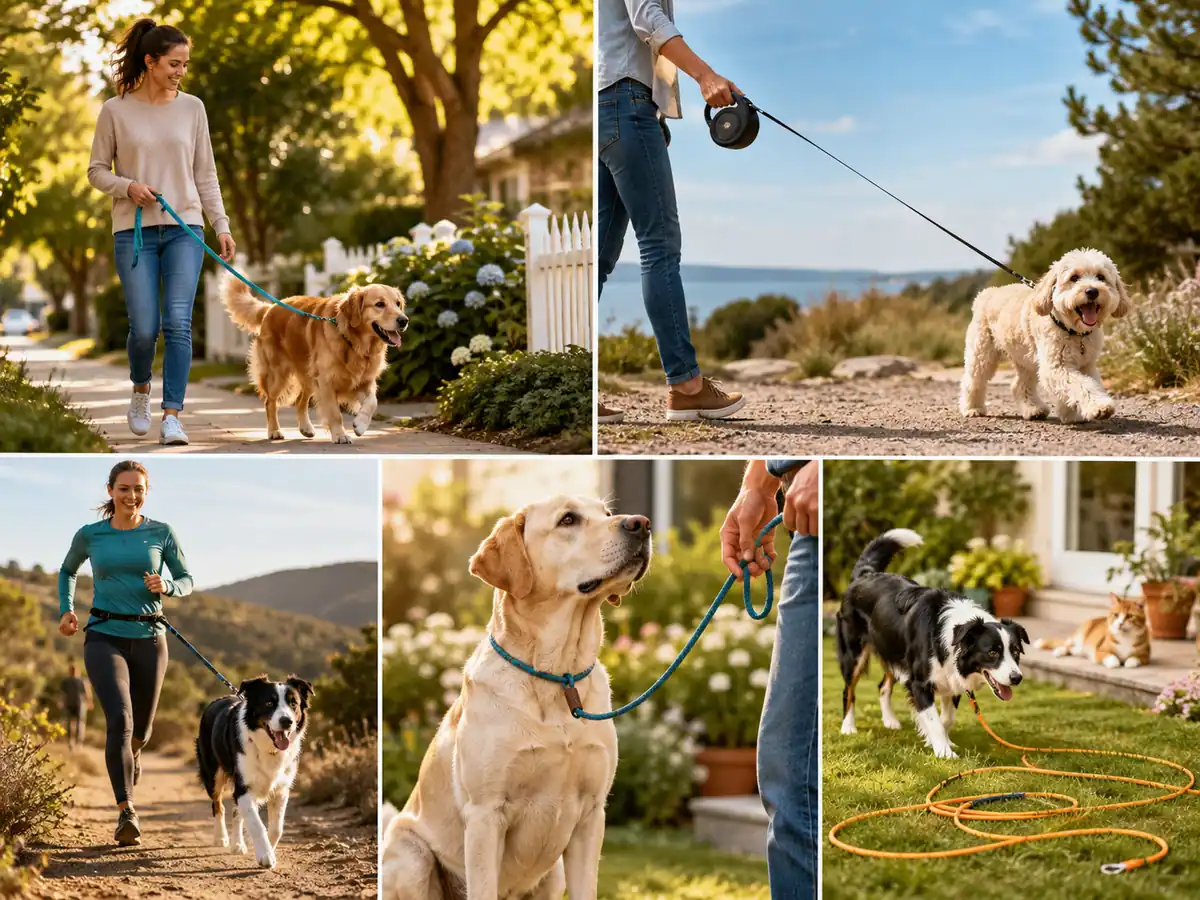
Write down where you walk, how your dog moves, and what your hands can manage. A calm small dog on neighborhood sidewalks needs less bulky hardware than a powerful dog on muddy trails. A handler with arthritis may prioritize a padded handle and an easy clip. An escape-prone dog may justify a locking clip and backup connection.
A leash is only one part of the system. Its rating should suit the dog, and its clip must fit the collar or harness ring without crowding it. Heavy hardware can bother a tiny dog, while a lightweight fashion snap may be inadequate for a large dog. Read manufacturer weight guidance and return products with unclear construction or ratings.
The AKC’s guidance on choosing a dog leash likewise treats leash style as a match among dog, handler, setting, and purpose. Product claims do not replace supervision, training, or inspection.
Choose Leash Length for Control and Freedom
Four-foot fixed leashes keep dogs close in crowds, elevators, training classes, and narrow urban areas. Six feet is the versatile everyday length for most neighborhood walks. It permits sniffing without placing the dog far beyond the handler’s reach. Very short traffic handles are secondary control tools, not suitable as the only leash for an entire enrichment walk.
Long lines from roughly ten to thirty feet support recall practice and exploration in open, legal areas. They require active line handling. Feed line out rather than dropping coils, keep it away from legs, and avoid abrupt stops after a high-speed run. Attach a long line to a well-fitted harness to distribute force.
Hands-free leashes can be convenient for experienced walking teams, but the waist attachment transfers force to the handler’s body. They are a poor choice when a sudden lunge could cause a fall. Compare configurations in our hands-free dog leash guide.
Length should reflect the environment, not a desire to give maximum freedom everywhere. Near traffic, bikes, wildlife, children, or other dogs, shorten the usable line without wrapping it around your hand. In safe open space, restore enough length for comfortable sniffing.
Match Width and Weight to the Dog
Width is a useful starting point, but not a complete strength rating. Narrow webbing and small hardware keep a leash light for very small breeds. Medium dogs commonly suit mid-width webbing. Large or powerful dogs generally need wider material, reinforced seams, and more substantial hardware. Follow the maker’s tested weight guidance because weave, fiber, stitching, and hardware differ.
More bulk is not always safer. An oversized clip can strike a small dog’s shoulder and make the leash sag. Thick rope may be difficult for small hands to control. Conversely, a narrow edge can hurt a handler’s hand when a strong dog surges. Evaluate dog comfort and handler grip together.
| Dog and setting | Starting format | Check closely |
|---|---|---|
| Small dog, sidewalk | Light 6-foot fixed leash | Clip weight and narrow edges |
| Medium dog, mixed walks | 6-foot mid-width leash | Grip and seam reinforcement |
| Large or strong dog | Wide rated webbing | Hardware rating and handler control |
| Open-space training | Rated long line plus harness | Tangling and stopping distance |
Compare Nylon, Leather, Rope, and Coated Webbing
Nylon webbing is light, affordable, colorful, and widely available. Quality varies, and rough edges may irritate hands. It can absorb water and odors, but many versions wash easily. Leather costs more and needs conditioning, yet good leather often softens into a comfortable grip. Replace leather that is deeply cracked, stretched, or damaged near the clip.
Rope offers a rounded, substantial grip and works well for many outdoor users. It may absorb water, collect grit, or become heavy when wet. Inspect splices and sewn connections. Coated webbing is water-resistant, wipes clean, and is useful in mud or rain. Some coatings become stiff in cold weather or slippery when wet, so test the actual handle.
Chain resists chewing but is heavy, noisy, and uncomfortable to hold. It is generally a management option for a dog actively biting a leash, not a first-choice everyday material. Address the reason for leash biting rather than relying indefinitely on weight. Reflective thread or panels improve visibility, but should supplement lights and route awareness.
No material is chew-proof, maintenance-free, or safe to leave on an unattended dog. Salt, sand, moisture, and repeated flexing shorten service life. Rinse as directed, dry completely, and store away from chewing and direct heat.
Evaluate the Clip, Handle, and Stitching
Bolt snaps are common and convenient. Trigger snaps open with a lever and can be easy for some hands. Locking carabiner-style clips add a deliberate locking step for escape-prone dogs, but only if the user closes them correctly. Swivel hardware can reduce twisting. Any design can fail if poorly made, corroded, bent, or mismatched to the dog.
Operate the clip repeatedly before use. It should open smoothly, close completely, and resist side pressure. Confirm it cannot slip through or crowd the attachment ring. Check sewn joints for dense, even stitching and enough overlap. Decorative rivets should not be mistaken for structural reinforcement.
Try the handle with bare hands and gloves. A padded loop can improve comfort but may hold water. A second traffic handle can add short-range control without sacrificing a normal main handle. Avoid wrapping any leash around fingers or wrists because a sudden pull can injure them.
Know When a Retractable Leash Fits
A retractable leash offers variable range, but the thin line, locking mechanism, and bulky handle change the risk profile. Extra range can place a dog in a road, around a corner, or beside another dog before the handler responds. A cord can wrap skin or legs, and a dropped handle may clatter behind and frighten the dog.
The AKC explains these tradeoffs in its guide to using retractable dog leashes safely. They are not a good default for crowded sidewalks, roadside walking, strong pullers, group classes, or dogs learning loose-leash skills. They should not be attached to devices that concentrate force on the neck.
If you use one, choose a model rated for the dog, inspect the tape or cord, learn the lock, and practice away from hazards. Hold the designed handle, never grab the moving line, and lock to a shorter length before people, dogs, bikes, or traffic get close. Read our dedicated retractable leash guide before deciding.
Match the Leash to Walking, Hiking, or Training
For everyday sidewalks, prioritize a six-foot fixed design, visibility, and easy cleaning. For wet trails, coated webbing or quick-drying rope may be practical, with corrosion-resistant hardware and a secure grip. Hiking does not automatically call for a longer leash. Narrow paths, wildlife, and drop-offs often require close control.
For recall training, use a long line in an open area attached to a harness. For running, choose purpose-built hands-free gear only after the dog has reliable manners and both partners are conditioned. Never attach a leash to a bicycle by hand; use appropriate equipment and professional instruction for dog-powered sports.
Keep a spare fixed leash in the car or walking bag. A backup is useful when a leash becomes wet, damaged, or lost. The best value is reliable construction that suits frequent use, not added pockets or accessories that interfere with grip.
| Activity | Useful format | Priority | Avoid |
|---|---|---|---|
| Neighborhood walk | 6-foot fixed | Comfort and visibility | Excess range near roads |
| Crowded area | 4 to 6 feet | Close control | Long lines |
| Recall practice | 10 to 30-foot line | Line handling | Traffic and tangles |
| Wet trail | Fixed coated webbing | Grip and cleanup | Corroded hardware |
Inspect, Clean, and Replace the Leash
Before each walk, flex the material near the handle and clip, check seams, and operate the gate. Look for cut fibers, deep fraying, loose stitches, cracked coating or leather, damaged splices, rust, bending, or a gate that does not close. Retire a questionable leash immediately rather than saving it for short walks.
Follow care instructions. Rinse salt, sand, and mud because grit abrades fibers and salt promotes corrosion. Air-dry fully before storage. Condition leather with an appropriate product, and do not machine-wash hardware unless the manufacturer permits it. Keep every leash away from chewing dogs.
Training remains part of safety. Even robust equipment is harder to control when a dog continually hits the end of it. Use rewards to teach a loose leash, and consult a qualified trainer when lunging or strength creates risk. Our loose-leash training guide provides a step-by-step plan.
Leash Feature Comparison
Use this table to compare formats by function rather than marketing language. A leash should be strong enough for the dog, comfortable for the handler, and appropriate for the place where it will be used. The AKC leash guide outlines common formats, and its retractable-leash safety guidance explains why extra range requires careful handling.
Before buying, picture the busiest point of your normal route. A leash that feels convenient in an empty store can be difficult near traffic, elevators, wildlife, or passing dogs. Choose the shortest practical length for that setting, then add a separate long line for controlled training in open areas. Keeping distinct tools for distinct jobs is often safer than expecting one leash to handle every activity.
Evidence trail: Leash hardware cannot teach walking skills on its own. The AVSAB position statement library explains why humane, reward-based behavior change should guide the training plan that accompanies your equipment choice.
Frequently Asked Questions
What is the best everyday leash length?
A six-foot fixed leash is the most versatile choice for many dogs. Four feet offers closer control in crowds, while longer lines belong in suitable open spaces.
How wide should my dog's leash be?
Choose width and hardware for dog weight and pulling force. Narrow lightweight webbing suits many small dogs; powerful dogs need wider rated material and stronger hardware.
Which leash material is best?
Nylon is light, leather softens with care, rope feels substantial, and coated webbing cleans easily. Choose for climate, grip, maintenance, rating, and activity.
Are retractable leashes safe?
They require careful handling and are unsuitable for many crowded, roadside, or training situations. Extra range, tangling, a dropped handle, and cord injuries are meaningful risks.
Which leash clip is most secure?
A quality bolt snap is convenient, while a properly closed locking carabiner adds security. Any clip must be appropriately rated, corrosion-free, and tested before use.
Can I use a long line every day?
A long line suits recall and exploration in open areas but is cumbersome near traffic, crowds, bikes, and narrow paths. Handle it actively and attach it to a harness.
When should I replace a dog leash?
Replace it for deep fraying, cuts, loose stitching, cracked leather, damaged fibers, corrosion, bent hardware, or a clip that sticks or opens unexpectedly.
Browse Accessories
Free US shipping on every order. No minimum purchase required.
Browse Accessories →