To train a dog to walk on a leash without pulling, reward your dog frequently while the leash is slack, and stop or turn before pulling gets them where they want to go. Practice first where distractions are low, keep sessions short, and increase difficulty gradually. Loose-leash walking is a learned behavior, not something dogs automatically understand when a leash is attached.
Set Up for Safe, Reward-Based Training
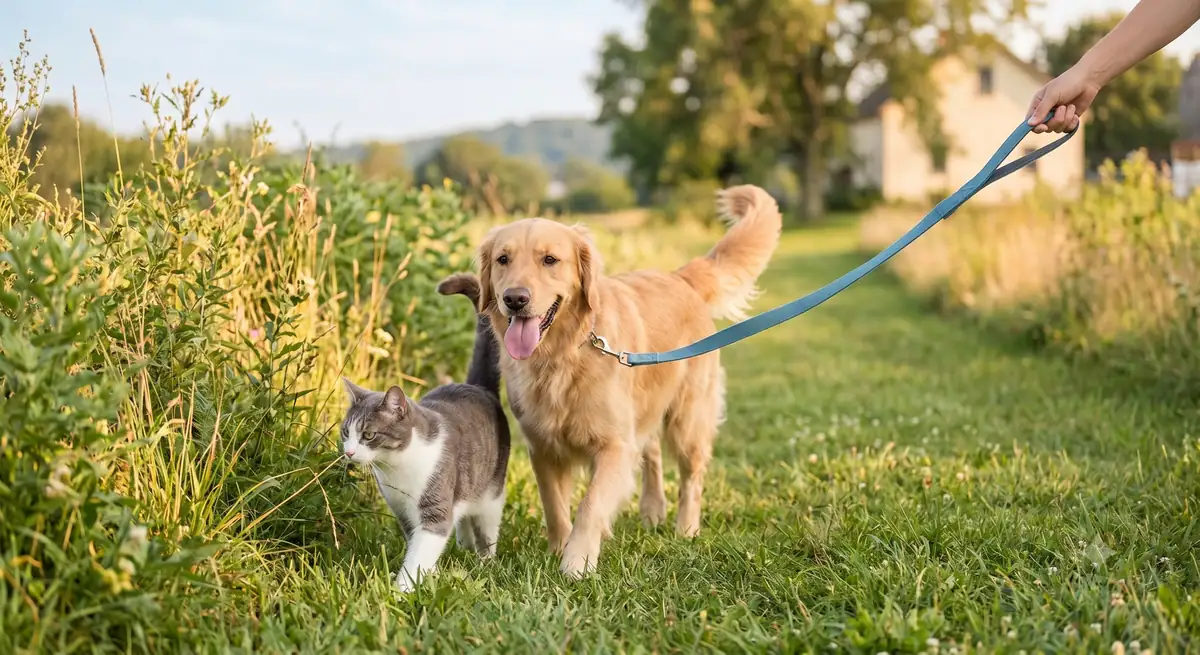
Start with a comfortable, well-fitted collar or harness, a sturdy fixed leash, and pea-sized treats. A six-foot leash gives most teams room to practice without allowing a running start. A harness can reduce neck pressure, especially for dogs with respiratory, spinal, or eye concerns. Ask your veterinarian about equipment if your dog has a medical condition. Check the fit and hardware before every session.
Choose a marker such as “yes” or a clicker. The marker tells the dog exactly which action earned a reward. Indoors, mark and immediately feed ten to fifteen times. Then mark choices such as looking at you or stepping toward your side. Deliver food near the seam of your pants so reward placement supports the position you want.
The American Veterinary Society of Animal Behavior resources and humane dog training PDF support reward-based methods and advise against aversive techniques. Avoid leash jerks, intimidation, and equipment designed to cause pain. Humane training builds skills while protecting the dog-handler relationship.
Build Attention Before Taking a Walk
Begin in a quiet room. Say your dog’s name once. Mark and reward when they turn toward you. Take one step backward and reward the dog for following. Move in curves, reward voluntary check-ins, and stop after two to five minutes. These games teach that your movement matters before the leash adds restriction.
Introduce gear gradually if your dog avoids it. Show the harness, feed, and put it away. Progress to touching the shoulder, placing the head through, fastening briefly, and walking indoors. Do not chase a worried dog. Freezing, hiding, continuous scratching, or refusing food means the step is too difficult.
Teach a hand target by presenting your palm near the dog’s nose. Mark a nose touch and reward. Gradually use it to guide the dog to your side. Build “this way” by saying it, turning smoothly, and rewarding when the dog follows. These skills give you alternatives to pulling the leash.
Clip on the leash indoors and hold it with relaxed arms. Reward your dog for standing near you while the leash hangs in a J shape. Take one step, mark the slack, feed, and repeat. The AKC puppy leash guide also recommends positive gear introduction before outdoor practice.
Teach Loose-Leash Walking Step by Step
Stand still with your dog beside you. Mark and reward slack. Say “let’s go,” take one step, then mark while the leash remains loose and feed at your side. Increase to three steps, five steps, and short turns. Frequent early payment is clear information during skill acquisition, not a lifelong requirement.
- Wait for slack and attention before moving.
- Walk a few steps at a pace your dog can match.
- Mark while the leash is still loose.
- Feed beside your leg rather than reaching ahead.
- Occasionally cue “go sniff” and visit a safe scent spot.
Use food and real-life rewards. If your dog wants to sniff a tree, wait for slack, mark it, and move together to the tree. Approach familiar people only while the leash stays loose. Access to smells and movement can strongly reinforce the lesson.
Keep criteria specific. Today’s goal might be three loose steps, passing the gate, or responding to “this way.” Reward that goal instead of waiting for a perfect block. End after success, then provide an easy sniff walk so training does not replace normal exploration.
What to Do the Moment Your Dog Pulls
When the leash tightens, stop calmly at the first tension. Wait for the dog to glance back or step toward you and create slack. Mark that choice, reward near you, and continue. If waiting causes frustration, use your practiced “this way” cue and turn into open space.
Avoid calling repeatedly while continuing forward. That teaches that pulling still reaches the destination. Do not yank back. A correction may interrupt behavior, but it does not explain where to walk and can create discomfort or negative associations with the environment.
Train doorway surges separately. Approach while slack, and back away if the dog lunges. Open the door slightly, reward calm behavior, then close it. Progress to stepping through together. Access to outside becomes the reward for self-control.
Add Distance and Distractions Gradually
Dogs do not automatically generalize from the living room to a park. Build an environmental ladder: hallway, yard, driveway, quiet sidewalk, familiar route, then busier places. Move up when your dog can eat, respond, and recover quickly. Move down when the dog scans constantly or cannot take food.
Distance is a training tool. If your dog can watch a cyclist at fifty feet and stay connected, practice there instead of forcing a close pass. Mark when the dog notices, feed, and move in an arc. Reduce distance only while the dog stays comfortable.
Vary rewards as skill improves. Start by rewarding every few steps, then reward unpredictable stretches, turns, and check-ins. Continue to pay well around difficult distractions. Keep sniff breaks because scent exploration is normal behavior and relieves the pressure of precision walking.
For physical management while teaching, review how a properly fitted dog harness should sit. Equipment can prevent rehearsal of pulling, but it does not teach the skill by itself.
A Four-Week Practice Plan
Practice one to three times daily for three to ten minutes. Puppies, adolescents, newly adopted dogs, and dogs with long pulling histories may need more repetition. A short successful session teaches more than a long outing filled with tension.
| Week | Setting | Goal | Progress when |
|---|---|---|---|
| 1 | Indoors | Marker and five loose steps | Dog readily follows |
| 2 | Yard | Turns, stops, sniff release | Short repetitions stay loose |
| 3 | Quiet sidewalk | Mild distractions | Dog reconnects quickly |
| 4 | Familiar route | Longer intervals | Skills hold with varied rewards |
Track check-ins, the longest loose stretch, or recovery time. Improvement is not linear. Weather, sleep, stress, pain, and novelty affect behavior. If a week goes poorly, simplify the setting rather than increasing pressure.
Solve Common Leash-Walking Problems
Zigzagging: Reward near one side for short stretches, but allow structured sniffing. Hold loose folds without wrapping the leash around your hand. Practice broad curves so following your path becomes easy.
Leash biting: Check for frustration, overarousal, gear discomfort, or teething. Keep the leash still, cue a known behavior, and reward four paws down. Do not create a tug game by pulling against the dog.
Planting: Do not drag the dog. Consider fear, heat, cold, fatigue, surfaces, or pain. Create distance, encourage one voluntary step, and reward. Sudden reluctance, limping, or repeated stopping deserves veterinary assessment.
Pulling toward dogs: Pause on-leash greetings because occasional access can strengthen pulling. Reward noticing and returning attention at a safe distance. Dogs do not need to greet every dog they see.
Safety, Welfare, and When to Get Help
Scan routes for traffic, hot pavement, broken glass, off-leash dogs, and wildlife. Use reflective gear in low visibility. Never attach a leash to equipment that restricts breathing or tether a dog where it can snag. Children should hold a leash only after an adult assesses the dog and environment.
Sudden pulling may reflect pain, sensory changes, or fear. Seek veterinary care when behavior changes abruptly or appears with coughing, gagging, limping, stiffness, exercise intolerance, or touch sensitivity. Training cannot resolve untreated discomfort.
Progress should look like a dog who stays connected while being allowed to act like a dog. Calm sniffing, comfortable body language, and disengagement from distractions matter more than a rigid heel. Formal heelwork is a separate behavior and is unnecessary for everyday walks.
Loose-Leash Training Progress Checklist
Progress should be measured by the dog's ability to stay engaged and recover from distractions, not by forcing a perfect heel for an entire walk. Keep sessions short enough that both handler and dog can succeed. The AKC leash-training guide recommends beginning with simple skills before adding outdoor distractions, while the AVSAB humane training statement supports reward-based methods.
Keep a simple training log for two weeks. Record the location, session length, reward used, distance from major distractions, and the point where the leash first became tight. Patterns become easier to see when they are written down. A dog who walks comfortably on a quiet block but pulls near a busy corner does not need harsher correction. The dog needs more distance, a shorter session, and carefully staged practice around that specific difficulty.
Also separate equipment management from skill training. A well-fitted harness may help the handler manage force safely, but it does not teach the dog what a loose leash means. Likewise, changing sides, shortening the leash, or walking faster will not replace clear reinforcement. Reward the exact behavior you want: checking in, turning with the handler, or moving while the leash hangs in a soft curve. With repeated success, those choices become easier for the dog to offer in everyday environments.
Evidence trail: The reward-first training approach described above is consistent with a Frontiers study comparing reward-focused and electronic-collar training. Use the source as context, not as a substitute for individualized advice from your veterinarian or a qualified behavior professional.
Frequently Asked Questions
How long does it take to teach a dog to stop pulling?
Many dogs improve within one to three weeks, but reliable skills around distractions can take months. Practice history, age, environment, and consistency matter. Track check-ins and recovery rather than expecting immediate perfection.
Should I stop walking when my dog pulls?
Yes. Stop at the first tension, wait for slack or turn smoothly, then mark and reward beside you before continuing. This teaches that a loose leash makes the walk move forward.
Is a harness or collar better for a dog that pulls?
A fitted harness can reduce neck pressure and help management, but equipment does not teach walking. Pair it with rewards, and ask a veterinarian about gear for dogs with medical concerns.
What treats work best for leash training?
Use tiny, soft pieces the dog can swallow quickly. Kibble may work indoors, while a veterinarian-approved higher-value food can help outside. Include training food in daily calories.
Can an older dog learn loose-leash walking?
Yes. Adult and senior dogs learn through short rewarding sessions. Start somewhere quiet. If pulling began suddenly or movement seems painful, arrange a veterinary exam.
Why does my dog pull outside but not at home?
Outdoor smells, movement, dogs, and people make the task harder. Practice at the doorway and driveway before busy routes, use better rewards, and add distance from distractions.
What if my dog lunges or barks on leash?
Create distance by turning away, crossing the street, or using a barrier. Reward responses at a safe distance. Repeated fear, lunging, or aggression warrants qualified professional help.
Browse Accessories
Free US shipping on every order. No minimum purchase required.
Browse Accessories →