A Jellycat dog is one of the soft plush puppies and dogs made by Jellycat, the London soft toy company, and many owners wonder whether their real dog can have one. The honest answer: a Jellycat is designed and safety tested as a toy for people, mostly children, not as a chew toy for dogs. A gentle dog can carry one around under supervision, but it is a poor choice for chewers, puppies, and any dog left alone with it.
Published September 26, 2026. Header photo: Slyronit / Wikimedia Commons, CC BY-SA 4.0, cropped and resized. A Beagle asleep on a sofa, cuddled up with a plush Beagle toy.
In This Article
- The Short Answer
- What People Mean by a Jellycat Dog
- Who Jellycat Designs Its Toys For
- What Happens When a Dog Chews a Plush
- Jellycat Plush vs. a Plush Made for Dogs
- When a Jellycat Can Work for a Dog
- A Five-Point Check Before You Hand It Over
- Dogs Who Should Skip Plush Toys Entirely
- Living With a Jellycat and a Dog Under One Roof
- Frequently Asked Questions
- Sources
The Short Answer
- Treat a Jellycat as a people toy first. The company describes its safety testing in terms of babies and children, not pets.
- Gentle carriers can use one with supervision. Some dogs only mouth, carry, and cuddle soft toys. Those dogs are the only realistic candidates.
- Chewers and shredders should skip it. Stuffing, eyes, and pellets are not food, and a torn plush can be swallowed in pieces.
- If you want the look, buy a plush made for dogs. Dog plush toys are built around the way dogs actually play.
The rest of this guide explains why the Jellycat label matters, how to check any plush before it becomes a dog toy, and what to do when a Jellycat and a dog share the same house.
What People Mean by a Jellycat Dog
Jellycat was co-founded in London in 1999 by two brothers, Thomas and William Gatacre, and expanded to the United States in 2001 with Jellycat Inc. in Minneapolis, according to the company's Wikipedia entry. The brand mostly sells soft toys, alongside books, bags, blankets, and keychains, and its designs have built a large following online. The same entry notes that the popularity of the toys has even pushed some British retailers to tighten security after a wave of Jellycat thefts.
When people search for a "jelly cat dog," they usually mean one of the plush dogs and puppies in Jellycat's own Pets collection, which includes soft puppies, a Scottie dog, and "rescue dog" designs, plus puppy themed bags, pouches, and bag charms. Some shoppers want one for a child or for themselves. Others have a real dog that keeps stealing the family Jellycat off the sofa and want to know if that is a problem.
Both situations come down to the same question. A Jellycat puppy looks like a dog toy, feels like a dog toy, and is about the size of a dog toy. It was not designed as one, and that difference shows up the moment a dog starts to chew.
Who Jellycat Designs Its Toys For
Jellycat's own Safety and Care page says every product is tested to British, American, European, and Australian safety standards and carries the CE and UKCA marks. It adds that some products come with an age suitability recommendation, printed on the product page and on the sewn in label, and it asks buyers to read all labels and remove all packaging before giving a Jellycat product to a baby or child. Every part of that guidance is written with children in mind. None of it describes how a Jellycat holds up when a dog chews it.
That is not a criticism of Jellycat. A toy safety standard for children answers questions about how a child handles, hugs, and mouths a toy. A dog brings a completely different set of forces: sharp carnassial teeth, head shaking, tugging against another dog, and hours of unsupervised chewing. A seam that passes a test for a toddler can still open under a determined terrier.
Care instructions point the same way. Jellycat says many of its products can be machine washed at 30 degrees, some must be surface washed by hand, and none should go in a tumble dryer, be ironed, or be dry cleaned. That suits a cuddly toy that lives on a bed. A dog toy gets drool, dirt, and mud every day, so a Jellycat that can only be surface washed turns grubby fast in a dog household.
What Happens When a Dog Chews a Plush
Dogs rarely stop at hugging a soft toy. Many start by licking, then nibble at a seam or a nose, then pull out the stuffing and shake it everywhere. The Humane Society guidance on choosing safe dog toys sums up the risks plainly: remove ribbons, strings, eyes, or any parts that could be chewed off and swallowed, discard toys once they start to break into pieces, and remember that even "safe" stuffing is not truly digestible. It lists nutshells and polystyrene beads as problem fillings.
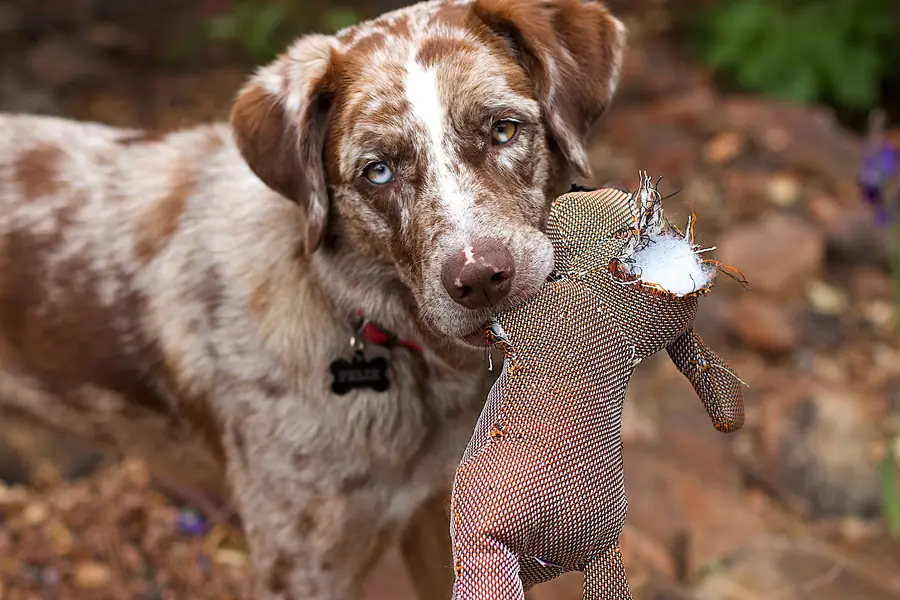
With a Jellycat, the practical risks are the same as with any soft toy that is not built for dogs:
- Fibre stuffing can be swallowed in wads once a seam opens.
- Embroidered or stitched faces, tags, and trims give a dog an easy place to start tearing.
- Weighted bottoms or bean fillings, where a toy has them, can scatter small pieces that are easy to swallow. Check the product page or label.
- Bag charms and keychain versions add metal rings and clips, which do not belong in any dog's mouth.
If your dog swallows stuffing, fabric, or a hard part, call your veterinarian for advice rather than waiting to see what happens. For a deeper look at the risks of soft toys in general, our guide to whether plush toys are safe for dogs covers stuffing, squeakers, and what to do after an accident.
Jellycat Plush vs. a Plush Made for Dogs
The table below compares a typical children's plush like a Jellycat with a soft toy designed for dogs. Individual products vary, so read the label on whatever you buy.
The short version: a Jellycat is designed to be beautiful and huggable for a person for years. A dog plush accepts that it will be mouthed, tugged, and washed often, and it is priced and built with that in mind. If you like the look of a soft puppy toy, a plush toy designed for dogs gives your dog the same comfort without borrowing a collectible.
When a Jellycat Can Work for a Dog
Some dogs genuinely treat soft toys as companions. They carry them from room to room, tuck them under a chin at nap time, and never pull out a single thread. If your dog has a long track record of that behavior, sharing a Jellycat is a lower risk decision, as long as you keep a few rules.
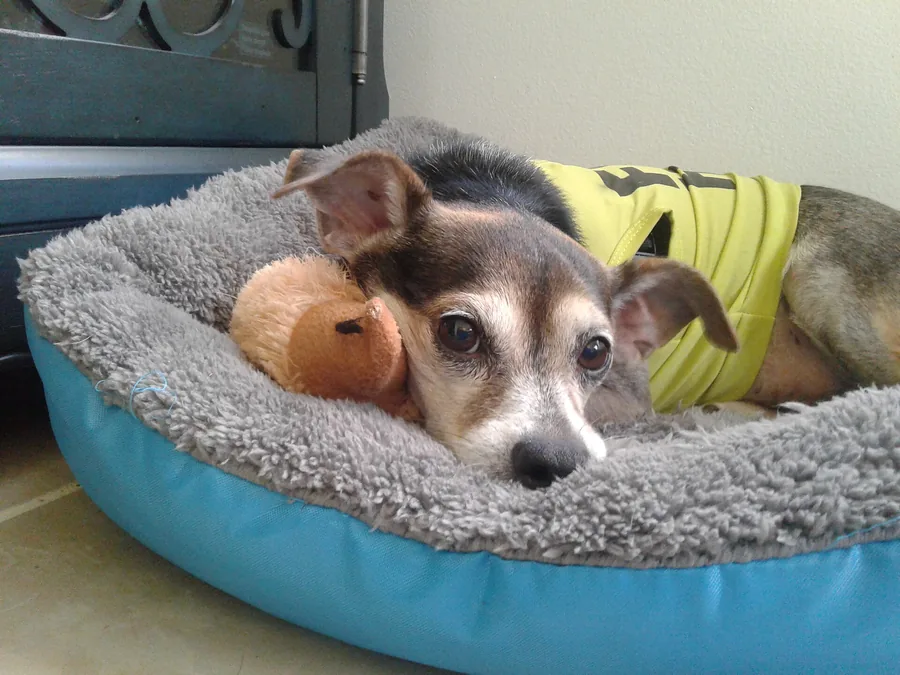
- Supervise every session, at least until you know exactly how your dog treats that particular toy.
- Pick up the toy when you leave the house. Boredom and stress change how dogs chew.
- Choose a larger Jellycat over a small one so it cannot slip down the throat.
- Inspect it after play. Retire it at the first loose seam, frayed nose, or visible stuffing.
- Wash it by the label, and keep it out of the tumble dryer, as Jellycat advises.
Calm, gentle dogs of any age are the usual candidates. For dogs who find a soft toy comforting during stressful moments, our list of calming toys for dogs includes options built for dogs rather than for children.
A Five-Point Check Before You Hand It Over
Use this quick check with any soft toy, whether it is a Jellycat, a fairground prize, or a gift from a friend. It takes about a minute and prevents most plush accidents.
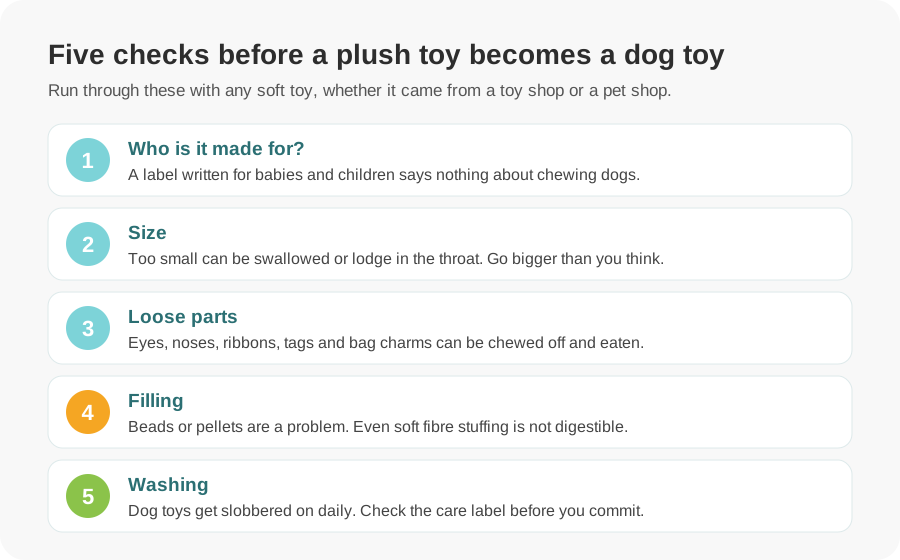
A toy that fails any row is better kept on a shelf. A toy that passes every row can still fail later, which is why the inspection habit matters more than the brand.
Dogs Who Should Skip Plush Toys Entirely
For some dogs, no plush is a good idea, Jellycat or otherwise. Power chewers can open a seam within minutes. Dogs who eat fabric, socks, or bedding are at real risk of swallowing stuffing. Teething puppies chew hard on anything soft, so they do better with toys made for that stage, covered in our guides to puppy teething toys and plush toys for puppies.
Households with two dogs who love tug of war also tend to destroy soft toys quickly, because the toy gets pulled from both ends at once. For these dogs, look at what an "indestructible" label really means and our picks of dog toys for aggressive chewers, and keep plush toys for supervised cuddle time only, if at all.
If your dog also loves the noise that soft toys make, read whether squeaky toys are bad for dogs before you buy, because many dogs will work hard to remove a squeaker.
Living With a Jellycat and a Dog Under One Roof
In many homes the real issue is not a gift for the dog. It is a child's favorite Jellycat that the dog keeps stealing. A Jellycat that gets chewed is upsetting for the child and risky for the dog, so it helps to manage the situation on purpose.
Keep collectible toys on high shelves or behind closed doors, especially at night and when nobody is home. Give your dog its own soft toy that looks different from the family plush, so the rules are easy to follow. When your dog picks up a Jellycat, trade it for a treat or the dog's own toy instead of chasing, which usually turns theft into a game your dog wants to repeat. Practising a solid "leave it" and "drop it" pays off here, and those cues are useful far beyond toys.
If you are shopping for a dog lover rather than a dog, a Jellycat puppy can still be a lovely present for the person. Our guide to gifts for dog lovers has more ideas, and our safe dog toys guide covers what to give the dog in the same household.
Frequently Asked Questions
Are Jellycat toys safe for dogs?
Jellycat describes its safety testing in terms of babies and children, not pets, so a Jellycat is not designed as a dog toy. A gentle dog can cuddle one under supervision, but chewers, puppies, and dogs left alone should have plush toys made for dogs instead.
What is a Jellycat dog?
It usually means one of the plush puppies and dogs in Jellycat's Pets collection. Jellycat is a soft toy company co-founded in London in 1999 by brothers Thomas and William Gatacre.
My dog chewed a Jellycat. What should I do?
Take the toy away, collect any loose stuffing or parts, and call your veterinarian for advice if you think your dog swallowed fabric, stuffing, or a hard piece. Do not wait to see whether symptoms appear.
Can I wash a Jellycat my dog has been carrying?
Follow the care label. Jellycat says many of its products can go in a washing machine at 30 degrees, some must be surface washed by hand, and none should go in a tumble dryer.
Are Jellycat pet toys the same as dog toys?
No. The Pets range is a collection of plush animals shaped like dogs, cats, and bunnies for people to collect and cuddle. It is named after the animals, not made for them to chew.
Is a Jellycat okay for a puppy?
It is a poor choice. Teething puppies chew hard on anything soft, so toys designed for teething puppies are safer. Keep collectible plush toys out of reach until your puppy is older and you know how it plays.
What is a good alternative to a Jellycat for my dog?
Choose a plush toy built for dogs in a size your dog cannot swallow, with simple stitched features and no loose trims. Inspect it after play and retire it at the first tear.
Sources
- Wikipedia: Jellycat
- Jellycat: Safety and Care
- Jellycat: Pets collection
- Humane World for Animals (formerly the Humane Society of the United States): How to pick the best and safest dog toys
Want the soft puppy look for your dog?
Our corduroy plush puppy is made as a dog toy, with a built-in squeaker and a 26 x 14 cm body that is easy to carry.
See the Plush Puppy Toy