Top illustration: a mixed breed dog chewing a natural braided hemp rope toy on a wooden floor. Illustration: Livehappypet.
Hemp dog toys have moved from niche eco shops into mainstream pet aisles, usually as braided tug ropes, knotted chews and fabric-covered plush. The pitch is simple: a plant fiber that is strong, grown with fewer inputs than many crops, and free of the plastics found in most synthetic toys. Some of that holds up well, and some of it needs context. This guide explains what hemp actually is, how it behaves in a dog's mouth, where the real safety risk lies, and how to decide whether a hemp toy suits your dog. If you are comparing materials more broadly, our guide to eco-friendly dog toys covers the wider picture.
Quick Answer: Are Hemp Dog Toys a Good Choice?
Hemp dog toys are a good choice for supervised tug, fetch and gentle chewing. Hemp fiber is strong and plant-based, and fiber hemp contains only trace THC. Like any rope, though, hemp strands can be swallowed, so retire frayed toys early and never leave a rope toy with an unsupervised power chewer.
What Exactly Are Hemp Dog Toys?
Answer: Hemp dog toys are toys made fully or partly from fiber taken from the stalk of industrial hemp, a variety of Cannabis sativa grown for fiber and seed rather than for drugs. The fiber is spun into rope, woven into canvas or blended with cotton, then braided, knotted or sewn into tugs, rings, balls and plush toys.
Hemp is one of the oldest fiber crops people have used. Its long bast fibers sit just under the outer skin of the stalk and are separated from the woody core during processing. Those fibers have been twisted into rope for thousands of years, which is exactly why they turn up in dog toys today: a braided hemp rope looks and feels much like a classic cotton tug, only coarser and denser.
Industrial hemp is a different crop from the cannabis grown for recreational use. Varieties grown for fiber and seed contain less than 0.3% THC, the compound responsible for a high, and are unsuitable for producing marijuana. Source: Wikipedia, Hemp.
That point matters to dog owners because the word hemp sometimes causes worry. A hemp rope toy is a textile product. It is not a hemp treat, a CBD chew or an oil, and it is not designed to be eaten. If you want CBD products for your dog, that is a separate conversation for your veterinarian, and nothing in this guide is about them.
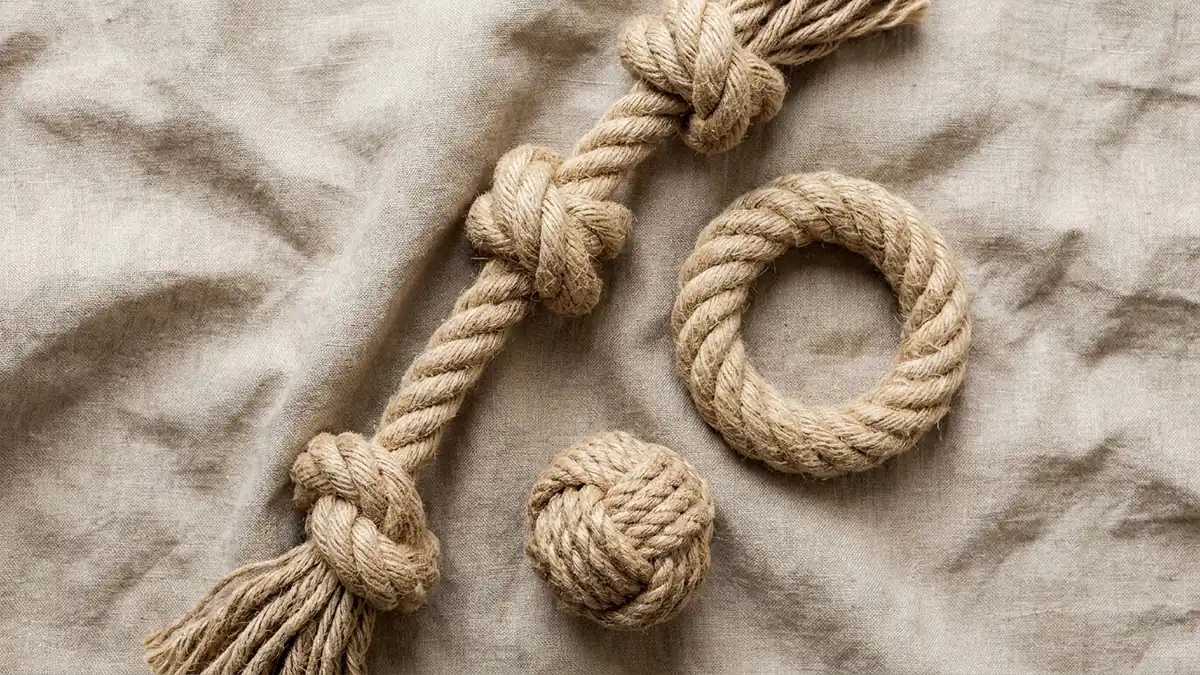
Illustration: Livehappypet.
On shop shelves you will usually meet three formats. Pure hemp rope toys are braided entirely from hemp yarn and feel stiff when new. Hemp and cotton blends soften the feel and lower the price. Hemp canvas toys use woven hemp fabric as an outer shell over stuffing or a squeaker. Each format behaves differently once a dog starts chewing, so it helps to know which one you are holding before you buy.
How Does Hemp Compare With Cotton and Synthetic Rope?
Answer: Hemp rope is usually coarser, stiffer and more abrasion resistant than cotton rope, and it softens with use. Cotton is softer on gums but tends to fray and shed sooner. Synthetic ropes such as nylon or polyester last longest but are plastic, and their fibers do not break down if swallowed.
Most dog owners already know cotton rope toys. They are soft, cheap and easy to grip, which makes them popular for tug. The trade-off is that cotton strands loosen quickly, and a determined chewer can pull a pile of fluff out of a cotton rope in one sitting.
Hemp fibers are longer and stiffer than cotton. In rope form that tends to mean a firmer braid that holds its shape for longer and resists the slow shredding that ruins cotton tugs. Hemp rope has a long record in heavy-duty uses for the same reason: it is strong for its weight and copes well with friction.
None of these materials is chew-proof. Durability claims on packaging describe how a toy stands up to normal play, not to a dog that methodically unpicks every strand. If your dog destroys toys rather than playing with them, the material matters less than the format. A solid rubber toy, covered in our guide to natural rubber dog toys, is usually a better match than any rope.
Weight and water are worth a thought too. Hemp absorbs water and dries reasonably quickly, which suits a toy that ends up soaked in saliva or dropped in a water bowl. A thick hemp rope can become heavy when wet, so for small dogs a thinner rope or a ring is easier to carry and toss.
Are Hemp Dog Toys Safe for Dogs?
Answer: Hemp dog toys are safe for most dogs when play is supervised. The fiber contains only trace THC and is not toxic as a textile. The real risk is the same as with any rope: swallowed strands can form a string-like obstruction in the gut, which is a veterinary emergency.
When people ask whether hemp toys are safe, they are usually worried about cannabis. That is the smaller issue. The bigger and more common risk has nothing to do with the plant at all. It is the rope format itself.
Veterinarians call a swallowed piece of string, thread or rope a linear foreign body. The Mar Vista Animal Medical Center guide to linear foreign bodies explains how one end can lodge in place while the gut keeps trying to move the rest along, bunching the intestine and risking serious damage. A shredded rope toy can supply exactly that kind of material.
Whole Dog Journal summarizes a Journal of Small Animal Practice study of 499 dogs with swallowed foreign bodies: dogs with string-like linear objects had more severe signs, longer hospital stays and higher treatment costs than dogs that swallowed other objects, although survival was similar. Source: Whole Dog Journal, Are Rope Toys Dangerous For Your Dog?.
This does not mean every rope toy is a hazard. It means rope toys are play tools, not something to leave in a crate with a bored dog for hours. Our article on whether rope toys are safe for dogs goes deeper into the general risks, and they apply to hemp just as much as to cotton.
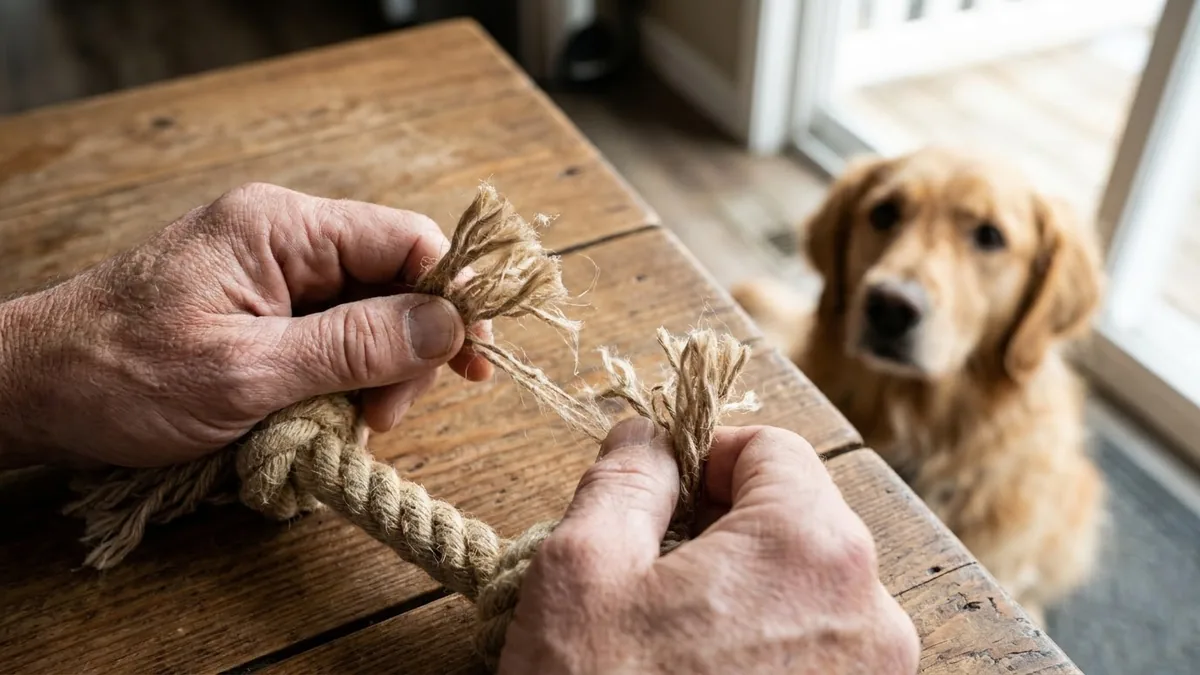
Illustration: Livehappypet.
Know the warning signs. The Cornell Riney Canine Health Center lists vomiting, loss of appetite, abdominal pain, diarrhea, dehydration and lethargy as common signs of a gastrointestinal obstruction. If your dog shows these after chewing a rope toy, or you can see string at either end of the dog, call your veterinarian straight away and do not pull on it.
Dyes and finishes are the other safety question. Undyed or naturally colored hemp avoids any doubt about what the color is made of. If a toy is brightly dyed, buy from a seller that can tell you what dyes were used and whether the toy meets pet product safety standards.
Which Dogs Suit Hemp Toys Best?
Answer: Hemp toys suit dogs that tug, fetch and chew moderately: most adult dogs of small to large size, and puppies under close supervision. They are a poor match for power chewers who shred toys alone, for dogs with a history of swallowing fabric, and as an unsupervised crate toy.
The best way to decide is to watch how your dog plays with toys you already own. A dog that carries toys around, plays tug with you and gives them back is a good candidate. A dog that lies down with a toy and starts pulling it apart thread by thread is not.
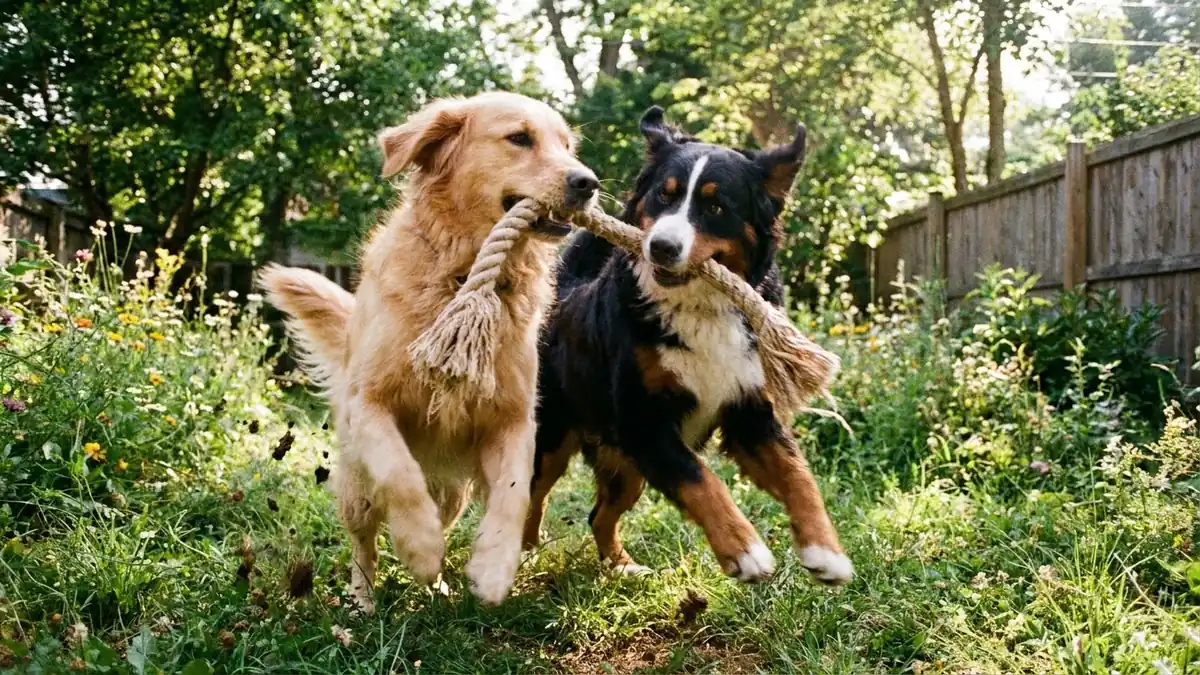
Illustration: Livehappypet.
Puppies deserve a special note. They explore everything with their mouths and do not yet know what is food. A soft hemp blend rope can be a nice teething texture, but keep sessions short, stay in the room, and swap it for a rubber teether when you leave. Our guide to the best chew toys for puppies lists safer options for alone time.
Multi-dog homes are another case. Two dogs tugging the same rope can pull it apart faster than one dog would, and loose strands get swallowed in the excitement. Rotate tug toys and inspect them more often when several dogs share them.
How Do You Choose a Good Hemp Dog Toy?
Answer: Choose a hemp toy that is tightly braided, sized so your dog cannot fit a whole knot in its mouth, and clearly labeled with its fiber content. Prefer undyed or plainly colored hemp, avoid glued-on parts and loose tassels, and buy from a seller that explains materials and sourcing.
Labels are your first filter. Many toys sold as hemp are blends, which is fine, but you should know the mix. A label that only says natural fiber or eco rope tells you very little.
- Check the braid. Squeeze and twist the rope. A tight braid that springs back lasts longer than a loose one that separates.
- Size it up. Knots and balls should be too large for your dog to swallow whole. When in doubt, go one size bigger.
- Look for short ends. Long loose tassels at the ends of a rope are the first thing to come apart. Trimmed or bound ends are better.
- Avoid add-ons. Glued plastic eyes, bells and decorative strings add choking and swallowing risks.
- Ask about dyes. Undyed hemp is the simplest choice. Colored toys should come with clear material information.
- Match the format to the job. Rope for tug and fetch, canvas plush for gentle carriers, rubber for solo chewing.
Price is a weak guide to quality. A cheap rope that sheds on the first day is no bargain, while an expensive one is not automatically safer. Judge the build in your hands and the information on the label.
Think about where the toy will be used, too. Outdoor fetch toys pick up mud and grass, so a hemp ring that can be rinsed and dried quickly makes more sense than a stuffed canvas plush. Indoor tug toys can be thicker and heavier.
If your dog already has a favorite tug style, our roundup of the best tug toys for dogs covers handle shapes and lengths that also apply to hemp versions.
Are Hemp Dog Toys Really More Sustainable?
Answer: Hemp has genuine environmental advantages as a crop: it is often described as needing few pesticides and no herbicides, and its fiber is plant-based and biodegradable. But a toy's footprint also depends on blends, dyes, processing, shipping and how long it lasts, so read sustainability claims with some care.
Hemp is popular with eco-minded brands for good reasons. It grows quickly and its fiber comes from a plant rather than from oil. Reference sources such as the Wikipedia overview of hemp note that it is often claimed to require few pesticides and no herbicides, though the same overview points out that high yields can still need nutrient levels similar to a demanding cereal crop.
The material is only part of the story. A hemp rope blended with polyester is no longer fully plant-based. Heavy dyeing, long shipping routes and plastic packaging all add to the footprint. And the most sustainable toy is usually the one that lasts: a sturdy toy used for a year beats three flimsy ones that end up in the trash in a month.

Illustration: Livehappypet.
End of life is where pure hemp has a clear edge. Plant fibers break down far more readily than nylon or polyester. A worn-out, undyed, all-hemp toy can go into general waste with a clear conscience, while synthetic ropes persist. For a wider look at greener choices, see our guides to organic pet toys and sustainable pet products.
How Do You Clean and Care for Hemp Dog Toys?
Answer: Rinse hemp toys in warm water with a little mild, unscented soap, or wash them on a gentle cycle in a laundry bag. Rinse thoroughly, squeeze out water and dry them completely in a well-ventilated spot. Inspect them as they dry, and retire any toy with loose strands or thin knots.
Rope toys trap saliva, food and dirt deep in the braid, so they get grubby faster than rubber toys. A regular wash keeps them pleasant to handle and helps you spot wear early.
- Hand wash in warm water with mild, fragrance-free soap, working the soap into the braid.
- For machine washing, use a laundry bag and a gentle cycle, and skip fabric softener.
- Rinse until the water runs clear so no soap is left for your dog to taste.
- Squeeze out excess water and dry thoroughly in airflow or sunlight before giving it back.
- Never return a damp toy to a toy box, where it can turn musty inside the braid.
- Own two of your dog's favorite rope so one can dry while the other is in use.
Inspection is the most important habit. Each time you wash or put away a hemp toy, look along the whole rope. Thin spots, unraveling ends, loose strands and knots that have shrunk are all signs the toy is nearing the end. Trimming a loose strand can buy a little time, but once the braid starts coming apart, replace the toy rather than repairing it.
Store rope toys out of reach between sessions if your dog tends to chew them alone. A toy basket on a shelf, rotated every few days, keeps toys interesting and keeps unsupervised shredding to a minimum. For general care tips that apply across materials, see our guide to dog chew toys.
What Questions Do Owners Ask About Hemp Dog Toys?
Answer: Most questions about hemp dog toys come down to safety, durability and value. Owners want to know whether the fiber contains anything harmful, how hemp holds up against cotton and nylon, which dogs should avoid rope toys, and how to keep a hemp toy clean and safe for as long as possible.
Can hemp dog toys make my dog high?
No. Hemp toys are made from fiber taken from industrial hemp stalks, and fiber varieties contain only trace amounts of THC. A rope or canvas toy is a textile, not a food or CBD product, and it is not intended to be eaten.
Are hemp rope toys safer than cotton rope toys?
They are not automatically safer. Hemp rope often frays more slowly than cotton, which helps, but any rope can shed strands that a dog swallows. Supervise rope play with either material and retire the toy as soon as strands start coming loose.
Are hemp toys good for aggressive chewers?
Usually not as an unsupervised chew. Power chewers can unpick even a tight hemp braid. Use hemp rope for interactive tug and fetch, and give strong chewers solid rubber toys designed for heavy chewing when they are alone.
Can puppies play with hemp dog toys?
Yes, with supervision. A soft hemp and cotton blend rope can feel good on teething gums. Keep sessions short, stay in the room, and swap it for a rubber teether when you cannot watch, because puppies swallow things easily.
How long do hemp dog toys last?
It depends on the dog far more than the fiber. With a gentle carrier or tug player, a well-made hemp rope can last many months. With a determined chewer it may last days. Inspect it regularly and replace it once it frays.
Can I wash hemp dog toys in the washing machine?
Most hemp rope and canvas toys can go in a laundry bag on a gentle cycle without fabric softener. Check the label first, rinse well, and dry the toy completely before returning it, since damp rope can turn musty inside.
What should I do if my dog swallowed rope fibers?
Call your veterinarian for advice, especially if a large amount is missing. Watch for vomiting, loss of appetite, belly pain, diarrhea or lethargy. If you see string at the mouth or rear end, do not pull it; get veterinary help.
Are hemp dog toys biodegradable?
Pure, undyed hemp is a plant fiber and breaks down much more readily than nylon or polyester. Toys that blend hemp with synthetic fibers, plastic squeakers or heavy dyes are only partly biodegradable, so check what else the toy contains.
Sources: Wikipedia, Hemp (fiber varieties and THC, environmental claims); Whole Dog Journal on rope toy risks; Mar Vista Animal Medical Center on linear foreign bodies; Cornell Riney Canine Health Center on GI obstruction in dogs.