An easy walk dog harness can give a handler a comfortable point of control when it fits the dog's chest and does not rub behind the legs. A harness is a tool, not a substitute for calm training or a secure backup plan.
This guide covers fit, introduction, walking checks and the signs that a different harness or professional help is needed.
Check the Fit
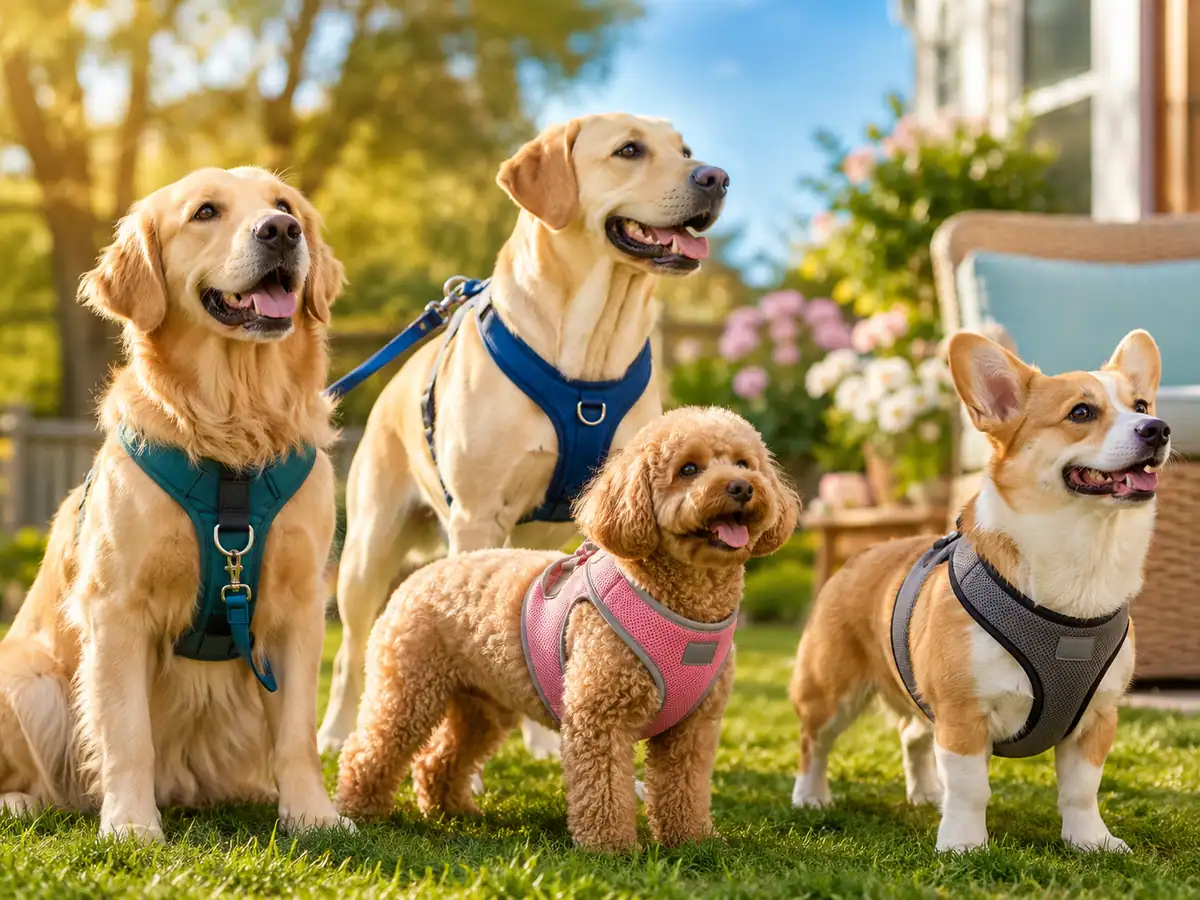
Measure the dog's chest according to the manufacturer's instructions and adjust every strap so the harness is snug without pinching. You should be able to slide two fingers under a strap, while the dog should not be able to back out.
Walk the dog indoors first and inspect behind the front legs, across the chest and around the neck. Stop if there is rubbing, restricted shoulder movement or repeated attempts to escape.
Introduce It Slowly
Let the dog sniff the easy walk dog harness, reward calm contact and put it on for short sessions before a full walk. Pair the harness with food, play or quiet praise rather than forcing it over a frightened dog.
For more expert recommendations, check out our easy walk harness guide.
Increase wearing time gradually and check the skin after each session. A calm introduction is safer than pulling a dog through resistance.
Use Gentle Walking Skills
Keep the lead slack where possible and reward the dog for walking near you. Avoid sudden jerks, tying the dog to the harness unattended or using the harness to drag a dog away from danger.
Carry a backup identification method and check buckles before leaving. A harness can fail if a clip is damaged, loose or attached to the wrong ring.
Know the Limits
An easy walk dog harness does not diagnose pain, anxiety or reactivity. A dog that coughs, limps, freezes or repeatedly tries to escape needs the walk paused and may need veterinary or qualified training advice.
You might also find our dog seat belt article helpful when shopping.
Choose a different design when the harness changes the dog's gait or cannot stay secure. Fit should be reassessed after weight, coat or body changes.
Organizations like the VCA Animal Hospitals pet health library also offer trusted, science-backed advice that is well worth bookmarking.
Frequently Asked Questions
How tight should an easy walk dog harness be?
It should be snug without pinching. Follow the product instructions and check that two fingers fit under a strap while the dog cannot back out.
Should a dog wear a harness all day?
Most dogs should wear it only for supervised use unless the manufacturer and a professional advise otherwise. Remove it and inspect the skin after walks.
How do I introduce a harness?
Let the dog sniff it, reward calm contact and begin with short indoor sessions before walking outside.
Why does my dog back out of a harness?
The size or adjustment may be wrong, or the design may not suit the dog's body. Stop using it until a secure fit is confirmed.
Can a harness replace training?
No. It provides a point of control, while reward-based training builds safe walking habits and confidence.
Browse Accessories
Free worldwide shipping on every order. No minimum purchase required.
Browse Accessories →